Tag: brent

  • Oil Prices Surge Back Above $60 as Market Volatility Intensifies

    Oil Prices Surge Back Above $60 as Market Volatility Intensifies

    Brent crude oil prices rebounded above $60 per barrel on Wednesday after briefly dipping below that threshold for the first time since 2021, highlighting ongoing volatility in global energy markets.

    The recovery was driven by short-covering and geopolitical tensions, including U.S. threats of sanctions on Iranian oil buyers and indications of renewed trade talks between the U.S. and China.

    Despite the uptick, analysts caution that oil markets remain under pressure due to weak demand forecasts and potential increases in OPEC+ production, with Saudi Arabia signaling tolerance for lower prices ahead of the group’s May 5 meeting.

    The U.S. economy’s contraction in the first quarter and China’s sluggish oil imports have further dampened demand expectations, contributing to the recent price volatility.

    Market participants are closely monitoring upcoming OPEC+ decisions and geopolitical developments for further direction in oil prices.

  • Oil Prices Plunge to 3-Year Lows Amid Trade War Turmoil and Supply Fears

    Oil Prices Plunge to 3-Year Lows Amid Trade War Turmoil and Supply Fears

    Oil prices tumbled again Wednesday, marking their steepest monthly decline since 2021 as a worsening U.S.-China trade war and supply concerns crushed market confidence.

    Brent crude dropped 75 cents to $63.50 per barrel, while West Texas Intermediate fell 79 cents to $59.63.

    For the month, Brent and WTI have plunged 15% and 17% respectively, their sharpest monthly losses in over three years.

    The market has been in free fall since early April, when U.S. President Donald Trump slapped tariffs on all imports, prompting swift retaliation from China.

    Escalating trade tensions between the world’s largest oil consumers have raised fears of a global recession and weaker fuel demand.

    China’s factory activity in April shrank at its fastest rate in 16 months, fueling further economic uncertainty.

    Investor sentiment also suffered as U.S. consumer confidence dipped to a near five-year low on tariff concerns.

    Although Trump’s recent efforts to soften auto tariffs slightly calmed markets, analysts expect oil to remain under pressure.

    Rising U.S. crude inventories, up 3.8 million barrels last week, have added to bearish sentiment.

    OPEC+ is also weighing a second consecutive monthly output hike, with key decisions expected at its May 5 meeting.

    Analysts forecast another stockpile increase of 400,000 barrels in official U.S. government data due later Wednesday.

  • Brent Crude Oil Prices Drop Amid US-China Trade Tensions: What You Need to Know

    Brent Crude Oil Prices Drop Amid US-China Trade Tensions: What You Need to Know

    Brent crude oil prices fell by $1.01, or 1.5%, to $65.86 per barrel on Monday due to economic concerns stemming from the US-China trade war.

    US West Texas Intermediate (WTI) crude also dropped by 1.5%, settling at $62.05 per barrel, as conflicting reports emerged from the US and China on the progress of trade negotiations.

    Analysts suggest the US-China trade war is the primary factor driving oil price movements, overshadowing other market developments like US-Iran nuclear talks and OPEC+ dynamics.

    China criticized the US for its tough negotiating stance, accusing the country of bullying and reneging on promises.

    Meanwhile, US Treasury Secretary Scott Bessent denied President Trump’s claims that China negotiations were ongoing.

    In China, crude oil inventories hit a nearly three-year high in March, signaling that demand growth was lagging despite refinery activity reaching a one-year peak.

    OPEC+ may consider accelerating oil output hikes when they meet on May 5, following an unexpected decision to raise output by 411,000 barrels per day earlier this month.

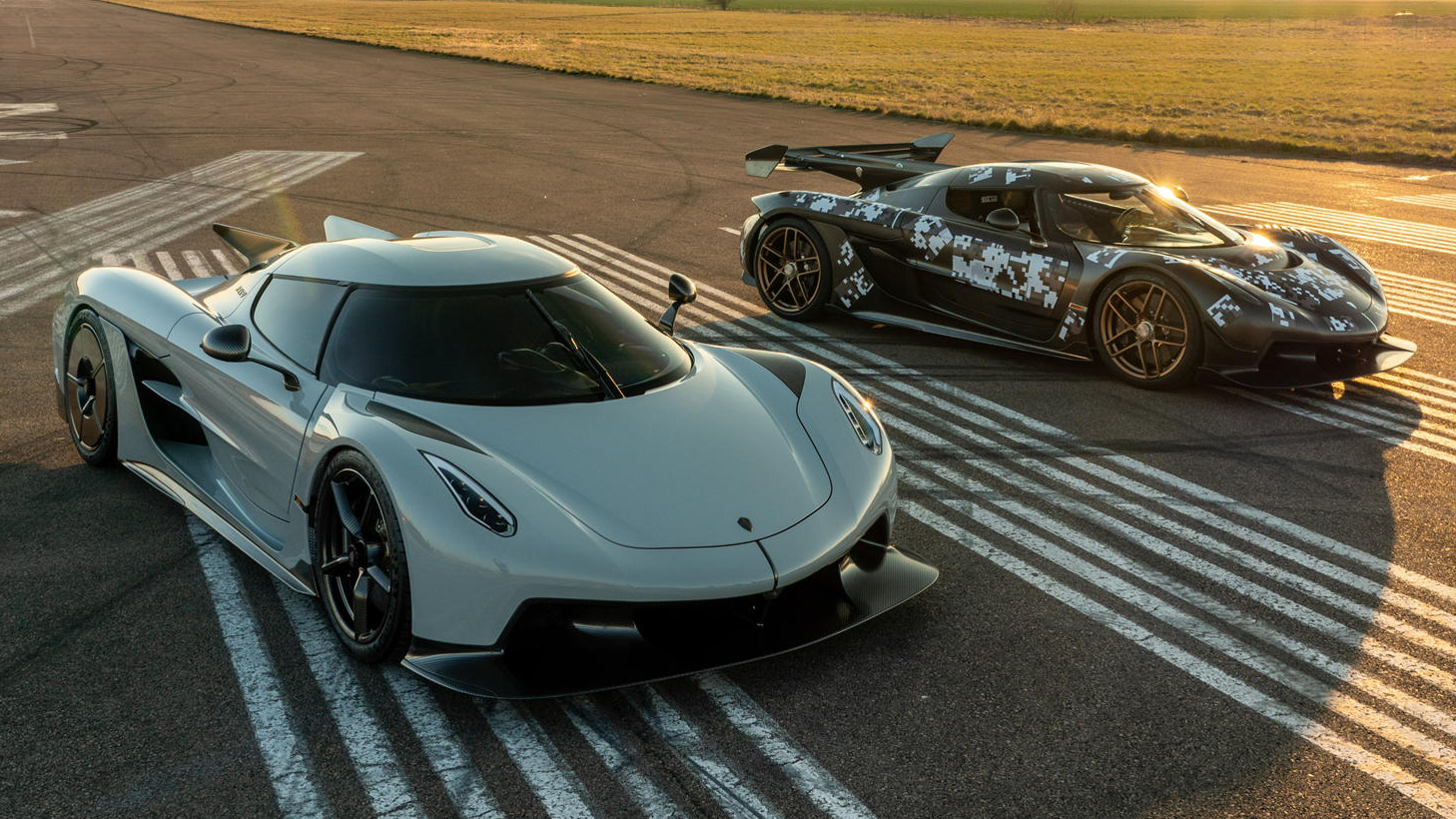
  • Koenigsegg: Jesko Absolut | Designed to achieve greater

    Koenigsegg: Jesko Absolut | Designed to achieve greater

    Every surface element is constructed to reduce drag or surrounding turbulence while increasing high-speed stability. Just as powerful as its track-focused sibling, the Jesko Absolut is the more seamless and stealthier of the two.

    With a drag coefficient value of only 0.278 Cd in combination with a frontal area of 1.88 m² and a minimum power output of 1600 bhp, the Jesko Absolut is destined to achieve higher, more extraordinary speeds than any Koenigsegg or any other fully homologated car before it. How fast? Time will tell. Looking at the math and our advanced simulations – it will be unbelievably fast.

    The Jesko Absolut is powered by a 1280 bhp (1600 bhp on E85), twin turbo charged V8 engine, featuring the world’s lightest V8 crankshaft that weighs just 12.5 kg. This flat-plane 180-degree crankshaft produces more power with greater efficiency while achieving a high 8500 rpm rev limit.

    Its design allows even firing across engine banks, creating a visceral engine sound. Koenigsegg has also designed super-light connecting rods and pistons to counter the tendency of greater vibrations in flat-plane engines.

    The CFD team meticulously went over every inch and design detail of the car, defining the elements needed to get to the drag coefficient even lower than the target of 0.28 Cd, to just 0.278 Cd. Most obvious when looking at the Jesko Absolut, is the removed massive rear wing. The wing is removed to reduce downforce and drag – dropping downforce from 1400 kg to 150 kg.

    The peak pressure area is in the front radiator, but the rest of the car has a significantly reduced downforce. More modifications were also done to the Jesko Absolut, such as more streamlined front splitter winglets, replacing its front louvers with smoother ones and the addition of removable wheel covers. Every surface finish is intended to be as slick as possible for air to glide effortlessly over.

    The Jesko Absolut sets the tone for incredible speed. It boasts an aggressively sleek silhouette paired with insane powertrain engineering aimed at achieving groundbreaking top speeds never before seen in a homologated series production car.

    The Light Speed Transmission (LST) is Koenigsegg’s latest gearbox innovation comprising nine forward gears and several wet, multi-disc clutches in a compact, ultra-light package. It is capable of gear changes between any gear at near light speed, making the driving experience smooth and seamless.

    Added aeration means a cooler cylinder, cleaner combustion, and less strain on the engine at the top of its power range. The V8s are also fitted with the world’s first individual in-cylinder pressure sensor system for production cars, allowing the Engine Management System to operate each cylinder at maximum efficiency.

    This mix of changes and technological improvements raises the engine’s rev limit to 8500 rpm – and increases the power to 1600 bhp on E85 fuel. When running on regular gasoline, the engine produces 1280 bhp. The Jesko Absolut features Koenigsegg’s most powerful engine , which is also the world’s fastest revving engine.