Tag: BUSINESS

  • Are you a fan of Honor’s Midnight Black series?

    Are you a fan of Honor’s Midnight Black series?

    If you’re not a fan of the colorful trend of smartphones nowadays, HONOR has got you covered with their sleek Midnight Black gadgets. These gadgets are sure to catch your interest, and the best thing about them is that HONOR is now more accessible with the recent opening of its experience stores in SM City Fairview and SM City Consolacion Cebu.

    “With our top-of-the-line design and technology, we are providing quality service to our HONOR fans and tech enthusiasts across the country. Watch out as well for our back-to-back store openings nationwide,” said Stephen Cheng, HONOR Philippines Vice President.

    By far the thinnest and lightest smartphone to feature a battery larger than 5000mAh, the limited-edition HONOR X9a 5G Midnight Black has a 120Hz Premium OLED Curved Display and an outstanding 64MP Triple Main Camera.

    Industry’s first 54MP IMX800 Super Sensing Main Camera, HONOR 70 5G brings users incredible enhancements in smartphone photography. It sports HONOR’s revolutionary Solo Cut Mode, an innovation enabling users to simultaneously produce a group video and a portrait vlog that spotlights a specific person.

    HONOR X7a strikes the right balance between mobility and battery life, packing in a super powerful battery that could last for 3 days, a TÜV Rheinland certified eye-protection FullView Screen, and a quad camera module within its 8.27mm slim body.

    This DSLR smartphone captures meaningful moments with its 100MP Main Rear Camera, supported by both a 5MP Wide & Depth Camera and a Macro Camera. With HONOR X8a, users can capture high-definition images in vivid details and clarity. It also features a 16MP Front Camera, perfect for your captivating selfies.

  • These are the biggest hurdles of automating IoT work in B2B industries 

    These are the biggest hurdles of automating IoT work in B2B industries 

    Viatick enables businesses to harness the power of their own data sets and simplify operations through data reliability.   

    The internet of things, or IoT, is a system of interconnected computational devices and digital machines that can share data over a network without requiring a human-to-human or human-to-computer interaction. We have witnessed a widespread introduction of such technologies across various industries over the last few years. Everything, from compact smart home devices like Amazon’s Alexa to Bosch’s large-scale smart irrigation systems, has helped increase the efficiency of particular tasks and made our work/lives simpler, overall.  

    The rate at which digital transformation continues to foster has increased year-on-year with the emergence of new technologies. But the initial attention was always on B2C markets; technology that makes our home lives easier. Gradually, more sophisticated IoT systems came into place that massively increased operational efficiency and turnaround times, while decreasing costs, in B2B markets like factories, waste management facilities, hospitals, etc.  

    But the introduction of new technologies is closely followed by the surfacing of bigger problems to solve. In the case of scaling IoT integrations in B2B, there lies the arduous task of seamlessly integrating and automating the technology being used in smart projects. To elaborate, there are three main challenges that businesses face when trying to automate their IoT workforce: 

    • Lack of a universal interface – there are multiple enterprises working on various kinds of IoT devices across the world, and it’s possible that a particular business requires different products from different brands to upgrade their operations. Now, the problem arises when all these products have to work together but aren’t able to smoothly integrate with each other. This can result in an increase in machine downtime and cause unnecessary interruptions in the workflow, which is counterproductive to the entire concept of digitizing the workspace. This problem calls for a universal solution that promotes brand inclusivity and ease of work – much like the USB-C charging port in the B2C space. With a universal interface, businesses will be able to pick and choose the best products from different brands without having to worry about integration issues.  
    • Increased resource expenditure – Without the availability of a universal interface, the expenses of managing and maintaining different machines can also increase. There are services available that help you integrate machines from different manufacturers but they tend to be temporary solutions and require constant observation to make sure everything is running smoothly. In this case, the business would have to employ someone to oversee the results of the data collected by the machine, defeating the purpose of no human-to-computer interaction.  
    • Nothing is hardware agnostic – Currently, there are few-to-none computing components that can work with various systems without requiring particular adaptations. This means that entire industries are dependent on the production of specific machinery in order to function and grow steadily. As we saw during the COVID pandemic, the global supply chain was disrupted, resulting in a shortage of chips which brought the automobile industry, among others, to a standstill.  

    While the digital transformation of our workforce is cause for celebration, it is also an opportunity to further innovate and solve the next generation of problems that are sure to arise. We are all aware of how change is the only constant, but it is our responsibility to pave a polished path for that change to arrive in style.  

    With Viatick’s AI-backed algorithm JARVIS, companies are able to automate lengthy processes from check in check outs, time stamps of their workforce, and even time spent at work. All of these are made available for quick identification to help companies corroborate other payroll related details, without having to go through individual time stamp machines one by one. 

  • RealWear taps TeamViewer for remote access functionality

    RealWear taps TeamViewer for remote access functionality

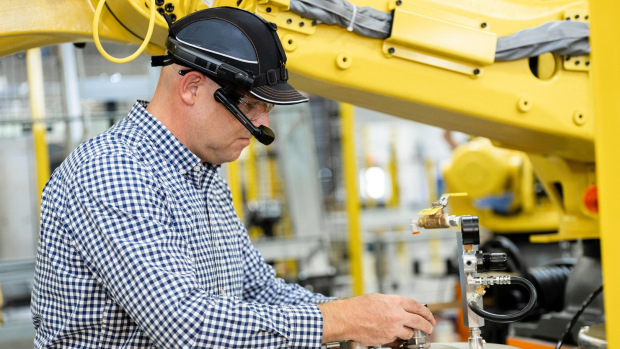
    The partnership allows quicker setup of wearables and remote support for RealWear customers across the globe

    TeamViewer, a leading global provider of remote connectivity and workplace digitalization solutions, today announced a major expansion of its partnership with RealWear, a leading provider of assisted reality wearable solutions for frontline industrial workers.

    TeamViewer’s remote access software is integrated into the newly announced RealWear Cloud.

    TeamViewer’s software is delivered as RealWear Cloud Assistance – an embedded service in RealWear Cloud, providing real-time technical support and enhanced collaboration, allowing subscribers’ IT and Business Operations to remotely set-up, configure, deploy and analyze a fleet of RealWear devices. 

    TeamViewer’s technology uniquely enables subscribers to accelerate the time-to-production and troubleshooting for RealWear devices.

    “It’s a great milestone to become a larger part of RealWear’s ecosystem and tech stack and to launch remote device support in a standardized way for the first time,” said Alfredo Patron, EVP of Business Development at TeamViewer.

    “We’ve already deployed our enterprise Augmented Reality software Frontline on thousands of RealWear devices across numerous customer sites all over the world. With the new integration of our remote connectivity capabilities into its cloud platform services, RealWear can offer its customers a new level of remote support for the devices themselves. This integration reinforces TeamViewer’s position as the de facto standard for remote access to both IT and non-IT devices in industrial environments.”

    Through RealWear Cloud customers can provision and manage their fleet of RealWear devices for their company. Adding remote support functionalities to that platform is addressing real business needs. The combination of screensharing and device interface control with parallel VoIP calling delivers the same experience as physical support on the ground.

    “With the release of RealWear Cloud Assistance, we’re excited about the continued growth and evolution of our partnership with TeamViewer to advance our mission to engage, empower and elevate frontline workers,” said Rama Oruganti, Chief Product Officer at RealWear.

    “Enabling IT to quickly and securely access remote devices will further accelerate deployments. Our focus is to support the frontline and keep them focused on work productivity and safety.”

  • Tetrix forays into digitized contact exchange powered by NFC

    Tetrix forays into digitized contact exchange powered by NFC

    Tetrix Link utilizes near-field communication (NFC) technology to enable users to conveniently share their information in just a single tap.

    Powered by Filipino-led blockchain Tetrix Network and Pitaka crypto wallet, Tetrix Link cardholders will be able to select and store their information, such as their personal contact details and relevant social media accounts, and share these data when they tap or hover over their card to an NFC-enabled mobile device.

    Felix Asuncion, co-founder and Chief Revenue Officer of Tetrix Network, explains that “With Tetrix Link, you can share your data to your peers more easily and would eliminate the need for multiple business cards since the data of multiple assets are stored inside the network. You can control which information to share, and lastly, you would only require a link or QR code to share.”

    To use this feature, cardholders must download the latest version of Pitaka mobile app. Next, sign up at https://link.tetrix.xyz and fill out the personal details and contact information needed in the dashboard.

    Once the card is purchased, receive an authentication code and use it to connect the dashboard to the Tetrix Link card. Finally, share that data by tapping the card onto an NFC-enabled device, and do not remove it until the information pops up on the screen.

    Tetrix Link recreates the way we use our physical wallets and will now allow us to secure other forms of self-custodial data. All the data you’ll need to present is housed in a handy little card, and potential connections only need to tap the card onto their NFC-enabled phones.

    “Currently, we are testing it to support human resources information system, healthcare services, and other hotel and restaurant use cases aside from it being used as business cards and personal or company ID. We’re also in talks with the local government in bringing this technology to modernize their systems,” Asuncion said.

    Tetrix Link offers an easy-to-navigate user interface and is uniquely backed with blockchain. It can function as any ID or key card. Eventually, it will also store mission-critical data and other physical documents like vaccine certificates and data inside NFTs for specific use cases.

    The card also has a scannable QR code in case one’s phone doesn’t support NFC. If there’s no internet connection at the moment of transfer, the receiver can just bookmark the link and access it later on. Soon, Tetrix Link will enable users to access data offline as well.

    The team is also in the works to launch the second version wherein users can add their resumé and an introduction about themselves and can also book their schedule or create a calendar when they tap the card onto an NFC-enabled phone.

    Future updates on the card aim to enable users to transfer and receive cryptocurrencies via the Pitaka wallet, receive perks as with loyalty or rewards cards, and pay for merchants and transportation.

    Overall, what Tetrix aims to offer its patrons is innovation and convenience. “Tetrix Link is not your ordinary business card. Unlike the traditional one, Tetrix Link card would be enough to last you a lifetime,” Asuncion said.

    “Imagine there are so many professionals, HR personnel, C-level executives, and even real estate brokers who print a lot of paper business cards which, more often than not, get discarded or misplaced just minutes after they’ve been handed around. With Tetrix Link, everything is digitally installed, and your details will be editable anytime, anywhere through https://link.tetrix.xyz,” Asuncion added.

    Consumers can purchase Classic, Bamboo, and Premium Tetrix Link Cards at VIridian Technologies Inc. Shop and its distribution partner Coin Vault PH on Facebook. They can also sign up for the selling link for them to receive an email regarding the process on how they can avail of the product.

    Currently, they are open for signups to get special offers for a limited time. Prices would start from a lifetime subscription fee of $39.99 or roughly ₱2,000 for the early adopters but will only include the business card functionality along with a Tetrix Link Card (NFC). Payment can be processed via GCash, bank transfer, and cryptocurrencies or USDT via Tetrix Network’s Pitaka wallet address.