Tag: decentralized

  • Baguio Bets Big on Blockchain: Can ‘GoodGovChain’ Finally End Ghost Projects and Budget Secrets?

    Baguio Bets Big on Blockchain: Can ‘GoodGovChain’ Finally End Ghost Projects and Budget Secrets?

    A thoughtful individual wearing a black cap and headphones, positioned in a modern studio with city skyline views in the background. An inset image shows a group of individuals, including two men shaking hands over documents, highlighting a formal agreement.

    Baguio City has just made a bold move that could redefine the future of Philippine governance. Under Mayor Benjamin “Benjie” Magalong, the summer capital of the Philippines has teamed up with blockchain startup BayaniChain to pilot GoodGovChain—a blockchain-based governance platform that promises to make government records tamper-proof, transparent, and open to citizens.

    The question now: could this be the beginning of the end for shady procurement, “disappearing” infrastructure projects, and budget leaks?

    A City That Wants to Lead Digital Governance

    In a Memorandum of Agreement signed by Baguio officials and BayaniChain’s CEO Paul Soliman, the city became the first local government unit (LGU) in the country to adopt blockchain for governance. The partnership aims to give ordinary citizens access to verified government records, covering everything from budgets to infrastructure projects.

    Unlike traditional databases that can be altered behind closed doors, blockchain keeps a permanent, time-stamped record of transactions. Think of it as a public ledger that is virtually impossible to fake. Each record is linked to the previous one, creating an unbreakable chain of accountability.

    According to Soliman, “GoodGovChain is the blueprint for verifiable governance—replicable, auditable, and tamper-evident by default.” He emphasized that the platform is designed for scalability, meaning any LGU or even national agency could adopt it without overhauling their entire system.

    What Exactly Is GoodGovChain?

    At its core, GoodGovChain is built on BayaniChain’s Digital Public Asset (DPA) Framework, powered by Prismo Protocol and Lumen Blockchain-as-a-Service. It uses a hybrid public-private blockchain model, balancing transparency with the need to protect sensitive information.

    Here’s how it works:

    • Every approved document, whether it’s a budget release, project plan, or procurement notice, is given a unique blockchain-verified seal.
    • Citizens can check a dashboard to confirm that the PDF or printout matches the original record.
    • Since it runs on Polygon’s proof-of-stake (PoS) network, the system avoids the heavy energy use of older proof-of-work models, making it eco-friendly.

    The benefits are immediate. By cutting down on printing, courier services, and redundant storage, the city expects to save both money and time. Audits, which often drag for months, could be shortened dramatically.

    Mayor Magalong’s Transparency Push

    Mayor Magalong, who has long positioned himself as a reformist, sees blockchain as a natural step in pushing transparency.

    “One of the basic principles of good governance is transparency, and the use of blockchain will allow us to be transparent, especially in our government transactions, financial transactions, and infrastructure projects,” he said.

    The mayor underscored that true open data cannot exist without trust, and trust requires security. By ensuring every record is placed on blockchain before being published, Baguio City can confidently release data without fear of tampering or hacking.

    Magalong also hinted at plans to encourage other reform-minded mayors to adopt the same system, effectively building a network of LGUs committed to transparent governance.

    A Perfect Match with Senator Bam Aquino’s Bill

    The timing couldn’t be more strategic. Just as Baguio City launches GoodGovChain, Senator Bam Aquino has filed the “Blockchain the Budget” bill, which aims to secure the national budget using blockchain technology.

    The proposal would require budget allocations, disbursements, and even audit trails to be recorded on blockchain—making it nearly impossible to manipulate.

    Interestingly, the Department of Budget and Management (DBM) has already piloted a similar hybrid blockchain system to safeguard Special Allotment Release Orders (SAROs) and Notices of Cash Allocation (NCAs). This existing framework was even cited by Aquino in his bill, reinforcing the idea that blockchain is ready for broader adoption.

    GoodGovChain builds on this model, but with a focus on local government. If successful, it could become the blueprint for scaling blockchain across all LGUs in the Philippines.

    Why Blockchain Governance Matters Now

    The Philippines has long struggled with issues of corruption, mismanagement, and ghost projects. Billions are lost annually to inefficiencies and outright theft. In 2023 alone, the Commission on Audit flagged over ₱200 billion worth of questionable expenses across national and local agencies.

    Blockchain offers a way out of this cycle. By placing public documents on an unalterable ledger, officials will have fewer places to hide anomalies. Citizens and watchdog groups will be able to verify records without waiting for long, drawn-out investigations.

    It also makes the process less political. Records cannot simply be “adjusted” to protect allies or target rivals, since the blockchain log itself is proof of authenticity.

    The Roadblocks Ahead

    Of course, implementing blockchain in governance won’t be easy. Operating in the cloud adds ongoing costs, and not all LGUs have the technical capacity to manage blockchain systems. Resistance from entrenched interests—those who benefit from opacity—could also slow adoption.

    Yet Soliman and Magalong remain confident. By proving its value in Baguio City, they believe GoodGovChain will demonstrate that the savings, efficiency, and trust-building benefits far outweigh the costs.

    What This Means for Ordinary Citizens

    For residents of Baguio, the benefits could soon be tangible. Imagine being able to check whether a road repair project in your barangay was really funded, when it was scheduled, and how much it cost—without having to beg for documents or chase down officials.

    Transparency could also help rebuild trust in local government, an institution that often suffers from low public confidence. By setting the bar high, Baguio may even position itself as a model city for digital governance in Southeast Asia.

    The Future of Good Governance Is Digital

    With Baguio City taking the lead, and Senator Bam Aquino pushing for nationwide adoption, blockchain governance is no longer a distant concept—it’s here.

    GoodGovChain is not just about technology; it’s about changing the culture of governance in the Philippines. It signals a shift from opaque, paper-based systems to a new era of verified transparency.

    Whether this experiment succeeds will depend not just on software and servers, but on political will. If more cities follow Baguio’s lead, the Philippines could leapfrog into a new standard of digital governance—where citizens no longer have to guess if their taxes are truly working for them.

  • Bitget to Transfer 440 Million BGB to Morph Foundation

    Bitget to Transfer 440 Million BGB to Morph Foundation

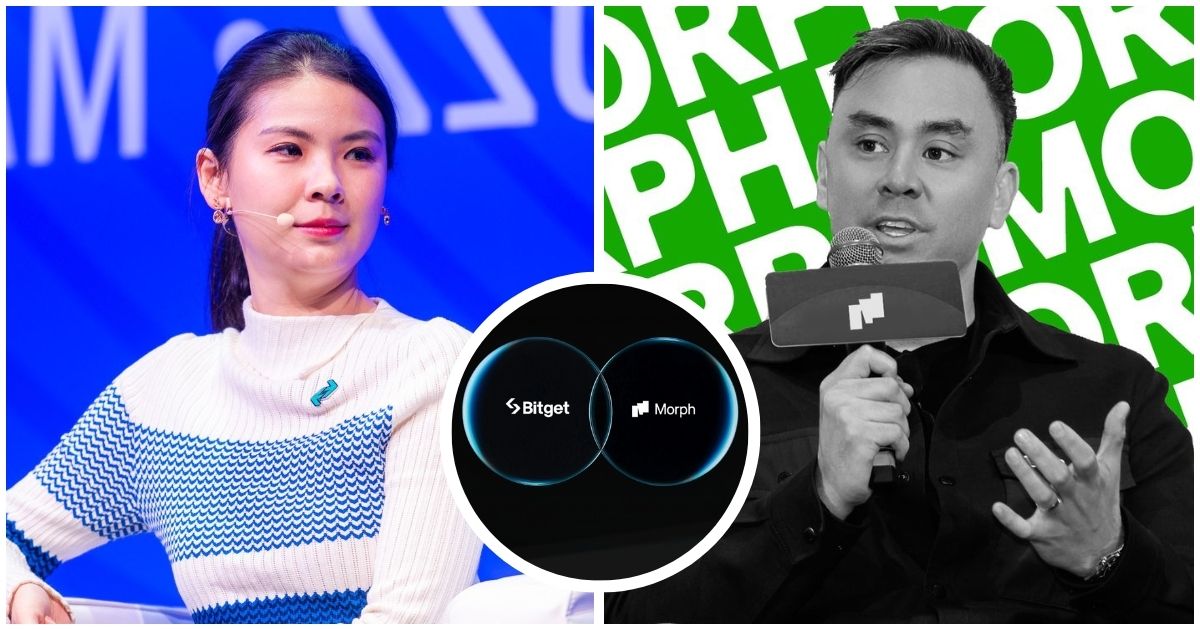
    A split image featuring two speakers, one on the left in a white and blue patterned sweater, the other on the right in a black jacket, speaking at an event. In the center, there is a graphic displaying the logos of Bitget and Morph.

    Bitget, the leading cryptocurrency exchange and Web3 company, is excited to share its strategic collaboration with its trusted ecosystem project Morph, the EVM layer for payments and onchain consumer finance. The duo has signed up to boost BGB’s utility across a multitude of projects.

    With this partnership, Bitget will transfer all BGB tokens that it controls, 440 million in total, to the Morph Foundation. Half of this allocation, 220 million BGB, will be burned in a single action, while the remaining 220 million BGB tokens will be locked and released at 2% per month to fund liquidity incentives, use case expansion, and education.

    Morph will become the native onchain home of BGB and serve as the core settlement layer for more than 120 million users worldwide, with BGB established as the gas and governance token of an improved high-performance network.

    Building the Standard for Onchain Payments

    The Morph chain will maintain its brand, team, and strategic direction, staying focused on its positioning as a Layer 2 dedicated to crypto payments, and striving to become the next-generation Web3 payment infrastructure, advancing beyond cost efficiency and performance toward real-world consumer finance at scale, with integrations across wallets, DeFi, stablecoins, and global payment providers.

    “With this commitment to the Morph Foundation, BGB is entering a new chapter as the gas and governance token of Morph. This upgrade expands BGB into the utility token for the next era of onchain consumer finance, powering payments, applications, and the broader settlement layer for millions of users worldwide,” said Gracy Chen, CEO of Bitget.

    Expanding BGB with Morph

    BGB will become the primary token of Morph’s blockchain, serving as the gas, governance, and payment token across the layer. Settlement and PayFi activity will run through BGB alongside stablecoins, giving it a central role in powering the Morph network. Meanwhile, BGB will continue to collaborate with existing partners, including Bitget, MEXC, and Bitfinex, where BGB is already listed, and others beyond these exchanges, serving as a key medium for Launchpool’s new token mining, fee discounts, and more.

    Moving forward, The Morph Foundation, a decentralized non-profit organisation, will be solely responsible for BGB’s long-term development roadmap, co-building the ecosystem with the community. It will also update BGB’s burn mechanism to link directly to the Morph network activity until the total supply is reduced to 100 million.

    “Morph has always had a close relationship with Bitget since its founding. There are projects we have always dreamed of collaborating on, but much of our growth so far has been autonomous. Through this strategic initiative, we are excited for Morph to become the home of Bitget’s onchain initiatives and to support the millions of BGB holders around the world.” Colin Goltra, CEO of Morph, added.

    Growing Decentralized Ecosystem at Scale

    To support the long-term prosperity of Morph, Bitget and Bitget Wallet will bring their full infrastructures directly into Morph, consolidating payment, trading, and ecosystem services around the chain. This includes native support for stablecoin issuers, regional currencies, and global payment providers, giving developers and merchants an unmatched foundation to build decentralized payment-focused applications at scale.

    Morph Rails will serve as the backbone of this expansion, powering hackathons, builder programs, and direct support for new projects. Developers building on Morph will gain access to Bitget’s and Bitget Wallet’s base of more than 120 million users, connecting their applications with one of the largest onchain audiences in the world. With Bitget’s backing, Morph is positioned to become the settlement hub for the next generation of PayFi and consumer finance.

    “BGB has found its home onchain with Morph, marking a new chapter in its journey. We are thrilled to invite millions of users to experience BGB and find utility in entirely new ways. Over the next 12 months, we will see an acceleration of BGB migration onto Morph Layer and deeper partnerships between Morph and Bitget Wallet to enable seamless web3 payments and onchain consumer finance,” said Karry Cheung, CEO of Bitget Wallet.

  • The Double-Edged Ledger: How Blockchain Strengthens (and Weakens) Enterprise Security

    The Double-Edged Ledger: How Blockchain Strengthens (and Weakens) Enterprise Security

    A hand reaching towards a digital lock icon on a connected network graphic, illustrating cybersecurity and blockchain technology.

    Blockchain has been touted as a breakthrough technology for enterprise security. Its decentralized structure, cryptographic protections, and immutable records promise to eliminate many of the vulnerabilities tied to centralized databases. From identity verification to supply chain auditing, blockchain’s ability to create trust without intermediaries makes it appealing to organizations weary of data breaches and fraud.

    “Blockchain offers security through transparency,” said Angela Wu, chief information security officer at a Hong Kong logistics firm. “For the first time, multiple parties can collaborate on a ledger without worrying about one player altering the records.”

    The Strengths: Integrity and Transparency

    For enterprises, blockchain delivers clear security benefits. Immutable transaction histories mean tampering is immediately evident, reducing the risk of insider fraud. Distributed consensus mechanisms make it harder for a single actor to compromise data, and cryptographic techniques ensure data authenticity.

    In the financial sector, blockchain-based settlements reduce reconciliation errors. In healthcare, patient records on permissioned blockchains have been shown to cut duplicate testing and fraud by as much as 30 percent, according to Deloitte’s 2023 health IT report.

    The Weaknesses: Code and Complexity

    Yet blockchain is not invincible. The very features that make it appealing also create new vulnerabilities. Smart contracts, which automate business logic on-chain, are only as secure as the code they are written in. In 2023, Web3 projects lost more than $1.8 billion to hacks, most of them exploiting flawed contracts, according to Chainalysis.

    “Blockchain doesn’t eliminate trust issues—it moves them into the codebase,” said Miguel Alvarez, head of cybersecurity research at a Madrid think tank. “One bad line of code can compromise millions of dollars.”

    The complexity of blockchain also makes it difficult to secure at scale. Consensus protocols like Proof-of-Stake require constant validation, and distributed nodes are susceptible to denial-of-service attacks. Enterprises may find themselves trading centralized risks for decentralized ones.

    Insider Risks and Privacy Gaps

    Another challenge lies in governance. While blockchain provides transparency, it can also expose sensitive business data to more eyes than necessary. Even permissioned blockchains carry risks if access controls are poorly implemented.

    “Too many companies assume blockchain equals privacy,” Alvarez noted. “But transparency can work against you if competitors or malicious insiders can analyze your transaction patterns.”

    In some jurisdictions, blockchain’s immutability also clashes with privacy regulations such as the European Union’s GDPR, which guarantees the right to erase personal data. This creates legal uncertainty for enterprises hoping to adopt blockchain at scale.

    Finding the Balance

    The reality is that blockchain is neither a panacea nor a peril—it is both. Enterprises can strengthen security by using blockchain to protect data integrity and streamline audits, but they must also invest heavily in securing code, managing governance, and training specialists.

    “Blockchain is like fire,” Wu said. “It can cook your dinner, or it can burn your house down. The difference lies in how carefully you handle it.”

    The Way Forward

    Enterprises adopting blockchain need a clear-eyed strategy. That means using blockchain selectively, combining it with traditional security controls, and continuously auditing both code and governance.

    As the cyber threat landscape evolves, blockchain will remain a powerful but risky tool in the enterprise security arsenal. Its double-edged nature is not a flaw—it is a reminder that no technology can replace strong security culture, human expertise, and vigilant oversight.