Tag: donald-trump

  • Metrobank Foundation Gets a Policy Pro: Philip Dy Succeeds Aniceto Sobrepeña

    Metrobank Foundation Gets a Policy Pro: Philip Dy Succeeds Aniceto Sobrepeña

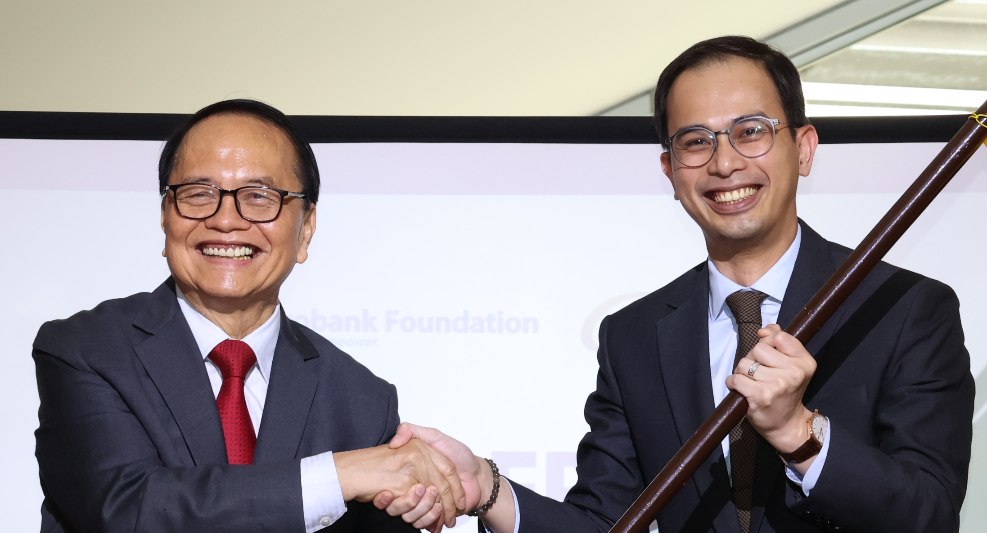
    After nearly three decades at the helm, Aniceto M. Sobrepeña stepped down from his leadership role at the Metrobank Foundation, Inc. (MBFI) and GT Foundation, Inc. (GTFI), handing over the reins to policy veteran and development strategist Philip Francisco U. Dy in a symbolic ceremony held July 15 at GT Tower International in Makati City.

    The leadership turnover was marked by both formality and warmth, as the joint Boards of Trustees of MBFI and GTFI read a resolution honoring Sobrepeña’s contributions before formally declaring Dy as the incoming President and Executive Director of the foundations.

    Dy, who previously served as MBFI’s Executive Vice President and GTFI’s Deputy Executive Director, officially took his oath during the event, signaling the start of a new chapter for the philanthropic arms of the Metrobank Group.

    His career prior to MBFI includes serving as Chief of Staff to former Vice President Leni Robredo and as Head Executive Assistant to the late Department of the Interior and Local Government Secretary Jesse Robredo.

    He also boasts academic credentials from Harvard University’s Kennedy School of Government, where he completed a Master in Public Policy focusing on democracy and institutions.

    A summa cum laude and valedictorian graduate from Ateneo de Manila University, Dy has led initiatives in disaster response, volunteer engagement, and grassroots development in education and nutrition.

    In a speech mixing humility and ambition, Dy declared, “Buong puso kong niyayakap ang pananagutan at karangalang maging inyong pinuno,” adding that he is excited to see where “our collaboration will lead us in this new chapter.”

    Sobrepeña leaves behind a legacy of transformative leadership, having led MBFI since 2006 as its first full-time and non-banker president.

    With a background in government as a former Cabinet Secretary under President Corazon Aquino and a former Deputy Director-General of the National Economic and Development Authority, Sobrepeña brought both gravitas and strategic foresight to MBFI.

    During his tenure, the foundation expanded its impact in public service, education, the arts, and health care, winning over 50 national and international awards along the way.

    “Behind every metric is a story—a life touched, a future shaped, a community served,” Sobrepeña said in his farewell remarks, reflecting on the deep personal impact of the foundation’s work.

    He emphasized MBFI’s culture of “quiet discipline and bold vision,” underscoring the importance of strategic action and measurable results in development work.

    MBFI and GTFI now welcome Dy as their sixth President and second Executive Director respectively, a move widely seen as a continuation of the institutions’ values-driven leadership and commitment to systemic impact.

    Industry observers view Dy’s entry as a natural fit given his strong grounding in public policy, collaborative governance, and community-led development.

    His experience at the Harvard Humanitarian Initiative, particularly in managing the Disaster Net Project, is expected to reinforce the foundation’s capacity to respond to crises and build resilient communities.

    The turnover comes as MBFI celebrates 45 years since its establishment by Dr. George S.K. Ty, who envisioned the foundation as a vehicle to uplift lives through excellence, engagement, and empowerment—the Foundation’s guiding 3Es.

    MBFI’s flagship programs include the Metrobank Foundation Outstanding Filipinos, Metrobank Art & Design Excellence, Metrobank Scholarship Program, MTAP-DepEd Math Challenge, National Teachers’ Month celebration, and Professorial Chair Lectures.

    It also owns and operates the Manila Doctors Hospital, one of the country’s premier wellness centers.

    With Dy taking the helm, MBFI signals a renewed focus on blending policy innovation with grassroots partnerships, a shift that aligns with growing trends in evidence-based and inclusive philanthropy.

    The Foundation has long been known for its quiet effectiveness, but with a leader like Dy—who speaks the language of both government technocrats and civic organizers—it may soon add “louder impact” to its reputation.

    As Sobrepeña reminded attendees during his parting words, “The work continues,” a phrase that now sits as both a challenge and a compass for Dy and the next chapter of MBFI’s journey.

  • Sex toy prices to skyrocket due to tariffs

    Sex toy prices to skyrocket due to tariffs

    Brian Sloan, the inventor of the Autoblow brand of male pleasure devices is sounding the alarm over how the Trump tariffs will negatively affect the sex lives of millions of Americans.

    The entire supply chain for sex toys is based in China with no American-made alternatives. Over the next one to two months, Americans will see retail sex toy prices raised between 2x-4x current levels, causing sales to virtually cease.

    American sex toy companies like Autoblow are global leaders in their use of technology and have spearheaded enormous advancements in sexual pleasure for Americans and others around the world.

    Fifteen years ago, Autoblow produced masturbation machines that simply moved rows of beads up and down.

    But today, with years of expert input from his Chinese factory partner, Autoblow offers a machine that syncs up with a VR video library and one called VacuGlide that, using suction and electronically controlled valves, offers the prospect of suction-based pleasure to men who cannot achieve erections.

    Soon the market of millions of American men in need that Autoblow serves will react to the tariff inflated prices of Autoblow machines by deciding to simply do it the old fashioned way.

    The old days of cheap rubber butts made from unsafe materials and dildos made from toxic PVC will return, as tariffs will put high quality sex toys out of reach of most American budgets. Americans will not cease masturbating, but tariffs will cause all but the rich to stop using high quality products to help them do so.

    Autoblow inventor Brian Sloan said,

    “I lived in China for 10 years and developed my American brand with the help of Chinese engineers and business partners who are simply irreplaceable. I understand and am sympathetic to the need to bring more manufacturing to the United States. But it defies logic that reviving American manufacturing requires bankrupting American entrepreneurs and their Chinese business partners. I am hoping that cooler heads prevail as soon as possible.”

  • 5 People Trump Won’t Turn His Back On — No Matter What

    5 People Trump Won’t Turn His Back On — No Matter What

    Donald Trump’s political style has always been bold, unpredictable, and unapologetically loyal to those he favors.

    As he navigates his current legal and political battles, it’s becoming clearer who might land on his “good side.” Let’s break down the five kinds of people Trump could be more forgiving towards — and why.


    1. The Die-Hard Defenders

    Trump values loyalty above all else — and those who publicly defend him, especially through his legal troubles and controversies, often find themselves rewarded with his support. From political allies like Senator Lindsey Graham to media personalities who echo his messages, Trump has a track record of standing by those who stand by him.


    2. The Power Players

    Trump, a businessman at heart, has shown a soft spot for moguls who align with his economic vision. Whether it’s real estate magnates or energy sector executives, leaders who advocate for deregulation, tax cuts, and America-first manufacturing are likely to get his ear — and his leniency.


    3. The Strongmen and Warriors

    Throughout his presidency, Trump admired “tough” leaders, from generals to law enforcement officials. Figures who project strength and align with his “law and order” mantra often receive praise and protection. He’s also known for pardoning high-profile military personnel, especially those he views as unfairly treated.


    4. The Firebrand Rebels

    If you’re an anti-establishment crusader or a politician who rallies the masses with a populist message, you’re likely on Trump’s radar — in a good way. Those who push nationalist, anti-globalist, or “drain the swamp” rhetoric tend to gain his favor, especially if they mirror his own campaign style.


    5. The Inner Circle

    It’s no secret that Trump holds his family close. From his children — Ivanka, Don Jr., and Eric — to trusted allies like Jared Kushner, his inner circle enjoys a level of protection few others do. Even former aides and advisors who remain loyal, like Roger Stone, have seen pardons and public defenses.


    Final Take:

    Trump’s approach to forgiveness and favoritism isn’t about politics alone — it’s personal. Loyalty, strength, and alignment with his vision often trump traditional metrics of success or merit. As he continues to influence American politics, one thing remains clear: knowing where you stand with Trump is everything.

  • How Trump’s Takeover Reshapes Cultural Influence and Investment Opportunities

    How Trump’s Takeover Reshapes Cultural Influence and Investment Opportunities

    The upheaval at Washington’s iconic Kennedy Center is more than a cultural flashpoint — it’s a strategic power shift with far-reaching implications for high-net-worth individuals, investors, and those navigating the nexus of politics and influence.


    The Power Grab: Reconstructing Influence

    US President Donald Trump’s unprecedented dismissal of the Kennedy Center’s longstanding leadership — including board chair and trustees — has reframed the institution’s governance.

    By installing loyalists and assuming the chairman’s seat, Trump has transformed the Kennedy Center from an independent cultural beacon into a political stronghold, aligning it directly with his administration’s ethos.

    Deborah Rutter, the institution’s president for over a decade, was ousted. Over 20 performances were canceled as high-profile artists, including Issa Rae and Rhiannon Giddens, withdrew in protest.

    The acclaimed musical Hamilton followed suit, pulling its planned run — a stark signal of the arts community’s rejection of the shift.


    Asset in Distress: A $268 Million Institutional Overhaul

    The Kennedy Center, a semi-independent nonprofit with a $268 million annual operating budget, now faces an uncertain financial future. Federal contributions account for just 16% of the budget, making private donors and ticket sales indispensable.

    Under Trump’s chairmanship, the institution risks alienating its traditional donor base and eroding public goodwill — a potential cash flow crisis that savvy investors will watch closely.

    However, disruption breeds opportunity. For those with an eye on cultural philanthropy or strategic influence, the Kennedy Center’s restructuring could pave the way for new power players to redefine its legacy, rebrand the institution, and leverage its prime real estate and prestige for unprecedented access to Washington’s elite.


    Political Capital Meets Market Potential

    The Kennedy Center’s transformation is more than an ideological battleground — it’s a platform for political influence and social capital.

    Trump’s vision to rehabilitate the Center’s riverside marble complex (“It’s in tremendous disrepair,” he noted) hints at potential public-private redevelopment opportunities.

    High-stakes investors could see a chance to position themselves as key patrons of a “reborn” Kennedy Center, unlocking elite networking prospects and visibility at one of America’s most symbolic cultural stages.


    Risk and Reward: A New Era of Patronage

    The backlash is undeniable. Vice President JD Vance and new board member Usha Vance were publicly booed at a National Symphony Orchestra performance — a rare, visible sign of audience rebellion.

    Interim President Richard Grenell’s statement on promoting “diversity and inclusion” contrasts sharply with Trump’s attacks on the center’s previous “woke” programming.

    Yet, with this upheaval comes the potential to curate a new donor ecosystem, aligned with the administration’s values.

    High-net-worth individuals positioned as early supporters could influence programming, secure seats at exclusive events, and craft the narrative of the Kennedy Center’s next chapter — turning cultural patronage into a strategic asset.


    The Bottom Line: Influence for Sale?

    For discerning investors and power brokers, the Kennedy Center’s transformation represents a dual-edged sword: a high-risk, high-reward avenue for political clout and cultural sway.

    Whether it emerges as a revitalized powerhouse or a hollowed-out monument hinges on who seizes the opportunity to shape its future.

    The Kennedy Center is no longer just a stage for the arts — it’s a stage for influence. The question is: who will own the spotlight next?

  • Global Dominion: To AI and Beyond!

    Global Dominion: To AI and Beyond!

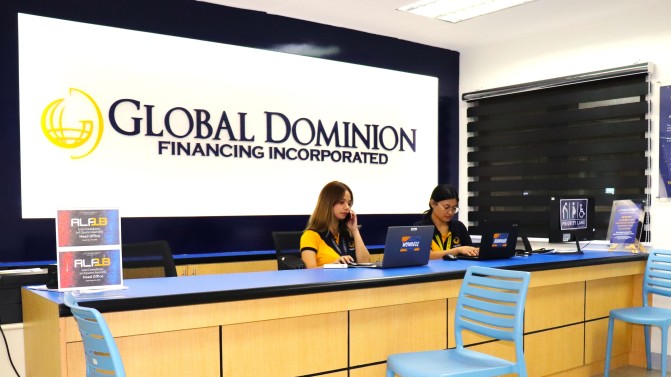
    Imagine a vehicle mortgage loan and vehicle financing company that approves applications  within minutes! 

    That’s exactly how the near future looks like for Global Dominion. 

    “To be aided by artificial intelligence when it comes to scaling our credit evaluation  operations is timely and much needed considering our growth in many areas in the country,”  said Global Dominion Credit Head Rodrigo Matinong Jr. The company has added 32 branches this year and it aims to open more by the first quarter of next year. 

    Global Dominion’s Information Technology Group (GDFI-ITG) has envisioned a shared  service to enhance IT governance, operations, and support across companies within its  group.

    GDFI-ITG works closely with the financing company’s business units to leverage  existing and upcoming technology to bring costs down, consequently helping to drive interest rates down for financial consumers in the future. 

    “Centralizing back-office operations has led to cost reduction, improved service quality,  better control, and more effective management of our assets,” said Global Dominion Chief  Information Officer Eric Salazar. Theirinitiatives have eliminated redundancy in IT resources,  budget allocation, hiring processes, and enforced the adoption of best practices. “This is  not even the peak for us, it is just the beginning!” Salazar added. 

    The company has been aggressively exploring and studying technology services that  maximize the use of artificial intelligence (AI), and it has so far screened no less than ten  vendors, including one in the field of explainable AI. 

    Alongside the transition to a cloud-based setup, and aside from AI, the growing demand for  automation has spurred the inclusion of new projects such as machine learning and mobile enabled self-service capabilities in its strategic roadmap going forward. 

    Global Dominion has been in the business of vehicle mortgage loans and vehicle financing  since 2003. Its purpose is to ignite and accelerate the growth of people and organizations to  transform lives for the better.

  • Iran’s Cyber Conspiracy: Three Nationals Indicted for Election Interference

    Iran’s Cyber Conspiracy: Three Nationals Indicted for Election Interference

    The U.S. Department of Justice has unsealed an indictment against three Iranian nationals linked to the Islamic Revolutionary Guard Corps (IRGC).

    Masoud Jalili, Seyyed Ali Aghamiri, and Yaser Balaghi are charged with cybercrimes aimed at undermining the integrity of the 2024 U.S. presidential election.

    The indictment reveals a sophisticated “hack-and-leak” operation targeting current and former U.S. officials, media representatives, and political campaign associates.

    Beginning in January 2020, the accused allegedly hacked personal accounts to steal sensitive information.

    They sought to weaponize this data by leaking it to influence electoral outcomes.

    In response, the State Department is offering a reward of up to $10 million for information leading to their arrest or conviction.

    Attorney General Merrick B. Garland condemned these actions as direct assaults on American democracy.

    He emphasized the Justice Department’s commitment to countering foreign interference in elections.

    FBI Director Christopher Wray stated that this case exemplifies Iran’s attempts to meddle in American affairs through cyber means.

    The indictment highlights ongoing concerns about foreign interference, underscoring the need for vigilance in protecting democratic processes.