Tag: energy efficiency

  • 8 Ways France is Trying to Become Europe’s AI Data Center Capital

    8 Ways France is Trying to Become Europe’s AI Data Center Capital

    A person in headphones is pondering while seated at a microphone, with a circular inset showing another individual looking overwhelmed in front of server racks.

    France is setting the stage for a digital revolution. From Paris to Provence, billions of euros are flowing into data centers designed to power artificial intelligence. But can France truly become Europe’s AI capital, beating rivals like Germany, the UK, and the Netherlands?

    Here are eight key developments shaping the country’s ambitious bid.

    1. From Château Grounds to Cutting-Edge Compute

    Just outside Paris, in the small town of Bruyères-le-Châtel, sits Château de Bruyères-le-Châtel, a 19th-century castle once known for art retreats. But less than 100 meters away, something very different is rising: a massive AI data center. Built by newcomer Eclairion, this facility will host Mistral’s dedicated GPU cluster, making France home to one of Europe’s most powerful AI training hubs.

    The irony isn’t lost on locals—what used to be a retreat for creativity now neighbors machines that could disrupt the creative industries themselves.

    2. Billions Committed to AI Infrastructure

    France went all-in during the International AI Summit earlier this year. President Emmanuel Macron’s government announced that it had secured an eye-watering €110 billion for digital infrastructure, dwarfing the UK’s £25 billion effort. The investment wave includes a €30–50 billion AI deal with the United Arab Emirates, plus private sector commitments from companies like G42, Nvidia, and Mistral.

    If these plans materialize, France could leapfrog its European rivals in sheer data center capacity.

    3. Paris Dominates the French Data Center Map

    Data centers in France are heavily concentrated in Paris, which accounts for 97 out of the nation’s 265 facilities. About 85 percent of capacity sits in the capital’s outskirts, where power and permits are easier to secure. While Paris is a top-tier European hub alongside Frankfurt, London, Amsterdam, and Dublin, France as a whole still trails Germany and the UK. However, analysts note that Paris overtook Amsterdam in 2024, becoming Europe’s third-largest market.

    The momentum is real, but Paris-centric growth leaves the rest of France playing catch-up.

    4. Marseille’s Subsea Cable Advantage

    Outside Paris, Marseille is a rising star. With 12 subsea internet cables landing there and five more on the way, the Mediterranean city has attracted heavy investment. Digital Realty, one of the biggest global players, has been expanding in Marseille since 2014, with four operational facilities and another in development.

    This coastal hub is uniquely positioned to serve as Europe’s digital gateway to Africa, Asia, and the Middle East—giving France a geographic edge.

    5. Eclairion’s Containerized Innovation

    At Bruyères-le-Châtel, Eclairion is building something unusual: a modular, container-based data center. The facility will house 66 massive containers filled with Nvidia GB200 GPUs, all stacked on giant steel platforms. This design allows flexibility, easier cooling, and even the possibility of recycling containers for other uses. Mistral will be the anchor tenant, taking up 40MW of renewable energy capacity from the site.

    For Eclairion, this deal was a make-or-break moment—no one else in France could meet Mistral’s demand for power in 2025.

    6. Mega-Campuses Beyond Paris

    Data4, another French heavyweight, is scaling aggressively. Its Marcoussis campus already holds 21 data centers, with four more under construction. But the bigger play is Cambrai in northern France, where a 1GW mega-campus is planned on the site of an old airbase. Colt DCS is also expanding, with a €2.3 billion plan for five data centers by 2031.

    The strategy is clear: spread the AI revolution beyond Paris, using France’s available land and robust grid to support hyperscale growth.

    7. Plug Baby, Plug: France’s Nuclear Edge

    While other countries struggle with electricity shortages, France has a secret weapon: nuclear power. With 57 reactors across 17 plants, the country generates up to 75 percent of its electricity from nuclear energy. Macron summed it up cheekily at the AI Summit: “In the US they say drill baby, drill. Here, it’s plug baby, plug.” This low-carbon power surplus is attracting operators who want reliable, green energy for their data centers.

    EDF, France’s state-owned utility, is even offering land near nuclear plants to data center developers, complete with 3GW of available capacity.

    8. Roadblocks and Resistance

    Despite the optimism, challenges remain. France is notorious for bureaucratic delays, with planning approvals often dragging out for 18 months or more. The government wants to cut that timeline in half by designating data centers as projects of national interest, but political deadlock could slow progress.

    Grassroots opposition is also emerging. In Marseille, activist group “The Cloud Was Beneath Our Feet” has staged protests, warning about water use and electricity diversion. With 2,500 legislative amendments pending and growing public scrutiny, France’s AI dreams may face some storm clouds ahead.

    The Verdict: Can France Claim the AI Crown?

    France has the ingredients to become Europe’s AI data center powerhouse—billions in investment, a nuclear-powered energy advantage, and a government eager to lead. Yet its Paris-heavy concentration, red tape, and budding activist opposition show that the road won’t be smooth.

    If Eclairion, Data4, and other players can deliver on their ambitious projects, France could indeed emerge as Europe’s AI capital. But if bureaucracy and resistance slow progress, rivals like Germany and the UK will be quick to capitalize.

    One thing is certain: the French AI revolution is no longer just a vision. It’s under construction—literally.

  • 8 Things to Know About Batavia’s $500 Million Data Center and Its Strict Water Limits

    8 Things to Know About Batavia’s $500 Million Data Center and Its Strict Water Limits

    A man in headphones sits in front of a microphone, contemplating, with a colorful data center interior image displayed in a circular overlay.

    Batavia, Illinois, is making headlines after approving an agreement that could bring a $500 million data center to town.

    The project, led by Miami-based Hut 8 Corp., has the potential to reshape the city’s economic and digital landscape, but it comes with one very strict condition: a cap on water usage.

    Here are eight things you need to know about the proposal, the debates it has sparked, and what comes next.

    1. A $500 Million Bet on Batavia

    Hut 8 Corp., a global player in energy and digital infrastructure, has its eyes set on building a massive 120,000-square-foot data center in Batavia. The project is valued at half a billion dollars and would rise on the vacant industrial park lot at 1780 Hubbard Avenue.

    If all goes according to plan, construction will move quickly, with the center expected to be operational by winter 2026.

    2. The 1,000-Gallon Daily Limit

    Water usage has become the most debated aspect of the proposal. The Batavia City Council capped the facility’s water consumption at an average of 1,000 gallons per day. To put this into perspective, Mayor Jeff Shielke compared it to the amount carried in the city’s firetrucks—meaning it isn’t much in the broader picture.

    Still, for a data center known to be water-intensive, the limit stands as a firm safeguard.

    3. Cooling Without Draining Resources

    Traditional data centers consume massive amounts of water for cooling. Hut 8, however, plans to use a closed-loop cooling system, which dramatically reduces daily consumption. The system needs an initial load of around 450,000 gallons of ionized water, but here’s the twist: this water only has to be replaced every 2,000 days.

    The company says it will truck in the water rather than rely solely on city supplies, easing concerns about strain on local resources.

    4. Promises of Jobs and Economic Growth

    The proposal is not just about servers and cooling systems—it also brings promises of opportunity. Developers estimate about 30 new jobs will be created once the data center goes live.

    While that may not seem like a massive number, the economic ripple effects from a project of this scale, including construction work, local partnerships, and tax revenues, could be significant for Batavia.

    5. Public Concerns Remain Strong

    Not everyone is convinced the project has been handled properly. Resident Susan Russo voiced frustrations that the city missed opportunities to engage energy experts, clarify the source of electricity, and educate the public before making decisions. Meanwhile, Batavia High School student Kasey Hubert worried that the council acted too quickly, leaving residents little time to process the details.

    Their concerns highlight a recurring theme in development projects: community trust is just as critical as technical safeguards.

    6. Water Is Not the Only Question

    While water usage has dominated the headlines, other important questions remain. Where exactly will the data center’s electricity come from? How sustainable is the project in terms of long-term energy demands?

    Mayor Shielke himself admitted that the proposal still has “a long way to go” before full approval, signaling that multiple details are still up in the air.

    7. Strict Monitoring and Accountability

    To address community worries, the agreement between Batavia and Hut 8 includes built-in oversight. Potable water and wastewater services will be provided by the city, but with meters installed to track usage closely. This ensures that the 1,000-gallon-per-day cap isn’t just a guideline but a monitored requirement.

    Accountability measures like these could serve as a model for other cities weighing similar high-tech developments.

    8. The Road Ahead: Not a Done Deal

    Despite the headlines, the data center isn’t a lock just yet. Developers must still present final plans to the Batavia Plan Commission for review, and the city council has made clear that approval could still fall through if conditions aren’t met. As Mayor Shielke bluntly put it, “A year from now, this could be off the table.”

    For now, the project stands as an ambitious proposal with promise, pushback, and plenty of unanswered questions.

    The Bigger Picture

    The Batavia data center debate reflects a broader global challenge: how to balance economic growth and digital infrastructure with sustainability and community engagement.

    As cities across the U.S. compete to attract billion-dollar tech projects, Batavia’s strict water limits could set a new precedent. Whether this becomes a success story or a cautionary tale will depend on how well the developers and the city can align priorities in the months ahead.

  • Hithium Launches AI Data Center Energy Storage Solution at RE+ 2025

    Hithium Launches AI Data Center Energy Storage Solution at RE+ 2025

    A thoughtful person wearing headphones and a Google t-shirt in a data center environment, with a circular inset image of Hithium energy storage containers outdoors.

    Hithium, a leading global provider of integrated energy storage products and solutions, today unveiled its AI data center ESS solution at RE+ 2025. The portfolio includes the ∞Power 6.25MWh 8h long-duration BESS, the ∞Power N2.28MWh 1h BESS, and a dedicated lifespan assessment model for AIDC ESS.

    The solution addresses both the real-time and reliability requirements of data centers while helping while help boost renewable energy utilization. This marks a breakthrough in applying long-duration storage to the data center industry.

    AIDC’s Urgent Need for Long-Duration Energy Storage

    In the AI era, data centers need to balance green transition while maintaining efficient operations. Increasing the share of renewable energy is essential for data centers to cut costs and emissions. However, the intermittency of renewable energy and millisecond-level load fluctuations challenge power stability and computing performance, making 8-hour long-duration storage an essential solution.

    Most existing energy storage solutions rely on a single product and generalized models, which are not optimized for the specific needs of AI data centers. To address these challenges, Hithium has developed a tailored AIDC energy storage solution that delivers scenario-specific performance and reliability.

    Balancing Demands: Lithium for Stability, Sodium for Power Surges

    The solution combines the ∞Power 6.25MWh 8h BESS, designed as the backbone for long-duration storage, and the ∞Power N2.28MWh 1h BESS, a sodium-ion solution purpose-built to handle sudden power surges. Together, these complementary technologies enable data center operators to meet both base load and peak demands efficiently, without sacrificing reliability. The dedicated lifetime assessment model for AIDC ESS further ensures precise degradation insights, longer and more reliable project lifespan guaranteed under highly dynamic workloads.

    Notably, Hithium’s AIDC ESS solution can effectively enhance renewable energy utilization, significantly reduce the levelized cost of electricity (LCOE), and thereby improve the efficiency and quality of AI power supply.

    “At Hithium, we designed our AI data center energy storage portfolio with customer operations in mind. The ∞Power 6.25MWh 8h BESS reduces auxiliary consumption and maximizes long-duration efficiency, while the ∞Power N2.28MWh 1h BESS built on the ∞Cell N162Ah, delivers 20,000 cycles and stable performance even under millisecond-level load fluctuations. These capabilities ensure operators can achieve reliability and cost efficiency as AI data centers push the boundaries of energy demand,” said Kush Sutaria, Hithium Senior Manager of Application Engineering.

    Empowering AI Data Centers with Local Networks and Vertical Integration

    Beyond product innovation, Hithium empowers AI data center with integrated manufacturing and localized service. Its fully operational 10GWh Texas factory, together with a U.S. network of 100+ engineers, regional warehouses, and a 72-hour on-site response, enables fast, reliable, and scalable deployment. Leveraging its “Local for Local” strategy and vertical integration capability, Hithium ensures both rapid deployment and long-term reliability for AI data centers in North America and globally.

    With its leading customization capabilities and efficient global delivery, Hithium has secured TOP 2 in global energy storage battery shipments and utility-scale shipments in the first half of 2025. The launch of AIDC ESS solutions marks a new milestone for Hithium in its full-scenario customization capability. By breaking through the limits of time and space, Hithium is extending energy storage applications into diverse industries and pioneering new pathways for emerging fields—driving the shift to clean energy and sustainability.

  • The Hidden Noise Draining Data Centers: Why Electrical Harmonics Matter More Than You Think

    The Hidden Noise Draining Data Centers: Why Electrical Harmonics Matter More Than You Think

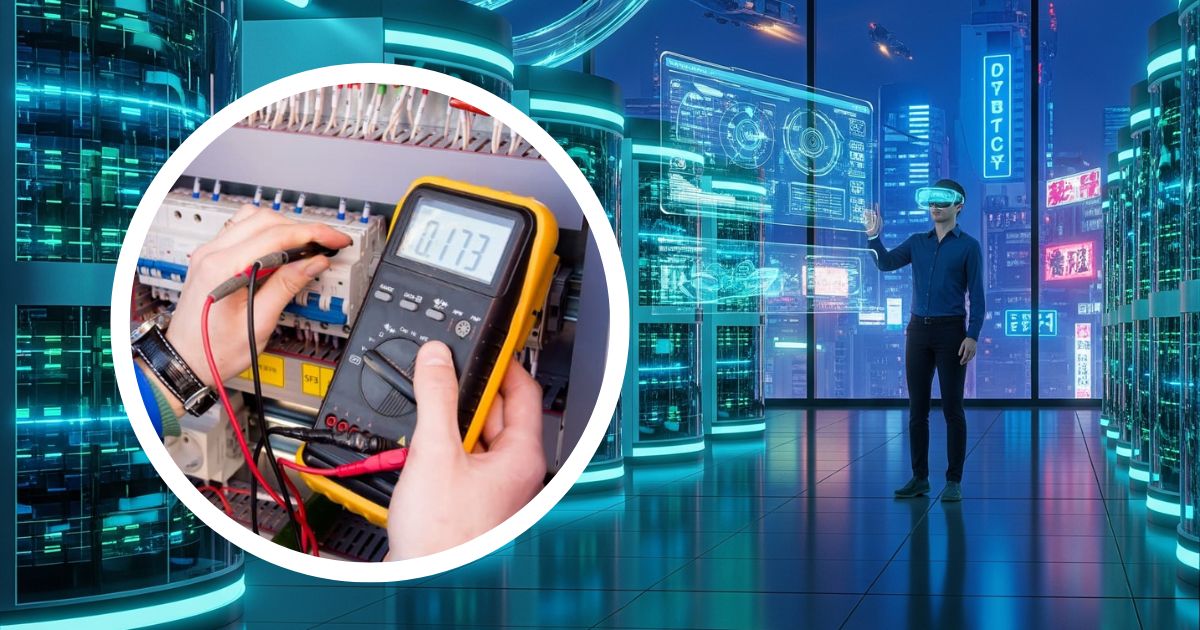
    A technician using a multimeter to measure electrical readings in a data center, surrounded by futuristic digital infrastructure.

    Step into any hyperscale data center and you’ll see the obvious energy hogs—towering racks of servers, miles of cabling, and cooling systems roaring day and night. But there’s another energy thief, one you won’t see or hear directly, yet it lurks in every rack and power line: electrical harmonics.

    Though obscure outside engineering circles, harmonics are a silent but costly problem. They emerge from nonlinear IT loads—think servers, UPS systems, or LED lighting—that distort the perfect sinusoidal wave of alternating current.

    The result: wasted power, overheating transformers, and a higher risk of equipment failure.

    “Harmonics are like background static on a radio signal,” explained Jose Alvarado, an electrical engineer who has audited dozens of data centers across Asia. “Individually, they don’t seem catastrophic.

    But when enough distortion builds up, the entire electrical system pays the price.”

    What are harmonics?

    In a perfect world, electricity would flow in a smooth, sinusoidal pattern at 50 or 60 hertz. Nonlinear devices, however—those that draw current in abrupt pulses instead of a continuous flow—create distortions in that waveform.

    These distortions, or harmonics, are integer multiples of the base frequency (120 Hz, 180 Hz, and so on) that ride on top of the fundamental wave.

    For data centers, packed with thousands of switching power supplies in servers, the result is a cocktail of harmonics surging through the electrical backbone. While invisible to the naked eye, the consequences are very real: wasted energy, higher operating costs, and stress on critical infrastructure.

    Real-world consequences

    One colocation facility in Hong Kong discovered that unexplained overheating in its main transformer was caused not by overload, but by harmonics. The distortion forced the transformer to handle currents it wasn’t designed for, leading to premature wear. Replacement cost: more than $1 million.

    Another North American data center experienced repeated breaker trips during peak load times. Investigators found that harmonic currents were falsely triggering protective devices, cutting off power to healthy circuits.

    “The irony is, the system thought it was protecting itself, but it was actually creating outages,” Alvarado said.

    According to a 2022 IEEE report, harmonics can increase energy losses in power systems by up to 20 percent. For a hyperscale operator with annual electricity bills running into the tens of millions, those “small distortions” add up to staggering costs.

    Why it’s overlooked

    Harmonics often fall into the category of “out of sight, out of mind.” Unlike overheating servers or tripped alarms, their effects are subtle and cumulative. Equipment doesn’t fail immediately; instead, it ages faster. Energy isn’t lost dramatically; it’s quietly siphoned off as extra heat.

    “Executives care about uptime and PUE,” said Alvarado. “Harmonics don’t show up in dashboards the way cooling or CPU metrics do, so they’re often ignored until something breaks—or the energy bills don’t add up.”

    Engineering solutions

    Fortunately, the industry isn’t defenseless. Passive filters can block specific harmonic frequencies, while active filters use power electronics to counteract distortions in real time. Many modern UPS systems and transformers are designed with harmonic mitigation in mind, distributing loads more evenly to reduce distortion.

    Another key tactic is careful load balancing. By distributing nonlinear loads across different phases of power, engineers can cancel out certain harmonics before they accumulate. Regular harmonic audits, using specialized meters to detect distortions, are increasingly being adopted as part of preventive maintenance programs.

    “Think of it as tuning an orchestra,” explained Alvarado. “Every instrument—every server—contributes to the overall noise. Filters and balancing are like conductors, bringing harmony back to the system.”

    The bigger picture: efficiency and sustainability

    With data centers consuming an estimated 2 to 3 percent of global electricity, efficiency has become both a financial and environmental priority. Every watt lost to harmonics is not only money wasted but also unnecessary carbon emissions.

    Green certifications such as LEED and emerging metrics for sustainable IT operations are beginning to include power quality considerations, pushing operators to address harmonics more directly. Vendors are also responding with harmonic-resistant equipment designed for today’s nonlinear loads.

    “Energy efficiency isn’t just about better cooling or newer chips,” said Alvarado. “It’s about cleaning up the power itself. Harmonics are pollution in the electrical sense. If we care about sustainability, we have to address them.”

    The silent risk in the background

    As the digital economy grows, so too does the demand for reliable, efficient data centers. But while operators focus on headline issues like AI workloads or renewable integration, harmonics remain a quieter but equally critical battle.

    The lesson is simple: ignoring harmonics won’t crash your system tomorrow, but it will slowly bleed it over time. In an industry obsessed with uptime and efficiency, that makes harmonics one of the most important invisible enemies.

    Or as Alvarado put it: “It’s not the big storms that sink ships. Sometimes it’s the constant, quiet leaks below the waterline.”

  • AI for the Grid: How Smart Algorithms Are Cutting Data Center Energy Waste in Real Time

    AI for the Grid: How Smart Algorithms Are Cutting Data Center Energy Waste in Real Time

    A person walking between rows of server racks in a data center, with visible cables and equipment.

    Modern data centers face unprecedented energy demands, particularly with the rise of artificial intelligence and cloud services. Cooling and server operations now account for a large portion of electricity consumption, often representing nearly half of total facility costs.

    Operators are searching for solutions that go beyond hardware upgrades to manage energy more intelligently.

    Smarter Algorithms, Lower Consumption

    Artificial intelligence itself is becoming part of the solution. Machine learning models can predict server workloads, adjust cooling systems in real time, and optimize energy consumption across thousands of racks. Early deployments have demonstrated reductions in energy usage of 15 to 25 percent, with significant cost savings for hyperscale operators.

    “AI allows us to see patterns that humans simply cannot,” said Karen Liu, a senior engineer at a leading cloud provider. “We can anticipate thermal hotspots, redistribute workloads, and adjust cooling dynamically, all while maintaining service performance.”

    Predictive Cooling and Demand Shaping

    One key application is predictive cooling, where AI analyzes historical and real-time sensor data to forecast temperature spikes before they occur. By modulating fans, pumps, and airflow in advance, facilities avoid energy-intensive emergency cooling cycles.

    Another approach is demand shaping, where non-critical workloads are shifted to periods of lower grid demand or higher renewable availability. In practice, this can increase renewable energy usage by 10–15 percent and reduce reliance on fossil-fuel backup power.

    Integrating with Smart Grids

    Data centers equipped with AI-driven energy management can also interact with smart electricity grids. They can throttle power use during peak demand, discharge stored energy from on-site batteries, and even sell excess capacity back to the grid. In some regions, these actions earn operators additional revenue while stabilizing local energy supply.

    “Intelligent load management is a game changer,” said Michael Torres, an energy systems analyst. “It not only cuts operating costs but also helps the broader grid integrate more renewable energy without disruptions.”

    Scaling AI for Energy Efficiency

    The potential for AI-driven energy optimization grows as facilities scale. Large hyperscale data centers with tens of thousands of servers can see multi-megawatt reductions in peak energy use. Analysts predict that widespread adoption of AI-powered energy management could reduce global data center energy consumption by up to 10 percent over the next five years, translating to billions of dollars in savings.

    Looking Ahead

    As sustainability pressures mount, AI for energy efficiency is moving from pilot programs to mainstream deployment. The technology/ aligns operational performance with environmental goals, allowing data centers to run smarter, cleaner, and more cost-effectively.

    In the next decade, the most competitive data centers will not just host AI—they will use AI to power themselves efficiently, demonstrating that the future of digital infrastructure depends as much on intelligent energy management as it does on computing capacity.

  • Liquid Cooling at Scale: What the Latest Deployment Data Reveals About AI-Driven Infrastructure Demands

    Liquid Cooling at Scale: What the Latest Deployment Data Reveals About AI-Driven Infrastructure Demands

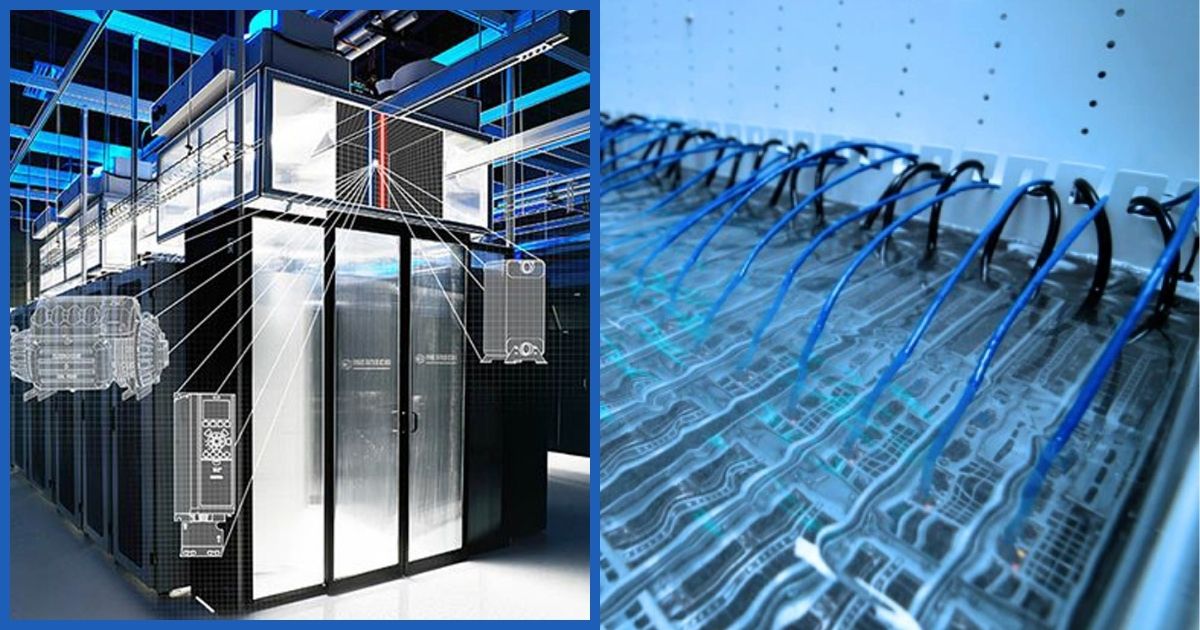
    Image depicting two cooling systems for data centers: one side shows large industrial fans in a cooling setup, while the other side displays a close-up of liquid cooling technology with pipes and circuits.

    Artificial intelligence has transformed data centers from steady digital warehouses into power-hungry compute engines. High-density servers that once drew 10 kilowatts per rack are now demanding 50 to 100 kilowatts, far beyond what conventional air systems can handle.

    The cooling challenge has become one of the most urgent engineering constraints in scaling AI workloads.

    The Data Behind the Shift

    Recent industry surveys show that nearly one in four data centers deployed liquid cooling in 2023, up from just one in ten only a few years earlier. Goldman Sachs projects adoption will accelerate further, with liquid cooling expected to serve more than half of all AI servers by 2026. Market forecasts estimate the global liquid cooling sector will exceed $20 billion by the early 2030s, driven by compound annual growth rates surpassing 20 percent.

    The economics are equally compelling. Operators report that immersion and direct-to-chip liquid cooling can cut energy use for cooling by as much as 40 percent compared with traditional air conditioning. These savings add up quickly at hyperscale sites, where cooling costs alone can run into tens of millions of dollars annually.

    AI as the Tipping Point

    AI is the primary driver behind liquid cooling’s rise. Training large language models and running inference workloads push hardware to extreme thermal thresholds. Without advanced cooling, chips throttle performance or risk failure.

    “The industry is at a tipping point,” said David Klein, a senior infrastructure strategist. “Air cooling has been stretched to its limits, and liquid cooling isn’t optional anymore — it’s necessary to sustain AI growth.”

    Challenges of Scaling

    Despite the momentum, widespread adoption is not without hurdles. Retrofitting existing facilities designed around air cooling is expensive and often impractical. Many operators are instead designing new campuses with liquid systems baked in from the start.

    “It’s not just about adding pipes and pumps,” explained Laura Cheng, a thermal systems engineer. “You’re redesigning power distribution, floor layouts, and maintenance protocols. It’s a total shift in how facilities are built and run.”

    Another concern is standardization. The industry is still divided between direct-to-chip approaches, where coolant flows through plates attached to processors, and full immersion systems, where servers are submerged in dielectric fluids. Without clear standards, operators face the risk of vendor lock-in.

    The Road Ahead

    The adoption curve is steep, and most analysts agree the coming decade will define the winners in cooling technology. For operators chasing net-zero commitments, liquid systems promise both efficiency gains and environmental benefits by reducing reliance on water-intensive evaporative cooling.

    For AI-driven businesses, the payoff is even clearer: faster compute, fewer bottlenecks, and a platform that can scale with demand.

    “Cooling used to be seen as a background function,” said Klein. “Now it’s a competitive differentiator. The companies that master liquid cooling at scale will be the ones powering the next generation of AI.”

  • Energy or Efficiency? The Hidden Environmental Cost of Proof-of-Work Blockchains

    Energy or Efficiency? The Hidden Environmental Cost of Proof-of-Work Blockchains

    A Bitcoin coin featuring the 'B' logo with a visual background of lights, alongside a stack of Ethereum coins, with the Ethereum logo prominently displayed.

    Proof-of-Work (PoW) blockchains, including Bitcoin, have drawn scrutiny for their massive energy consumption. Recent estimates suggest that the global Bitcoin network alone consumes over 120 terawatt-hours of electricity annually, comparable to the energy usage of some medium-sized countries.

    The network’s reliance on computationally intensive mining operations makes energy use both enormous and continuous.

    While blockchain advocates often highlight its decentralized security, the environmental trade-offs are significant. Each transaction requires thousands of computational steps, producing substantial carbon emissions when powered by fossil fuels.

    Even highly efficient mining facilities contribute to the problem if the electricity comes from coal or natural gas.

    The Geography of Mining

    The environmental cost varies widely by location. Mining operations in regions with abundant renewable energy have a much lower carbon footprint per transaction, while operations in coal-heavy regions exacerbate global emissions. For example, a single Bitcoin mined in a coal-powered facility can produce more than 500 kilograms of CO₂, while the same operation in a hydro-powered facility might produce under 50 kilograms.

    “Energy efficiency is often oversold in blockchain discussions,” said Dr. Lena Hart, a renewable energy researcher. “Even with the most efficient hardware, the scale of Proof-of-Work mining means emissions remain substantial unless the power source is completely green.”

    Mining Hardware and Efficiency Gains

    Mining rigs have improved dramatically in efficiency over the last decade. Modern Application-Specific Integrated Circuits (ASICs) can perform 100 times more calculations per watt than early-generation machines. However, these gains are partially offset by increased mining difficulty and competition, which drive overall energy demand higher.

    Analysts note that while individual miners become more efficient, the network’s total energy consumption continues to rise, following what some call the “efficiency paradox.” More efficient hardware encourages more mining activity, which ultimately maintains or increases total energy use.

    Industry Responses

    Some blockchain projects are exploring alternatives to PoW. Proof-of-Stake (PoS) and hybrid consensus mechanisms consume orders of magnitude less energy while maintaining network security. Ethereum’s transition to PoS, completed in 2022, reportedly cut its energy consumption by over 99%, demonstrating a path toward sustainable blockchain operations.

    “Proof-of-Work has a built-in energy cost that can’t be ignored,” said Marcus Nguyen, a blockchain analyst. “Shifting to less energy-intensive consensus models is essential for the industry to scale responsibly.”

    The Path Forward

    The debate over blockchain and sustainability is far from over. Investors, regulators, and consumers are increasingly weighing environmental impact alongside security and decentralization. For Proof-of-Work networks, the challenge is balancing the benefits of decentralization and security with an energy footprint that is increasingly difficult to justify in a climate-conscious world.

    Ultimately, the blockchain industry faces a choice: continue to rely on energy-heavy consensus mechanisms or embrace innovation that aligns with global sustainability goals. The environmental ledger, it seems, may soon matter as much as the digital one.

  • The Hidden Cost of Cooling: Why Energy Efficiency Now Dictates Data Center Site Selection

    The Hidden Cost of Cooling: Why Energy Efficiency Now Dictates Data Center Site Selection

    Interior of a data center featuring server racks and cooling systems, with highlighted components.

    Data centers are expanding at an unprecedented rate to meet global demand for cloud, streaming, and artificial intelligence. But as servers multiply, so does the cost of keeping them cool.

    Cooling systems now account for up to 40 percent of a facility’s total electricity use, making them one of the most expensive and environmentally sensitive factors in operations. In many regions, the cost of energy dedicated to cooling rivals the cost of powering the servers themselves.

    Location, Location, Location

    The days of building data centers anywhere with cheap land and fiber access are fading. Operators now consider local climate, water availability, and grid sustainability before breaking ground.

    Cooler northern climates, where “free cooling” with outside air is possible for much of the year, reduce the need for costly mechanical systems. In hot, arid regions, however, the reliance on water-cooled chillers drives up both operational costs and community tensions.

    The link between site selection and sustainability is growing stronger. A facility built in a temperate climate can cut cooling-related energy consumption by as much as 30 percent compared with one in a desert environment.

    For hyperscale operators, that difference can translate into millions in annual savings while improving public perception in regions already facing water scarcity.

    The Numbers Behind the Decisions

    Industry analysts estimate that the average data center consumes enough electricity each year to power 50,000 homes, with nearly half of that tied to cooling.

    A single megawatt of data center capacity can draw more than 4 million kilowatt-hours annually just for temperature control. This economic burden is prompting companies to rethink where and how they grow.

    The global market for liquid and immersion cooling is forecast to surpass $20 billion by the early 2030s, fueled by the need to manage higher rack densities driven by artificial intelligence. But for many operators, choosing the right location still offers the fastest and most cost-effective path to efficiency.

    Voices From the Field

    “Energy costs are now as important as network latency in determining where a data center is built,” said Susan McAllister, a senior analyst specializing in data center infrastructure. “Cooling is no longer a secondary consideration — it’s often the dealbreaker.”

    Operators echo that sentiment. “A one percent improvement in power usage effectiveness can translate into millions of dollars in savings,” said Rahul Banerjee, a chief engineer for a hyperscale provider. “When you multiply that across dozens of sites, location decisions become financial imperatives.”

    Looking Ahead

    As operators push toward 2030 net-zero commitments, the economics of cooling will only sharpen. With rising energy prices, growing regulatory scrutiny, and increased community resistance to high water usage, site selection is becoming as much about sustainability as it is about connectivity.

    The future of data centers will be defined not just by where the internet flows fastest, but by where the air and water can cool servers at the lowest cost — and with the smallest environmental footprint.

  • Battery Walls and Beyond: How Next-Gen Energy Storage Is Redefining Data Center Efficiency

    Battery Walls and Beyond: How Next-Gen Energy Storage Is Redefining Data Center Efficiency

    Interior of a data center showing battery storage racks and a technician monitoring equipment.

    Data centers have always relied on batteries as a safety net, but the role of energy storage is evolving. Traditionally, uninterruptible power supply (UPS) systems provided only minutes of backup, just long enough for diesel generators to kick in.

    Now, with the industry under pressure to cut carbon emissions, batteries are becoming more than a backup—they are an active part of the energy strategy.

    From Lead-Acid to Lithium-Ion

    For decades, most facilities relied on bulky lead-acid batteries. Today, the industry is pivoting to lithium-ion systems that offer longer lifespans, smaller footprints, and higher energy density. Operators report that lithium-ion can last up to twice as long while reducing cooling demands, since the chemistry tolerates higher ambient temperatures.

    The numbers are significant. A switch from lead-acid to lithium-ion can reduce lifecycle costs by as much as 40 percent. Global adoption is accelerating, with analysts projecting that lithium-ion will dominate UPS deployments in new builds by 2030.

    Grid-Interactive Data Centers

    The next frontier is using batteries not just for emergencies, but for everyday efficiency. So-called grid-interactive data centers are beginning to feed power back into the grid during peak demand and recharge during off-peak hours when renewable energy is abundant.

    In markets like California and Northern Europe, where wind and solar supply can fluctuate, this approach helps stabilize the grid while lowering operational costs for operators. A 50-megawatt facility with advanced battery systems can store enough energy to power tens of thousands of homes for several hours.

    “Batteries are no longer just a safety mechanism,” said Daniel Hughes, an energy strategist for a major colocation provider. “They’re part of a broader optimization strategy. If you can shave your peak load or sell excess capacity back to the grid, you’re not just saving money—you’re turning energy into an asset.”

    Beyond Lithium: The Next Wave

    While lithium-ion dominates today, the industry is already eyeing alternatives. Solid-state batteries, with promises of higher safety and even greater energy density, are under development. Some operators are exploring flow batteries, which can provide long-duration storage measured in days rather than hours.

    Though still early, these technologies could redefine how data centers balance reliability, efficiency, and sustainability. “Long-duration storage is the missing link for a 24/7 renewable-powered data center,” said Priya Desai, a researcher specializing in grid integration. “The minute you can store solar energy from noon and use it at midnight, the economics of green data centers transform completely.”

    A Smarter Energy Future

    As operators pursue net-zero pledges, energy storage is emerging as a crucial lever for both efficiency and sustainability. Batteries are helping data centers consume more renewable energy, reduce dependency on diesel generators, and lower overall operating costs.

    The shift is clear: data centers are no longer passive consumers of electricity. With next-generation batteries, they are becoming active participants in the energy ecosystem—balancing loads, supporting grids, and redefining what efficiency looks like in the digital age.

  • The Power Usage Effectiveness Paradox: Why Lower PUE Doesn’t Always Mean Greener Data Centers

    The Power Usage Effectiveness Paradox: Why Lower PUE Doesn’t Always Mean Greener Data Centers

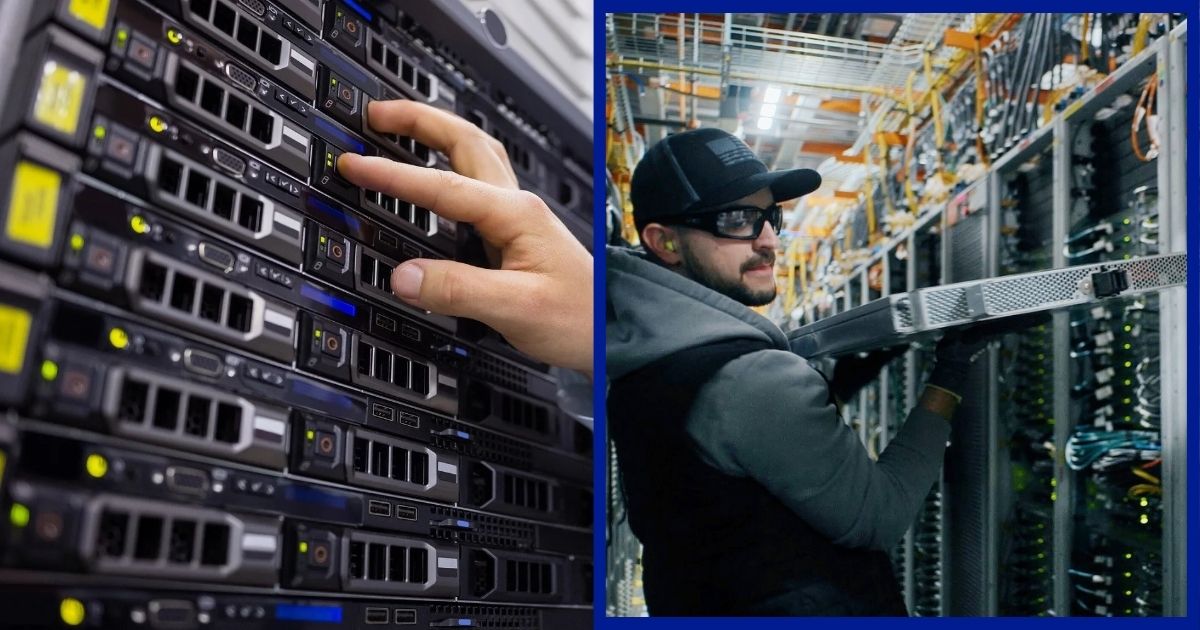
    A technician adjusting settings on multiple server units in a data center, showcasing the intricate technology used in modern computing facilities.

    For more than a decade, Power Usage Effectiveness (PUE) has been the industry’s go-to metric for measuring efficiency. A perfect score of 1.0 means all the energy consumed by a data center goes directly to computing equipment, with no overhead wasted on cooling or lighting.

    Hyperscale operators frequently tout PUE figures hovering between 1.1 and 1.2, far better than the 2.0 averages seen in older facilities.

    The problem? A lower PUE number doesn’t necessarily mean a data center is greener. In some cases, it can mask the true environmental footprint.

    When Efficiency Masks Consumption

    Modern hyperscale facilities run so efficiently that they consume massive amounts of power even while boasting low PUE scores. A 300-megawatt site with a PUE of 1.2 still draws the equivalent of hundreds of thousands of homes’ worth of electricity. In other words, a data center can be highly efficient while still being an enormous consumer of energy and resources.

    “PUE is a useful measure of how well you run a facility,” said Andrew Patel, a data center energy consultant. “But it doesn’t tell you anything about where your power is coming from or how much carbon you’re putting into the atmosphere.”

    The Carbon Blind Spot

    One of the biggest criticisms of PUE is that it focuses on efficiency, not sustainability. A data center powered by coal can achieve the same PUE score as one powered by renewable energy.

    For regulators and communities, this is a glaring blind spot. The industry’s collective carbon footprint is already estimated to exceed that of some mid-sized nations, and efficiency metrics alone won’t bring it down.

    Operators are now facing growing pressure to disclose not just PUE, but also carbon usage effectiveness (CUE) and water usage effectiveness (WUE). These complementary metrics track emissions and water consumption, giving a fuller picture of environmental impact.

    AI, Storage, and Smarter Grids

    Emerging technologies may help bridge the gap between efficiency and sustainability. Some operators are experimenting with artificial intelligence to dynamically adjust cooling loads in real time, shaving energy waste during off-peak usage. Others are integrating battery storage systems to soak up renewable energy when it’s plentiful and discharge it when demand spikes.

    “Efficiency alone isn’t enough anymore,” said Maria Lopez, an infrastructure strategist for a global cloud provider. “The conversation has shifted to resiliency and sustainability. That means using cleaner power and being transparent about every input, not just the overhead ratio.”

    The Road Ahead

    The industry is unlikely to abandon PUE—it remains a quick and simple way to compare facilities. But leaders increasingly recognize its limits. Investors, regulators, and customers are demanding more comprehensive reporting on sustainability, not just efficiency.

    The paradox is clear: a data center can achieve world-class efficiency while still being a heavy polluter. The next decade will test whether the industry can balance both measures—delivering the performance the digital economy demands without overwhelming the planet’s energy resources.