Tag: latency

  • Data Center Interconnects: The Highways Powering Cloud and Hybrid IT

    Data Center Interconnects: The Highways Powering Cloud and Hybrid IT

    A technician adjusting server components in a data center, surrounded by server racks filled with equipment.

    As enterprises embrace hybrid and multi-cloud strategies, the role of data center interconnects (DCI) has become more critical than ever. These high-capacity links connect facilities across regions, ensuring seamless data flow, low latency, and resilient business operations.

    Why Interconnects Matter

    In the past, enterprises could rely on a single, centralized data center. Today, workloads are distributed across private facilities, colocation centers, and multiple public clouds. This creates a complex web of traffic that must be managed efficiently.

    “Interconnects are the highways of the digital economy,” said Andrew Kim, a network architecture lead at a major telco. “Without them, cloud strategies simply don’t work.”

    The Latency Factor

    One of the most pressing challenges is latency. According to Gartner, a one-second delay in application response can reduce user satisfaction by up to 16%. DCI addresses this by creating direct, high-speed routes between data centers and clouds, bypassing congested public internet paths.

    Financial services, streaming platforms, and AI applications are especially reliant on low-latency DCI to deliver real-time performance.

    Scaling with Demand

    DCI isn’t just about speed—it’s about scalability. A 2024 IDC report noted that global interconnection bandwidth is expected to exceed 33,000 terabits per second by 2027, reflecting skyrocketing demand from edge computing, 5G rollouts, and AI workloads.

    “Every new digital service—from self-driving cars to real-time analytics—pushes more data across interconnects,” Kim explained. “The infrastructure has to grow at the same pace.”

    Security and Resilience

    Another advantage of DCI is enhanced security. By keeping traffic off the public internet, enterprises reduce exposure to threats. Providers also design interconnects with redundancy in mind, ensuring that if one path goes down, another takes over instantly.

    This resilience is crucial for industries like healthcare and finance, where downtime can have massive financial or even life-threatening consequences.

    The Road Ahead

    As hybrid IT becomes the default, DCI will evolve further. Analysts expect to see increasing use of software-defined interconnects (SD-DCI), which allow enterprises to dynamically allocate bandwidth as workloads shift between clouds.

    “The future is programmable,” Kim said. “Interconnects won’t just be fixed circuits. They’ll adapt in real time to where applications and users need the most performance.”

  • Latency Matters: How Proximity and Network Design Shape Data Center Performance

    Latency Matters: How Proximity and Network Design Shape Data Center Performance

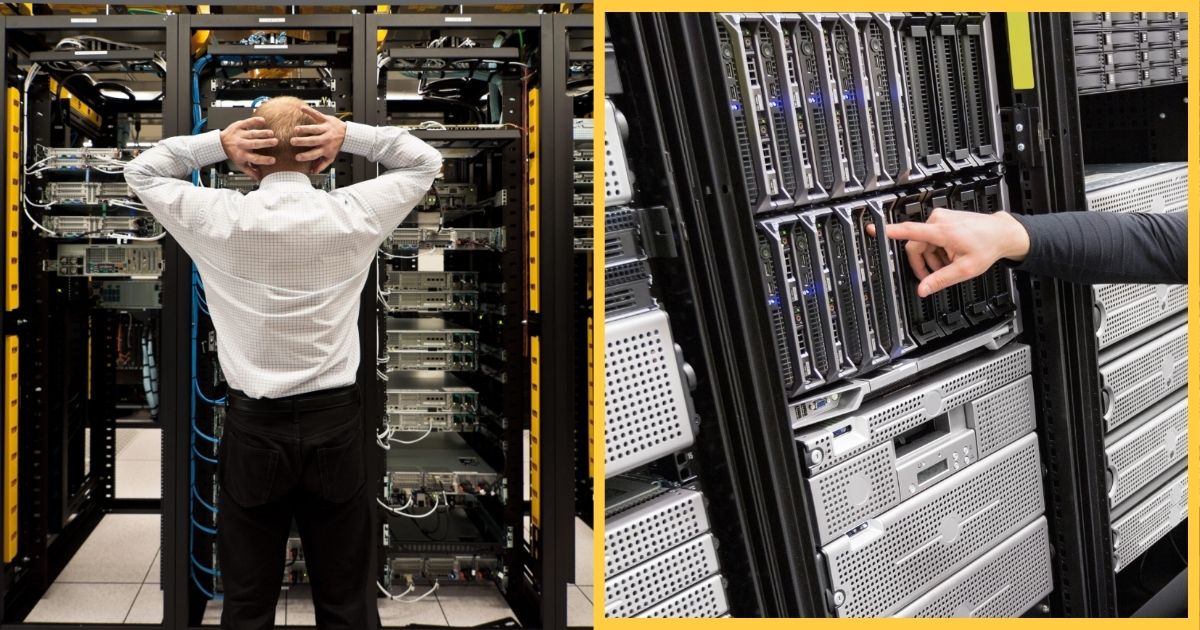
    A frustrated technician stands in front of a server rack, holding his head in distress, while another technician points at a server in a different rack.

    In today’s digital economy, speed is everything. Whether streaming a live sporting event, trading stocks, or training AI models, the difference between milliseconds can mean the difference between success and failure. At the heart of this race against time is data center latency—a measure of how quickly data can travel from one point to another.

    Why Latency Is Critical

    Latency directly impacts user experience and application performance. A 2023 Akamai study found that a one-second delay in page load can reduce conversion rates by up to 20%, while in industries like finance or gaming, even microseconds carry weight.
    “Low latency is no longer a luxury; it’s a requirement,” said Jason Kim, CTO of a U.S.-based cloud provider. “End users expect near-instant access, and that expectation puts pressure on data center design.”

    The Role of Proximity

    Physical distance plays a huge role in latency. Even at the speed of light, data traveling across continents experiences unavoidable delays. This has fueled the rise of edge data centers—smaller facilities strategically placed closer to end users and devices.
    For example, telecom operators are building edge sites near 5G towers to support real-time applications like autonomous vehicles and AR/VR. By processing data locally instead of sending it back to a centralized core, latency can be reduced from 50–100 milliseconds down to under 10 milliseconds.

    Network Architecture as a Differentiator

    While proximity helps, the design of the network itself is equally critical. Modern data centers are increasingly adopting software-defined networking (SDN) and high-speed interconnects to minimize bottlenecks.
    “Optimizing latency isn’t just about where your data center is located,” said Kim. “It’s about how your network is built and how traffic is managed within and between facilities.”
    Advanced routing techniques, fiber upgrades, and direct interconnects with major cloud providers all contribute to lower latency and higher reliability.

    Industry-Specific Demands

    Not all industries face the same latency requirements. Online retailers can tolerate slightly higher response times, but financial institutions demand single-digit millisecond performance to execute trades. Healthcare providers need low-latency connections for telemedicine, while AI workloads require rapid data movement between training clusters.
    These diverse demands are reshaping how operators design facilities, leading to specialized builds for different sectors.

    Future Outlook: Ultra-Low Latency

    As applications like metaverse platforms, real-time language translation, and robotics gain traction, demand for ultra-low latency will only increase. Analysts predict that by 2027, over 50% of enterprise data will be created and processed outside traditional data centers or the cloud, underscoring the shift toward distributed architectures.

    “Latency will define the next wave of digital infrastructure,” said Kim. “The winners will be those who balance proximity, network intelligence, and scalability.”