
Tag: latest

  • People pick job stability and retirement over marriage and a degree – Buzz Capital News

    People pick job stability and retirement over marriage and a degree – Buzz Capital News

    According to Accenture’s 17th annual Life Trends report, half of people worldwide are significantly changing their life goals, placing a higher priority on retirement and job security than on getting married or earning a college degree. Another 48% of people make plans for their lives that are less than a year in the future or don’t make any plans at all. 

    This shift in mindset — brought on in part by the rapid advance of technology — is putting society in flux and creating a level of uncertainty and fragility for businesses as people are now deconstructing everything in their lives, as they try to figure out their place in the world. 

    “We’re entering a decade of deconstruction spurred on by changing consumer values, AI’s explosive growth and the relentless speed of change,” said Mark Curtis, global sustainability lead for Accenture Song.

    “This is causing business leaders to ask, ‘where do we begin?’ in the face of these challenges. It starts with a clarion call for excellence and giving the pursuits of human ingenuity and creativity space to flourish.” 

    These insights helped Accenture Song identify five global macro-cultural trends forecasted to revolutionize how businesses and leaders remain relevant to their customers while also accelerating growth. 

    For years, the correlation between customer experience and revenue growth inspired organizations to hold the customer at the center of every decision. Now, economic considerations are forcing cuts at enterprises, driving friction between customers and brands across channels — in the form of price increases, reduced quality, an avalanche of subscriptions and poor customer service. Nearly half of customers feel less valued when facing difficulty reaching or talking to unsupportive customer service. 

    Quality or size reductions (‘shrinkflation’), declines in service (‘skimpflation’), customer service shortcomings and unwelcome subscriptions are adding up to a sense that brands are quietly reversing on their promises. At the center of this trend is a critical perception problem: where companies see actions for survival, some customers see greed.  

    With 77% of people familiar with conversational AI, this is a technology with mass cultural awareness. Generative AI is upgrading people’s experience of the internet from transactional to personal; large language models (LLMs) are being used to stage intelligent, two-way conversations, giving people solutions to “I want to” queries, rather than simply “I want a” requests.

    Nearly half (42%) of consumers would be comfortable using conversational AI like ChatGPT for product recommendations, completing tasks at work (44%) and wellness and healthcare advice (33%).

    This technology will eventually change most of the interfaces we use. Brands will try to use that understanding to shape hyper-relevant products, services and experiences, while smart brands will go beyond, into responsive brand development.

    The chief aim of creativity used to be inspiring an emotional response through imagination and human connection. Now that algorithms and tech often sit between creator and audience, it’s become about playing the game or risking going undiscovered, which is influencing the end product — sometimes for the worse.

    In entertainment, consumers are being fed a constant diet of film and franchise extensions. And broadly, 35% of respondents feel app designs are indistinguishable across brands, a sentiment that rises to nearly 40% among 18-24-year-olds. A period of cultural stagnation appears to be with us.

    This mediocrity challenge isn’t going to solve itself and might even get worse as generative AI becomes a bigger player in creative processes. Savvy businesses will see opportunity here: in a sea of familiarity, originality will always stand out — as will investing in creative talent.  

    People’s relationship with technology is at a critical juncture. Nearly a third of consumers say that technology has complicated their lives just as much as it has simplified it. Tech feels like something that happens to them rather than for them, demanding too much and often failing to make a positive impact on well-being. 

    Thirty-one percent say constant notifications control their use of personal tech; 27% say it’s algorithms, while another 27% say it’s the draw of the endless scroll.

    In response, consumers are tightening the reins on their tech use: a third are removing notifications, one in five are putting on screen time limits and a quarter are removing apps and devices altogether. This tension points to technology draining people’s resources and their desire to put their well-being first.

    Organizations must be thoughtful about how their use of technology will fit in to people’s lives and what it will demand of them. Time? New skills? Brands that offer people greater choice in how they use (or don’t use) technology to interact with will become trusted partners, because customers will be able to regain a much-needed sense of agency.  

    Traditional life paths are being rerouted by new limitations, necessities and opportunities, significantly shifting demographics. People are challenging long-standing ideas, and shaping new ways of thinking, acting and living. It feels like a decade of deconstruction is beginning, and the impact on systems and services will be far-reaching. 

    For example, people are now living life less than one year at a time — 48% make plans for their lives less than 12 months ahead, or don’t plan at all. In the past three years, we’ve also seen a drop in the value placed on traditional milestones including marriage (from 30% to 21%), graduating from college (from 30% to 24%) and moving out of the parental home (23% to 17%).

    These new mindsets will trigger different perspectives on products and services. Businesses that fluidly adapt, craft seamless experiences that challenge norms and support people’s unique paths will remain relevant to the evolving consumer.

    “It takes meticulous orchestration to play a meaningful and relevant role in customers’ lives,” said David Droga, chief executive officer, Accenture Song.

    “Consumers today are not linear, they are changing faster than businesses can, so keeping pace is a constant challenge. These trends are a window into the interplay between people, their behaviors and their overall attitudes toward the ever-changing world.”
  • Airbnb contributed 45.7-M to Philippine GDP

    Airbnb contributed 45.7-M to Philippine GDP

    According to recent analysis from Oxford Economics, Airbnb is a significant pillar of the Philippines’ tourist sector, with its operations supporting about 103,800 employment in the country in 2022 alone and contributing USD$840 million (45.7 million pesos) to the GDP.  

    The analysis, commissioned by Airbnb, discovered that the platform was critical to the Philippines tourist industry’s contribution to GDP and jobs. 

    The report also highlighted the powerful multiplier effect Airbnb guest spending has within local communities. In 2022, Airbnb guests spent a total of USD$876 million (47.7 million pesos) in the Philippines in areas like purchases in restaurants, retail stores, and on transportation.

    It details the contribution made by Airbnb guests to domestic tourism across the nation. In 2022*, domestic Airbnb guest spending totalled USD$445 million (24.2 million pesos). 

    The report also explores two profound changes in travel behaviour since the pandemic: the dispersal of tourism away from urban areas, and long-term stays driven by the emergence of flexible work arrangements.

    James Lambert, Director for Economic Consulting in Asia for Oxford Economics said, Airbnb has clearly played a major role in the resilience and rebirth of the Philippines travel and tourism sector in the wake of the Covid-19 pandemic.

    “Airbnb has been at the heart of some of the trends reshaping the nation’s travel and tourism industry, including the shift in travel away from cities and towards more rural communities, and the increase in demand for long-stay trips, exemplified by the live and work anywhere phenomenon, Lambert said.

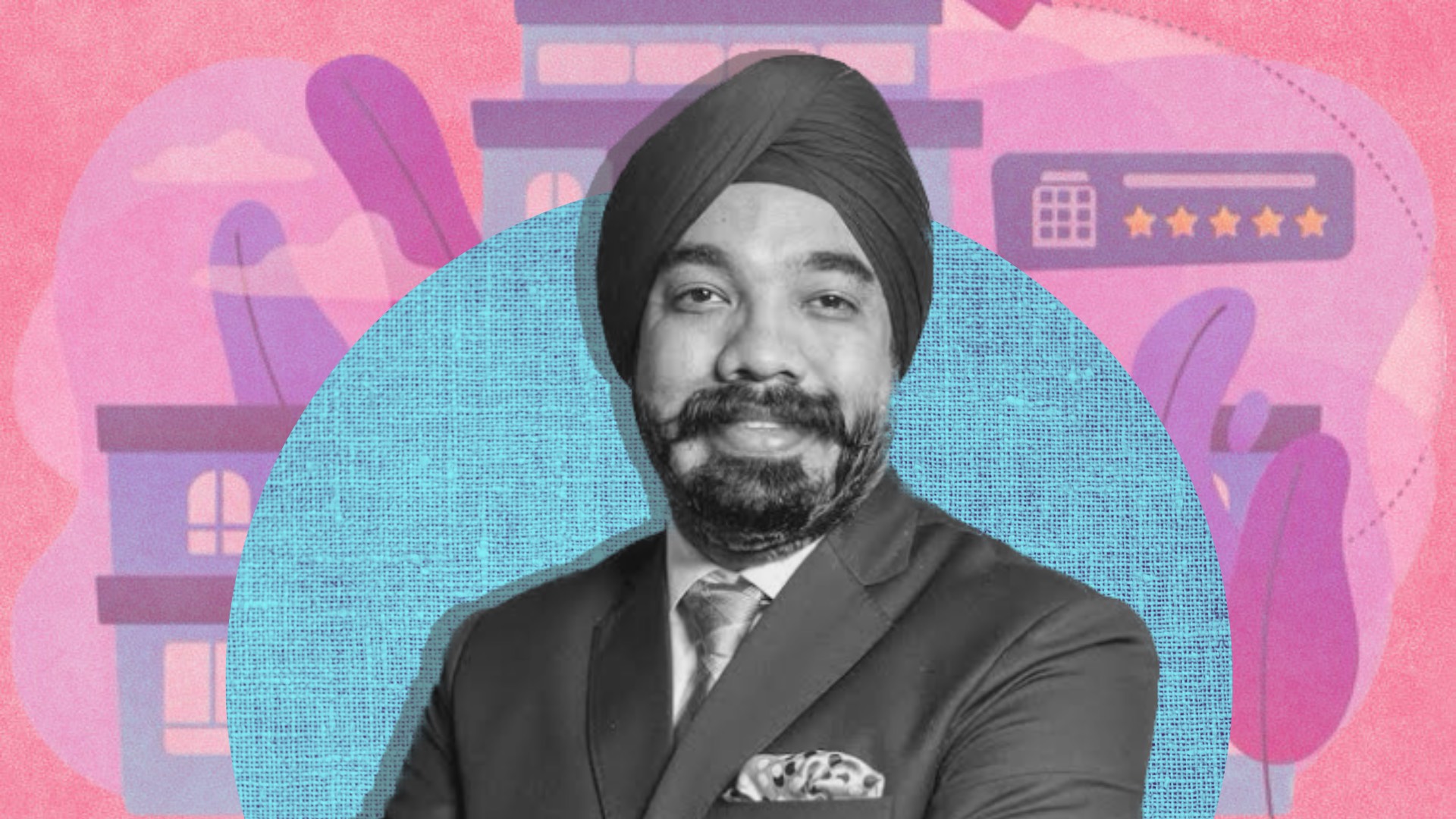
    Amanpreet Singh Bajaj, Airbnb’s General Manager for Southeast Asia, India, Hong Kong and Taiwan said, “The economic contribution to both GDP and jobs driven by travel on Airbnb in the Philippines has created powerful economic ripple effects that have enabled the growth of local businesses, such as shops, restaurants, bars, and cafes — which are often central to how travellers experience a destination — and created job opportunities for the locals.” 

    “The growth of the long-term stays segment since 2020 — enabled by flexible work policies and supported by Airbnb’s Live and Work Anywhere program — is helping destinations attract guests who stay longer and spend more per trip.

    “Travel is now more dispersed, and so the economic benefits are being shared across more destinations, enabling a valuable economic contribution to rural and regional areas. This dispersal is being driven by Hosts on Airbnb and in turn creating economic opportunities for various communities. 

    “As destinations across the Philippines continue to recover, we are committed to partnering with governments and communities to rebuild their tourism economies in a way that is equitable, inclusive, and sustainable.”

    *This report presents results for the twelve month period up to and including March 2023, referred to as 2022*, which represents the first full year after the reopening of international travel. Prevailing exchange rates at the time of study were applied, using proprietary data from Oxford Economics.

  • What went down at the female-led debate of Bull or Bear

    What went down at the female-led debate of Bull or Bear

    Everyone now has the chance to take part in a more open internet and make money thanks to the Web3 world. However, as addressed during the Bull or Bear event hosted during the Philippine Blockchain Week on September 20, 2023, women still face harsher hurdles inside the business, including a lack of representation, unfriendly policies, and unfavorable environments.

    The “Bull or Bear: On-Chain Inclusivity: A Debate on Women Empowerment in Web3” was organized by edutech platform Bitskwela and included six female Web3 members who presented opposing viewpoints on important barriers that may make it more difficult for women to succeed on the decentralized web.

    Dr. Nataliya Ilyushina, economist and a research fellow at the Blockchain Innovation Hub at RMIT University, believes the lack of regulations in Web3 exposes women to higher risks in the space, leaving them vulnerable to scams and workplace injustices without clear protective measures such as social welfare benefits.

    On the contrary, Belinda Lim, co-founder of Embolden Ventures, contended that regulations offer protection in traditional industries, highlighting the inclusivity of Web3, where women can experience less discrimination compared to mainstream sectors.

    The poll after the debate round revealed that the audience is divided, with 50% agreeing that regulations provide essential protection and structure, while the other 50% appreciates the potential for reduced discrimination in the more open and decentralized nature of Web3.

    Meanwhile, Ida Mok, president of Women in Blockchain Asia, argued that women-led initiatives are harder to foster in Web3 because they inherit the male-dominated nature of Web2 industries like finance and agriculture. She cited recent studies that show women only make up 7% of the blockchain workforce and that only 13% of Web3 projects had a female position at the founding table. “Web 3 doesn’t exist in isolation… The social barriers still exist, that is why all these initiatives are extremely difficult to foster. The statistics are there, and the numbers don’t lie,” she said.

    However, for Ivy Gutierrez of the Lady Traders of Global Miranda Miner Group, Web3 is a newfound niche for women to achieve financial independence, and on a later round, explained why the industry is already conducive to women’s involvement, “Web3 is young but a lot of women already made waves in the industry… and this drives more women to get involved and feel included.”

    With a narrow margin, 56% of the audience perceives the male-dominated legacy from Web2 as a hindrance to women-led initiatives in Web3, while the remaining 44% believe Web3 presents a promising avenue for women to attain financial independence.

    Entrepreneur and Web3 advocate Juliane Indiongco, also known as Modern Mulan, highlighted the importance of prioritizing women’s empowerment in Web3. In contrast, Irene Umar, the CEO of We Guild Games (W3GG), the official guild partner of Yield Guild Games in Southeast Asia, stressed the broader concept of human empowerment within the realm of Web3.

    Prior to the debates, keynote speakers including Liza Panowich, marketing manager of OctaFX; Hideki Okada, CEO of Tekkon; Nelson Lumbres, co-founder of ICP Philippines; and June Olivar, client services director of Blockceler8 PR, shared how their platforms are bringing more diversity to the Web3 ecosystem.

    Bitskwela is actively advancing the Web3 education landscape in the Philippines by localizing educational content and fostering a collaborative environment that promotes understanding and awareness in the space.

    Camille Puentespina, Chief Product and Tech Officer of Bitskwela, shared in an earlier interview, “We’re really trying to drive towards getting the numbers up in terms of the women engaged in the space. Women are very much in business development, marketing, and executive jobs. We really want to push forward and try to recognize as well those in the backstage, those who are really developing and building.”

    Jiro Reyes, co-founder and CEO of Bitskwela and Philippine Block Awards 2023 awardee, announced the firm’s strategic partnership with W3GG to support its platforms and community members in Indonesia, Thailand, Vietnam, Malaysia, and Singapore.

    “Our mission to help Filipinos own a piece of the internet continues with this debate. Part of our Web3 education mission is to build events and campaigns that provide a platform for women-led companies to build. Aside from education, Bitskwela also pushes for equal opportunities in the space,” JC Macalintal, CMO of Bitskwela, added.

    The “Bull or Bear: On-Chain Inclusivity” event was co-presented by GCrypto, Tekkon, ICP Hub Philippines, and Blockceler8 by Uniquecorn Strategies PR, and supported by the Philippine Blockchain Week, OctaFX, CoinVault, and TikTok.

  • Jollibee commits to use cage-free eggs in all locations

    Jollibee commits to use cage-free eggs in all locations

    Jollibee Foods Corporation, Asia’s biggest restaurant group and operator of 18 brands and more than 6,300 restaurants, cafés, and bakeries worldwide, has announced a new commitment to use 100% cage-free eggs in all of its businesses worldwide. 

    In addition to managing a number of francs, Jollibee, which has more than 1,600 locations worldwide, also controls the international restaurant and café chains Chowking (over 600 global locations), Yonghe King (over 420 locations), Mang Inasal (over 570 locations), Highlands Coffee (over 600 locations), Milksha (more than 280 locations), and Greenwich (more than 270 locations). 

    “Through responsible sourcing, which includes animal welfare efforts, we strive to provide our customers the highest quality and safest food offerings,” the company noted in its new responsible sourcing policy. “In this direction, we commit to transition to 100% cage-free eggs in the US by 2025. Globally, we aim for 100% cage-free eggs by 2035 and we will collaborate with suppliers, partners, and industry leaders to achieve this goal.”

    “With its new policy goal of shifting to use only cage-free eggs globally, Jollibee Foods Corporation and its numerous restaurant and café brands join a growing list of Asia-based food companies that have set timelines to end the use of cruel caged eggs,” said Robyn del Rosario, Philippines Sustainability Program Manager at the non-profit Lever Foundation, which worked on the issue with the company and several of its iconic food brands over the past eighteen months.

    Jollibee Foods Corporation’s pledge comes on the heels of similar commitments made by close to twenty other prominent Philippines-based food and beverage groups since the start of last year, including 75% of hospitality groups in the country as well as convenience and retail players.

    It also follows similar pledges in recent years from most other major QSR restaurant groups, including Burger King, KFC, Pizza Hut, Papa John’s, Dunkin Donuts, Costa Coffee and others. 

  • Philippines has highest number of disruptive attacks versus ASEAN peers, Palo Alto Networks says | Buzz Capital – Latest News from the Philippines

    Philippines has highest number of disruptive attacks versus ASEAN peers, Palo Alto Networks says | Buzz Capital – Latest News from the Philippines

    Palo Alto Networks, the industry pioneer in cybersecurity, has released the 2023 State of Cybersecurity ASEAN study at a press conference.  According to the report, the Philippines and Malaysia saw the most disruptive assaults in ASEAN during the previous 12 months.

    A 50% or more increase in occurrences was reported by 29% of neighborhood organizations. Securing operations technology (OT), particularly for critical infrastructures, is still of utmost importance since attacks that interrupt crucial services have been more frequent than in other industries. 

    Top 3 cybersecurity concerns:

    Malware (66%), phishing and spear phishing attacks (63%), and password attacks (56%), are the types of attacks that Filipino organizations are most concerned about.

    With a growing reliance on cloud-based services and applications, local businesses say they are most challenged in cybersecurity because of increased digital transactions, which expose them to more cyber-risks (50%), risks from personal devices or home networks accessing corporate networks (49%), and the need to procure a broader range of cybersecurity solutions (44%).

    Cybersecurity remains a top priority in the boardroom

    Cybersecurity also continues to be a top priority for businesses in the Philippines. Similar to last year, 56% of local organisations shared that cybersecurity is discussed at a board level monthly.

    Furthermore, 68% of Filipino businesses have increased their cybersecurity budget due to increasing digitalisation (53%) and adapting to new or changing regulations that require stricter data privacy measures (48%) 

    Confidence level highest across the services sector

    Across ASEAN, confidence in security measures is reflected across industry sectors in the region. It is particularly apparent in the Services (Banking and Financial) as well as Transport and Logistics sectors. While 51% of Philippine-based organisations feel that they are at high risk from cybersecurity threats, 90% of local organisations are confident in their adopted security measures. Compared to large organisations, small-medium sized organisations feel relatively less confident in coping with cybersecurity challenges due to constrained cybersecurity budgets and relatively weaker in-house cybersecurity talent. 

    “In many parts of ASEAN, including the Philippines, SMEs form the backbone of our economies. It is imperative for them to update their security capabilities, and an actionable incident response plan is the first step towards redefining their security strategy,” said Steven Scheurmann, Regional Vice President for ASEAN, Palo Alto Networks.

    Cloud security, IT/OT convergence are top strategies against attacks

    To combat evolving threats in the past year, Filipino organisations implemented cloud security adoption (44%), identity and access management (44%), and a security orchestration, automation, and response (SOAR) strategy (41%). Organisations with OT (75%), including essential services, have embraced unified IT/OT cybersecurity teams to enhance their security posture and facilitate quicker responses.

    AI Integration the next steps:

    Regionally, AI integration is the top technology businesses across ASEAN, particularly those in the Telco/Tech/Communications industries. This reflects the approach of Filipino organisations, wherein 54% are looking into  AI integration (including machine learning, predictive analytics, voice recognition, and sentiment analytics) in the next one to two years.

    “Taking a proactive approach to cybersecurity is the need of the hour, which will need an all-hands-on-deck initiative with active participation from everyone within the organisation,” concluded Oscar Visaya, Country Manager for the Philippines at Palo Alto Networks.

  • How Cloud4C’s “SHOP” streamlines SAP migration

    How Cloud4C’s “SHOP” streamlines SAP migration

    In today’s rapidly evolving digital landscape, businesses are embracing cloud technologies as a means to drive innovation, improve operational efficiency, and enhance customer experiences.

    The move to the cloud has become a strategic imperative across all industries, and Cloud4C, an Advanced Managed Cloud Service Provider, stands at the forefront.

    The KaUSAP Summit 2023 was held recently at the Grand Hyatt Hotel with the theme of Building Blocks Towards Business Agility, with Cloud4C as a Titanium event sponsor.

    Senior Vice President of Global Delivery Kamalakar Gunupati gave a talk titled “Move to Cloud” which aimed to shed light on the groundbreaking Self Healing Operations Platform (SHOP) and why this serves as a game-changer for managing Systems Applications and Products in data processing (SAP) environments.

    Cloud4C has evolved as a global leader in Managed Cloud Services, catering to businesses across 26 countries worldwide. Their promise is to provide efficient and innovative cloud solutions that facilitate seamless digital transformation.

    However, they didn’t arrive at this status out of nowhere. Cloud4C sets itself apart from the competition with years of immersing themselves trying to learn the best practices of SAP migration and automation.

    Migration, management & modernization of SAP environments is a very complex activity, especially when done in a scale environment. Pulling these complex activities off, time & again with accuracy, agility and consistency requires a specialist capability, backed by high levels of automation and a migration factory approach. Very few companies can claim this.

    These are the pillars that Cloud4C was built on. The organization started as part of the CtrlS group of companies in India. CtrlS owns the largest pools of Rated 4 datacenters in Asia Pacific. Not even the Philippines has that high of a digital infrastructure.

    “Our founder & chairman saw that we’re good at hosting all of this unimaginable amount of workload, but why not take it to the next level and manage them? That’s how Cloud4C was born,” said Edler Panlilio, Cloud4C President and CEO.

    Cloud4C is able to confidently streamline complex processes because of 3 things. The first is a strong foundation set in place with the delivery platform of SHOP. Secondly, built-in practices have been developed from decades of doing SAP and non SAP related practices. And what those practices will give clients is a baseline.

    “Transformation will always be complicated. The hardest part is knowing where to start. We are able to inform you of that,” Panlilio says. And thirdly, it’s a question of capability. This is all the more proven by the rapid growth the organization has seen over the years with now being over 20+ centers of excellence that Cloud4C has.

    Senior Vice President of Global Delivery Kamalakar Gunupati gave a talk titled “Move to Cloud” which aimed to shed light on the groundbreaking Self Healing Operations Platform (SHOP) and why this serves as a game-changer for managing Systems Applications and Products in data processing (SAP) environments.

    Every organization looks for the best way to efficiently use resources. More than having less physical labour, automation offers operational value for both businesses and its customers.

    Cloud4C understands that not all workloads have the same migration requirements or urgency. They can prioritize critical workloads and devise migration plans that minimize disruption and downtime for business-critical processes.

    “SHOP enables businesses to scale their SAP environments dynamically based on workload demands. Cloud4C leverages the elasticity of the cloud to provide resources as needed, ensuring optimal performance and cost-efficiency. This scalability and elasticity accommodate businesses with varying workloads and growth patterns, allowing them to scale up or down without constraints,” Gunupati says.

    Based on the name itself, SHOP leverages automated scripts to provide self-healing operations for SAP environments on the cloud. Its ability to proactively identify and resolve issues, optimize performance, and reduce manual intervention results in enhanced operational efficiency.

    IT decision-makers are faced with multiple challenges when migrating SAP environments to the cloud, such as complex configurations, scalability issues, and cost concerns.

    Cloud4C works closely with organizations to assess their specific needs and develop a customized migration approach. This approach takes into consideration factors such as the size of the SAP landscape, complexity of the existing infrastructure, desired cloud platform, and business goals.

    By tailoring the migration strategy, Cloud4C ensures that the transition to the cloud aligns with the organization’s objectives and architecture.

    “We have developed our own unique configuration management and template. We do assessments with the client to figure out what is the deviation from standard practice and tweak the SHOP for that particular difference,” Gunupati said.

    Cloud4C’s SHOP offers hybrid and multi-cloud capabilities, allowing businesses to choose the cloud platform that best suits their requirements. Whether it’s public clouds like AWS, Azure, or Google Cloud, or private cloud environments, Cloud4C can accommodate them.

    This flexibility enables businesses to leverage their existing investments, adhere to specific regulatory requirements, or adopt a multi-cloud strategy for redundancy and performance optimization.

    Each client is unique depending on the industry they’re in. SHOP is able to offer a high level of customization and flexibility to businesses because it is a low-code platform in which a non-developer can operate themselves.

    “We have built in bots to write the code for the functionality that is required. You just need to provide what’s needed and it’ll give a program or an API in no time. This helps us with not just integration but it also gives complete control with how the platform is used,” Gunupati says.

    Panlilio further emphasizes that more than customization, a low-code application offers extensive configuration options for the clients to adjust accordingly.

    Cloud4C’s experts can customize the SAP environment in the cloud to match the organization’s desired architecture and functionality. This flexibility ensures that businesses can maintain their unique SAP setups and tailor the environment to meet their specific business needs.

    Cloud4C ensures ongoing support and innovation for businesses that have migrated their SAP environments to the cloud through managed services, dedicated support teams, continuous innovation initiatives, collaboration, thought leadership, and training programs.

    These efforts are aimed at delivering long-term value, optimizing operations, and helping businesses achieve their digital transformation goals.

    During Gunupati’s talk, he mentioned that 300 of the top companies around the world were hosted in their partnership with SAP Company on the HANA Enterprise Cloud. Over the years, Cloud4C has had more than 4000 success stories, 25+ global hyperscaler partnerships, and 1 billion fail-proof managed hosting hours.

    When asked about what’s next for the company, Panlilio shares his aspirations to put the Philippine healthcare industry to the cloud. “It’s a fast growing sector. There needs to be forward thinking into how we handle our operations for a more sustainable and efficient modernization effort.”

  • Pinoy fans are excited about Versace’s Trigreca sneakers

    Pinoy fans are excited about Versace’s Trigreca sneakers

    The Trigreca trainers bring innovation to the brand’s ever-evolving aesthetic. Three-dimensional Greca executions on the soles offer an impactful landing with the “Greca Cushioning System.”

    In a subtle nod to Versace’s home city, the uppers have a discrete print of Milan’s coordinates.

    Trigreca was designed by much-celebrated footwear designer, Salehe Bembury, for the Versace Fall-Winter 2020 runway, and has since been ever present in the House’s sneaker selection.

    Naming is derived from the three executions of the signature Versace Greca motif featuring across the toe stripes, midsoles, and outsoles.

    Further iconic symbols of the House feature, with the Medusa head sunken into the sole, and the coordinates of Via Gesù, 12 printed across the upper in homage to Versace’s home in the city of Milan, Italy. The footbed features a unique cork-based ‘Greca Cushioning System’ construction for added comfort.

  • Vivo pretends the X100 specs are “leaked” to get people interested in the ugly phone

    Vivo pretends the X100 specs are “leaked” to get people interested in the ugly phone

    Mobile China reported earlier this June the leaked configuration information of a domestic Android flagship phone.

    According to the report, the vivo X100 Series could be the brand’s next-generation flagship model with high configuration.

    Based on the rumors, vivo X100 would be powered by the third-generation Qualcomm Snapdragon 8 Generation 3, offering up to 16GB of operating memory and 1TB of onboard storage.

    The phone is also expected to have a high-quality flex-curved screen with 2K resolution. At the same time, the rear imaging system will feature a powerful ultra-high-pixel large-bottomed periscope telephoto lens.

    vivo X100 was also tipped to be equipped with an ultrasonic under-screen fingerprint unlock module and a one-inch newly coated glass-plastic hybrid primary camera.

    What’s more is that it is expected to have a built-in high-capacity battery, which is supported by up to 120W wired and 50W wireless charging.

    Since vivo released the vivo X90S in June 2023, many are expecting that the arrival of the next X Series model may take a little longer.

    With the leaked news, it is clear that the highest-positioned vivo X100 Pro+ in the brand’s X100 Series is estimated to debut in early 2024.

    Meanwhile, the lower-positioned vivo X100 Pro and vivo X100 Standard Edition are confirmed to launch by the end of the year.

  • What Inspira recently opened in BGC

    What Inspira recently opened in BGC

    Inspira Enterprise, a global cybersecurity risk management service provider, announced today the launch of its fifth Cyber Fusion Center (CFC) in the Philippines.

    This state-of-the-art facility strengthens Inspira’s global cybersecurity coverage, enabling organizations to proactively manage cyber risks and secure their businesses.

    Located in the Finance Centre Building in BGC, Taguig City, this state-of-the-art facility will serve as an in-country service center for Filipino conglomerates, a near-shore option for ASEAN multinationals, and an in-region facility for Asia Pacific clients.

    “The launch of our fifth CFC in the Philippines is a strategic move, demonstrating our commitment to global growth and cybersecurity excellence. It represents our multi-million-dollar investment in cybersecurity talent, packaged solutions, and industry-based expertise,” said Josef Figueroa, ASEAN President of Inspira.

    Offering a comprehensive set of cyber threat management capabilities, the cutting-edge facility houses both the Security Operations Center (SOC) and the Network Operations Center (NOC) to enable a unique, unified, and integrated approach to end-to-end security.

    The facility also provides organizations with a holistic view of the threat landscape, empowering them to remediate vulnerabilities and prioritize their security posture. This capability is integral for businesses as cybersecurity becomes more complex and costly.

    “In recent years, we have seen organizations integrating different products and services into their systems and processes. This approach, however, overwhelms security teams with too many alerts and incidents on different screens,” said Jose Maria Palanca, Inspira’s Sales Director for Philippines.

    As a provider of business outcome-based cybersecurity and digital transformation solutions, Palanca added that Inspira aims to help its clients face these challenges head-on. By integrating advanced security tools and services, Inspira offers a streamlined approach, simplifying the review of alerts and incidents across multiple dashboards.

    Beyond its security capabilities, the new CFC also serves as a Customer Experience Center (CEC), where Inspira showcases its innovations in cybersecurity and analytics. It also aims to help address the shortage of cyber skills through strategic partnerships with other organizations and academic institutions.

    The facility is also full integrated with Inspira’s other CFCs to provide customers with full coverage, regardless of time or location.

    With multiple CFCs across different regions, including India, the United Arab Emirates, and the United States, Inspira provides comprehensive coverage to customers, ensuring a “follow the sun” approach to cybersecurity support.

    This global presence allows Inspira to collaborate closely with each customer, developing individualized cybersecurity solutions that effectively meet their unique needs.

    “At Inspira, we aim to help our customers ensure that they have the right people, processes, and technologies so they can further strengthen their cyber security posture. Organizations can rely on this cutting-edge CFC facility as it provides 24/7 access to cybersecurity experts and proof of concepts and innovations. It also enables a proactive and coordinated approach to detect, respond to, and mitigate cyber threats, safeguarding their operations against cyberattacks in near real-time,” Palanca noted.

    The launch of the fifth Inspira CFC in the country marks a significant milestone in the company’s global expansion strategy.

    With this newly launched facility, the company remains committed to helping empower organizations, protecting their operations, and delivering cutting-edge cybersecurity solutions to address the evolving cyber threat landscape.

  • Aftermath: Clipper vs Kings

    Aftermath: Clipper vs Kings

    The Clippers and Kings have a tied season series at one win each, with the Clippers historically having won 10 out of 12 season series against the Kings since 2010-11, tied for their most wins against any conference opponent.

    The Kings have played in the most games with a combined score of 250 or more points this season, while the Clippers have played in the most games with a combined score of 210 or fewer points by any western conference team.

    Russell Westbrook recently joined the Clippers, having been traded from the Lakers and bought out of his contract with the Jazz. Terance Mann has been on a hot streak, averaging 15.0 points per game on 64.5 percent shooting over his last seven games, a feat only achieved by Chris Paul in November of 2014 for the Clippers. Additionally, Ivica Zubac is currently the only player to have started a game for both the Clippers and Lakers in the same season since the Clippers moved to LA in 1984-85.

    The LA Clippers are a professional basketball team based in Los Angeles, California, and are members of the Western Conference in the National Basketball Association (NBA). The team was founded in 1970 as the Buffalo Braves and moved to San Diego in 1978, where they became the San Diego Clippers. In 1984, the team moved to Los Angeles and became the LA Clippers.

    The team’s early years were marked by mediocrity, with only a few notable players, such as World B. Free, Terry Cummings, and Norm Nixon. In the 1990s, the team drafted high-profile players such as Danny Manning, Ron Harper, and Loy Vaught, but struggled to achieve success in the playoffs. The team’s fortunes began to change in the early 2000s with the arrival of All-Star forward Elton Brand, who led the team to their first playoff appearance in nine years in 2006.

    In 2011, the Clippers’ fortunes changed dramatically with the acquisition of All-Star point guard Chris Paul, who helped turn the team into a perennial playoff contender. The team has also had success with other high-profile players such as Blake Griffin, DeAndre Jordan, and Kawhi Leonard. In the 2019-2020 season, the Clippers reached the Western Conference Semifinals but were eliminated by the Denver Nuggets in a stunning comeback from a 3-1 series deficit.

    The team has undergone several changes in ownership over the years, with Steve Ballmer purchasing the team in 2014 for a record $2 billion. The Clippers currently play their home games at the Staples Center, which they share with their crosstown rivals, the Los Angeles Lakers. The team’s colors are red, white, and blue, and their mascot is Chuck the Condor. The Clippers have yet to win an NBA championship, but they remain one of the most exciting teams in the league with a talented roster and a loyal fan base.

    The Sacramento Kings are a professional basketball team based in Sacramento, California, and are members of the Western Conference in the National Basketball Association (NBA). The team was founded in 1945 as the Rochester Royals and won the NBA championship in 1951. In 1957, the team moved to Cincinnati and was renamed the Cincinnati Royals. The team moved to Kansas City in 1972 and became the Kansas City-Omaha Kings, before settling in Sacramento in 1985 and becoming the Sacramento Kings.

    The Kings had a period of success in the early 2000s with a talented roster led by All-Stars Chris Webber, Peja Stojakovic, and Vlade Divac. In 2002, the team reached the NBA Western Conference Finals but lost to the eventual champions, the Los Angeles Lakers, in a closely contested seven-game series.

    After the departure of Webber in 2005, the team entered a period of rebuilding and struggled to achieve success in the following years. However, the team has had some notable players, such as DeMarcus Cousins, Mike Bibby, and Jason Williams. In recent years, the Kings have focused on rebuilding their roster with young talent, including De’Aaron Fox, Buddy Hield, and Tyrese Haliburton.

    The Kings play their home games at the Golden 1 Center, which opened in 2016 and is known for its advanced technology and sustainable design. The team’s colors are purple, black, silver, and white, and their mascot is Slamson the Lion. Despite not having won an NBA championship, the Kings have a loyal fan base and remain an important part of the Sacramento sports community.