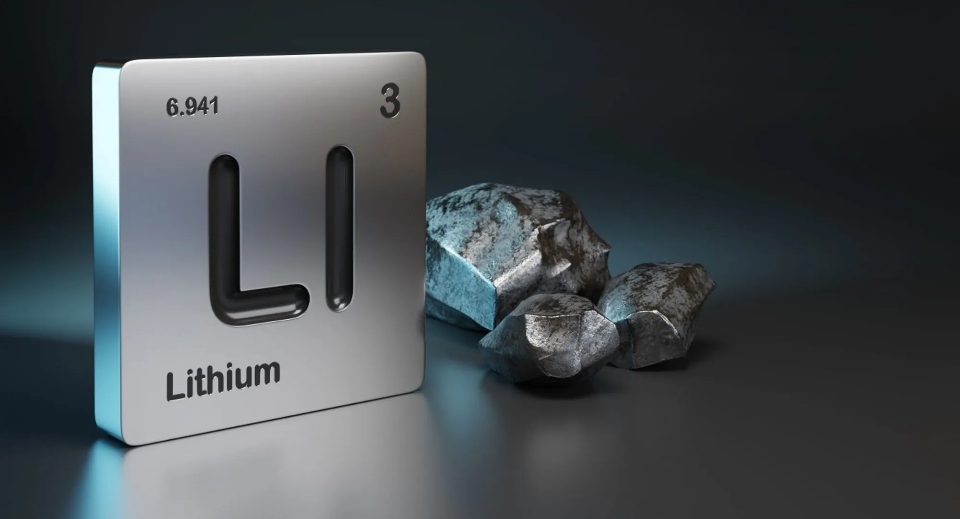
Leo Lithium has completed its $177.6 million exit from the Goulamina lithium project in Mali and is now on the hunt for new acquisitions.
The Perth-based miner offloaded its 40% stake to China’s Ganfeng Lithium Group, collecting $171.2 million in a final tranche and $6.4 million in interest.
A prior tranche of $161 million was received in late 2023, with $44.7 million shaved off for capital gains tax paid to Mali’s government.
The company walked away from the Mali project after talks with the transitional government went nowhere.
With lithium prices in the gutter and juniors gasping for cash, Leo Lithium sees now as the perfect time to scoop up distressed assets on the cheap.
Mergers and acquisitions are its top strategic priority, eclipsing any urge to reward shareholders just yet.
The miner says it may return capital in late 2025 if no deals materialize by the third quarter.
A few lithium hard rock targets are already in play, and at least one deal is expected to be sealed before this quarter ends.
Any major purchase using the Goulamina proceeds will still need a shareholder green light.
Japan, once blindsided by China’s 2010 rare earths embargo, has spent the last decade actually preparing for a repeat — unlike most of the West, which still seems surprised minerals don’t grow on trees.
Tokyo’s strategy included stockpiling materials, promoting recycling, investing in alternative technologies, and pouring money into non-Chinese projects like Australia’s Lynas.
These efforts slashed Japan’s dependence on Chinese rare earths from over 90% to under 60%, with plans to push it below 50% this year.
The country’s industrial policy pivot made it far more resilient to China’s recent export ban on critical minerals used in EVs, robotics, and defense.
Meanwhile, Western automakers are scrambling, with Suzuki halting production of its Swift model and Nissan now begging for flexibility in sourcing.
China currently controls 70% of rare earth mining and nearly 90% of global processing, making it the inescapable puppet master of the clean tech supply chain.
Despite Japan’s head start, it still struggles with sourcing heavy rare earths, which Lynas has only recently begun producing outside of China.
The export bans, conveniently rolled out during trade tensions with the U.S., exposed just how deep Western dependence goes — and how laughably unprepared much of the world remains.
Europe and the U.S. are now rushing to fund local projects and processing plants, but without serious subsidies, most non-Chinese ventures are unlikely to survive long enough to matter.
Japan’s strategy, forged in crisis, now serves as both a case study and a cautionary tale: diversify early or panic later.
In a revelation poised to reshape the trajectory of deep-sea mining investments, scientists have uncovered evidence suggesting polymetallic nodules—potato-sized metallic formations scattered across the ocean floor—could generate electrical currents, splitting seawater into hydrogen and oxygen through electrolysis.
This paradigm-challenging discovery, published in Nature Geoscience, questions long-held assumptions about life’s origins and introduces profound implications for resource extraction strategies.
For high-net-worth investors and global market leaders, the implications extend beyond academic debate. The Clarion-Clipperton Zone (CCZ)—a vast Pacific seabed region between Mexico and Hawaii—harbors these nodules, rich in manganese, nickel, and cobalt, essential materials for electric vehicle (EV) batteries, renewable energy storage, and next-generation technology supply chains.
With an estimated 21 billion metric tons of these high-demand metals, the CCZ represents a multi-trillion-dollar untapped resource.
Strategic Insights for Investors:
Resource Scarcity and Market Leverage: The global energy transition hinges on secure, long-term access to critical minerals. Disruptions in terrestrial mining regions, particularly in politically unstable areas, make seabed sourcing a strategic diversification play. Early investments in deep-sea extraction technology could establish dominant market positioning as supply bottlenecks tighten.
Hydrogen Economy Catalyst: If proven viable, the natural electrolysis phenomenon could redefine hydrogen production economics, slashing operational costs and accelerating the hydrogen economy’s viability. Investors and energy giants exploring green hydrogen infrastructure should closely monitor technological validation and IP developments in this emerging frontier.
Environmental, Social, and Governance (ESG) Risks: The discovery amplifies environmentalists’ concerns over deep-sea mining’s ecological impact, underscoring the need for due diligence on regulatory frameworks and public sentiment. Proactive ESG positioning, coupled with technological innovations minimizing seabed disruption, could differentiate forward-thinking firms from ESG-lagging competitors.
Controversy and Scientific Scrutiny:
The findings, led by marine ecologist Andrew Sweetman, have ignited fierce scientific and industry debate. The Metals Company, a Canadian deep-sea mining corporation partially funding the research, challenged the study’s methodology, branding it “scientifically flawed.”
Meanwhile, five counter-studies are under peer review, questioning the viability of sustained electrolysis in nodules that take millions of years to form.
Despite the dispute, the race for oceanic resource dominance remains unabated. Companies with early-mover advantage in exploration rights, extraction technologies, and ESG-aligned strategies are positioned to lead this high-stakes, high-reward market.
Key Takeaway for Decision-Makers:
For visionary leaders navigating the future of critical mineral supply chains, the evolving seabed mining landscape represents both unprecedented opportunity and regulatory uncertainty.
Staying ahead requires relentless market intelligence, strategic positioning, and agility in adapting to breakthrough scientific insights.
The question is no longer whether deep-sea mining will redefine global resource strategies—but who will control the depths when it does.
The deep-sea frontier is no longer a distant horizon—it’s today’s emerging battleground for resource supremacy. The smart money won’t wait on the sidelines.