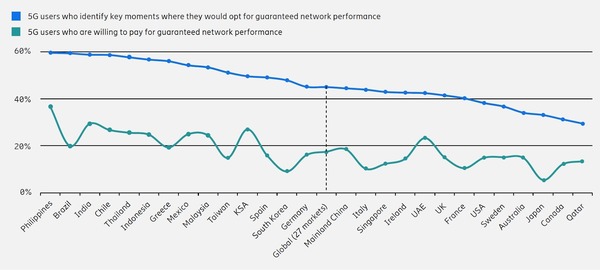
Filipino smartphone users lead the world in demanding guaranteed 5G performance, with 60% seeking guaranteed connectivity during critical moments compared to the 40% global average.
A new Ericsson ConsumerLab study reveals that this strong appetite for performance assurance presents a major revenue opportunity for local telecom operators as mobile artificial intelligence usage accelerates.
According to the report, Winning in the Market with Differentiated Connectivity Offerings, 36% of Filipino 5G consumers are willing to pay a premium for guaranteed Quality of Service (QoS). This willingness to pay for uninterrupted service could generate up to two months of additional average revenue per user (ARPU) for local communication service providers (CSPs).
The findings reflect a broader shift away from standard, “best-effort” mobile broadband toward performance-led connectivity models, driven largely by the rapid growth of mobile AI applications.
“Filipino consumers show a strong appetite for guaranteed 5G performance, with over a third ready to pay a premium for uninterrupted connectivity during critical moments. As on-the-go AI adoption and multimodal apps accelerate, expectations around responsiveness will only intensify. By introducing discoverable, performance-assured offerings, local service providers can address this growing demand, capture up to two months of additional ARPU, and build enduring subscriber loyalty,” said Daniel Ode, Head of Ericsson Singapore, Brunei and Philippines.
The Role of Mobile AI in Connectivity Demand
Artificial intelligence is rapidly altering consumer expectations for network speed and stability:
- Speed sensitivity: Among current smartphone AI users, response times carry twice the impact on overall network satisfaction compared to general 5G subscribers.
- On-the-go usage: Approximately 44% of mobile AI activity currently takes place on mobile networks outside the home.
- Visual AI shift: Video-based AI interactions are projected to more than double from 22% to 51%, as visual inputs begin to surpass standard text prompts.
- Surging engagement: Daily multimodal AI engagement is expected to double from 16% today to 32% by 2030.
Unlocking New Monetization Models
To capitalize on this demand, Philippine telecom operators must move beyond flat-rate pricing structures and offer targeted performance upgrades. Local consumers are open to acquiring guaranteed connectivity through multiple touchpoints:
- Direct provider purchases: 36% of Filipino 5G users prefer buying differentiated connectivity directly from their mobile operator.
- In-app integration: 25% are open to alternative models, such as boosted connectivity capabilities embedded directly within third-party mobile apps.
Delivering tailored performance relies on programmable network APIs, such as Quality on Demand (QoD). By giving application developers direct access to these network capabilities, local telcos can launch performance-backed apps, dynamic service tiers, and real-time add-ons that ensure high-traffic network hubs remain responsive.
Study Methodology
The Ericsson ConsumerLab global study surveyed 43,000 smartphone users across 27 markets between June and August 2025, including 34,000 active 5G users aged 15 to 69. In the Philippines, the findings represent 46 million smartphone users based on interviews with 1,500 local consumers, including 900 active 5G subscribers.



Leave a Reply