

Filipino educators are turning to plain-language coding tools to tackle heavy administrative workloads, build custom teaching applications, and navigate frequent curriculum updates without needing technical expertise.
By leveraging Canva Code—a tool that translates natural language prompts into functional software and interactive digital resources—teachers across the country are developing custom platforms to streamline lesson preparation and boost student participation.
Among them is Daniel Timbal, a veteran educator with nearly 15 years of classroom experience. Facing constant standard revisions, Timbal built GuroHub, a free AI-powered lesson planning platform designed specifically around the Philippine curriculum. The platform attracted over 2,000 users in its first month.
“I’ve been a teacher for almost 15 years. So I experienced firsthand how much time Filipino educators spend on paperwork, making lesson plans, and in several years, since 2015, our curriculum is constantly changing. So every year we have to learn, we have to acquire skills,” Timbal said.
The burden of administrative prep work is a widespread challenge across the local education sector. At Cristina Calnantoc Rosario National High School in Davao Occidental, teacher Richard Empimo developed the DepEd ILAW Lesson Planner Website to synchronize teaching materials with updated standards while saving crucial hours.
“We know that making lesson plans is very time consuming. There are times when I’d spend hours just to complete a lesson plan,” Empimo said.
For English and Media Arts teacher Reyna Orlanes, consolidating visual presentation tools, instructional content, and student exercises into a single platform eliminated the friction of managing multiple software subscriptions. She authored an interactive module titled Diction, Context & Connotation, enabling students to review lessons, complete exercises, and take quizzes within a unified space.
“This really makes the work of teachers very easy in the sense that we don’t need any additional subscriptions if we want to work on our lesson plans or if we want to prepare presentations,” Orlanes said.
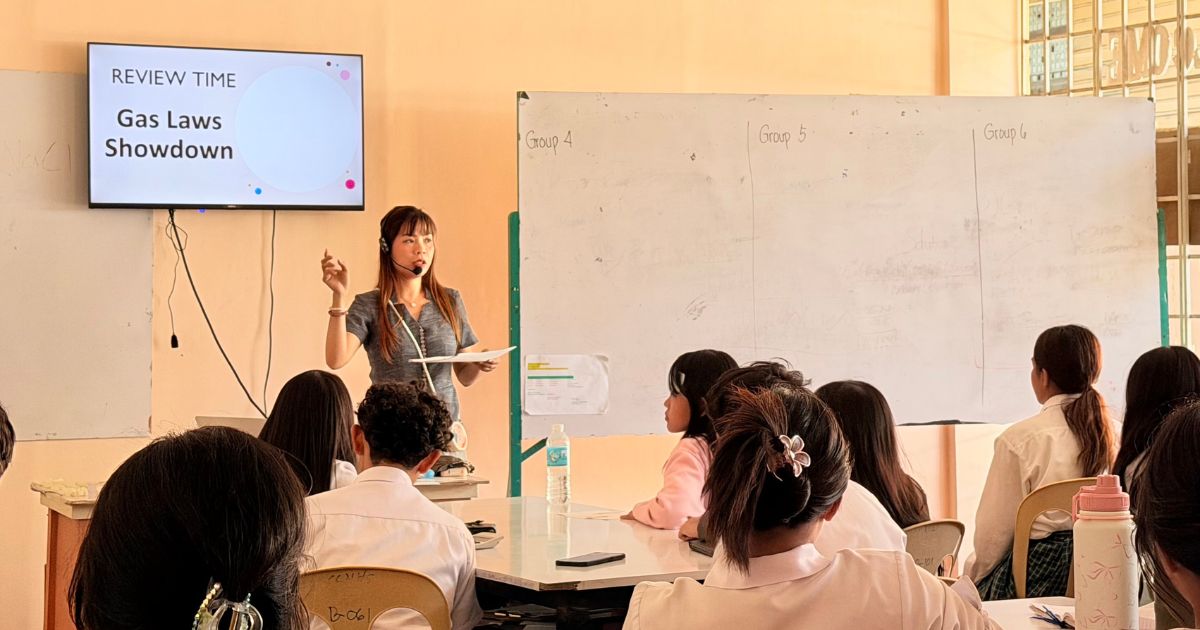
Beyond administrative efficiency, educators are using interactive app creation to adapt to evolving student attention spans. Science teacher Vanda Rema, who has taught for nearly eight years, built a web-based group learning activity on Collision Theory to gamify review sessions and clarify complex scientific principles.
“I incorporate technology into my lessons to enhance learning and encourage student participation,” Rema said. “AI has helped a lot because we treat it as a tool to improve teaching. It’s not there to replace teachers because human interaction is still needed,” she added.
Rema noted that active participation in gamified reviews translated directly into improved classroom engagement and stronger academic retention.
Key applications created by these educators include:
- GuroHub (by Daniel Timbal): An AI-driven website assisting teachers with Philippine curriculum-aligned lesson planning.
- DepEd ILAW Lesson Planner Website (by Richard Empimo): A web tool designed to streamline administrative workflows and lesson plan formatting.
- Diction, Context & Connotation (by Reyna Orlanes): An all-in-one interactive English and Media Arts module featuring instruction, practical activities, and quizzes.
- Collision Theory Group Activity (by Vanda Rema): A gamified science website engineered to make group assignments more engaging.
As educational requirements continue to evolve, the focus remains on supporting the educators behind the technology. Equipping teachers with accessible digital tools provides them with the time, flexibility, and interactive resources needed to prepare students for an increasingly digital world.



Leave a Reply