Tag: Appdome

  • Buzzword Breakdown: Appdome’s AI-Powered Mobile API Gateway Explained

    Buzzword Breakdown: Appdome’s AI-Powered Mobile API Gateway Explained

    The Appdome logo displayed on a torn paper background with 'TBC NEWS' in a repeated pattern.

    What happened?
    Appdome just announced at Black Hat 2025 the integration of its IDAnchor™ Customer Identity Protection suite into its MobileBOT™ Defense solution.

    Why it matters
    This unification gives mobile brands the ability to build their own AI-powered Mobile API Gateway that protects against bot attacks and unauthorized API access—without needing point products, SDKs, or complex external infrastructure.

    What is Appdome offering now?
    Appdome’s updated MobileBOT Defense with IDAnchor allows companies to identify and stop fake users, spoofed devices, and bot-driven threats directly within their mobile app architecture. It builds a chain of trust between the app, the install, and the device using cryptographic fingerprints.

    How does this work without cookies or tokens?
    Traditional systems use cookies or tokens that can be intercepted or reused by attackers. Appdome instead uses IDAnchor fingerprints, which are cryptographically bound to specific mobile devices, app installs, and users. These persist across re-installs, OS updates, and even factory resets.

    What’s included in the ‘chain of trust’?
    The security framework includes identifiers like WorkspaceID, ReleaseID, InstallID, and DeviceID. It also checks for OS-independent attributes, threat signals, and other indicators to validate every API request.

    What threats can it detect or block?
    Appdome claims the solution can stop fake devices, synthetic identity attacks, session hijacks, credential stuffing, bot farms, install fraud, and even KYC fraud. It can also flag weaponized or malware-controlled mobile apps.

    What makes this different?
    The system works without any external SDKs or point products. App makers can implement a virtual Mobile API Gateway that works across devices and platforms.

    Can this be customized per app or device?
    Yes. According to Gil Hartman, Appdome’s Field CTO, security enforcement can be customized “per App, per API, or per Device.”

    What are the implications for mobile developers?
    Developers can implement real-time mobile threat defense and risk scoring without having to rely on multiple vendors or integrating complex infrastructure. The platform also enables bot triangulation—if a bot is detected in App A, it can be blocked in App B.

    When and where can I see it?
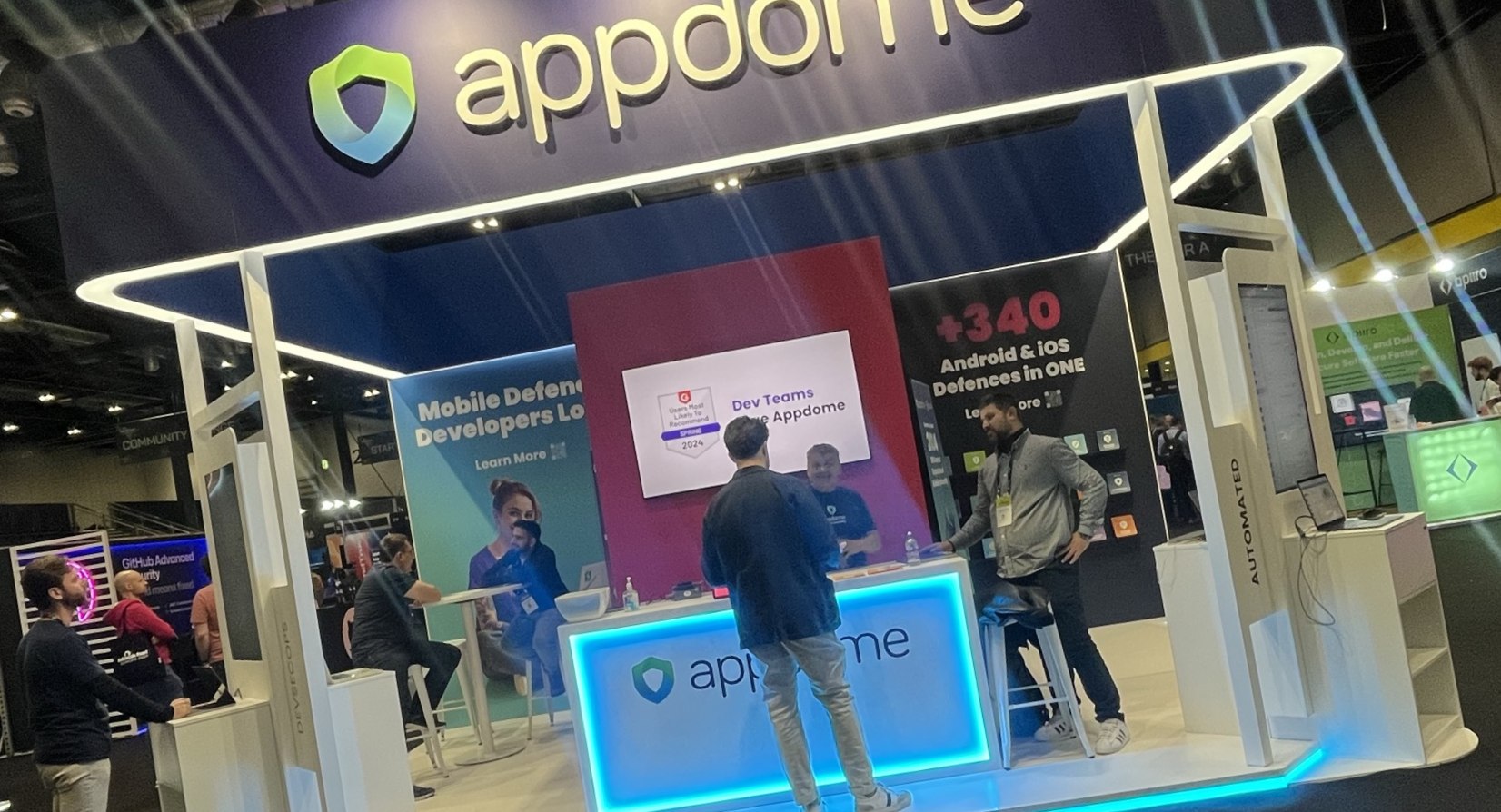
    Appdome is demoing this technology at Black Hat USA 2025 on August 6–7 at Booth #4746 in Las Vegas.

    Appdome is betting big on AI-driven security by fusing API and bot protection into one mobile-native solution. With MobileBOT Defense and IDAnchor, brands can reduce fraud, boost app integrity, and ditch outdated token-based models for good.
  • Appdome to Fraudsters: “Catch Us If You Can”; Mobile Security Leader Surges as AI Scams Skyrocket

    Appdome to Fraudsters: “Catch Us If You Can”; Mobile Security Leader Surges as AI Scams Skyrocket

    As cybercriminals turn to deepfakes, AI bots, and social engineering scams to loot mobile users, Appdome is having none of it.

    The mobile security firm has officially been named a Quadrant Leader in mobile fraud detection and prevention, according to customer-verified rankings, rising 16 spots in just 18 months.

    Appdome’s rapid ascent is not fueled by buzzwords or industry jargon but by the real-world success of its AI-native platform that shields Android and iOS apps from modern threats.

    In a time when mobile fraud has become as common as autocorrect fails, the company’s rise to the top reflects just how urgent the demand for serious mobile defense has become.

    According to a 2024 industry survey, 58% of consumers ranked mobile fraud as their top cybersecurity concern, with over 40% claiming firsthand or secondhand exposure to scams or malware.

    Appdome’s achievement also includes two new badges in the fraud prevention category, alongside prior recognition as a G2 Momentum Leader in Mobile Data Security, Runtime Application Self-Protection (RASP), and Application Shielding.

    The surge in fraud isn’t theoretical—account takeovers (ATOs) have jumped 24% year-over-year, and deepfake attack attempts have exploded by over 2,000% since 2021.

    “Digital trust and identity protection require a unified risk engine that ties together all the critical threat signals,” said Appdome CEO and Co-Creator Tom Tovar.

    For mobile-first businesses grappling with the digital equivalent of whack-a-mole, Appdome’s multi-layered approach is proving essential.

    Legacy tools—often siloed and static—are increasingly failing to keep up with attackers who are as agile as they are anonymous.

    Enter Appdome’s platform: 400+ anti-fraud defenses that require zero SDKs, zero server setup, and—miraculously—zero engineering effort.

    That’s right, developers don’t have to rip their apps apart just to stay protected.

    Instead, they can deploy countermeasures like behavior-based geo-fraud detection, deepfake identity stream monitoring, and advanced device integrity checks at will.

    The company’s no-nonsense, on-demand model has earned it G2’s honors for “Best Meets Requirements,” “Easiest to Use,” and “Easiest to Do Business With” for three consecutive years.

    “Fraud detection can’t live in a vacuum,” said Chris Roeckl, Chief Product Officer at Appdome.

    He added that bundling fraud prevention with telemetry, bot defense, and threat analysis isn’t a nice-to-have—it’s a survival tactic.

    Appdome’s efforts haven’t gone unnoticed by security industry heavyweights.

    The company picked up multiple Global InfoSec Awards at RSA Conference 2025 and was spotlighted by Intellyx and the InfoSec Innovator Awards in 2024.

    The real bragging rights, however, come from the app developers and mobile businesses who use Appdome every day.

    “Our customers can scale their defenses while others stall,” said Jamie Bertasi, Chief Customer Officer, noting that Appdome’s architecture enables constant evolution in fraud defense without integration chaos.

    That flexibility is especially critical as attacks grow in complexity and frequency, targeting everything from banking apps to e-commerce platforms.

    With AI-driven scams growing faster than your screen time, Appdome’s value proposition is clear: security without the slowdowns.

    And in today’s hyper-connected, breach-prone landscape, that might be the biggest flex of all.

  • AI Assistants or Spies? Appdome Declares War on Siri, ChatGPT, and the Rest of Your “Helpful” Pocket Snoops

    AI Assistants or Spies? Appdome Declares War on Siri, ChatGPT, and the Rest of Your “Helpful” Pocket Snoops

    Appdome has launched new plugins designed to detect and block Agentic AI Malware infiltrating Android and iOS apps, raising alarms about the growing abuse of AI assistants for mobile surveillance.

    The company’s latest defense tools aim to protect consumer and enterprise mobile apps from unauthorized AI behavior masquerading as helpful virtual assistants.

    With Siri, Gemini, ChatGPT, Copilot, and their shady clones now baked into everyday mobile life, Appdome warns that the same convenience features could be weaponized for spying, stealing credentials, and hijacking sessions.

    Appdome claims that these AI tools—legit or not—can exploit runtime access to screen data, UI overlays, and user activity, posing risks of mass data exfiltration in finance, healthcare, and enterprise services.

    Android devices, thanks to their infamously loose API policies, are especially vulnerable to these AI agents, while iOS is not far behind with threats like AirPlay-based data leaks.

    The new Detect Agentic AI Malware plugin reportedly uses behavioral biometrics to spot suspicious AI behaviors in real time, whether from official apps or sketchy third-party clones.

    Appdome’s solution gives mobile brands the power to approve trusted AI assistants while shutting out the copycats that silently siphon data under the guise of productivity.

    With enterprises facing potential breaches, compliance violations, and lateral attacks triggered by AI assistants acting as employees, Appdome insists real-time defense is non-negotiable.

    The plugin supports detection, monitoring, and mitigation strategies to prevent AI-driven exploitation before it spirals into a PR nightmare or regulatory disaster.

    Appdome warns that as the mobile ecosystem is flooded by both legitimate and rogue AI agents, the line between helpful and hostile continues to blur—and without safeguards, your app might just be working for the enemy.

  • Filipino Consumers Draw a Hard Line: Demand for Mobile App Security Hits Unprecedented Levels

    Filipino Consumers Draw a Hard Line: Demand for Mobile App Security Hits Unprecedented Levels

    Appdome has unveiled startling findings from its 4th Annual Philippines Consumer Survey at the Rootcon18 Conference.

    The survey reveals that a staggering 97.5% of Filipino consumers now demand total protection against security threats in mobile applications.

    This growing insistence on security reflects a profound distrust in mobile brands, with 76.3% of respondents willing to abandon those that fail to safeguard their data.

    In collaboration with OWASP, Appdome highlights a significant shift in consumer expectations, as users prioritize security over app features.

    Tom Tovar, CEO of Appdome, noted that Filipino consumers are increasingly aware of the risks posed by AI-driven attacks.

    Over 67% expressed concerns about hacking, while nearly half reported being victims of cyber-attacks.

    The survey indicates a critical opportunity for brands to distinguish themselves by enhancing mobile app security.

    As consumers become more vigilant, 91.6% insist that security is as important as functionality when choosing apps.

    With this data, the pressure mounts on mobile brands to act decisively or risk losing consumer loyalty and trust in an increasingly hostile digital landscape.

    Citations:
    [1] https://www.manilastandard.net/business/314502641/demand-for-mobile-app-security-rises.html
    [2] http://www.upgrademag.com/web/2024/09/26/ph-consumer-security-survey-reveals-highest-demand-for-mobile-app-security-in-4-years/
    [3] https://malaya.com.ph/pinoys-demand-protection-vs-security-fraud-in-mobile-apps/
    [4] https://www.appdome.com/press-release/appdome-survey-finds-filipino-consumers-have-higher-expectations-of-mobile-security-than-their-global-peers/
    [5] https://www.philstar.com/business/technology/2024/09/26/2388180/most-filipino-mobile-phone-users-demand-total-data-protection-survey
    [6] https://www.manilatimes.net/2024/09/22/business/sunday-business-it/ensuring-consumer-privacy-in-the-growing-e-commerce-market/1973190
    [7] https://www.appdome.com/press-releases/3/
    [8] https://www.appdome.com/mobile-consumer-cyber-security-survey-2024/

  • American software firm introduces a new approach to protect smartphones

    American software firm introduces a new approach to protect smartphones

    In a bid to combat the rising threat of social engineering attacks targeting mobile apps, Appdome, a leading player in mobile app defense, has unveiled its latest innovation – the Social Engineering Prevention service on the Appdome Platform.

    This cutting-edge service equips mobile brands with the capability to proactively detect, block, and intervene in real-time against social engineering attacks, thereby protecting billions of mobile users from potential fraud and abuse.

    The landscape of cybersecurity is constantly evolving, with social engineering attacks posing a significant risk to both users and brands. Katie Norton, Research Manager of DevSecOps at IDC, emphasized the critical need for solutions that can effectively detect and prevent social engineering attacks on mobile applications.

    The consequences of successful social engineering attacks can be severe, ranging from financial loss and identity theft to reputational damage and emotional distress for users and organizations alike.

    Traditionally, social engineering attacks were only identified after the damage had been done, leaving victims vulnerable to prolonged harm. With the introduction of Appdome’s Social Engineering Prevention service, mobile brands now have the power to disrupt these attacks in real-time, mitigating the impact and safeguarding their users’ security and trust.

    Tom Tovar, CEO of Appdome, highlighted the urgency for continuous protection against evolving AI-powered attacks, underscoring the importance of breaking the cycle of manipulation inherent in social engineering tactics.

    By leveraging real-time defenses against various social engineering methods such as voice phishing (vishing), remote desktop control, FaceID bypass, fake applications, SIM swapping, and more, mobile brands can fortify their defenses and uphold their commitment to user safety and brand integrity.

    The Social Engineering Prevention service empowers mobile brands to stay ahead of malicious actors by detecting and defending against the top tactics employed in social engineering attacks. From behavioral analysis to detect vishing fraud to identifying attempts to bypass biometric security measures, the service offers a comprehensive suite of defenses to thwart attacks and protect users from harm.

    Appdome’s approach to social engineering prevention is not only proactive but also versatile. The new features can be deployed as standalone defenses or integrated with Appdome’s extensive range of mobile app security solutions, providing a unified and robust defense mechanism against evolving threats.

    Chris Roeckl, Chief Product Officer at Appdome, emphasized the importance of breaking the cycle of social engineering attacks in real-time. By combining technical defenses with actionable intelligence and telemetry, Appdome’s Social Engineering Prevention service empowers mobile brands to intervene effectively and protect their users from harm.

    Appdome’s launch of the Social Engineering Prevention service marks a significant milestone in the realm of mobile app security. By offering real-time protection against social engineering attacks, Appdome is equipping mobile brands with the tools they need to safeguard their users, uphold their brand reputation, and combat the growing threat of fraud and abuse in the mobile ecosystem. For more information on Appdome’s Social Engineering Prevention service, visit their official website.

  • What Filipinos are careful of when it comes to apps

    What Filipinos are careful of when it comes to apps

    Mobile apps are extremely vulnerable as they maintain permanent internet connectivity to function, and the constant flow of data means that hackers can easily exploit vulnerabilities.

    This is why mobile app security is an essential aspect of mobile app development that protects mobile applications against cyberattacks and data theft.

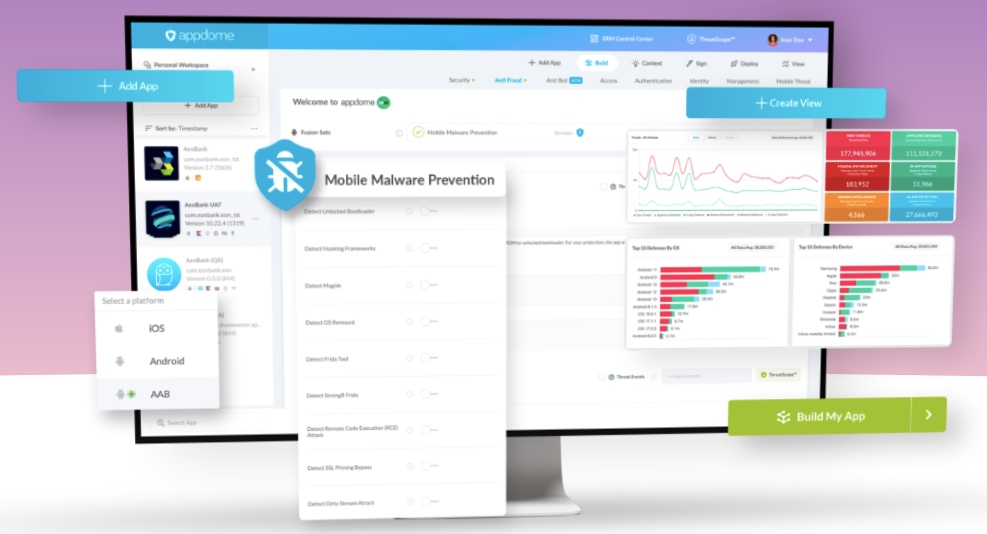
    The Appdome platform automates the mobile app integration process by enabling mobile developers and mobility professionals to build secure Android and iOS apps in seconds.

    Recently, the cyber defense automation platform announced the results of a new survey that showed Filipino consumers have significantly higher expectations than global peers when it concerns mobile device and app security, fraud prevention and malware protection.

    The survey also revealed that 68.1% of Filipinos believe that protecting consumers against security, fraud and malware is as important as new features in the app, eclipsing the global average of 62%.

    The Appdome platform is a no-code mobile security and development platform that allows developers and DevSecOps to build secure Android and iOS apps in seconds.

    The repository of knowledge accumulated by the Appdome platform continues to grow and build upon itself, and the platform implements new functionality adaptively and selectively, resulting in consistent implementations of the customer-selected services.

    This survey, the Appdome Philippines Consumer Expectations of Mobile App Security, is the first country-specific cyber survey conducted in the Philippines.

    The research is designed to inform Philippine-based mobile brands, cyber security professionals and mobile developers and help this audience create and prioritize their mobile security and anti-fraud strategies to meet consumer expectations in the mobile channel.

    The survey included respondents from across the demographic spectrum, including Android & iOS users, different generations, genders, countries, and economic backgrounds. For the full report, or country-specific or demographic-specific reports visit: https://www.appdome.com/filipino-consumer-expectation-of-mobile-app-security/