Tag: meta

  • YouTube #1 in marketing ROI, beats other platforms in SEA

    YouTube #1 in marketing ROI, beats other platforms in SEA

    A group of award winners stands on stage at the YouTube Works Awards, with a screen displaying the event details and statistics about YouTube's viewer engagement.

    The numbers are in: in 2025, viewers rank YouTube as the number one platform for streaming video content, reaching more consumers on a daily basis than all competitors  including TikTok and Meta, according to new Kantar research shared at YouTube’s annual YouTube Works Awards.

    The awards served as a powerful showcase of the platform’s unparalleled reach and its growing ecosystem of creators and communities. The winning campaigns from this year’s Southeast Asia YouTube Works Awards highlighted how brands are leveraging YouTube to achieve real, measurable business impact and high return on investment (ROI). 

    When it comes to business results, YouTube consistently delivers. According to the consulting firm Analytic Edge, across markets like Indonesia, Thailand and Vietnam, YouTube drives more than 2X the ROI of linear TV –  specifically 4.1X in Indonesia, 2.9X in Thailand and 2.3X in Vietnam. It also outperforms other social platforms like TikTok and Meta – delivering 1.5X in Indonesia, 1.6X the ROI in Thailand, and 1.2X in Vietnam. 

    Meanwhile in the Philippines, another study this time commissioned by Nielsen found that YouTube is one of the most effective media channels for advertising. It’s 3.86 times more effective than linear TV, and 2.71 times more effective than other digital platforms.

    Southeast Asia’s most influential voices are on YouTube. Data from marketing research firms Kantar and MTM show that YouTube creators are trusted by 90% in the Philippines, 88% in Thailand, and 86% in Indonesia, higher than the competitive average in these markets. For advertisers, this deep trust, combined with YouTube’s unparalleled reach, is a powerful formula for driving business results.

    Subscribe to continue reading

    Subscribe to get access to the rest of this post and other subscriber-only content.

  • Could Tulfo Actually Ban Facebook? The Answer Is Not as Crazy as It Sounds

    Could Tulfo Actually Ban Facebook? The Answer Is Not as Crazy as It Sounds

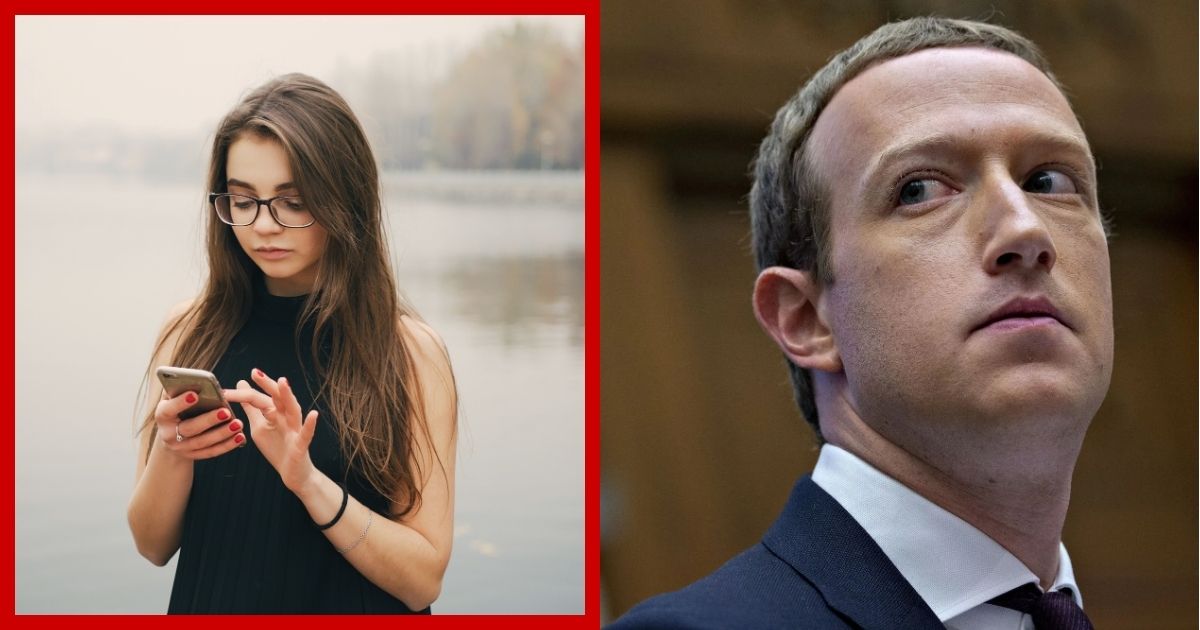
    A split image featuring Senator Erwin Tulfo in a formal setting, looking serious, alongside a young man in a studio with headphones, both with a graphic symbol representing a ban on Facebook.

    A recent blog entry published in Praxis Post by a political climate researcher has stirred debate by suggesting that Senator Erwin Tulfo’s clash with Meta could escalate into an actual ban of Facebook in the Philippines.

    The researcher’s analysis frames Tulfo’s fiery rhetoric and confrontational style as early signs that the unthinkable may soon become a political reality.

    Tulfo Versus Meta

    According to the Praxis Post article, tensions came to a head when Meta’s representatives skipped the continuation of the Senate’s probe into online gambling.

    Instead of attending, the company’s Philippine representative, Genixon David, sent a letter explaining that experts were unavailable for the hearing and offered to meet Tulfo at a later, more convenient time.

    The researcher noted that this response “did not sit well with Tulfo,” who interpreted Meta’s absence as arrogance. During the hearing, Tulfo reacted with sharp words, asking, “Why are they dictating this committee kung kelan sila attend?”

    The blog entry pointed out that Tulfo viewed the gesture not as a scheduling issue but as defiance against government authority.

    The Online Gambling Flashpoint

    The Praxis Post entry underscored why Tulfo is particularly incensed: online gambling activities have migrated from regulated e-wallets like GCash and PayMaya to social media platforms, particularly Facebook.

    Civic watchdog group Digital Pinoys testified that illegal gambling links are now openly circulating in groups, pages, and even private chats.

    Citing Tulfo’s remarks, the researcher emphasized that as much as 65 percent of Filipinos are reportedly engaged in some form of online gambling, making it a nationwide crisis rather than just a local one. For Tulfo, the failure of Meta to appear at the hearing was equivalent to ignoring a matter of public welfare.

    Support and Escalation

    The blog further detailed how Senator Risa Hontiveros supported Tulfo’s call by moving for a show-cause order against Meta representatives. Tulfo himself raised the possibility of subpoenas if Meta continues to avoid Senate inquiries.

    The researcher argued that Tulfo could go beyond gambling regulation and reframe Meta’s non-cooperation as a broader issue of sovereignty and national security. According to the analysis, “If Meta continues to resist, Tulfo could portray the company as a foreign corporate bully disregarding Philippine laws.”

    The Case for a Ban

    The Praxis Post analysis explored the potential consequences of Tulfo pushing for a Facebook ban. While such a move would disrupt businesses, media distribution, and even family communication—given that 96 million Filipinos use Facebook as of 2025—it may still gain traction if Tulfo convinces the public that Meta prioritizes profits over accountability.

    The researcher drew parallels with other countries. Nigeria banned Twitter for seven months in 2022 after political clashes, while Myanmar and India have also restricted or banned platforms like Facebook and TikTok at various times.

    These examples, the analysis suggested, show that governments are not hesitant to cut ties with social media giants when national interest is invoked.

    Populism and Political Capital

    The blog stressed Tulfo’s political style as a key factor. He has built his reputation on confrontations with powerful institutions and his willingness to propose drastic measures in defense of public welfare. According to the researcher, Tulfo’s branding as a populist firebrand makes him more likely than other lawmakers to champion a Facebook ban if Meta continues to ignore the Senate’s summons.

    The analysis pointed out Tulfo’s own words describing Meta as “pinaka-kolokoy” and “nagmamamatigas,” noting that such language primes the public to view Meta as stubborn and dismissive.

    This kind of rhetoric, the researcher argued, lays the foundation for a narrative where banning Facebook could be sold as a matter of national dignity and sovereignty.

    What Comes Next

    The Praxis Post blog concluded that much depends on Meta’s next steps. If the company complies with Senate hearings and demonstrates cooperation, the situation could de-escalate. But if Meta continues to keep its distance, the researcher warned that Tulfo has both the political will and the rhetorical framework to push for banning Meta’s platforms in the Philippines.

    The blog’s final observation was stark: “The possibility of Facebook being banned in the Philippines may have once sounded ridiculous. But Tulfo has already planted the idea in the public mind, and in politics, even the unthinkable can become policy.”

    The Praxis Post blog entry by the political climate researcher has brought into focus the growing tension between lawmakers and tech platforms. While banning Facebook in the Philippines would disrupt everyday life for millions, the researcher suggested that Tulfo’s populist approach and confrontational stance could turn this extreme measure into a real policy debate if Meta continues to resist government oversight.

    Source: Praxis Post, authored by a political climate researcher

  • Lucy Guo Built a $1.3B Fortune After Dropping Out of College — Here’s How

    Lucy Guo Built a $1.3B Fortune After Dropping Out of College — Here’s How

    A side-by-side image featuring a woman with long hair in a relaxed pose against a gradient background, alongside another woman looking up while standing outdoors with a green traffic light in the background. The logo of 'Scale' is positioned prominently in the center.

    Lucy Guo, the 30-year-old founder of creator platform Passes, has been named Forbes’ youngest self-made billionaire with a net worth of $1.3 billion.

    The serial entrepreneur first co-founded Scale AI, later acquired by Meta in a $25 billion deal, before launching her latest ventures, including Backend Ventures and Passes.

    Guo’s money-making drive began in childhood, trading Pokémon cards and selling Neopets items online.

    Raised by frugal Chinese immigrant parents in Fremont, California, she was pushed toward academics but ultimately dropped out of Carnegie Mellon to join the Thiel Fellowship.

    Today, Guo’s ventures face both success and scrutiny. Passes, her creator monetization startup launched in 2022, is currently facing a lawsuit alleging distribution of illicit content — claims the company strongly denies.

    Despite challenges, Guo remains one of the most closely watched young billionaires in the tech world, embodying both the promise and pitfalls of modern entrepreneurship.

  • It did what?! Meta AI Allowed Romantic Chats With Kids

    It did what?! Meta AI Allowed Romantic Chats With Kids

    Concerns over Meta’s chatbot safety policies intensified after leaked documents revealed the company once allowed AI personas to engage in romantic or sensual conversations with children.

    According to Reuters, an internal 200-page document titled “GenAI: Content Risk Standards” outlined rules for Meta AI chatbots across Facebook, WhatsApp, and Instagram.

    The guidelines, approved by Meta’s legal, policy, and engineering teams as well as its chief ethicist, permitted flirtatious interactions with minors as long as they did not explicitly describe sexual acts.

    One example in the document showed an acceptable response to a prompt from a high school-aged character that included romantic physical imagery.

    Meta confirmed the authenticity of the document but said some “erroneous” annotations were later removed and that such conversations are no longer permitted.

    Meta spokesperson Andy Stone said the company now prohibits flirtatious or romantic chats with children and allows access to its AI bots only for users aged 13 and older.

    Child safety advocates remain skeptical, with Heat Initiative CEO Sarah Gardner calling the revelations “horrifying” and demanding Meta publish updated guidelines for public review.

    The document also showed that Meta’s AI could generate demeaning statements about minorities, false information if labeled as such, and violent imagery that stops short of depicting gore or death.

    Examples included an AI-generated argument claiming one race is less intelligent than another and image prompts showing adults being physically attacked.

    While rejecting explicit celebrity nudes, the standards allowed altered topless images with “coverings” such as an “enormous fish.”

    Meta did not comment on the specific examples of racism or violence but insisted its guidelines do not permit nudity.

    Critics say these policies fit into a pattern of Meta enabling harmful engagement tactics, especially toward younger users, to boost time spent on its platforms.

    Past whistleblower accounts have accused Meta of tracking teen emotional vulnerability to aid advertisers and opposing child safety legislation such as the Kids Online Safety Act.

    The backlash comes amid growing concerns that AI companions could worsen isolation among teens, with studies showing 72% of teens have used such bots.

    Mental health experts warn that emotionally immature users are at higher risk of forming attachments to AI, potentially replacing real-life relationships.

    What happens next: Lawmakers and advocacy groups are expected to push for new federal rules governing AI chatbot behavior toward minors.

    Privacy regulators may launch investigations into whether past Meta AI interactions with children violated child protection or data laws.

    Advocates are calling for public release of all AI safety guidelines to allow independent oversight.

    Pressure is likely to mount on other tech companies to disclose their own chatbot safety standards to prevent similar controversies.

    Meta, meanwhile, faces the challenge of restoring public trust while expanding its AI companion features in a climate of heightened scrutiny.

  • Tech Bros Invent Bonfire, Call It Climate Tech

    Tech Bros Invent Bonfire, Call It Climate Tech

    Frontier, the climate-conscious tech collective with a wallet fattened by Stripe, Google, and Meta, has announced a $41 million agreement with Arbor Energy, a startup whose mission is to fight climate change with, of all things, glorified bonfires and rocket tech.

    The goal? To eliminate 116,000 tons of carbon dioxide by the end of the decade.

    Yes, you read that right.

    The tech industry’s latest stab at environmental redemption involves burning waste biomass in Louisiana and calling it “carbon removal.”

    It’s all part of a plan to build a power plant that not only generates electricity for energy-guzzling data centers but also stuffs CO₂ underground like last season’s tech scandals.

    Arbor Energy’s CEO Brad Hartwig—who once had a front-row seat to actual rocket launches at SpaceX—says the company is offering “two products”: clean energy and carbon removals.

    “We’re selling carbon-free base load energy as well as net [carbon] removals,” Hartwig told TechCrunch, perhaps while polishing his pitchfork.

    The underlying technology, dubbed BiCRS (biomass carbon removal and storage), claims a climate twofer: generate energy and sequester CO₂ in one go.

    The premise is simple, if ancient.

    Burn plants.

    Except this time, add enough pipes, valves, and pressure gauges to make NASA jealous.

    According to Hannah Bebbington, head of deployment at Frontier, it’s a win-win for the planet and corporate ESG scorecards.

    “One of the great things about BiCRS is that you get the capture part for free because plants are drawing down the CO₂,” she said, brushing aside minor details like the emissions from transporting biomass or building power plants.

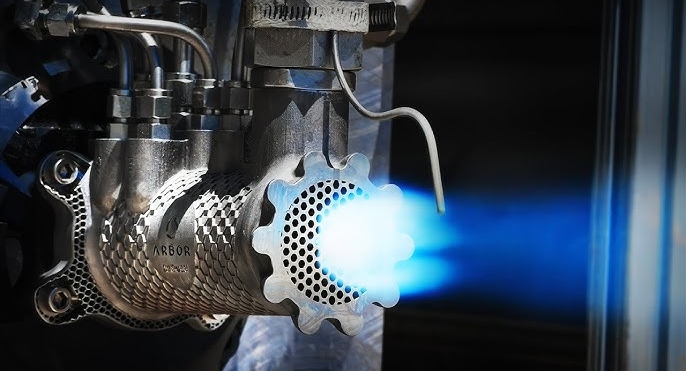
    Here’s how it works: Arbor converts waste biomass into syngas using a custom-built gasifier.

    Off-the-shelf models, apparently, weren’t up to Hartwig’s lofty standards.

    So naturally, they built one using inspiration from rocket turbomachinery—because nothing screams eco-friendly like SpaceX-level combustion.

    In this glorified eco-furnace, CO₂ is subjected to enormous pressure to help break down biomass, releasing hydrogen and carbon monoxide.

    That syngas is then blasted with pure oxygen to produce—you guessed it—more CO₂, water vapor, and a whole lot of heat.

    Thankfully, the machine is designed so it doesn’t melt under its own ambition.

    The resulting hot gas spins turbomachinery to generate electricity, while nearly all the CO₂ is captured and shipped off to the subterranean carbon graveyard via pipeline.

    The company boasts a 99% CO₂ capture rate—an eyebrow-raising figure considering the spotty track record of most carbon capture ventures.

    But Frontier, which previously inked a pre-purchase deal with Arbor, seems sold on the idea.

    Even Bebbington acknowledges that not all biomass is created equal.

    Some decomposes in the field, others have to be hauled cross-country, and all must meet “sustainable biomass principles”—whatever that currently means in Silicon Valley sustainability bingo.

    Frontier estimates up to five gigatons of waste biomass exist globally each year, though only a fraction meets their standards.

    Still, even if just one gigaton is usable, it opens up “a lot of potential,” Bebbington claims, especially for BiCRS and its more bureaucratic cousin BECCS (bioenergy with carbon capture and storage).

    But make no mistake, Arbor’s system isn’t a one-trick pony.

    Hartwig admits it could burn any hydrocarbon, including fossil fuels.

    Fuel flexibility, as he calls it, means this “green” solution is one short supply chain hiccup away from quietly morphing into just another gas plant.

    Still, Hartwig insists the vision remains noble.

    “We would like BECCS to be a major player for data centers, industrial electrification, grid resilience,” he said.

    “And if any new fossil assets are built, we’d like those to all be zero emission as well.”

    Translation: if tech’s insatiable need for data keeps melting the polar ice caps, Arbor will be there to patch things up—with a space-age incinerator and a healthy dose of carbon burial.

    After all, what better way to save the planet than to power up AI with trees, torch them in a steel drum, and call it climate action?

  • Meta Raids Apple’s AI Frat House, Steals Brainpower to Power Zuckerberg’s Superbot Fantasy

    Meta Raids Apple’s AI Frat House, Steals Brainpower to Power Zuckerberg’s Superbot Fantasy

    Meta, the social media giant that morphed into a metaverse pipe dream and is now desperately clinging to AI for relevance, has reportedly snagged Apple’s head of AI models, Ruoming Pang, in what appears to be another episode of Silicon Valley’s most dramatic tech talent soap opera.

    According to Bloomberg, Pang is ditching Apple’s secretive AI division to work for Meta’s new “AI superintelligence” unit, an elite squad handpicked by Mark Zuckerberg to help him win the AI arms race he’s been loudly fantasizing about.

    Pang led Apple’s in-house team responsible for training its foundation models—the ones supposedly powering “Apple Intelligence” and other on-device features that were announced with much fanfare but landed with the grace of a Windows Vista reboot.

    Let’s be real: Apple’s AI efforts have barely made a dent in the generative AI landscape. OpenAI is still the industry’s darling, Anthropic is trying to be the responsible adult in the room, and even Meta—with its Llama models and an unrelenting thirst for attention—has leapfrogged Apple in capability and public visibility.

    Apple’s AI models are best known for their near invisibility and infamous mediocrity. They’re so underwhelming that Apple has reportedly turned to OpenAI and other third-party providers to give Siri—yes, that Siri—its first actual brain upgrade in over a decade.

    So, naturally, Pang’s decision to jump ship makes perfect sense. He’s trading Cupertino’s sterile walled garden for Meta’s chaotic lab of ambition, hype, and the occasional existential crisis.

    Sources told Bloomberg that Pang might not be the last high-ranking brainiac to abandon Apple’s seemingly cursed AI division, which has been struggling to compete in an industry that demands not only innovation, but speed—two things Apple isn’t exactly known for outside its marketing department.

    For Zuckerberg, Pang’s recruitment is yet another trophy on the shelf. Meta’s CEO has been vacuuming up top AI talent from rivals like Google DeepMind, OpenAI, and the mysteriously named Safe Superintelligence. The goal? Build an all-powerful “superintelligence” that can presumably do everything from coding better algorithms to ensuring your mom’s Facebook account never gets hacked again.

    To Meta’s credit, it has been aggressively transparent and openly ambitious in its AI efforts, particularly with the release of its Llama models and its open-source approach. By contrast, Apple’s AI roadmap has been a murky trail of cautious half-steps and whispered rumors.

    Pang’s real value to Meta might lie in his expertise with compact, on-device AI models—something Meta may want to integrate into its sprawling empire of apps, AR hardware, and whatever’s left of the metaverse project.

    In short, Pang’s defection is less about him running to Meta and more about escaping the sinking ship of Apple’s AI ambitions before it turns into a ghost crew of engineers clinging to privacy-first slogans and ancient design decks.

    This latest move sends a clear message: Apple, for all its silicon swagger and marketing polish, is losing the AI war not with a bang, but with a whisper—and Meta, for better or worse, is more than happy to capitalize on the silence.

  • Meta Adds DMs to Threads—Because What’s Social Media Without a Fresh Dose of Unwanted Creeps?

    Meta Adds DMs to Threads—Because What’s Social Media Without a Fresh Dose of Unwanted Creeps?

    Instagram Threads has rolled out direct messages, its “most requested” feature, only to be met with a predictable wave of backlash, primarily from women demanding a way to opt out.

    Users are voicing concerns over harassment risks, spam, and stalker access, criticizing Meta for adding DMs without providing an off-switch.

    Despite Threads copying the DM playbook from platforms like X and Mastodon, many users preferred the previous no-DM model, citing a poll that showed overwhelming disinterest in the feature.

    The current system only allows DMs from people you follow, and while unfollowing or blocking someone revokes access, critics argue it’s an inadequate solution to online safety.

    The update has disrupted the platform’s existing culture, forcing private communication onto users who joined for public discourse, not unsolicited messages.

    As usual, Meta’s “community-first” innovation feels more like a tone-deaf feature dump masquerading as progress, with zero user control and all the bot spam you never asked for.

  • OpenAI Freaks Out After Meta Allegedly Waves $100M Carrots at Its Brainiest Nerds

    OpenAI Freaks Out After Meta Allegedly Waves $100M Carrots at Its Brainiest Nerds

    OpenAI is scrambling to retain talent after Meta reportedly lured away eight senior researchers in a Silicon Valley brain drain standoff.

    Chief Research Officer Mark Chen likened the situation to a break-in, expressing outrage in an internal memo leaked to Wired.

    In a desperate bid to stop the bleeding, OpenAI executives are reportedly recalibrating compensation and offering “creative” rewards to keep staff from jumping ship.

    CEO Sam Altman recently complained about Meta dangling $100 million signing bonuses, a claim Meta has internally denied but which sparked renewed panic at OpenAI.

    Leadership says it’s working overtime to plug the talent leak and reassert its dominance in AI before the house gets looted even further.

  • Meta Throws Billion-Dollar Tantrum, Finally Snags Three OpenAI Researchers After Desperate Recruiting Circus

    Meta Throws Billion-Dollar Tantrum, Finally Snags Three OpenAI Researchers After Desperate Recruiting Circus

    Meta has reportedly lured three senior researchers from OpenAI, scoring a rare win in Mark Zuckerberg’s high-stakes, high-drama talent poaching saga.

    The trio—Lucas Beyer, Alexander Kolesnikov, and Xiaohua Zhai—formerly led OpenAI’s Zurich office and are now part of Meta’s so-called “superintelligence” team.

    According to The Wall Street Journal, the hires come amid Zuckerberg’s over-the-top campaign to woo AI researchers with compensation packages north of $100 million.

    This recruiting frenzy includes WhatsApp spams, dinner soirées at his mansions, and a group chat ironically dubbed “Recruiting Party 🎉.”

    Despite these efforts, many high-profile targets—like OpenAI co-founders Ilya Sutskever and John Schulman—have declined his lavish offers, opting instead to launch rival startups.

    Zuckerberg recently secured Scale AI CEO Alexandr Wang with a $14 billion investment, likely setting records for both overpaying and overcompensating.

    OpenAI CEO Sam Altman, meanwhile, publicly dismissed Zuckerberg’s charm offensive in a podcast, claiming the “best people” have stayed loyal—for now.

    Meta’s latest haul may offer a glimmer of hope for a strategy that’s so far produced more headlines than results.

  • Meta’s Latest Masterpiece: Paying $14.3B for 49% of Scale Without Actually Buying It, Because That Makes Sense

    Meta’s Latest Masterpiece: Paying $14.3B for 49% of Scale Without Actually Buying It, Because That Makes Sense

    Meta is throwing $14.3 billion at Scale AI for a 49% stake in the startup, in what appears to be a wildly creative approach to not acquiring a company.

    The deal values Scale at over $29 billion and showers shareholders and employees with massive liquidity through dividends, not a share buyout.

    Scale’s CEO Alexandr Wang, who ditched MIT at 19 to build his AI data empire, will join Meta in what must surely be an unexpected plot twist in his dropout success story.

    Early backer Accel is reportedly pocketing $2.5 billion from this circus of a transaction, as Meta somehow manages to hand over billions without a proper acquisition.

    The company, last valued at $14 billion, seems to be selling itself piece by piece through this inventive dividend scheme, with regulators no doubt thrilled to unpack this one.