Tag: news

  • Who are the new Guardians of the Galaxy?

    Who are the new Guardians of the Galaxy?

    Guardians of the Galaxy Vol. 3 is an American superhero film based on the Marvel Comics superhero team Guardians of the Galaxy, produced by Marvel Studios, and distributed by Walt Disney Studios Motion Pictures.

    The film was directed by James Gunn and is intended to be the sequel to Guardians of the Galaxy Vol. 2. The film features an ensemble cast including Chris Pratt, Zoe Saldana, Dave Bautista, Vin Diesel, Bradley Cooper, Sean Gunn, Chukwudi Iwuji, Will Poulter, Elizabeth Debicki, Maria Bakalova, and Sylvester Stallone

    According to Marvel’s official synopsis, the Guardians embark on a mission to protect Rocket from the High Evolutionary – a fictional character appearing in American comic books published by Marvel Comics.

    In Guardians of the Galaxy Vol. 3, the High Evolutionary is portrayed by Chukwudi Iwuji in the Marvel Cinematic Universe. The High Evolutionary is a brilliant scientist with a penchant for genetic manipulation and a particular interest in elevating animals to intelligent self-awareness. He was born on Earth and directly interacted with everyone from the Avengers to the X-Men in the Marvel Universe.

    If you watched the movie, you’ll know that there are new members of the Guardians of the Galaxy. They include:

    Rocket Raccoon

    Rocket Raccoon is a fictional character appearing in American comic books published by Marvel Comics. He is a genetically modified creature who appeared as a prominent member in the 2008 relaunch of the superhero team Guardians of the Galaxy.

    He is a skilled marksman, weapons specialist, and master tactician. Rocket Raccoon made his Marvel Cinematic Universe debut in the 2014 film Guardians of the Galaxy, directed by James Gunn. He is voiced by Bradley Cooper in the films.

    Groot

    Groot is a character appearing in American comic books published by Marvel Comics. He is an extraterrestrial, sentient tree-like creature who first appeared in Tales to Astonish #13 in November 1960.

    Groot is a major character in the Marvel Cinematic Universe and is one of the main characters of Guardians of the Galaxy and Guardians of the Galaxy Vol. 2. He is voiced by Vin Diesel in the films. Groot is sweet and loyal, and while he’s not the most verbose hero, he still finds ways to express himself, giving flowers to little girls and going out of his way to protect his friends.

    Adam Warlock

    Adam Warlock is a fictional character appearing in American comic books published by Marvel Comics. He is a genetically-engineered being who possesses incredible physical powers, as well as the ability to manipulate energy and matter.

    In the Marvel Cinematic Universe, Adam Warlock is the ultimate weapon of the Sovereign, created by Ayesha and High Evolutionary to kill the Guardians of the Galaxy. Adam Warlock has appeared in various animated series and video games.

    In Guardians of the Galaxy Vol. 3, Adam Warlock is played by Will Poulter. The movie introduces Adam Warlock as young and hapless, mostly a comic-relief character.

    Kraglin

    Kraglin Obfonteri is a former Ravager who served as the first mate in the Yondu Ravager Clan in the Marvel Cinematic Universe. He remained loyal to Yondu Udonta during the hunt for Star-Lord.

    Kraglin grew to care for Peter Quill and enjoyed listening to stories about his home planet. He is officially a Guardian of the Galaxy and living on Knowhere.

    Cosmo

    Cosmo the Spacedog is a fictional character appearing in American comic books published by Marvel Comics. He is a telepathic dog who serves as the security chief on Knowhere, a floating city in space built from the decapitated head of a Celestial.

    Cosmo was mutated by cosmic radiation, gaining psychic powers and becoming Chief of Security. He has appeared in various Marvel comics and is a fan-favorite character. In the Marvel Cinematic Universe, Cosmo is depicted as a different gender from their counterpart in the comics.

    Phyla Vell

    Phyla-Vell is a fictional character appearing in American comic books published by Marvel Comics. She is the daughter of superhero Mar-Vell and the sister of Genis-Vell. Phyla-Vell has also been known as Quasar, Captain Marvel, and Martyr at different points in her history.

    She is a stalwart superhero who uses her cosmic abilities to protect the universe. Phyla-Vell was created by writer Peter David and artist Paul Azaceta in 2004’s Captain Marvel #16. She is a playable character in Marvel Avengers Alliance. In Guardians of the Galaxy Vol. 3, Phyla-Vell is played by Zawe Ashton.

  • Moms get an extra scoop of ice cream in Mang Inasal

    Moms get an extra scoop of ice cream in Mang Inasal

    Mang Inasal, the country’s Grill Expert, continues its year-long 20th-anniversary celebration by giving moms back-to-back treats this Mother’s Day.

    “We want to make all our mommy customers feel how much Mang Inasal values them and their support to us over the past two decades,” said Mang Inasal business unit head Mike V. Castro.

    “We will make them enjoy their Ihaw-Sarap favorites and Unli-Saya experience whether dine-in, takeout, or delivery.”

    From May 8 to 14, moms will get FREE extra scoop of Selecta Ube Ice Cream for every purchase of Extra Creamy Halo-Halo Regular via dine-in, takeout, and delivery.

    Making the season extra special is the launch of the Mang Inasal Palabok Fiesta Size, a big serving of the well-loved noodle dish perfect for a group of 10. The Palabok Fiesta will complete any Mother’s Day get-together especially when partnered with the now-popular bundled group meals, Mang Inasal Family Fiesta (good for 4 to 6 people) and Buddy Fiesta (good for 2 to 3 people), which are both bilaos of Ihaw-Sarap Chicken and Pork Inasal favorites with a platter of Java Rice.

    Also running for the whole month of May is the FREE DELIVERY promo for a minimum spend of ₱600 when customers order via Mang Inasal Delivery App or https://manginasaldelivery.com.ph.

  • Achieve your dream bod with Nutrilite’s BodyKey; just add water!

    Achieve your dream bod with Nutrilite’s BodyKey; just add water!

    Attaining and keeping a healthy weight plays a significant role in our health and wellbeing. The goal is to keep our body mass index (BMI), an indicator of body fat based on height and weight, within the normal range, so we can look and feel healthy, and even prevent and control diseases and conditions like high blood pressure, heart disease, stroke, diabetes, arthritis, some reproductive health issues, and even certain cancers.

    There are many things that affect our weight, from factors out of our hands like our genes and age to some environmental influences like our stress level, family habits, and culture. But there’s one essential element that we can always have control over, and that’s what fuel our body—our eating patterns. Despite our desire to eat healthy foods every meal every day, the demands of our modern lifestyles are keeping us from doing that.

    This is especially true if you’re a young working mom who’s struggling to prioritize your personal health because of all the responsibilities you have to handle at home and at work. On extra busy days and when you’re on the go, you probably find yourself having no time and energy to prepare a wholesome meal to power you through the day, relying on non-nutritious fast foods and all their added sugars, unhealthy fats, and preservatives to keep you going.

    With BodyKey by Nutrilite™, you’ll always have time to make a nutritious meal. Just add water for a delicious shake filled with everything you need to keep moving forward with your day, and your health goals. This meal replacement shake from entrepreneur-led health and wellness company Amway, is launching an improved version that’s scientifically formulated to provide the essential nutrients.

    It now has more protein from soy and chia seeds than its previous formulation with 17g plant protein to help satisfy hunger and reduce cravings. It also contains 5g fiber to support healthy digestion, 22 vitamins and minerals to provide the key nutrients of a healthy, balanced meal, and 200 calories to help maintain energy levels.

    One thing great about this meal replacement shake is that it’s backed by Nutrilite. It’s one of Amway’s flagship brands and the world’s number 1 selling vitamin and dietary supplement brand. With over 80 years of leadership in nutrition research and development, it’s the only global vitamin and mineral brand to grow, harvest, and process plants on its own certified organic farms. This also makes Nutrilite the only brand in the world that can truly claim traceability from seed to shake so you are ensured of products that are pure, safe, and effective.

    “As an entrepreneur-led health and wellness company, Amway is committed to supporting its customers in their journey to overall health and wellness by offering an arsenal of products that can help them improve their quality of life,” says Amway Philippines Country Manager Leni Olmedo. “We’re proud to showcase BodyKey by Nutrilite, an all-natural line of meal replacement shakes designed to meet all of one’s nutritional needs for a well-balanced diet that addresses the demands of modern life and supports your health goals.” 

    “Eating right for what our body specifically requires takes time and some trial and error. Based on my experience, the healthiest solutions are always a shift, not a shortcut. Success usually comes when the changes we made aren’t too drastic,” says Amway Global Senior Research Scientist and Research and Clinical Investigator Dr. Gigi Kwok-Hinsley, DrPH, MS, RD. “They should fit into our busy lives and align with our overall health goals. BodyKey by Nutrilite provides the nutrition you need with a high protein, nutrient-packed shake that doesn’t feel and taste like you’re missing out on a lot.”

    To ensure you’re taking in something that’s only good for your body, BodyKey by Nutrilite has taken the extra steps to ensure the shakes come with more safety and clean labels. They have no artificial flavors, colors, sweeteners, and preservatives, and they are made with non-GMO ingredients. They also contain zero trans fat and are vegetarian-friendly. For your pleasure, BodyKey by Nutrilite offers five flavors: chocolate, café latte, and berry.

    Fuel your day and your health goals with something that’s naturally and conveniently nutritious and filling. BodyKey by Nutrilite is your nutrient-packed meal in seconds that can help you work towards a better, healthier version of yourself.

  • 93% of APJ enterprises find SecOps challenging

    93% of APJ enterprises find SecOps challenging

    Sophos, a leading global cybersecurity service provider, has recently released a survey report titled “The State of Cybersecurity 2023: The Business Impact of Adversaries on Defenders.” The report reveals that 93% of organizations in Asia Pacific and Japan find some essential security operation tasks, such as threat hunting, challenging.

    Additionally, 76% of respondents have difficulty identifying the root cause of an incident, making proper remediation difficult. This leaves organizations vulnerable to repetitive and/or multiple attacks by the same or different adversaries, especially since 71% of those surveyed reported challenges with timely remediation.

    The report highlights the need for organizations to improve their cybersecurity posture and invest in advanced threat detection and response capabilities to stay ahead of the evolving threat landscape. In addition, 74% said they have challenges understanding which signals/alerts to investigate, and 71% reported challenges prioritizing investigations.

    “Only one fifth of respondents globally considered vulnerabilities and remote services a top cybersecurity risk for 2023, yet the ground truth is that these are routinely exploited by Active Adversaries. This cascade of operational issues means that these organizations aren’t seeing the full picture and are potentially acting on incorrect information. There’s nothing worse than being confidently wrong. Having external audits and monitoring helps eliminate blind spots. We can look at you the way an attacker does,” said John Shier, field CTO, commercial, Sophos.

    The report also says revealed that 50% of organizations surveyed said that cyberthreats are now too advanced for their organization to deal with on their own, 63% wish the IT team could spend more time on strategic issues and less time on firefighting, 55% said that the time spent on cyberthreats has impacted the IT team’s work on other projects, while 94% said they are working with external specialists to scale their operations, the majority still remain involved with managing threats rather than taking a fully outsourced approach.

    “Today’s threats require a timely and coordinated response. Unfortunately, too many organizations are stuck in reactive mode. Not only is this having an impact on core business priorities, but it also has a sizeable human toll, with over half of global respondents stating that cyberattacks are keeping them up at night. Eliminating the guesswork and applying defensive controls based on actionable intelligence will let IT teams focus on enabling the business instead of trying to douse the eternal flame of active attacks,” he added.

  • Zero trust seen as essential to securing critical infrastructure

    Zero trust seen as essential to securing critical infrastructure

    Climate change is no longer a looming threat but a stark reality affecting communities worldwide. The Philippine government has committed to reducing emissions by 75% by 2030, in line with the Paris Agreement on Climate Change.

    To achieve this goal, the country has introduced the National Renewable Energy Program (NREP) 2020-2040, which aims to increase the power generation share of renewable energy from 22.8% to 35% by 2030 and up to 50% by 2040. However, electric utilities need to step up to support the growing usage of renewable energy and help the country achieve its clean power targets.

    The utilities can do this by investing in advanced technologies, such as energy storage systems, to ensure a stable and reliable power supply from renewable sources. They can also collaborate with the government and other stakeholders to develop policies and regulations that promote the adoption of renewable energy.

    Advanced networking capabilities are vital to enable a modern power grid. Such networks are required to support an energy company’s IT and operational technology (OT) components to allow the grids to collect and transport electricity in real time from different energy sources, which include wind and solar farms, hydropower plants, and many more.

    Other than that, these networks are also critical to enable ongoing, two-way communication while supporting automated processes to track the use of electricity and the status of the systems at various physical locations.

    However, critical infrastructures, like energy utilities, are appealing targets for cybercriminals. Successful attacks on this sector can have a widespread impact and affect vital services, which can disrupt businesses, education, and healthcare, among others.

    Over the years, these attacks have been increasing. According to a 2022 study published by Microsoft, nation-state attacks alone on critical infrastructures grew from 20 percent to 40 percent during July 2020 to June 2021 to July 2021 to June 2022 timeframes, respectively.

    Using effective cybersecurity solutions is essential to secure critical infrastructures from cyberattacks. However, when OT networks are modernized, deploying security is a challenge. With the convergence of OT and IT networks, the air gap that OT systems depend on to keep strong security ceases to exist. This leaves this sector vulnerable to attacks.

    “To safeguard critical infrastructures, organizations can implement a zero-trust approach to cybersecurity. This strategic approach’s philosophy is to verify first every user’s identity and only provide access based on what is known about them. But companies must also consider how this approach will affect users to maintain seamless experience and productivity,” said Peerapong Jongvibool, Regional Director of Fortinet Southeast Asia and Hong Kong.

    Securing critical infrastructure is essential to maintain vital services every day and ensure it is protected from cyberattacks that can impede its operations.

  • Blackboard Learn continues to grow traction

    Blackboard Learn continues to grow traction

    Anthology, a leading provider of education solutions that support the entire learner lifecycle, has announced that its flagship learning management system (LMS) Blackboard Learn is increasingly becoming the preferred choice for institutions worldwide.

    The growth is attributed to significant investment in the product since it became part of Anthology’s portfolio in 2021. This investment has driven the availability of more than 200 new features since the merger, which has accelerated development.

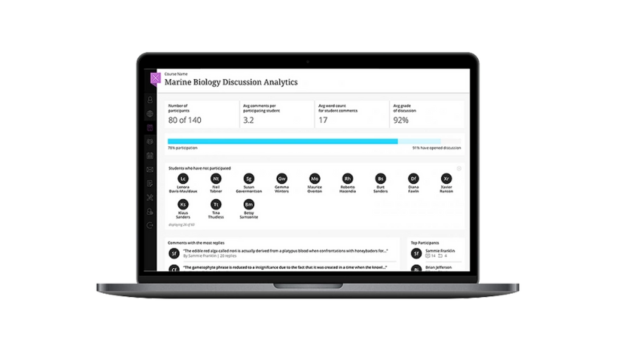
    The feature development is powered by an unprecedented level of client input. Recent competitive wins across the globe and a 55% increase year-over-year in the use of courses that unlock the benefits of Blackboard Learn Ultra further demonstrate growing global interest in the new Blackboard Learn. The LMS is designed to help students and educators achieve their goals through dynamic, data-informed learning experiences.

    “Institutions are seeking personalized, data-informed experiences for their students. As they evaluate whether they have the right tools in place, they are increasingly selecting the new Blackboard Learn to drive the future of learning on their campuses,” said Jim Milton, Chairman and CEO of Anthology.

    “With Blackboard Learn, we’re providing institutions with a market-leading LMS, where client and user feedback shapes future roadmap. We’re focused on delivering the best experience in the industry and these wins and the momentum they represent reflect that commitment.”

    In April, Anthology will have developed and deployed more than 200 significant features for Blackboard Learn including self-expression tools, an adaptable test-taking experience designed to reduce student anxiety, superior progress tracking tools, and embedded insights.

    Accelerated feature development is occurring hand-in-hand with an industry-leading level of client and user input. More than 60 focus groups are providing user and instructor-level feedback and 80 percent of the top client and user-identified features are in active development. That user guidance is directing feature development like deeper student progress tracking and a more holistic overview of each student.

    Enhancements enable instructors to monitor student progress, manage outreach to students who haven’t started an activity and provide a comprehensive view of where a student stands, including their overall grade, when they last accessed the course, accommodations, and feedback.

    Together, they’re empowering instructors to have more personalized interactions with their learners to help guide them on their unique journey. In addition to the investments in product features, Anthology has invested significantly in the tools and resources to help clients implement the solution and transition to Blackboard Learn Ultra courses.

    “We’ve redefined the Blackboard Learn Ultra adoption journey with free, easy-to-use resources and tools as well as a dedicated adoption team available to all clients that simplify the process,” said JD White, Chief Product Officer at Anthology.

    “The new Learn Ultra Adoption Toolkit is an end-to-end solution designed to guide campus administrators along every step of the journey to benefit from the powerful tools available in Learn Ultra as quickly and efficiently as possible.”

    Blackboard Learn continues to build momentum with recent wins across the globe. Anthology’s LMS is replacing Instructure Canvas at EC-Council University in New Mexico; the Culinary Institute Lenotre in Houston, Texas; and at the Amity Global Institute in Singapore. Waldorf University in Forest City, Iowa and Transnet in South Africa also recently selected Blackboard Learn following competitive reviews.

    The wins run the gamut, from long-time clients continuing their relationship, to current institutions deepening their relationship with additional Anthology solutions, to new clients selecting Blackboard Learn to replace their existing LMS. Colleges and universities are all gaining simpler, more-powerful teaching and learning experiences to support the needs of the modern classroom.

  • Mastercard to use recycled plastics for payment cards by 2028

    Mastercard to use recycled plastics for payment cards by 2028

    Mastercard has announced that it is accelerating efforts to remove first-use PVC plastics from payment cards on its network by 2028. This initiative reinforces the company’s sustainability commitments and scales the accessibility of more sustainable card offerings for consumers seeking a way to reduce the environmental impact of their wallet.

    From January 1, 2028, all newly produced Mastercard plastic payment cards will be made from more sustainable materials, including recycled or bio-sourced plastics such as rPVC, rPET, or PLA, and approved through a certification program.

    This is the first move for a payment network, and the company will support its global issuing partners through the transition away from virgin PVC. The initiative aims to reduce the environmental impact of payment cards and promote sustainable practices in the industry.

    “The world has a plastic problem. Solving it will be a whole-of-society task, yet efforts are often taken in isolation or without coordination,” said Sandeep Malhotra, Executive Vice President, Products & Innovation, Asia Pacific, Mastercard.

    With this “sustainable cards” effort, Mastercard is bringing its global network of banks, financial institutions and consumers – who collectively hold more than 3 billion Mastercard cards – together to build a greener payments sector through collaboration and partnership.”

    Mastercard launched its Sustainable Card Program in 2018. Since then, over 330 issuers across 80 countries have voluntarily signed up, including 90 issuers in 15 markets across the Asia Pacific region.

    Since then, Mastercard has been working in partnership with major card manufacturers to transition more than 168 million cards across its network, including 31 million in the Asia Pacific region, to recycled and bio-based materials. Today’s announcement accelerates these efforts, while complementing the company’s work to deliver digital-first card programs that fully eliminate the need for a physical card.

    The rule change will also see all newly made cards certified by Mastercard to assess their composition and sustainability claims; this certification will then be validated by an independent third-party auditor. Once a card has been validated it can be imprinted with a Card Eco Certification mark.

    “Here in the Asia Pacific region, Mastercard’s issuer partners have been very receptive to this initiative, with 90 customers already opting into the sustainable cards program across Japan, Australia, Taiwan, Singapore, Malaysia and many other markets. This means their cardholders can proudly carry their card with the knowledge that it is made from sustainable forms of plastic. This holistic network connectivity is what makes this effort different and more effective,” added Malhotra.

    In 2018, through Mastercard’s Digital Security Lab, the company launched the Greener Payments Partnership with card manufacturers Gemalto, Giesecke+Devrient and IDEMIA to reduce the use of first-use PVC plastic in card manufacturing. It launched the Mastercard Card Eco-Certification (“CEC”) scheme in 2021. 

    “Mastercard is committed to advancing climate action and reducing waste by driving our business toward net zero emissions and leveraging our network and scale to accelerate the transition to a low-carbon, regenerative economy,” said Ellen Jackowski, Chief Sustainability Officer for Mastercard. 

    Mastercard established its sustainability efforts more than a decade ago with a focus on financial inclusion, data responsibility and the environment. Through its network, it collaborates with partners to bring new environmental innovations and initiatives like the sustainable cards to market.

    In addition, Mastercard’s Priceless Planet Coalition is working towards restoring 100 million trees globally by 2025. Here in the Asia Pacific region, more than 20 partners in Australia, Korea, the Chinese Mainland, Hong Kong SAR, Taiwan, the Philippines and Cambodia have joined the Coalition which is currently running 18 reforestation projects worldwide.

    Mastercard also works with Swedish fintech Doconomy to develop the Mastercard Carbon Calculator. Available to all issuers globally for any Mastercard card, the easily integrated API helps consumers to understand the estimated carbon footprint of their purchases via their banking app. This pioneering ESG fintech solution was named the first place winner of the Singapore Fintech Festival Global FinTech Award 2022, presented by the Monetary Authority of Singapore (MAS) in November last year.

  • Xiaomi announces renewed climate strategy

    Xiaomi announces renewed climate strategy

    Xiaomi Corporation, a consumer electronics and smart manufacturing company, has announced a plan to substantially curb its Greenhouse Gas (GHG) emissions called the Zero-carbon Philosophy.

    The company aims to achieve lower carbon emissions by researching and developing clean technologies, expanding electronic-waste management techniques, and implementing green operations and logistics.

    Xiaomi’s mission is to let everyone in the world enjoy a better life through innovative technology, and it believes it has the responsibility to help avert climate change through technological innovations and operational efficiencies.

    The company is determined to do its part to accelerate the global transition to a net-zero emission economy by infusing climate-conscious elements into the design-to-delivery process of its products. Xiaomi is committed to promoting sustainable practices in the industry and reducing the environmental impact of its operations.

    The goal of Xiaomi’s Zero-carbon Philosophy is to enhance its product efficacy and affordability while reducing the carbon footprint of its products and services. Xiaomi will continue to grow the use of low-carbon technologies to create positive climate impacts and foster greener lifestyles and a low-carbon society.

    Xiaomi set its first-ever GHG emission reduction target in 2021, which aimed to reduce per capita GHG emissions from its self-operated campus by 4.5% by 2026 compared to the 2020 baseline. As of December 31, 2022, the company achieved a 21.12% reduction in per capita GHG emissions against its baseline year.                                                       

    In 2022, Xiaomi invested more than 50% of its total R&D expenses in clean technology R&D. That same year, application of clean technology-related patents and products produced  59.7% of its revenue. The company made notable progress in this area and here are a few examples:

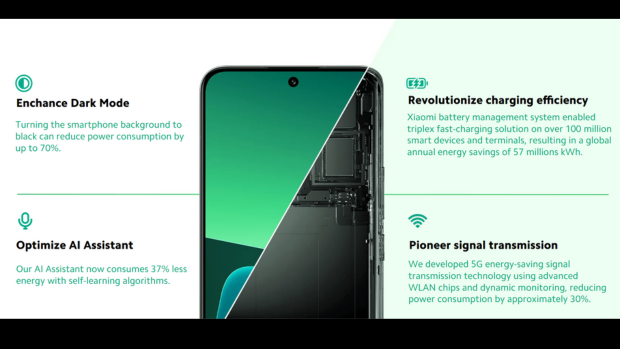
    5G & Energy-saving Signal Transmission Technology: Through 5G energy-saving technologies such as self-adaptive broadband and energy optimization technology, Xiaomi increased the power-saving efficiency of its smartphones.

    Advanced WLAN chips, in combination with the WLAN power monitoring and dynamic transmission technology, reduced power consumption of its smartphones by approximately 30% compared to the previous generation.

    Energy-efficient Display Technology: By switching to Dark Mode, which turns the smartphones’ background into black, the energy consumption of the display can be reduced by as much as 70% when using specific applications.

    Charging Technology: In 2022, more than 100 million smart devices and terminals used Xiaomi’s fast-charging technologies, which saved nearly 57 million kWh of energy consumption and 24,852 tons of CO2e emissions compared to conventional fast-charging technology.        

    Eco-friendly Packaging: Xiaomi changed its packaging for its ecosystem products from buckling boxes to flattened carton boxes and removed plastic handles. Through this upgrade, the company reduced the use of paper packaging by an average of 0.3m² and removed about 80g of plastic per product.

    Recycling and Disposal: In 2022, Xiaomi recycled approximately 4,500 tons of electronic waste, including smartphones. From 2022 to 2026, the company is committed to recycling 38,000 tons of e-waste and using 5,000 tons of recycled material in its products.

    Xiaomi continues to expand its Trade-In program by increasing the types of recyclable products and its coverage of recycling services. It collects items in-store, by mail, and at the consumer’s door to encourage users to recycle their products.

    Last year, the company launched the Trade-In program on its official website in some European markets. It also works with qualified third parties to dispose of waste generated during the repair process of electronic products and components.

    Refurbishment and Reuse: The company is committed to promoting the development of a circular economy by refurbishing used products. In 2022, its renovation factory refurbished approximately 94,000 smartphones, 5,600 electric scooters, and 6,200 smart televisions, all of which were sold as certified refurbished products.

    Enhancing Durability: Xiaomi considers material durability when selecting materials for its products. It has developed wear-resistant ceramic materials and synthetic silicone leather materials used in many of its smartphones. It has established testing standards for dustproofing, waterproofing, and drop resistance that exceed international standards. In 2022, Xiaomi released a long-lasting battery with full charging and discharging capabilities that has a 25% longer lifespan than previous versions.

  • Remittance spike largely driven by OFWs still – Pera Hub

    Remittance spike largely driven by OFWs still – Pera Hub

    The Bangko Sentral ng Pilipinas (BSP) has reported a 3.0% increase in personal remittances from Filipinos abroad, reaching $5.93 billion in February 2023 compared to $5.76 billion in the same month last year.

    This follows the new record high of $3.49 billion in December 2022, an increase of 5.7% from $3.3 billion in the same month in 2021. This continued growth in remittances is a testament to the invaluable contribution that Overseas Filipino Workers (OFWs) have on the Philippine economy.

    Personal remittances account for 9.3% of the country’s gross domestic product or GDP, according to 2021 data from the World Bank. The increase in remittances is a positive sign for the Philippine economy, as it helps boost consumer spending and supports the country’s balance of payments.

    “The shift in digital plays a big part in our decision to provide OFWs with more options to remit safely and efficiently,” said Ian Ocampo, President and CEO of PERA HUB, the retail brand of PETNET.

    “This thrust has also allowed us to prioritize financial inclusion that accommodates the growth in remittances, as well as strengthen our digital network and continue to provide not only remittance but also other relevant financial services in our counters and channels.”

    With 25 years of experience serving Filipinos, PERA HUB has established itself as one of the leaders in the brick and mortar setup with over 180 company-owned branches and more than 3,000 sub-agent locations across  the Philippines—each one functioning as a one-stop location for every transaction needs, including  remittances.

    The next logical step according to PERA HUB, is to provide its services digitally. Through the Digital  Remittance Platform (DRP), its award-winning innovation, PERA HUB is granting businesses and digital  communities access to its global remittance network, retail and over-the-counter partners, major Philippine  banks, wallets, and fintech partners. This will empower more financial service providers to extend the  secure, efficient and quality services of PERA HUB to more OFWs.

    To date, PERA HUB has partnered with UnionBank and RCBC and has integrated their remittance API in the UnionBank and Diskartech mobile apps, allowing their customers to receive their remittances in-app. Among its partner remittance service providers are Western Union, Remitly, Instant Cash,  Intel Express, Japan Remit, and Sendah Remit—with more on the way.

    “We want to provide financial services to the Filipino, and we’ve been doing that for 25 years through our counters and network. This time we want to evolve and expand beyond that community that we have today and go to the digital space and enable it for them,” said Bryan Makasiar, Senior Assistant Vice President for digital business at PERA HUB.

  • UnionDigital Bank app now in AppGallery

    UnionDigital Bank app now in AppGallery

    UnionDigital Bank, the digital bank subsidiary of UnionBank, has partnered with HUAWEI, a global technology leader, to bring innovative financial services to more people in the Philippines.

    The partnership aims to tap into HUAWEI’s ecosystem of services and 7 million customer base to offer easy access to UnionDigital Bank’s financial services and products. The UnionDigital Bank app is now available on the HUAWEI AppGallery, allowing users to access the digital bank’s financial services and products easily.

    As the number one digital lender in the country, UnionDigital Bank will offer loan products to mobile users through Petal Ads, the mobile marketing platform tailored for HUAWEI devices. The partnership reinforces UnionBank’s commitment to embracing the future of banking and empowering Filipinos in the new digital normal.

    “Our partnership with HUAWEI reflects our shared belief in harnessing the power of technology to enhance financial inclusion and provide convenient banking solutions to all,” said Henry Aguda, President and CEO of UnionDigital Bank.

    “Together, we are committed to shaping a better future by leveraging our combined expertise and resources to create innovative and accessible banking services.”

    The tie-up between UnionDigital Bank and HUAWEI marks an important step towards promoting financial inclusion and leveraging technology to make innovative banking solutions closer to a greater number of Filipinos, regardless of their location or economic status.

    “We are proud to work with a tech-first and tech-forward company like UnionDigital Bank, who shares our vision for leveraging technology to create positive change and make a difference in people’s lives,” said Ken Liang, Director of Mobile Ecosystem Business Growth, HUAWEI Technologies Philippines.

    “Our alliance reflects our commitment to driving innovation and using it for the greater good. We are excited to collaborate with UnionBank’s digital bank subsidiary to contribute and help in making their commitment a reality, starting with our users.”

    Together, they aim to empower more people to access essential financial services designed to contribute to supporting the country’s growing digital economy.