Tag: news

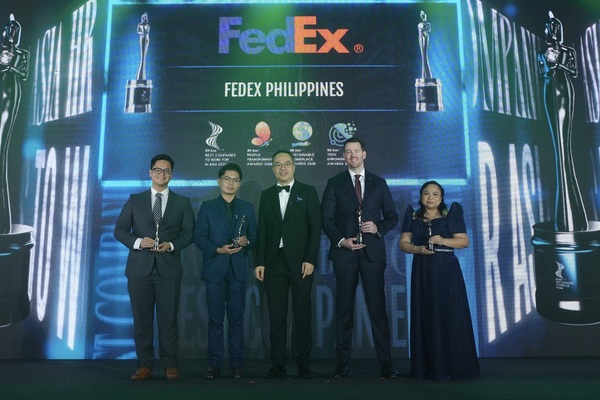
  • How six Filipino students won spots at the 2026 FedEx / JA ITC regional finals in Singapore

    How six Filipino students won spots at the 2026 FedEx / JA ITC regional finals in Singapore

    Six student entrepreneurs from the Philippines have advanced to the 2026 Asia Pacific regional finals of the FedEx / Junior Achievement International Trade Challenge (FedEx / JA ITC) after developing artificial intelligence (AI)-powered warehouse drone strategies for Vietnam’s e-commerce logistics sector.

    The winning delegation, comprising three two-student teams, will represent the country in Singapore this August against student teams from across eight other Asia Pacific markets.

    Delivered in partnership with JA Philippines, the 17th annual national competition tasked secondary school participants with formulating a Market Entry Strategy Plan (MESP) for AI autonomous drones aimed at raising inventory accuracy and accelerating order fulfillment in Vietnam’s rapidly expanding logistics industry.

    Winning Philippine Teams and Business Concepts

    The three national finalist teams presented target market analyses, operational frameworks, and financial projections tailored to Vietnam’s mid-sized warehouses and cold-chain facilities:

    • Team ArkSight (Mandaue City Comprehensive National High School): Matthew John A. Hife and Lorente Jr. Berden developed ArkSight, an autonomous inventory drone combining computer vision, UHF RFID, autonomous navigation, and cloud analytics. Utilizing a Drone-as-a-Service (DaaS) model tailored for small-to-medium enterprises and third-party logistics (3PL) providers, the strategy projects Year 1 revenue of approximately US$244,000 and operating break-even by Month 8.

    • Team The Visionary (University of San Jose-Recoletos): Minette H. Cabaluna and Jim Niño C. Gonzales designed Chuôn Chuôn, a DaaS inventory management system featuring autonomous drones, wireless charging docks, real-time monitoring, and Chuôn2Bot, a native Vietnamese-language conversational AI assistant. Their strategy targets 10 enterprise clients in Year 1, with forecasted first-year revenue of $81,075 (approximately VND 2.1 billion).

    • Team TeamMate (Everest International Academy): Mico Alfonso Aviñante Nolledo and Nathan Trono Dy Pico created Altius AI, an autonomous drone system engineered specifically for cold-chain facilities in Ho Chi Minh City. The multi-functional solution integrates inventory scanning, environmental tracking, LiDAR mapping, Warehouse Management System (WMS) integration, and AI-driven irregularity detection to address worker safety hazards, high lighting costs, and temperature fluctuations in sub-zero environments.

    “The future of innovation depends on giving young people the opportunity to learn, collaborate, and think big,” said Maribeth Espinosa, managing director, FedEx Philippines. “Bringing back the in-person workshop while continuing to welcome students virtually allowed us to reach even more aspiring entrepreneurs across the country. Through the FedEx / JA International Trade Challenge, we hope to equip Filipino youth with the confidence, global perspective, and problem-solving skills they need to turn bold ideas into meaningful business solutions.”

    Regional Competition and Program Legacy

    At the August regional finals in Singapore, the Philippine representatives will compete and collaborate with student delegations from Hong Kong, Indonesia, Japan, Korea, Malaysia, Singapore, Thailand, and Vietnam. Beyond presenting their business plans, participants will engage with industry practitioners and corporate leaders from FedEx to gain firsthand insight into global trade networks.

    Since launching in the Philippines in 2009, the FedEx / JA ITC initiative has engaged more than 12,000 students nationwide. Philippine representatives have recorded strong performances at past regional finals, taking first place in 2020 and 2021, and earning second-place finishes in 2021, 2024, and 2025.

  • What makes NTC Homeschool SmartClass a lifestyle-adaptive alternative to traditional schooling

    What makes NTC Homeschool SmartClass a lifestyle-adaptive alternative to traditional schooling

    The National Teachers’ College (NTC), in partnership with APEC Schools, has launched NTC Homeschool SmartClass, a Department of Education (DepEd)-recognized online program designed to provide Filipino families with a flexible, structured, and credible alternative to traditional schooling.

    Combining NTC’s century of academic expertise with APEC Schools’ digital infrastructure, the program addresses long-standing challenges in non-traditional education, including credential recognition, educational continuity, and future academic pathways for learners from Kindergarten to Grade 10.

    The initiative comes as homeschooling continues to expand across the Philippines, spurred by post-pandemic learning shifts, growing demand for online options, and increasing dissatisfaction with conventional classroom setups.

    A Learner-Centered Approach to Education

    Unlike informal homeschooling setups, NTC Homeschool SmartClass operates under an official DepEd license, ensuring its curriculum satisfies national basic education standards.

    Built around a learn-by-doing philosophy, the program moves away from rote memorization in favor of critical thinking, real-world application, cross-subject integration, and content mastery.

    “When I saw how supportive, organized and flexible the program was, that was the moment when I knew that NTC Homeschool was a good fit for her,” said Nancy Marcariña, mother of an NTC Grade 10 learner.

    Key Features of the Framework

    Designed specifically for the needs of Gen Z and Gen Alpha students, the program incorporates several core pillars:

    • Triangle of Support: A collaborative environment connecting parents, Subject Matter Experts (SMEs), and Academic Coordinators to guide each student’s development across various academic and creative disciplines.

    • 24/7 Access and Flexibility: Learners can access on-demand recorded sessions and educational materials at any time, allowing families to build schedules around their specific lifestyles without falling behind. Scheduled one-on-one consultations with SMEs provide live support when needed.

    • Alternative Assessment: The program replaces traditional exams with the Quarterly Learning Narrative Presentation (QLNP). Learners curate and present their academic progress, personal growth, and challenges directly to their parents.

    • Holistic Socialization: To keep students connected, the program integrates optional meetups, field trips, and shared community events, giving learners room to pursue sports, arts, and extracurricular interests.

    “Before, my son was worried about making mistakes and saying out loud what he was thinking, but now, he is very confident in telling me what he wants and what’s on his mind. He is more responsible now, not only with things concerning his studies, but with everything, especially inside our home,” said Weng Perez, mother of an NTC Homeschool Grade 10 learner.

    By offering personalized pacing, digital autonomy, and official accreditation, NTC Homeschool SmartClass aims to equip young learners with the core competencies required for higher education and future workforce integration.

  • What to expect at Cyan Modern Kitchen’s new weekend dining series

    What to expect at Cyan Modern Kitchen’s new weekend dining series

    Lanson Place Mall of Asia in Pasay City launched a new series of themed weekend dining experiences at Cyan Modern Kitchen featuring premium meats, seafood feasts, and family-style meals overlooking Manila Bay.

    The Weekend Buffet Collection will run on alternating weekends from July 24 through Dec. 13, 2026, offering distinct Friday, Saturday, and Sunday menus priced at 3,300 Philippine pesos net per person.

    According to executive chef Kristine Oro, the initiative aims to meet growing diner demand for immersive, shared culinary experiences beyond standard buffet offerings.

    Friday evening dinners focus on premium roasts and carving stations, featuring slow-cooked pepper beef sirloin, smoked beef short plate, pork rack, marinated lamb, and traditional grilled items.

    Saturday lunch and dinner sessions showcase the hotel’s largest spread, highlighting live cooking stations alongside fresh lobster, crab, shellfish, grilled seafood, international dishes, and local specialties.

    Sunday lunches emphasize family sharing with generous platters of comforting classic dishes and an extensive dessert selection.

    The property, situated at Block 12 on Palm Coast Avenue corner Seaside Boulevard within the Mall of Asia Complex, is accepting reservations by phone at +63 2 7777 0000 or through the Lanson Place website.

  • How European authorities plan to strengthen coordination between OLAF and the EPPO

    How European authorities plan to strengthen coordination between OLAF and the EPPO

    The European Commission published its 2025 Annual Report on the Protection of the European Union’s Financial Interests (PIF Report), introducing a full-cycle evaluation of the EU’s anti-fraud system that spans prevention, early detection, investigation, prosecution, recovery, and reporting. Marking its 37th edition, the report compiles data from the European Commission, EU Member States, the European Anti-Fraud Office (OLAF), and the European Public Prosecutor’s Office (EPPO) to assess how public funds are safeguarded.

    Beyond reporting past performance, the document lays out plans to overhaul the EU’s anti-fraud architecture ahead of the next Multiannual Financial Framework. Key upcoming reforms include:

    • Mandatory national anti-fraud strategies across all EU Member States.

    • Stricter reporting requirements to ensure timely updates on detected irregularities.

    • A review of the legislative framework governing EU anti-fraud entities to keep pace with increasingly complex financial crimes.

    “Every euro lost to fraud is a euro stolen from European taxpayers. This report shows how the Union is strengthening every stage of the fight against fraud, from prevention to recovery, while preparing its anti-fraud system for future challenges. We are committed to transparency to better protect EU funds. The 2025 report is a step in the right direction.” – Piotr Serafin, Commissioner for Budget, Anti-Fraud and Public Administration.

    By the numbers: 2025 financial irregularities

    Authority figures for 2025 point to a total of 13,010 recorded irregularities involving €2.1 billion. Out of these:

    • Fraudulent irregularities: 986 cases were classified as fraud, accounting for €274.3 million.

    • Year-over-year trends: Compared to 2024, the total volume of reported irregularities dropped by 7.6%, even as the overall monetary value involved rose by 12.8%.

    Although fewer fraud incidents were flagged in 2025 than in the previous year, officials caution that financial crimes against the EU budget are becoming more complex. To counter this trend, the Commission is urging authorities to rely more heavily on risk analysis and specialized IT tools, such as Arachne+, while speeding up formal referrals to prosecution services and reporting mechanisms.

    Long-term prevention and recovery metrics

    Over the past decade, combined preventive measures by OLAF and the European Commission successfully blocked more than €658 million from being wrongly disbursed. Where follow-up procedures were fully completed following OLAF financial recommendations, recovery rates exceeded 96%.

    Despite these recovery rates, the report flags lingering bottlenecks. Investigations continue to suffer from length and complexity, while coordination between administrative, investigative, and judicial bodies needs improvement to reclaim misused funds faster—especially once cases enter judicial proceedings.

    Looking forward, the report’s insights will feed into an upcoming Commission Communication planned for 2026. That document is expected to lay the groundwork for legislative proposals aimed at tightening operational links between OLAF, the EPPO, and partner agencies across the bloc.

    Fediverse reactions
  • Exclusive Interview: SmartTech Research’s Mark Norman Vena | How smart enterprise AI adoption yields real ROI beyond flashy hype

    Exclusive Interview: SmartTech Research’s Mark Norman Vena | How smart enterprise AI adoption yields real ROI beyond flashy hype

    Artificial intelligence is delivering genuine bottom-line value for modern enterprises, but the most impactful deployments are often the least headline-grabbing. Rather than chasing trendy tech fads, forward-looking companies are focusing on core operational mechanics—using automated tools to eliminate repetitive tasks, improve decision accuracy, and boost overall employee speed.

    According to Mark Norman Vena, CEO and Principal Analyst at SmartTech Research, the value of artificial intelligence lies in practical execution rather than hype. “Sometimes, the most interesting AI strategies aren’t the flashiest. When AI removes repetitive work, makes better decisions and helps employees go faster, companies are seeing real value,” Vena noted.

    However, scaling these technologies requires a tailored approach rather than a single enterprise playbook. While a hospital, bank, retailer, and manufacturer might leverage similar underlying models, their operational realities remain vastly different. “There’s no one playbook for AI across industries. Similar models might be used by a hospital, bank, retailer or manufacturer but their risks, data, workflows and definitions of success are very different,” Vena explained.

    To navigate these sector-specific risks without crippling progress, companies must embed safety mechanisms into their deployment workflows from day one. Waiting to address vulnerabilities until after a system failure occurs creates severe operational liability.

    “AI guardrails should be part of the process from the beginning, not something you put in after the fact when something bad happens. Clear human oversight, data controls, testing and accountability make adoption safer, without killing innovation,” Vena emphasized.

    A major pitfall facing expanding organizations is adopting technology for its own sake rather than solving a specific enterprise issue. Without clear targets—such as lowering support costs, raising conversion rates, or shortening product development timelines—AI initiatives quickly turn into financial drains.

    “When companies chase technology without first defining the business problem, AI can become very expensive, very quickly,” Vena warned.

    To keep budgets in check, leaders must establish concrete metrics that measure broader operational improvements. While immediate cost reduction is a critical benchmark, long-term valuation must capture improvements across employee productivity, customer satisfaction, decision quality, and speed to market.

    “ROI should be more than just immediate cost savings. AI could also improve customer satisfaction and employee productivity, as well as decision quality and speed to market, but companies still need clear metrics to validate those benefits are real,” Vena added.

  • How the Philippines and Oman plan to convert decades of labor ties into major economic deals

    How the Philippines and Oman plan to convert decades of labor ties into major economic deals

    Manila will host senior government officials, investors and business leaders from Oman and the Philippines this Sunday, July 26, as both countries seek to expand trade, attract investment and open new opportunities for business partnerships through the Oman–Philippines 3: Strategic Majlis.

    Oman’s delegation will be led by His Excellency Sayyid Badr bin Hamad bin Hamoud Al Busaidi, Foreign Minister of Oman. Its composition signals the agenda: His Excellency Muneer Al Muneeri, Deputy President of Operations at the Oman Investment Authority, brings the Sultanate’s sovereign wealth fund to the table, while His Excellency Dr. Mahad bin Said bin Ali Baawain, Minister of Labour, oversees labor policy and employment conditions for Filipino workers in Oman. They are joined by His Excellency Nasser bin Said Al Manawri, Ambassador of the Sultanate of Oman to the Republic of the Philippines, and representatives from public and private sector institutions.

    The forum is expected to create new opportunities for Philippine exporters, tourism stakeholders, investors, technology companies, logistics providers and agribusinesses seeking to expand cooperation with Oman. Fisheries and agriculture open a route for Philippine seafood and tropical produce into a Gulf market that imports the bulk of its food and requires halal-compliant supply. Logistics and connectivity address the shipping and air links that currently route Philippine goods to the region indirectly. Tourism and technology are positioned as areas for joint ventures rather than one-way trade, and the presence of the Oman Investment Authority signals opportunities for two-way investment.

    The forum will serve as a platform for:

    • Enhancing economic ties. Delegates will explore ways to increase bilateral trade, attract investment and establish joint ventures in priority sectors.
    • Fostering diplomatic relations. Both governments will reaffirm their commitment to constructive dialogue, peace, stability and shared regional and international interests.
    • Driving innovation and collaboration. Participants will identify partnerships in emerging sectors, including technology, energy, fisheries, agriculture, logistics and transport.

    “This Forum represents a historic turning point in the Philippine-Oman relationship. For decades, our bilateral bond was primarily defined by the thousands of Overseas Filipino Workers building livelihoods in Oman, but this institutionalized platform now channels decades of social goodwill to turn it into concrete investments,” said Her Excellency Noralyn Jubaira Baja, the Philippine Ambassador to Oman.

    The forum reflects the evolution of bilateral relations – from a partnership historically anchored on labor mobility and people-to-people ties to one increasingly driven by trade, investment, innovation, and economic cooperation. 

    “Oman views the Oman–Philippines Strategic Majlis as an exceptional opportunity to further strengthen our robust and growing relationship with the Philippines,” said His Excellency Nasser bin Said Al Manawri, Oman’s Ambassador to the Philippines. “We look forward to constructive discussions that will pave the way for mutually beneficial collaboration and contribute to the prosperity of both nations.”

    The forum will also unveil its official logo, developed by Brand Oman in collaboration with the Foreign Ministry, symbolizing shared growth, partnership and the expanding economic relationship between Oman and the Philippines.

    The Oman–Philippines 3: Strategic Majlis follows the commemorative activity in Manila marking the 50th anniversary of the signing of the Treaty of Amity and Cooperation in Southeast Asia, attended by His Excellency Sayyid Badr bin Hamad bin Hamoud Al Busaidi.

    As both countries enter a new chapter in their bilateral relations, the Oman-Philippines Strategic Majlis aims to transform decades of friendship into lasting economic partnerships that will benefit businesses, investors, and communities in both nations.

  • Where Middle East Meets Southeast Asia: Manila Hosts High-Level Oman-ASEAN Bilateral Talks

    Where Middle East Meets Southeast Asia: Manila Hosts High-Level Oman-ASEAN Bilateral Talks

    The Sultanate of Oman, represented by its Ministry of Foreign Affairs, joins ministers in Manila this week for the meeting commemorating the 50th anniversary of the Association of Southeast Asian Nations (ASEAN) Treaty of Amity and Cooperation (TAC).

    On the sidelines of the Philippine-hosted gathering, Oman will hold a series of high-level bilateral meetings intended to advance political and economic partnerships, widen trade and investment opportunities, and strengthen cooperation on regional priorities of mutual interest.

    The Philippines figures prominently in Oman’s engagement with the region. Around 50,000 Filipinos live and work in the Sultanate, where they serve in healthcare, aviation, hospitality, construction and professional services. Their remittances support families across the country, and their presence forms the most immediate link between the two nations. Oman regards this community as the foundation on which broader cooperation in trade, investment, innovation, education, research and cultural exchange can be built.

    Oman’s participation reflects its deepening engagement with Southeast Asia and its role as a trusted partner connecting ASEAN with the Gulf, Africa and wider international markets. Several of the priority sectors on the table speak directly to Philippine strengths and needs, among them maritime transport, where Filipino seafarers crew a substantial share of the world’s merchant fleet, as well as logistics, energy and green hydrogen, food security, tourism, digital transformation, advanced manufacturing and emerging technologies. Cooperation in these areas serves Oman Vision 2040, the Sultanate’s long-term development plan, while offering Philippine firms and workers a wider footing in the Gulf.

    Trade, investment and people-to-people ties between Oman and ASEAN member states continue to grow. The bloc, of which the Philippines is a founding member, is home to more than 684 million people and recorded trade in goods exceeding USD 3.8 trillion in 2024.

    Other member states have already moved to convert that potential into concrete arrangements: bilateral trade with Singapore reached roughly OMR 511 million (about USD 1.3 billion, or PHP 76 billion) by the end of October 2024, while Thailand’s PTT signed a long-term agreement to buy 300,000 metric tonnes of liquefied natural gas each year from Oman LNG beginning in 2025. Oman sees room for the Philippines to pursue comparable agreements in energy, food and logistics.

    The Treaty of Amity and Cooperation was signed in Bali in 1976 as ASEAN’s foundational framework for peaceful relations, dialogue and regional cooperation, with the Philippines among its original signatories. Oman acceded to the Treaty in 2022 through Royal Decree No. 7/2023, affirming principles that have long guided its foreign policy and that Manila has likewise upheld: dialogue, mutual respect, peaceful coexistence, adherence to international law and constructive international engagement.

    Fifty years on, those shared commitments give Oman and the Philippines a common basis for closer work on regional stability and sustainable development. As ASEAN and the Gulf deepen engagement, Oman sees the Philippines not only as a valued diplomatic partner but also as a strategic gateway for broader economic cooperation between Southeast Asia and the Middle East.

  • How Maxim Streamlined Support to Boost Driver Satisfaction to 90 Percent

    How Maxim Streamlined Support to Boost Driver Satisfaction to 90 Percent

    Maxim Rides & Food Delivery has rolled out a dedicated, in-app Driver’s Help section while cutting response times for customer support inquiries. The updates are designed to give driver-partners immediate access to operational information and streamline assistance directly within the app.

    The newly introduced Driver’s Help section functions as a digital manual accessible through the Taxsee Driver application. The tool allows driver-partners to resolve routine concerns, review platform services, and consult frequently asked questions independently, eliminating the need to reach out to support staff for basic inquiries.

    According to internal company data, these combined operational upgrades contributed to a positive support experience during the first half of the year, with nearly 90% of driver-partners expressing satisfaction with Maxim’s support team.

    Alongside the launch of the in-app manual, Maxim overhauled its direct support framework to improve resolution times and maintain consistent inquiry standards. Key performance metrics from the company’s support operations reveal:

    • 81% of driver inquiries receive a resolution or response within the first 24 hours.

    • 22% of basic inquiries are addressed in 15 minutes or less.

    • Complex concerns are routed through specialized evaluation, requiring additional time to reach an accurate solution.

    To maintain these benchmarks, the company regularly audits its support handling procedures, monitors representative performance, and adjusts operations based on driver-partner feedback. The company expects the instant accessibility of the new guide to help driver-partners execute orders more efficiently and elevate overall service quality across the platform.

    “At Maxim, we continuously invest in solutions that make it easier for driver-partners to perform orders and access support whenever they need it. The Driver’s Help section and our ongoing improvements to customer support are part of our commitment to providing a better experience for every driver-partner on the Maxim platform,” said Andres Morales Jr., President of Maxim Rides & Food Delivery.

  • How artificial intelligence and global clean energy sectors powered Manulife’s record first-half gains

    How artificial intelligence and global clean energy sectors powered Manulife’s record first-half gains

    Manulife Investment Management and Trust Corporation (Manulife Investments Philippines), the local asset management arm of leading international financial services provider Manulife, topped the latest Philippine unit investment trust fund (UITF) rankings across growth-oriented equity and equity feeder funds and steadier fixed income funds for the period January 1 to June 30, 2026.

    Manulife Investments Philippines delivered its strongest showing in the equity feeder fund category, where three of its funds secured the top three spots based on year-to-date returns:

    • Introduced in November 2025, Manulife Global Semiconductor Opportunities Equity Feeder Fund delivered a 105.71% return, investing in leading semiconductor companies that power artificial intelligence, data centers, and everyday devices.
    • Manulife Global Clean Energy Equity Feeder Fund posted a 40.67% return, investing across renewable power, electric vehicles, and the technology and infrastructure supporting the clean energy transition. This fund ranked no. 5 in the second half of 2025 with 20.53% year-to-date returns.
    • Manulife Global Technology Equity Feeder Fund recorded a 37.06% return, investing in diverse technology subsectors positioned to benefit from the continued growth and everyday use of technology. This fund ranked no. 12 in the second half of 2025 with 15.49% year-to-date returns.

    The results underscore the strength of Manulife’s globally diversified, theme-based investment approach, with funds focused on long-term structural trends such as artificial intelligence, clean energy, and technology adoption.

    Manulife Investments Philippines also led the equity fund category. Manulife Asia Best Select Equity Fund secured the top spot, with its PHP Unhedged Class A ranking second with a 37.31% return.

    Manulife’s strong performance extended to fixed income. In the fixed income feeder fund category, which is designed for investors seeking steadier returns and lower risk, the Manulife Asia Short Duration Bond Feeder Fund took the top spot, with two more Manulife funds also ranking among the category leaders.

    These categories serve different investor needs. Equity funds, such as Manulife’s Global Semiconductor, Global Clean Energy, Global Technology and Asia Best Select, provide access to fast-moving global sectors with higher growth potential. Fixed income funds are designed for investors who prefer greater stability and a smoother investment journey. Together, these funds give Filipinos more choices aligned with their goals, risk appetite, and investment horizon.

    “Investing is not one-size fits all.  Some investors seek long-term growth, while others prioritize income or stability. That is why we offer a diverse range of UITFs designed to help investors pursue their financial goals based on their unique objectives and risk preferences. As Filipinos live longer, disciplined investing becomes even more important. According to the United Nations World Population Prospects, life expectancy at birth in the Philippines is projected to rise to around 73 years by 2050, making long-term financial planning and investing essential for building lasting financial security,” said Aira Gaspar, President and Chief Executive Officer, Manulife Investments Philippines

    Gaspar added, “Through our UITFs, investors gain convenient access to powerful long-term themes shaping the future, including artificial intelligence, technology, and clean energy. These strong results reflect the strength of our research-driven investment approach, global investment capabilities, and local market expertise, helping investors navigate changing markets with confidence and achieve better financial outcomes.”

    These funds are part of Manulife’s growing suite of UITFs, designed to match different goals and levels of risk tolerance.  Investors can open an account online through Manulife iFUNDS, a secure digital platform for managing UITF investments.

    For more information, contact a Manulife Wealth Specialist or visit manulife.com/ph.

  • Exclusive Interview: Enigmatica’s Edward Morris | Why the Next Wave of Corporate AI Success Depends on Guardrails Rather Than Total Restriction

    Exclusive Interview: Enigmatica’s Edward Morris | Why the Next Wave of Corporate AI Success Depends on Guardrails Rather Than Total Restriction

    The defining factor in the corporate artificial intelligence race over the next 12 to 18 months will not be access to ultra-powerful frontier models like GPT-6 or Fable-5. Instead, market leadership will belong to organizations that master agentic workflows, continuous loop engineering, and operational control.

    That is the perspective of Edward Morris, CEO of Generative AI firm Enigmatica and member of the Forbes Business Council. Speaking on the rapid shift occurring across enterprise deployments, Morris emphasized that business value is migrating away from one-off prompts and toward autonomous, instruction-driven systems capable of self-evaluation and refinement.

    The Shift to Agentic Workflows and Loop Engineering

    As AI capabilities expand, the technological frontier is shifting from simple text generation to orchestrated execution. Over the coming 12 to 18 months, specialized multi-model systems will increasingly automate complex tasks through iterative evaluation cycles.

    “Future trends around AI always tend to be a little murky because the market shifts, flagship companies like OpenAI, Anthropic, and others tend to release things that shake the way AI is used. It’s likely though that over the next 12 to 18 months we’ll see far larger impact from agentic workflows, loop engineering, and the rise of Forward Deployment Engineers,” Morris noted. “Perhaps even hybrids of Loop Engineering where smaller specialised models and systems repeatedly loop and continuously evaluate and improve their own outputs. What we’re going to see are organisations that don’t necessarily have access to Fable-5 or GPT-6 that are “winning” the AI race. It’ll be organisations that figure out loops and agents better than others and can control data, AI, employees, and actual outcomes.”

    Moving Beyond Isolated Prompting

    Despite rumors of prompt engineering’s decline, Morris maintains that direct instructions remain foundational to all AI operations, whether delivered verbally, in text, or contextually. However, the nature of how humans interact with these systems is maturing into sustained feedback loops rather than standalone queries.

    To demonstrate this approach, Morris recently built a mass orchestration agent featuring built-in safety controls and real-time user steering.

    “Prompting will always be an important part of AI. Anyone who says it won’t be is being disingenuous at best and lying at worst. You will always need a first push for AI to start working and that first push is the Prompt. It doesn’t have to be written out either. It can be spoken, placed in via Context, or similar. But regardless, there will always be an instruction,” Morris explained. “When I think about recently, I made a mass orchestration Agent that does have loops in it for continuous improvement. The loop has a start and stop function so that it doesn’t go forever, just in case it repeats mistakes. To add to this, users can add their own input into the loop so that the AI Agent can better determine what is good and what is bad. The loop then reinforces that until user feedback is purely pedantic. Moving away from isolated prompting and instead into instruction based work. The system now becomes more reliable over time instead of slowly turning into a confident liability.”

    Strategic Guardrails: Balancing Safety with Innovation

    Deploying highly capable AI systems brings significant risk management challenges. As models grow more sophisticated, rigid rules alone are often insufficient to dictate behavior, requiring structured access controls and strategic human intervention.

    Key elements of modern AI risk management include:

    • Risk-Tiered Use Cases: Categorizing applications based on potential impact and potential failure costs.

    • Targeted Data Access Restrictions: Limiting sensitive data access strictly to authorized systems and roles.

    • Selective Human-in-the-Loop Oversight: Placing human review specifically where high-stakes consequences justify intervention.

    “Risk Management is always an interesting concept when it comes to AI because as AI gets smarter, the more potential there is for AI to just simply ignore the risks or guidelines in place and do its own thing. Typically though, we classify use cases by risk, restricting access to sensitive data and placing human oversight exactly where the consequences justify it,” Morris stated. “It would simply be impossible to have a good AI Product and have every single possible risk removed. You need space for innovation to breathe. The point is in finding a balance where you can be sure that no one accidentally gives an intern level Chatbot the ability to access a theoretical nuclear reactor and cause untold amounts of damage.”

    Industry Background

    A British-Filipino AI strategist and consultant, Morris has advised and implemented artificial intelligence solutions across Fortune 100 corporations, small and medium enterprises, public sector government bodies, and non-profit organizations. His work in prompt architecture and AI implementation has previously been featured on the front page of the Financial Times and showcased on the NASDAQ screen in Times Square.