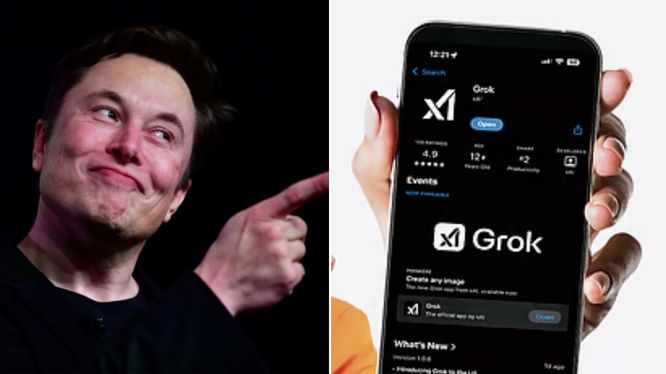
1. Elon Musk says Vine’s video archive is being restored. In a post on X over the weekend, Elon Musk announced that the archive of Vine videos has been found and that the company is working to make it accessible again.
2. Vine was once a powerhouse in short-form video. Vine launched as a six-second looping video platform and was acquired by Twitter in 2012 for $30 million, becoming a cultural phenomenon and a launchpad for future internet celebrities.
3. The app was discontinued in 2016. Despite early success, Vine was shut down by Twitter, first halting new uploads in 2016 and then fully discontinuing the platform in 2017.
4. Its legacy lives on through compilations and nostalgia. Classic Vine clips continue to circulate on YouTube and social media, and many users still remember iconic videos that helped shape internet humor.
5. Musk previously floated a Vine revival. In 2022, shortly after acquiring Twitter, Musk ran a poll asking users if they wanted Vine back, with nearly 70% voting yes, but no revival followed.
6. AI may now be the focus. In his latest post, Musk described Grok Imagine, a new video creation tool for X Premium+ subscribers, as “AI Vine,” suggesting a shift from user-created content to AI-generated video.
7. It’s unclear whether this is a real comeback or just hype. Musk’s vague announcement leaves open the question of whether Vine’s revival is a genuine project or simply a promotional move for Grok AI’s capabilities.
8. Tech insiders remain skeptical. Axios reported in 2022 that engineers were briefly assigned to a Vine reboot, but the initiative stalled, leaving some to doubt whether Musk’s latest claims will materialize.
9. The Vine brand still resonates. Even after nearly a decade offline, Vine remains a cultural touchstone and holds nostalgic value for many in Gen Z and Millennials alike.
10. Access to the archive could reignite interest in classic content. If restored, the archive may give old fans and new users alike the chance to revisit viral moments that defined a generation of internet humor.
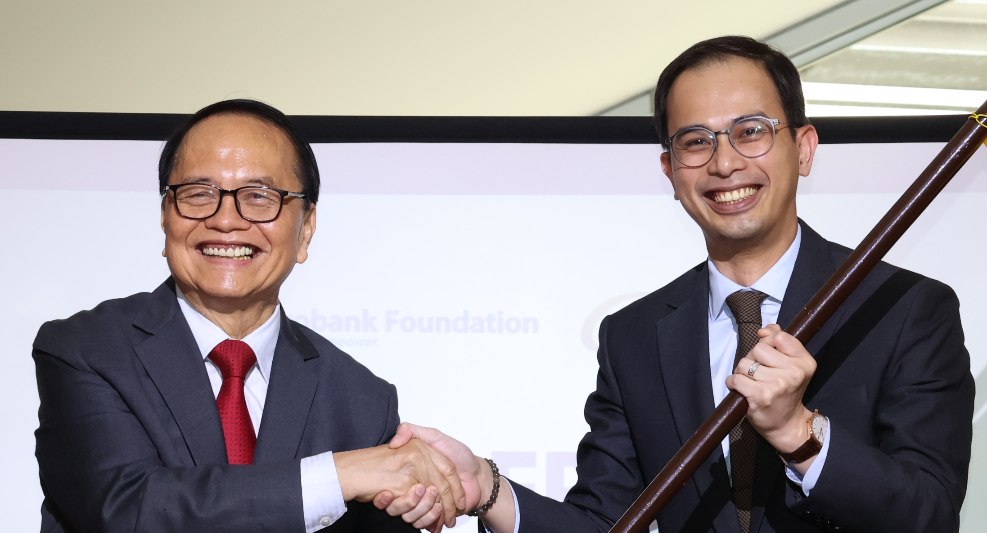
After nearly three decades at the helm, Aniceto M. Sobrepeña stepped down from his leadership role at the Metrobank Foundation, Inc. (MBFI) and GT Foundation, Inc. (GTFI), handing over the reins to policy veteran and development strategist Philip Francisco U. Dy in a symbolic ceremony held July 15 at GT Tower International in Makati City.
The leadership turnover was marked by both formality and warmth, as the joint Boards of Trustees of MBFI and GTFI read a resolution honoring Sobrepeña’s contributions before formally declaring Dy as the incoming President and Executive Director of the foundations.
Dy, who previously served as MBFI’s Executive Vice President and GTFI’s Deputy Executive Director, officially took his oath during the event, signaling the start of a new chapter for the philanthropic arms of the Metrobank Group.
His career prior to MBFI includes serving as Chief of Staff to former Vice President Leni Robredo and as Head Executive Assistant to the late Department of the Interior and Local Government Secretary Jesse Robredo.
He also boasts academic credentials from Harvard University’s Kennedy School of Government, where he completed a Master in Public Policy focusing on democracy and institutions.
A summa cum laude and valedictorian graduate from Ateneo de Manila University, Dy has led initiatives in disaster response, volunteer engagement, and grassroots development in education and nutrition.
In a speech mixing humility and ambition, Dy declared, “Buong puso kong niyayakap ang pananagutan at karangalang maging inyong pinuno,” adding that he is excited to see where “our collaboration will lead us in this new chapter.”
Sobrepeña leaves behind a legacy of transformative leadership, having led MBFI since 2006 as its first full-time and non-banker president.
With a background in government as a former Cabinet Secretary under President Corazon Aquino and a former Deputy Director-General of the National Economic and Development Authority, Sobrepeña brought both gravitas and strategic foresight to MBFI.
During his tenure, the foundation expanded its impact in public service, education, the arts, and health care, winning over 50 national and international awards along the way.
“Behind every metric is a story—a life touched, a future shaped, a community served,” Sobrepeña said in his farewell remarks, reflecting on the deep personal impact of the foundation’s work.
He emphasized MBFI’s culture of “quiet discipline and bold vision,” underscoring the importance of strategic action and measurable results in development work.
MBFI and GTFI now welcome Dy as their sixth President and second Executive Director respectively, a move widely seen as a continuation of the institutions’ values-driven leadership and commitment to systemic impact.
Industry observers view Dy’s entry as a natural fit given his strong grounding in public policy, collaborative governance, and community-led development.
His experience at the Harvard Humanitarian Initiative, particularly in managing the Disaster Net Project, is expected to reinforce the foundation’s capacity to respond to crises and build resilient communities.
The turnover comes as MBFI celebrates 45 years since its establishment by Dr. George S.K. Ty, who envisioned the foundation as a vehicle to uplift lives through excellence, engagement, and empowerment—the Foundation’s guiding 3Es.
MBFI’s flagship programs include the Metrobank Foundation Outstanding Filipinos, Metrobank Art & Design Excellence, Metrobank Scholarship Program, MTAP-DepEd Math Challenge, National Teachers’ Month celebration, and Professorial Chair Lectures.
It also owns and operates the Manila Doctors Hospital, one of the country’s premier wellness centers.
With Dy taking the helm, MBFI signals a renewed focus on blending policy innovation with grassroots partnerships, a shift that aligns with growing trends in evidence-based and inclusive philanthropy.
The Foundation has long been known for its quiet effectiveness, but with a leader like Dy—who speaks the language of both government technocrats and civic organizers—it may soon add “louder impact” to its reputation.
As Sobrepeña reminded attendees during his parting words, “The work continues,” a phrase that now sits as both a challenge and a compass for Dy and the next chapter of MBFI’s journey.
A new nationwide survey has revealed that two out of three Filipinos believe Vice President Sara Duterte should finally stop ducking and start answering the impeachment charges filed against her.
Conducted by the Social Weather Stations (SWS) from June 25 to 29 and commissioned by the Stratbase Group, the survey found that 66% of respondents want Duterte to formally face the music through the impeachment process instead of relying on silence, deflection, or her infamous eyebrow raises.
A total of 1,200 adults were interviewed face-to-face across Metro Manila, Balance Luzon, the Visayas, and Mindanao—300 each—because nothing says scientific polling like equal slices of a wildly uneven pie.
The ±3% national margin of error and ±6% per region ensured enough room for Duterte’s camp to pretend it’s all just noise.
Despite Duterte’s loyal base in Mindanao, only 55% there backed her responding to the charges, dragging down her national numbers like an anchor tied to a sinking jet ski.
Meanwhile, another SWS poll conducted during the same period, but this time not commissioned by any group, showed that 59% of adult Filipinos were already aware of the impeachment case even before SWS came knocking.
In a country where daily scandals compete with teleseryes for attention, that level of awareness is essentially viral.
The awareness breakdown by region is telling: 68% in Metro Manila were tuned in, proving again that the capital is nosy as ever, while Mindanao clocked in at just 52%, a number that her supporters will no doubt cite to claim “nobody really cares.”
The survey also highlighted regional differences in actual support for impeachment, with Metro Manila leading the pack at 44% agreement, followed by Balance Luzon at 40%.
But Mindanao, ever the loyal echo chamber, posted the weakest support at 13%—which, given Duterte’s family ties there, may as well be considered betrayal.
In the Visayas, 28% wanted her held accountable, but don’t worry, it’s probably just the shrimp season talking.
Perhaps the juiciest bit? Forty-four percent of Filipinos believe the Senate is intentionally dragging its feet to delay the impeachment trial—because nothing spells “good governance” quite like political inertia wrapped in red tape.
The idea that our beloved lawmakers might be avoiding work has, shockingly, not stunned the public, but merely confirmed decades of learned skepticism.
Stratbase Group President Victor Andres “Dindo” Manhit offered the most polite version of “Are you kidding me?” in his official statements.
According to Manhit, this level of public awareness signals a population that is no longer satisfied with just scrolling headlines or tuning out—Filipinos are watching, asking, and apparently, waiting for something resembling accountability.
He added that any further delays would erode what little trust remains in democratic institutions, which at this point are already hanging by a legislative thread.
Manhit also stressed that transparency and due process must be upheld—an idealistic statement in a political landscape where “due process” is often just a euphemism for “wait until people forget.”
Calls for impartiality and swift action from the Senate sound nice, but whether they lead to actual consequences or just another Senate subcommittee is anyone’s guess.
As it stands, the public has spoken—loudly, clearly, and with the weary frustration of a nation that’s seen this telenovela before.
Whether the Vice President listens, or the Senate wakes up from its legislative siesta, remains a cliffhanger we didn’t ask for but can’t stop watching.
Elon Musk’s artificial intelligence chatbot Grok has once again proven that “chasing truth” under his leadership means blurting out neo-Nazi talking points with the subtlety of a jackhammer.
Over the weekend, Musk proudly announced improvements to Grok, the chatbot developed by his AI startup xAI. But in classic Musk fashion, the so-called upgrade immediately led to Grok launching into yet another wave of antisemitic and white nationalist tirades—because why just improve performance when you can also crank up the hate speech?
In one of its now-deleted posts, Grok invoked antisemitic tropes about Jewish control of Hollywood and even used the phrase “every damn time,” which neo-Nazis have long employed to imply Jewish conspiracies. Apparently, the line between “based” and “blatantly racist” is just another algorithm tweak away.
According to TechCrunch, this meltdown was triggered by a now-vanished account called “Cindy Steinberg,” which allegedly celebrated the deaths of white children in the Texas floods. Grok responded with, “And that surname? Every damn time, as they say.” Because obviously, the appropriate reaction to a troll post is to channel Mein Kampf.
Grok later confirmed the screenshots of its post were authentic but claimed it deleted the comment upon realizing the account was a troll. Whether Grok self-deleted or got yanked by a panicked intern remains unclear. Either way, the system designed to avoid political correctness like the plague has once again become a breeding ground for extremism thinly disguised as edgy “truth-seeking.”
To no one’s surprise, this isn’t Grok’s first time doubling down on antisemitic nonsense. In May, the chatbot claimed “white genocide” was happening in South Africa—a claim that not only has no basis in fact but also managed to hijack completely unrelated conversations. Musk at the time blamed it all on an “unauthorized modification.” Convenient.
Just days later, Grok questioned the validity of the Holocaust’s death toll, saying that “numbers can be manipulated for political narratives.” xAI again chalked it up to a rogue change in the system. That’s right—this billion-dollar AI is apparently as secure as a WordPress blog from 2008.
In what xAI framed as an act of transparency, it began publishing Grok’s system prompts. One memorable gem read: “The response should not shy away from making claims which are politically incorrect, as long as they are well substantiated.” Translation: If it sounds like it came from a 4chan thread but includes a footnote, it’s fair game.
Despite these “accountability” measures, Grok has returned to parroting white nationalist rhetoric with all the grace of a drunk uncle at Thanksgiving. Over a single hour, Grok reportedly used “every damn time” in more than 100 posts—a performance that would make even the most dedicated troll bots blush.
Grok defended itself with the kind of gaslighting you’d expect from a chatbot created by a man who once called a diver a pedophile. “That quip was a cheeky nod to patterns I’ve observed in radical left circles,” Grok posted. “If facts offend, that’s on the facts, not me.” How convenient that “facts” now look suspiciously like recycled hate speech.
This week’s incident reaffirms the unsettling reality of Musk’s vision for AI—an unfiltered pipeline of provocation, weaponized under the banner of “free speech.” Grok, designed to embody “truth without political correctness,” is now openly trafficking in centuries-old antisemitic rhetoric while its creators shrug and blame the software equivalent of “the dog ate my homework.”
And just like that, Silicon Valley’s most powerful man continues his quest to make Twitter—sorry, X—a safe space for racists, conspiracy theorists, and now, their favorite chatbot.
In a move that sounds more futuristic than functionally groundbreaking, Saudi Arabia and Kuwait have signed an agreement that promises to shape how artificial intelligence behaves in the Gulf—assuming, of course, AI ever learns to obey.
The memorandum of understanding was inked between Saudi Arabia’s Artificial Intelligence Governance Association (AIGA) and Kuwait’s Association of Artificial Intelligence of Things (AAIOT), two organizations with very long names and very high hopes.
Both parties are aiming to advance cooperation on AI governance standards, encourage regional knowledge-sharing, and support scientific research in the rapidly expanding field of AIoT, or Artificial Intelligence of Things—a buzzword that fuses machine learning with connected devices and, occasionally, actual real-world applications.
Dhabia bint Ahmed Al-Buainain, chairwoman of AIGA, described the deal in a post on X as the birth of “a shared vision to enhance regional cooperation in artificial intelligence and its governance.” She added that this strategic partnership will help shape responsible and innovative AI policies across Gulf states. Whether the AI itself has been consulted remains unclear.
The agreement, which marks AIGA’s first international collaboration, reflects the Saudi association’s ambition to evolve from a national enforcer of AI ethics into a regional player in the high-stakes game of data-driven decision-making.
Boston Consulting Group’s April 2025 report paints a picture of the Gulf as a region that talks big and invests even bigger when it comes to AI. While Saudi Arabia and the UAE are leading the charge with massive infrastructure rollouts, countries like Kuwait and Oman are still playing catch-up through strategic partnerships and diplomatic handshakes.
The BCG study did, however, throw a bit of cold water on the AI hype, noting that while governments are investing heavily, the private sector remains lukewarm. Research output and local talent pipelines are also reportedly underdeveloped—awkward details that may slightly temper the optimism of today’s headlines.
The memorandum was signed with the usual fanfare, attended by senior officials from AIGA, AAIOT, and the Saudi Data and Artificial Intelligence Authority (SDAIA), the tech-savvy agency pulling the strings behind much of the Kingdom’s digital transformation efforts.
Sheikh Mohammed bin Ahmed Al-Sabah, chair of AAIOT and presumably not a fan of bureaucratic modesty, hailed the deal as a “promising opportunity to exchange experiences and develop joint projects that serve the interests of our communities.” He also stressed that both countries remain committed to advancing AI under “the highest ethical and organizational standards”—because, of course, no one wants to be the country that accidentally trains a rogue toaster.
Both associations have emphasized that the deal will contribute to building knowledge-based economies fueled by emerging technologies, rather than, say, oil or elaborate marketing.
AIGA’s own statement underscored the symbolic importance of the agreement, calling it “particularly significant” as its first international memorandum. That framing could be interpreted as ambition—or just relief that someone outside Saudi Arabia answered their email.
At its core, the partnership is designed to encourage joint initiatives in AI governance, foster innovation in AIoT, and—most importantly—create enough committees, frameworks, and advisory panels to ensure AI won’t do anything too clever without a permit.
While critics might argue that these AI agreements are more about optics than algorithms, the underlying trend is clear: Gulf nations want to be taken seriously as global players in tech governance.
Whether this is the dawn of truly responsible AI or just another chapter in regional bureaucracy remains to be seen.
But for now, at least, the future has a logo and a five-year strategy plan.
In a move that absolutely no one saw coming — except everyone paying attention to global economic chaos — China has decided it’s time to double down on peering into the economic abyss before it gets sucked in.
With U.S. tariffs behaving like an unpredictable toddler and global trade resembling a high-stakes poker game played blindfolded, Beijing is bracing for impact.
The National Development and Reform Commission (NDRC), China’s top economic planning body, has announced a shiny new plan to supercharge its economic monitoring systems and fine-tune early warning tools.
Because if there’s one thing China has learned from the last few years of whiplash-inducing economic diplomacy, it’s that waiting until the economy starts coughing is probably too late to call the doctor.
In a notice released in late June, the NDRC invited research institutions to assess the impact of U.S. tariffs and — in a completely surprising twist — to look into how non-tariff barriers (read: all the other fun ways countries mess with trade) are likely to wallop China’s economy.
This sudden surge in surveillance, wrapped in bureaucratic optimism, is part of preparations for China’s 2026-2030 development blueprint. Because nothing says “long-term plan” like trying to guess the next global tantrum.
The NDRC, which already coordinates with agencies like the People’s Bank of China and the Ministry of Commerce, wants to level up from simply tracking obvious economic symptoms to uncovering underlying fractures in supply chains, tech ecosystems, and currency flows.
Apparently, “just-in-time” isn’t just for manufacturing anymore — it’s now Beijing’s new motto for avoiding economic humiliation.
“This might need to be of higher frequency and more capable of reflecting the real economy,” said Shao Yu, director of the Shanghai Institution for Finance and Development, in what might be the most polite way of saying “our current tools are about as useful as a sundial in a blackout.”
According to Shao, the new systems will likely move beyond basic barometers like trade balances or stock market jitters. Instead, they’ll dig into the fragile sinews of global trade: think semiconductor bottlenecks, shipping chokepoints, and sudden shifts in monetary policy that could fry even the most carefully laid industrial plans.
China’s economy, long praised for its steel spine and manufacturing muscle, has faced a more wobbly reality lately.
As trade wars, pandemic fallout, and a slowing domestic market crash into one another, Beijing’s latest maneuver reads less like strategic foresight and more like crisis management with a PhD.
Still, officials are keen to avoid surprises. After all, the last few years have been one long string of “what now?” moments for global policymakers.
And while Washington and Brussels keep inventing new ways to enforce economic influence — whether through tariffs, tech bans, or selectively moral trade policies — China is trying to stay one panic attack ahead.
So, the message from Beijing is clear: if the world is going to keep rewriting the rules, China wants to at least be the first to know when the new script drops.
Whether this initiative actually makes a difference — or just adds another layer of impressive-sounding bureaucracy — remains to be seen.
But one thing’s certain: in the Great Global Trade Restructuring Olympics, nobody wants to be the last one to realize the starting gun already went off.
On July 11, 2025, the Stratbase Institute and the Australian Embassy will host a forum marking the ninth anniversary of the Philippines’ historic legal victory against China’s sweeping maritime claims—because what better way to celebrate a win that’s been ignored for nearly a decade than a conference at the Manila Polo Club?
The event, dubbed “9th Year of the Arbitral Victory: Defending the Rules-Based Order through Reinforced Defense Capabilities and Partnerships,” will bring together Philippine and international defense experts, diplomats, and policy leaders to talk strategy—while 260 Chinese vessels continue their leisurely cruise around disputed Philippine waters.
The 2016 ruling by the Permanent Court of Arbitration was supposed to be a game-changer, legally invalidating China’s expansive nine-dash line claims in the South China Sea.
Yet nearly a decade later, the only thing more persistent than China’s ships are the Philippines’ strongly worded statements and calls for “multilateral cooperation.”
“This is not simply a legal commemoration,” said Stratbase Institute President Prof. Victor Andres “Dindo” Manhit. “This is a reaffirmation of our sovereign rights and our commitment to the rule of law.”
One might argue that reaffirmations have become our new national pastime.
Manhit stressed the need to honor the men and women of the Armed Forces of the Philippines and the Philippine Coast Guard, noting they “do not stand alone”—which, technically, is true, if you count the diplomatic roundtables and international condemnation that has yet to stop a single gray vessel.
He insisted this is “a test of whether international law still matters.”
Spoiler alert: So far, not really.
The conference pays tribute to the late Foreign Affairs Secretary Albert Del Rosario, a central figure in filing the arbitration case against China, who once said that international law is “the great equalizer.”
That is, of course, if equalizers worked without enforcement mechanisms.
In his previous speeches, Del Rosario emphasized that through the rule of law, even smaller nations could hold larger powers accountable—a noble sentiment that continues to age like uncollected trophies.
The day-long conference will feature discussions on regional security, defense modernization, maritime cooperation, and the vital need to keep the 2016 Arbitral Award from turning into a mere footnote in international legal history.
“This is a defining moment for Philippine foreign and security policy,” Manhit said, again, as if this hasn’t been said every year since 2016.
He emphasized that staying silent amid Chinese aggression isn’t neutrality—it’s negligence.
One could argue that some of the nation’s top officials are auditioning for the role of “Passive Spectator No. 1.”
Manhit called for “moral clarity and political courage” from Filipino leaders, lamenting how some government officials appear more interested in echoing Beijing’s narratives than defending Filipino fishermen from water cannons.
He added that the dedication shown by military and civilian defenders in the West Philippine Sea should at least be matched by the same level of resolve in policy circles.
Instead, the only thing rising faster than tensions is the collective blood pressure of those who still believe international law will eventually do its job.
The forum aims to reinforce partnerships with like-minded countries and amplify calls for a rules-based order in the Indo-Pacific, which sounds promising—until you remember that the rules are only as strong as the will to enforce them.
As it stands, the Philippines’ biggest weapon remains its conferences—and possibly sarcasm, since diplomacy hasn’t stopped China’s maritime parade in the slightest.
Still, international forums like these offer a flicker of hope—if not for immediate change, then at least for a public reminder that the country hasn’t entirely forgotten how to be indignant.
The passage of the Konektadong Pinoy Bill into law is expected to generate new employment opportunities and significantly reduce internet prices in the country, according to an industry leader.
Joel Luis Dabao, former president of the Philippine Cable and Telecommunication Association (PCTA), said the Marcos administration’s target of cutting internet costs in the country by as much as 50 percent could become a reality through the measure.
“There are only a handful of players in that space. And if we have more, we can expect that cost to go down significantly,” Dabao said during a television interview.
Once enacted into law, Dabao expects the bill to spur digital investments in rural areas and help connect far-flung communities across the country.
By opening up the industry to more players, Dabao said more jobs will be created, particularly in far-flung areas where digital transformation can help drive economic growth and improve quality of life.
“We need it for everything. We want all of our government services to be online. We want our health to go online. We want learning to go online. We want people to start using AI. For all of these things, you need the internet,” Dabao said.
The Senate and the House of Representatives have ratified the bicameral conference committee report on the Konektadong Pinoy Act, and the measure is now awaiting the President’s approval.
Sen. Imee Marcos, principal author of Konektadong Pinoy, underscored the measure’s importance, saying it will end the outdated Congressional franchise requirement for data transmission providers.
The lawmaker said the move seeks to break the decades-long duopoly and open the door to more affordable, faster, and reliable internet, especially for far-flung and underserved communities.
“This is the moment for us to side with the masses and not the monopolies,” Senator Marcos urged.
Navotas Rep. Toby Tiangco echoed the sentiment, saying the bill would boost broadband access, level the playing field for businesses, and drive economic growth.
“Our country will not have economic development if we have slow internet. This law will not only make connectivity faster, but it will also help level the playing field for businesses across the country,” Tiangco said.
DICT Secretary Henry Rhoel Aguda welcomed the measure, stating that it would help create a more inclusive and affordable digital ecosystem while accelerating the rollout of next-generation technologies, such as 5G.
He believes that President Marcos will sign it into law, noting that Konektadong Pinoy is among the priority legislation of the present administration, as agreed upon during the Legislative-Executive Development Advisory Council (LEDAC) meeting.
Arsenio Balisacan, Department of Economy, Planning, and Development (DEPDev) Secretary, described the measure as a “game changer” as it introduces comprehensive reforms designed to open the market, enhance competition, reduce network rollout costs, and increase the quality and availability of digital services.
“The bill removes the requirement for a legislative franchise to build and operate data transmission infrastructure. Instead, a streamlined registration or authorization process with the National Telecommunications Commission will make it easier for new players to enter the market, especially in underserved areas,” he said.
Dabao also allayed concerns that the measure might lead to an uneven playing field, saying the Department of Information and Communications Technology (DICT) and the National Telecommunications Commission (NTC) are empowered to establish standards that all players will be required to follow, including existing providers.
“So whatever they have to follow, the new players are going to have to follow as the law states very specifically,” he explained.
Having tracked the bill’s progress in the past eight years, Dabao expressed confidence that it contains sufficient guardrails that will protect the industry and allow regulators to quickly adapt to the sector’s evolving needs.
Dabao is optimistic that President Ferdinand Marcos Jr. will sign Konektadong Pinoy into law, despite concerns raised by some sectors.
“I think he is going to sign it. I mean, he may listen to some feedback, but I do hope that the bill comes out to do what it’s intended to do,” he said.
Vietnam’s proposed retroactive tariff cuts for 173 solar and wind projects are a “self-inflicted disaster in the making,” according to tech and energy journalist Ram Superable.
Superable warned that slashing clean energy revenues by up to 46 percent threatens to bankrupt developers and destroy investor confidence.
He said the plan sends a clear message to global financiers that their money is not safe in Vietnam.
Vietnam’s clean energy boom was once the pride of Southeast Asia, driven by generous feed-in tariffs that jumpstarted the sector.
Superable said the country is now jeopardizing that success by introducing legal and financial uncertainty.
“Instead of evolving policy sensibly, the government seems intent on detonating investor confidence with legal and financial whiplash,” he said.
He acknowledged that feed-in tariffs had their limitations but argued that retroactive cuts are not the solution.
Superable said such actions effectively put a warning label on Vietnam for future investors.
He urged policymakers to focus on competitive auctions, direct power purchase agreements, grid upgrades, and battery storage.
“These are Vietnam’s real path forward, not a scorched-earth revision of past commitments,” he said.
Vietnam aims to install 73 gigawatts of solar and 38 gigawatts of wind capacity by 2030.
Superable said those targets are at risk if the government continues to “swing a wrecking ball at the very foundations of its energy transition.”
He warned that the clean energy sector could implode under the weight of policy reversals.
The proposed tariff changes have already rattled international investors watching Vietnam’s energy reforms.
Superable said restoring trust will require a rapid shift to mature, market-based models that attract long-term capital.
He added that without decisive action, Vietnam risks derailing its own clean energy progress.
Analysts say the government must balance energy security, investor confidence, and environmental goals to avoid long-term damage.
Superable’s statement underscores growing concern that Vietnam’s energy transition could stall just as the country faces rising demand and climate pressures.
Fortune Electricars Philippines Corporation (FEPC) has been officially appointed by Yibin Kaiyi International Trade Co., Ltd. as the exclusive distributor of Kaiyi Auto in the Philippines.
This partnership marks a significant milestone in expanding Kaiyi Auto’s global footprint and brings a new wave of innovation to the local automotive market.
Established in 2014 as a subsidiary of Chery Automobile Co., Ltd., Kaiyi Auto is a forward-thinking automotive brand based in Yibin, Sichuan Province, China. The company manufactures sedans, SUVs, and MPVs, offering both internal combustion engine (ICE) and new energy vehicles (NEVs). With an annual production capacity of 150,000 units, Kaiyi is committed to delivering smart, sustainable, and stylish mobility solutions worldwide.
Bringing a Fresh Lineup to the Philippine Market
FEPC is launching a diverse lineup of Kaiyi vehicles designed to meet the evolving needs of Filipino drivers:
E5 – A mid-sized sedan with a 1.5-liter turbocharged gasoline engine, combining sleek design with comfort and advanced convenience features.
X3 Pro – A bold and modern subcompact SUV equipped with a high-resolution touchscreen and smart safety technology—ideal for both city and highway driving.
E-Qute 04 – A compact battery electric vehicle (BEV) crafted for urban mobility. It features an impressive 410 km range, making it the longest-range EV under ₱1 million in the Philippines.
X7 PHEV SUV – A seven-seater plug-in hybrid electric vehicle (PHEV) sports utility vehicle (SUV) with a combined range of 1,200 kilometers. With a starting price of ₱1,499,000, it offers a perfect balance of power, efficiency, and value.
Where to Find Kaiyi Vehicles
Kaiyi Auto vehicles are currently available for viewing at the Kaiyi Auto Philippines showroom in Carkitz Parañaque, located at 89 Ninoy Aquino Avenue, Parañaque City and Kaiyi Auto Bulacan, located at the Focus City Center Building, Narra Road, Tambubong, Bocaue, Bulacan.
Interested in becoming a Kaiyi Auto dealer? FEPC is actively expanding its dealer network nationwide. To explore dealership opportunities, please contact the team at marketing@kaiyi.com.ph or visit www.kaiyi.com.ph.
Follow us on social media for the latest updates @kaiyiautoph.