Filipinos consume less than half of their recommended daily fiber, facing an average intake of just 6 to 8 grams compared to the national dietary target of 20 to 25 grams.
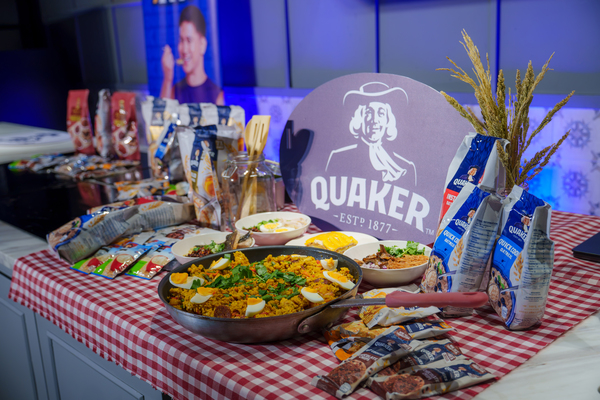
To address this widespread nutritional shortfall, Quaker convened Philippine media at The Studio Kitchen at Enderun Coworking Estancia for the Quaker Fit Breakfast Club 2026: Quaker Salu-Salo.
The hands-on cooking showcase demonstrated how incorporating oats into classic local dishes can help bridge the fiber gap without sacrificing familiar regional flavors.
The event focused on a nutrient that most households fail to track. While daily meal planning frequently prioritizes protein, dietary fiber is regularly overlooked.
A single serving of oats delivers 3.5 grams of fiber alongside protein, offering a straightforward way to increase daily intake. Oats also contain beta-glucan, a soluble fiber known to support heart health, aid digestion, and promote prolonged satiety to assist with weight management.
During an exclusive interview at the event, registered nutritionist-dietitian Jo Sebastian explained why fiber occupies a unique category in human nutrition and why low intake presents serious long-term health risks.
“Because usually the macro nutrients are carbs, fats, and protein because they’re needed in large amounts. But fiber is a type of carbohydrate that our body can’t digest. So usually it falls kind of under the carbohydrate. But also, macro nutrients are nutrients that provide energy. And fiber doesn’t really provide energy because it’s like 1 calorie per gram. So its energy is almost negligible. When we talk about macro nutrients, we’re just talking about nutrients that provide energy. But it doesn’t mean that those are the only valuable nutrients we have. Because we also have what we call micro nutrients. Those are vitamins and minerals,” Sebastian said.
Addressing the consequences of a low-fiber diet, Sebastian pointed to rising rates of chronic conditions among younger populations.
“Usually, it can definitely lead to… Okay, so usually what they see for fiber intake is that our rates of colorectal cancer are increasing, especially for the younger population. So that’s one very important health concern that needs to be looked at when it comes to fiber intake. Because of colorectal cancer, that’s one. Another one, of course, it can impact the lack of fiber to your hypertension, to your blood sugar levels, and your blood cholesterol. Because fiber helps with these. So in general, fiber intake plays a role in all of the lifestyle diseases that we have right now that the rates are increasing,” Sebastian noted.
Sebastian emphasized that while popular health trends shift over time, fiber remains a fundamental nutritional requirement rather than a passing fad.
“The wellness space is always changing because there’s always new trends. Before, it was low-fat, then it’s high-fat, then it’s low-carb. There are so many trends. But the thing about fiber is it’s not a trend. It’s a reality that we have to understand. It’s very important to our diet. And that’s why we really appreciate as well Quaker’s initiative to bring that forth, especially for Filipinos. While we do already have a high-fiber diet based on regional dishes, our cultural food, we don’t apply it on a regular basis because of all of these many concerns we have with lifestyle, prices, and all of that. So, it shows us one way we can incorporate that doesn’t have to sacrifice other aspects of our life,” Sebastian added.
When asked whether oatmeal fits into low-carbohydrate diets, Sebastian clarified that carb limits vary and noted her personal approach to such restrictive eating plans.
“It depends. When you say low-carb diet, usually around 150 grams of carbohydrates are lower. Sometimes the extremes are even lower than that. So it can help you feel more satisfied and full. But it depends on your overall targets for if it would fit in a low-carb diet. Because it’s a carbohydrate source. So it can still be an option for us. But again, it depends on the overall diet if you are being prescribed a low-carb diet. But personally for me, I wouldn’t necessarily prescribe or ever really recommend to go on a low-carb diet unless you have a health concern that might require it,” Sebastian stated.
“Closing the fiber gap doesn’t mean overhauling how you eat. It starts with small swaps, like a bowl of oats in the morning or a handful stirred into the dishes you already cook,” Sebastian said during her opening presentation. “When fiber shows up in familiar food, it becomes a habit instead of a chore.”
To put these principles into practice, Chef Nat Sundiang led a culinary masterclass showcasing oat-based reformulations of traditional Filipino comfort food and festive staples:
- Chicken and Mushroom Oats Caldo: Quick-cooking oats substitute for traditional rice, producing a savory porridge in minutes.
- Oat-Infused Breakfast Paella: A festive dish featuring chicken, chorizo, bell peppers, boiled eggs, and sweet peas built on a savory, turmeric-and-pimentón oat base instead of sticky rice.
- Oats Sarciado: A high-protein breakfast pairing eggs, tomatoes, and fried fish with fluffy oats and tomato sauce.
- Oat Mango Float: A no-bake cold dessert utilizing milky oats as a creamy substitute for heavy cream, layered with graham crackers and fresh mangoes.
“Oats are one of the most forgiving ingredients in the kitchen. They take on broth, pimentón, tomato sauce, even mango, whatever you give them,” said Chef Nat Sundiang, recipe developer, food stylist, and Head Chef of Turo Filipino Kitchen. “The goal was never to hide the oats. It was to let them carry the flavors Filipinos already love, with a modern spin that still tastes like home.”
The initiative marks the continuation of Quaker’s effort to improve everyday family nutrition across the country.
“In Filipino homes, breakfast has always been more than a meal. It’s the moment the family gathers before the day pulls everyone in different directions,” said Macy Monson, Marketing Lead at PepsiCo Inc. Philippines. “Our commitment is to make good nutrition something every family can reach for every day, not a special effort. And as the holidays come around, we want families to know they can celebrate with the dishes they love, without the guilt, and with a little more goodness in every bowl.”
Following closing remarks from Aditya Ahuja, General Manager for PH/MY Asia Foods at PepsiCo Inc., attendees gathered for a communal salu-salo to share the prepared dishes. Quaker is encouraging home cooks to share their own oat-based recipe updates on social media using the hashtag #QuakerSaluSalo.




Leave a Reply