
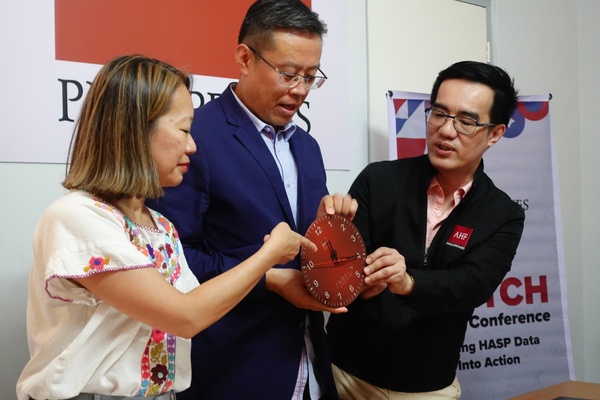
AHF Philippines is calling on journalists to take a stronger role in the national HIV response, launching a new media awards program as the country grapples with one of the fastest-growing HIV epidemics in the Asia-Pacific region.
The organization stressed the role of journalists in promoting accurate information, reducing stigma and encouraging access to HIV services. The call was made during “Empowered Stories: Advancing Accurate, Ethical, and Stigma-Free Reporting on HIV,” a gathering of media practitioners that featured an HIV Media Reporting Training, an AHF Philippines press briefing and the launch of the AHF Media Awards.
33 new diagnoses a day
The 2026_Q2 HIV & AIDS Surveillance of the Philippines (HASP) report logged 2,994 new HIV cases from April to June 2026 alone, an average of 33 new diagnoses every day.
- Adults aged 25-34 accounted for 43% of newly diagnosed cases
- Those aged 15-24 made up 31%
- Men accounted for 96% of newly reported cases
Large gaps in diagnosis and treatment
The report estimates that 288,000 Filipinos are living with HIV, yet only 159,997 (56%) have been diagnosed and know their status. Of those diagnosed, 111,154 are currently receiving antiretroviral therapy (ART).
Viral suppression among those tested remains high at 97%. Overall, however, only 57% of people on treatment are virally suppressed, highlighting persistent gaps in diagnosis, treatment retention and viral load monitoring.
The latest HASP data put the country at 56-69-57 across the HIV care cascade, against the global 95-95-95 targets. AHF Philippines said this shows significant opportunities to improve diagnosis, treatment coverage and viral suppression.
Media’s role
“Behind every statistic is a person, a family, and a community,” said Ryan Guinaran, Country Program Manager of AHF Philippines. “The media has tremendous power to shape public understanding of HIV. Accurate and stigma-free reporting can encourage people to seek testing, stay on treatment, and access life-saving services.”
AHF Philippines noted that misinformation and stigma remain major barriers to HIV prevention and treatment. Fear-driven narratives, sensationalized reporting and the use of outdated terminology can discourage people from accessing HIV services and contribute to discrimination against people living with HIV.
“Media professionals are not merely observers of the HIV response. They are partners in public health,” Guinaran added. “Through responsible reporting, journalists can help normalize HIV testing, combat misinformation, reduce stigma, and connect communities to services.”
Awards for accurate reporting
AHF Philippines officially launched the AHF Media Awards, a new recognition platform for journalists, media organizations and content creators who produce accurate, ethical and impactful stories on HIV and public health.
The program seeks to encourage reporting that is evidence-based, people-centered and reflective of the realities faced by individuals and communities affected by HIV.
Prevention efforts gain ground
The HASP report documented 9,640 new PrEP enrollments from April to June 2026, a 10% increase from the previous quarter. More than 107,000 individuals have enrolled in the program nationwide since PrEP was implemented in 2021.
Most new enrollees were aged 18-34, a sign of growing demand for effective HIV prevention services.
Collaboration to reach the targets
As the country works toward the 95-95-95 targets, AHF Philippines underscored the importance of collaboration among government agencies, healthcare providers, civil society organizations, communities and media institutions to ensure that more Filipinos are reached with accurate information and essential HIV services.


Leave a Reply