
Key leaders in the Philippine digital asset sector have welcomed the Bangko Sentral ng Pilipinas’ (BSP) proposed temporary freeze on new payment system operator registrations and tighter controls on virtual asset service providers (VASPs), framing the regulatory push as a key milestone in the maturation of the local market.
Industry advocates warn that while stricter regulatory oversight strengthens market safeguards, it does not make investing risk-free, making widespread financial education essential as national crypto adoption nears 12.8 million users this year.
The central bank’s draft circular, released for consultation earlier this month, outlines a 12-month suspension on new Operator of Payment System (OPS) registrations while regulators review the existing licensing framework. Under the proposed measures, payment firms will be restricted to dealing exclusively with regulated VASPs through direct arrangements, subject to enhanced due diligence, transaction limits, continuous monitoring, and strict settlement rules.
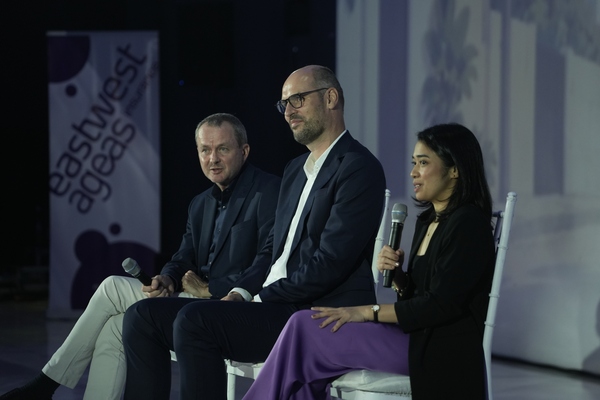
Speaking at The Crypto Roundtable alongside executives from GCash, GCrypto, and PDAX, Arlone Abello, CEO of Global Miranda Miner Group (GMMG) and Founding Chairman of the Innovative Movement of the Philippine Association of Crypto Traders (IMPACT), endorsed the central bank’s direction.
“A pause on new licenses and closer controls on virtual asset service providers are not a step back for crypto. They are what happens when an industry grows up,” Abello said. “When every payment can be traced to a real business, users, banks and partners can deal with crypto platforms with the same confidence they have in any other financial service. That is how the industry earns its place in mainstream finance. Our job now is to make sure users mature at the same pace.”
Approximately 10% of the Philippine population currently uses cryptocurrency, driven largely by a demand for digital financial services in a country where roughly 76% of citizens remain unbanked or underbanked. For many of these initial entrants, digital assets represent their first introduction to investing.
“Reaching this level of participation shows that crypto is no longer just a niche interest. As the ecosystem grows, users also need to become more disciplined in how they understand risks, manage exposure, and make decisions in the market,” Abello said.
The demographic makeup of local crypto market participants has shifted significantly since the early play-to-earn games that fueled initial adoption. Today, the sector attracts:
- Experienced traders transitioning from equities and gold commodities
- Corporate professionals applying conventional risk management strategies to digital assets
- Younger Filipinos integrating cryptocurrency into long-term financial planning
This local evolution comes against a backdrop of renewed global market momentum. Total cryptocurrency market capitalization recently surpassed $3 trillion, anchored by Bitcoin reaching approximately $86,000—its highest price point since late January. Meanwhile, open interest in perpetual futures approached $160 billion, signaling increased leveraged activity among traders worldwide.
As higher market activity threatens to draw a new wave of novice investors into the ecosystem, GMMG confirmed plans to expand training initiatives covering technical analysis, risk management, market psychology, and disciplined trading practices. The organization plans to convene the next edition of The Crypto Roundtable in November 2026.




Leave a Reply