For millions of busy parents, the temptation is undeniable: pass a smartphone or a gaming controller to a restless child to buy an hour of quiet focus. Yet, a growing body of research warns that treating interactive media as a digital nanny carries long-term development consequences.
While video games offer proven cognitive and social benefits, experts emphasize that technology cannot substitute for active parental engagement. Games are entertainment and tools for learning—but they are not your babysitters.
The Reality of the “Digital Nanny”
The reliance on screens to manage household routines is widespread. According to a national study conducted by Lurie Children’s Hospital, 49% of parents admit they rely on screen time daily to help manage parenting responsibilities. Furthermore, 71% report using devices to manage their child’s behavior in public spaces.
While parents surveyed believed an average of nine hours of screen time per week is ideal, children are actually averaging 21 hours per week—more than double the preferred amount. This discrepancy triggers significant parental anxiety, with 60% of respondents feeling guilty about their child’s screen habits, frequently citing the use of devices as babysitters as a primary cause of remorse.
“Quality time with family helps children thrive,” notes Dr. Alyssa Cohen, MD, MSc, a pediatrician and health services researcher. “Parents can support children by setting and enforcing age-appropriate boundaries.”
The Shift from Time Limits to Active Curation
The nature of digital parenting underwent a fundamental structural shift recently when the American Academy of Pediatrics (AAP) officially retired its rigid, hour-based screen time models for older children, replacing them with a framework focused on quality, context, and conversation.
The updated AAP guidelines emphasize that instead of merely watching the clock, parents must analyze what digital activities are actively displacing. Prolonged, unmonitored gaming becomes problematic when it crowds out critical developmental pillars: healthy sleep, physical exercise, real-world socialization, and academic responsibilities.
The risks of unchecked access are particularly acute because of what children are playing. Data from the Boston Consulting Group (BCG) Global Gaming Report reveals that 44% of gaming parents have children playing video games by age five. Crucially, two of the three most popular introductory titles—Roblox and Minecraft—rely heavily on User-Generated Content (UGC). Because these platforms feature unmoderated, player-created environments and live communication features, leaving a child unsupervised exposes them to adult content or predatory monetization schemes hidden within kid-friendly graphics.
Co-Playing and Connected Boundaries
Monitoring does not require treating video games as the enemy. Data from the Entertainment Software Association (ESA) Essential Facts Report shows that 70% of parents play video games, and 82% of those gaming parents actively play alongside their children. The top motives cited are shared family fun and distinct opportunities to socialize.
Effective monitoring balances technical boundaries with open dialogue. The ESA reports that 86% of parents utilize at least one parental control setting on their children’s devices, while 78% routinely use the Entertainment Software Rating Board (ESRB) age ratings.
True digital mentorship, however, moves beyond software blocks. By co-playing, asking questions about the narrative, and explicitly modeling how to step away from a device without distress, parents can transition from passive supervisors to active media mentors—ensuring technology serves as a tool for enrichment rather than a substitute for parenting.
A majority of small and mid-sized businesses in the Philippines have never conducted a formal review of their public relations standing, according to data from BrandComm Asia (BCA). To address this widespread gap in market perception, the Philippine public relations agency has launched a complimentary, website-focused PR Audit service for businesses of all sizes.
The tool is designed to provide companies—ranging from local small enterprises to incoming multinational corporations—with an objective, professional assessment of their media presence and communication health.
“Many brands assume their PR is fine simply because nothing has gone visibly wrong,” said Daphne Sena, PR Accounts Director at BrandComm Asia. “But the absence of a crisis is not the same as having a strong, consistent reputation. We created this audit so that any business, regardless of size or budget, can get an honest, professional look at where they actually stand.”
The automated service evaluates businesses across five core areas:
Media visibility: Tracks earned media coverage and measures it against industry competitors.
Brand Story Strength: Assesses the consistency of the company’s voice across its website, social media, press materials, and executive statements.
Digital Credibility: Examines how effectively the brand’s online profiles, website, search results, and reviews signal trustworthiness to first-time researchers.
Newsworthiness: Evaluates whether the brand’s current developments and stories are compelling enough to secure organic media coverage.
Expert Positioning: Analyzes whether the brand and its spokespeople are recognized as go-to industry authorities.
Upon completing the assessment, businesses receive a prioritized list of findings and strategic recommendations within 10 minutes. The service is entirely free, with no obligation to retain the agency’s services.
“We wanted to lower the barrier for businesses to get this kind of insight,” Sena added. “Whether a company is just starting to build its public profile or is a multinational entering the Philippine market, an outside, objective view of their PR is something every brand can benefit from.”
The free PR Audit is currently available to organizations operating across the Philippines. Interested companies can request their assessment online at brandcommasia.com/#consultation or by contacting info@brandcommasia.com.ph via email.
This back-to-school promo offers up to Php10,000 in eGift vouchers, 0% interest for up to 18 months, and an additional Php1,000 discount on Home Credit transactions. Acer also offers students the ultimate peace of mind with an extended three-year warranty on participating products.
The academic season is in full swing, and Acer is ready to help learners achieve their academic goals with the ultimate tech upgrades.
Whether you are a multitasking master, a creative genius, or a late-night gamer, Acer’s “Bag of Deals” back-to-school promo has a laptop or desktop perfectly designed for your vibe. The best part? You have until July 19, 2026, to secure a new setup and unlock amazing perks.
The promo offers up to a Php10,000 eGift Voucher, 0% interest installments for up to 18 months with an extra Php1,000 discount on Home Credit purchases, and total peace of mind with a three-year extended warranty on participating Acer products.
For Daily Productivity and Creative Hustles – Aspire Go 14 AI & Swift Go
For students looking for a sleek, lightweight device to handle their daily academic workloads, Acer offers two excellent 14-inch options suited to different performance levels.
If your daily routine centers on standard schoolwork, the Aspire Go 14 AI is the perfect daily driver. Weighing a travel-friendly 1.5 kg, this laptop easily handles essay writing, creating presentation decks, and multitasking across Google Docs and multiple browser tabs. Powered by an Intel Core Ultra 5 115U processor, 8GB of DDR5 RAM, a 512GB NVMe SSD, and a crisp 14.0″ WUXGA IPS display with Acer ComfyView, it runs on Windows 11 Home.
On the other hand, if your studies demand extra muscle for content creation, multimedia, or design work, the Swift Go scales up your potential. It upgrades the visual experience with a stunning 14.0″ WUXGA OLED display, ensuring true-to-life color reproduction for photo editing, graphic design, and video layouts.
Under the hood, it features an Intel Core Ultra 5 processor with integrated Intel Arc 130V graphics and Intel® AI Boost (up to 40 TOPS)—a combination that delivers smooth performance across various design software. Even with this performance, the Swift Go remains an ultra-portable device at an incredibly feather-light 1.27kg, packing 16GB of rapid LPDDR5X memory and a 512GB NVMe SSD.
For Serious School Work and Play – Nitro V 15 & Predator Helios Neo Slim
For students who need a high-performance laptop that goes far beyond essay writing, Acer offers two powerful options that double as heavy-duty workhorses and elite gaming rigs.
First up is the Nitro V 15, the ultimate hybrid machine for engineering, architecture, and computer science majors. Its dedicated NVIDIA® GeForce RTX™ 5060 graphics card and AMD Ryzen™ 7 processor smoothly handle tasks such as 3D modeling and heavy rendering. Weighing 2.1kg, this device packs 16GB of rapid DDR5 RAM, a massive 1TB SSD, and a 15.6” FHD IPS 165Hz display—making it perfect for smashing assignments by day and dominating games by night.
If you want to take your performance even further, the Predator Helios Neo Slim scales things up to the absolute next level. Driven by an Intel Core Ultra 9 processor and paired with NVIDIA® GeForce RTX 5070 graphics, this laptop delivers cutting-edge AI acceleration, OLED visuals, and instant responsiveness. Whether you’re a heavy content creator rendering high-res video, a game developer breaking new ground, or a competitive gamer streaming your matches, the Predator Helios Neo Slim 16 is built to give you the ultimate edge.
All purchases made during the promo period are eligible for eGift vouchers redeemable within 60 days of the campaign’s end, through September 19, 2026.
The “Bag of Deals” promotion is available nationwide through Acer Concept Stores, Acer Authorized Resellers, and the Acer Philippines Online Store.
Stay up to date by following Acer Philippines’ official social media channels for more information about this promotion. Follow @AcerPH on Facebook, @acerph on Instagram, and @acerphils on X. Visit the official website at www.acer.com.
Jollibee Philippines earned gold and bronze honors at the 25th PR Awards Asia-Pacific for campaigns recognized in the Esports/Gaming and PR Event categories.
The brand was awarded Gold for its “Jollibee GameJoy Combos” campaign under the Esports/Gaming category for integrating gaming culture into its engagement strategy to reach younger audiences.
The initiative, a promotional dining program in partnership with UniPin, bundles select meals with GameJoy Credits Mystery Cards that can be redeemed as in-game credits across thousands of online titles, linking food purchases with gaming rewards.
It also received a Bronze award in the PR Event category for “Reimagining Mealtime as a National Literacy Movement” through Jollibee’s Kids Values Meals initiative in partnership with Adarna House.
The program offers educational storybooks that promote core Filipino values such as honesty, respect, generosity, responsibility, and environmental stewardship. Each meal package includes food, a storybook, an activity sheet, and a reward sticker, with a portion of proceeds helping fund classroom construction nationwide.
The PR Awards Asia-Pacific, organized by Campaign Asia-Pacific, is a regional industry program that recognizes communications campaigns, agencies, and professionals across the region.
Craving more Jollibee treats and exclusives? Head to www.jollibee.com.ph for the latest updates, order your favorites at https://order.jollibee.com, and follow us on social media for more JOYful surprises!
The premier and leading gathering for the livestock, poultry, and aquaculture industries, Livestock Philippines 2026 and Aquaculture Philippines 2026, officially opens today, 24 June 2026, at the World Trade Center, bringing together the nation’s agricultural community to showcase innovations, forge partnerships, and drive sustainable growth.
The three-day event is poised to be the most significant platform for advancing the Philippines’ rapidly growing livestock, poultry, and aquaculture sectors, which play a critical role in national food security and economic development.
Livestock Philippines and Aquaculture Philippines both will welcome an impressive gathering of 11,000 visitors and 300 local and international exhibitors, representing the full spectrum of the energy sector—from renewable energy and power generation to energy efficiency technologies and grid infrastructure solutions.
“This event represents a critical moment for the Philippine energy industry,” said Ms. Rungphech Chitanuwat, the Country General Manager of Informa Markets Philippines. “As we face growing energy demands and the urgent need for sustainable solutions, The events provide the ideal environment for knowledge exchange, business partnerships, and technological innovation.”
The expo features a robust lineup of conferences and seminars designed to address the most pressing challenges and opportunities in the livestock and aquaculture sectors. And the highlight of this year’s events is the strong support from the Department of Agriculture Pavilion, featuring 11 government agencies under one roof. This consolidated presence provides direct access to financing programs, insurance schemes, veterinary services, research and development support, regulatory guidance, and market access assistance—demonstrating the government’s whole-of-agency commitment to agricultural development.
The DA Pavilion exemplifies the critical partnership between government and industry, making it easier for farmers, producers, and entrepreneurs to access the resources and support needed to grow their operations and enhance competitiveness.
Strategic Importance for Philippine Agriculture
With the Philippines’ growing population and increasing global demand for quality protein, the livestock, poultry, and aquaculture sectors are at the forefront of national development. The event showcases technologies and practices that enhance productivity, ensure animal welfare, promote sustainability, and meet international market standards.
Livestock Philippines and Aquaculture Philippines 2026 serve as catalysts for partnerships that will strengthen food security, create livelihood opportunities, and position the Philippines as a regional leader in sustainable agricultural production.
About Informa Markets
Livestock Philippines and Aquaculture Philippines are organised by Informa Markets, a division of Informa plc. Informa Markets creates platforms for industries and specialist markets to trade, innovate, and grow. We provide marketplace participants around the globe with opportunities to engage, experience and do business through face-to-face exhibitions, targeted digital services, and actionable data solutions. As the world’s leading market-making company, we bring a diverse range of specialist markets to life, unlocking opportunities and helping them to thrive 365 days of the year. For more information, please visit www.informamarkets.com.
The 4th edition of PhilEnergy Expo officially opens today at the World Trade Center Metro Manila, bringing together over 100 local and international exhibitors and an expected 5,000 trade buyers to address the Philippines’ pressing energy challenges and explore innovative solutions for a sustainable future.
As the premier energy industry event in the Philippines, PhilEnergy Expo 2026 serves as a critical platform for energy professionals, policymakers, investors, and technology providers to collaborate on advancing the nation’s transition toward clean and renewable energy sources.
Addressing the Energy Crisis Through Innovation
The Philippines currently faces a significant energy crisis driven by growing demand, economic expansion, and the urgent need for sustainable power solutions. PhilEnergy Expo 2026 arrives at a pivotal moment, showcasing cutting-edge technologies and strategies that will help the nation harness its abundant renewable resources—including solar, wind, hydroelectric, and geothermal power—to achieve energy security and environmental sustainability. The three-day exhibition highlights the critical role of clean energy in powering communities, industries, and economic growth while reducing the country’s carbon footprint and dependence on fossil fuels.
This year’s PhilEnergy Expo is strategically co-located with Livestock Philippines and Aquaculture Philippines, creating a unique convergence of industries that are fundamentally interconnected. Energy powers agricultural operations, while sustainable agriculture supports energy innovation. This collaborative approach underscores the holistic development necessary for national economic resilience and food security.
Knowledge-Sharing Sessions Drive Industry Dialogue
Beyond the exhibition floor, PhilEnergy Expo 2026 offers an extensive program of seminars, roundtable discussions, and knowledge-sharing sessions featuring industry experts and government agencies. Key highlights include sessions from the Philippine Institute for Development Studies, providing data-driven analysis on energy policy and development strategies, the Energy Storage Seminar at PhilEnergy, examining breakthrough technologies in power storage and management. The Energy Lawyers Roundtable Discussion addresses legal and regulatory frameworks shaping the energy sector, and a session from the Department of Trade and Industry Philippine Bureau of Accreditation (DTI-PAB), offering guidance on industry standards and best practices.
These sessions are designed to facilitate meaningful dialogue among stakeholders and drive actionable solutions to the country’s energy challenges.
Industry Partnership and Collaboration
PhilEnergy Expo 2026 has garnered strong support from both existing and new industry partners, including government agencies, private sector leaders, industry associations, and international organizations. This collaborative effort reflects the shared commitment across sectors to build a sustainable and energy-secure Philippines. The event provides an unparalleled opportunity for exhibitors to showcase their products and services, for buyers to discover innovative solutions, and for all participants to forge partnerships that will shape the future of Philippine energy.
Shell Pilipinas Corporation has earned multiple honors at the Asian Management Excellence Awards and the Asia-Pacific Stevie Awards, underscoring the company’s initiatives across key areas, including employee well-being, sustainability, digital transformation, stakeholder engagement, and business innovation.
These recognitions highlight Shell Pilipinas’ continued efforts to build impactful programs that deliver value for its workforce, customers, stakeholders, and the communities it serves.
At the Asian Management Excellence Awards 2026, Shell Pilipinas was recognized as Philippines Employee Engagement of the Year – Oil & Gas and Philippines Health and Wellness Initiative of the Year – Oil & Gas for its Be Well program.
Anchored on the values of bayanihan and Shell’s commitment to Powering Progress, Be Well champions holistic employee well-being by encouraging physical, mental, and social wellness through a range of engagement activities implemented across offices and supply terminals nationwide.
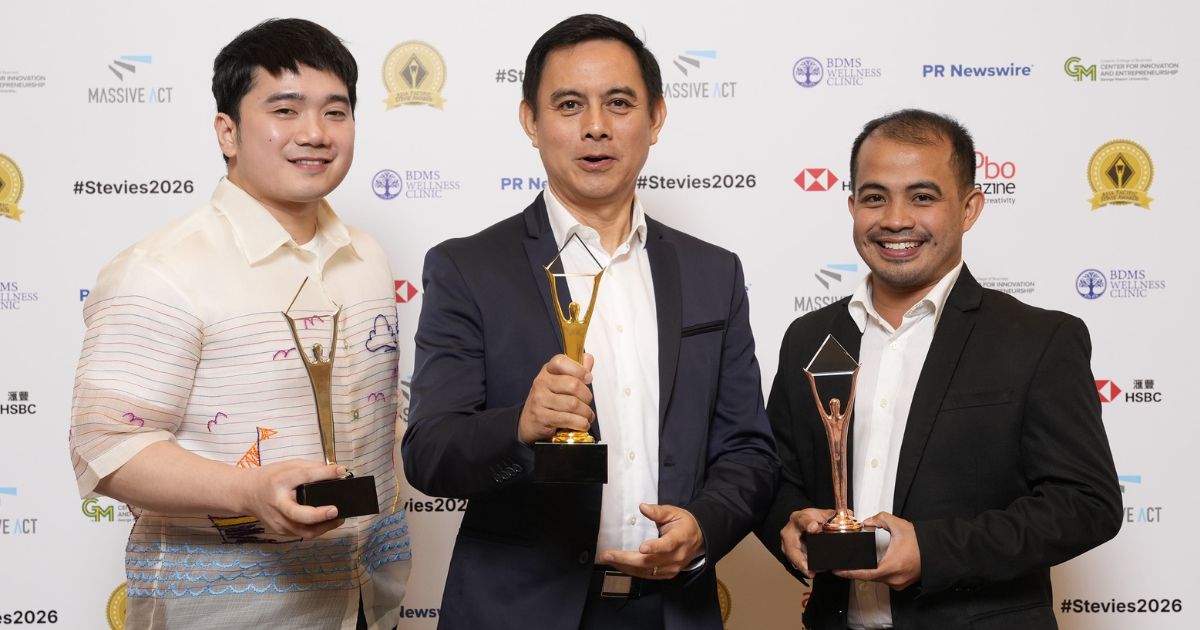
Meanwhile, at the 2026 Asia-Pacific Stevie Awards, Shell earned 10 awards, including 3 Gold Stevies, recognizing the company’s initiatives in investor relations, revenue generation, stakeholder engagement, digital transformation, and corporate social responsibility. Among the Gold-winning initiatives were IR Transformation: Democratizing Investor Access in a Micro-Cap Market, Shell’s 5x2y Story for e-commerce growth, and Project PASA, a circular economy initiative focused on repurposing end-of-use office assets.
Other recognitions include Silver Stevie wins for Shell Lubricants Philippines’ Integrated Stakeholder Engagement Ecosystem, the Shell Lubricants Philippines Marketing Team, Plasticycle Project, and Shell LiveWire’s enterprise development program. Meanwhile, Bronze Stevie recognitions were awarded to Shell Pilipinas’ digital influencer campaigns for Shell Advance, Helix, and Rimula, the Shell Advantage Rewards App, and the Be Well program for employee well-being and mental health initiatives.
“At Shell, we continue to develop programs and solutions that support our people, strengthen communities, and respond to the evolving needs of the industry,” said Serge Bernal, Shell Pilipinas Corporation Vice President of Corporate Relations. “These recognitions inspire us to keep innovating and creating initiatives that deliver meaningful and lasting impact.”
Federal Express Corporation, one of the world’s largest express transportation companies, is strengthening its support for Asia Pacific businesses as they prepare for the European Union’s removal of the de minimis duty exemption on July 1, 2026. The change introduces new customs requirements and cost implications for cross-border shipments into Europe.
Ahead of the implementation, FedEx engaged more than 5,000 businesses across 12 Asia Pacific markets through a series of customer education webinars, supporting organizations from small and medium-sized enterprises (SMEs) to multinationals with practical guidance to navigate evolving customs clearance requirements, maintain operational efficiency, and reduce the risk of unexpected costs in an increasingly complex trade environment.
Awareness high, readiness uneven
Post-webinar insights reveal strong awareness of the EU de minimis changes, but a notable gap between awareness and readiness remains:
Just over half, or 59% of APAC businesses, report being fully or mostly prepared, while 41% remain at an early stage or unprepared
Key barriers include:
Limited access to clear, actionable guidance (27%)
Lack of internal expertise on EU customs regulations (24%)
Difficulty keeping pace with evolving rules and timelines (22%)
Businesses that are not fully prepared for new product data requirements, product identifiers, EU-wide handling fees, and stricter documentation standards may face delays at EU borders once the changes take effect.
Businesses recalibrate cost and trade
Rising compliance requirements and cost pressures are prompting businesses to reassess their approach to European markets. 45% of respondents cite EU customs regulations as a constraint to growth, driven by higher landed costs (24%) and increased compliance burdens (23%).
More than one-third (36%) have already adjusted or plan to adjust their EU pricing, while half say the changes are influencing their trade corridor strategies, leading to a reassessment of market priorities. Among those diversifying beyond Europe, Intra-Asia (28%) and the United States (23%) are emerging as key alternatives, highlighting the importance of strong regional and global logistics connectivity.
Helping businesses move forward with confidence
“As global trade continues to evolve, businesses across Asia Pacific are navigating increasing regulatory complexity while pursuing growth across key markets,” said Salil Chari, president, Asia Pacific, FedEx. “At FedEx, we combine deep trade expertise, digital capabilities, and the strength of our global network to help businesses adapt quickly, operate with confidence, and continue growing across Europe and beyond.”
Support to navigate regulatory change
FedEx is expanding support to help customers stay compliant and keep shipments moving:
1. Digital systems aligned to new requirements
· With 29% of businesses identifying digital customs and compliance tools as a top priority, FedEx shipping, invoicing, and clearance platforms are already aligned to meet new EU customs processes and data requirements, helping customers continue to ship with confidence.
2. Practical guidance and expert access
As 25% of businesses seek clearer, step-by-step regulatory guidance, FedEx has launched a proactive customer support program including:
· Direct outreach and detailed guides on Product Identifier (PID) requirements and the Import One-Stop Shop (IOSS).
· Access to FedEx clearance and compliance specialists for support on classification, documentation and customs processes.
· A dedicated EU de minimis information page across APAC markets with regularly updated guidance, videos, and trade resources.
3. Strengthening Asia-Europe Connectivity
To support continued trade across the critical Asia–Europe corridor, FedEx is enhancing network capacity and flexibility, including:
· A total of 26 weekly flights supporting APAC to Europe shipments, enabling express deliveries in as little as 48 hours.
Enabling continuity in a changing trade environment
As businesses adapt to new regulatory realities, FedEx remains focused on ensuring continuity, helping customers stay compliant, manage costs, and maintain reliable access to European markets.
To access the latest EU compliance guidance and support resources, businesses are encouraged to visit the FedEx Go-To Europe Hub and contact their local FedEx representative for personalized support.
As part of its Father’s Day celebration, Maxim Rides & Food Delivery recognized four outstanding father driver-partners from across the Philippines for their dedication to supporting their families while providing excellent service to customers.
Maxim identified the top-performing driver-partners nationwide based on the number of completed orders in May 2026. The recognition was given to driver-partners who not only demonstrated outstanding performance on the platform but also fulfilled their responsibilities as fathers and providers for their families.
The awardees were Omar Uddin of Zamboanga City, Johnny Sanchez of Angeles City, Jerby Cuevas of Tacloban City, and Lee Paca of Cebu City. Their dedication, hard work, and commitment to supporting their loved ones earned them a place among Maxim’s most outstanding father driver-partners nationwide.
As a token of appreciation for their hard work and commitment, the awardees received grocery packages and a week of zero commission.
The initiative highlights the important role fathers play in their families and communities. Through their dedication and perseverance, these driver-partners support their loved ones while helping provide reliable transportation and delivery services to Maxim users.
“Fatherhood comes with great responsibility, sacrifice, and dedication. We are proud to recognize these outstanding father driver-partners who work tirelessly every day to support their families while providing excellent service to our customers,” said Andres Morales, Jr., President of Maxim Rides & Food Delivery.
Maxim continues to support its driver-partners through initiatives that recognize their contributions and help improve their earning opportunities. These include incentives and performance-based programs, such as the company’s permanent vehicle branding program, as well as campaign-based activities linked to community engagement efforts that provide additional income opportunities for driver-partners and their families.
Background Information
Maxim service launched in the Philippines in 2020, with Cebu being its first city of operations. Now its services are available to residents and guests of 19 more Philippine cities. In addition to providing delivery services, the service is a licensed Transport Network Company authorized to pre-arrange transportation of passengers by car. In Metro Manila and Cagayan de Oro, the company has been included in a pilot project to transport passengers on motorcycles.
The company develops innovative technologies that make ordering transport and other services more modern, accessible, and safe. The service has created a system that makes it possible to connect an unlimited number of clients and drivers, and process millions of orders. The Maxim app for ordering services and the Taxsee Driver app for fulfilling orders are among the world’s top apps with millions of users.
The company’s goal is to continuously enhance user experience and empower people to reach their destinations safely and efficiently.
While cybersecurity companies leverage AI to enhance threat detection, cybercriminals are weaponizing the same technology for automated phishing and malware attacks —highlighted by the fact that 43% of organizations believe hackers are using AI-driven methods to boost their effectiveness. To stay protected, organizations must adopt AI-powered platforms rather than relying on isolated tools.
Artificial intelligence has firmly established its presence in enterprise cybersecurity. Solution providers are embedding it to accelerate detection, reduce analyst workload and counter attacks that move faster than human responders can manage. While cybercriminals are using it to automate reconnaissance, generate convincing phishing content and scale operations that would previously have required significant resources and expertise.
This symmetry is the challenge. Every AI-driven capability available to cybersecurity providers is also available, or adaptable, to attackers. According to Kaspersky data, 21% of organizations believe cybercriminals are ahead in the technology arms race, with 43% saying criminals are able to adopt new technologies like AI to increase the effectiveness of their attacks.
Security leaders need to understand how AI is being weaponized, invest in AI-powered protection that is genuinely integrated into daily security workflows and approach the organizational and technical challenges of AI implementation with the same rigor applied to any critical infrastructure decision.
AI-based threats: how cybercriminals are using AI
The adoption of AI by threat actors is systematic. Attackers are integrating generative AI across the full attack chain: automating the creation of phishing lures, generating functional malicious code, improving the evasiveness of payloads and making social engineering more convincing at scale. What previously required skilled human operators can now be replicated and scaled cheaply.
Kaspersky’s Global Research and Analysis Team (GReAT) documented this shift in detail through its investigation of the RevengeHotels campaign, which targeted hospitality businesses across Latin America. Threat actors incorporated AI-generated code into their malware development and delivery process, producing more convincing phishing content and more evasive payloads than earlier iterations of the campaign.
The financial sector has also felt the impact directly. Kaspersky’s analysis of financial threat trends in 2025 identified AI as a key enabler of increasingly targeted fraud, social engineering and market manipulation attempts, with attackers using AI to model victim behavior, craft more persuasive lures and probe infrastructure at a pace and scale that manual methods cannot match.
The entertainment industry tells a similar story. Kaspersky identified AI as the thread running through the most significant emerging risks facing studios, content platforms and rights holders in 2026, from AI-generated deepfakes and content fraud to AI-assisted probing of content delivery infrastructure.
The common thread across these threat scenarios is speed and scale. AI removes the manual bottlenecks that previously constrained attackers, compressing the time between reconnaissance and compromise, between identifying a target and deploying a convincing lure, and between creating a payload and adapting it to evade detection. For defenders, the response time advantage that once existed is eroding.
AI-based protection: how security vendors are responding
The cybersecurity industry has responded to the AI threat landscape by embedding AI throughout the detection and response lifecycle. Kaspersky has extended AI-driven capabilities throughout its portfolio enabling security teams to understand what is happening across their ecosystems, why it matters and what to do next, delivering richer, faster and more actionable intelligence without increasing the burden on analysts.
AI has the potential to deliver wide ranging advantages. For instance, behavioral correlation rules can be used to establish a baseline of normal login activity and automatically flag anomalous events, triggering account theft alerts without requiring manual analyst review of individual log entries. While AI-powered asset scoring can continuously evaluate for risk based on the sequence and context of detected security events across the infrastructure. Assets with unusual or correlated patterns receive elevated risk scores and are automatically categorized by severity helping teams focus limited resources where exposure is greatest.
In addition, AI-enabled incident summarization can explain the attack chain, initial vector and adversary actions in plain language. Analysts can use this to immediately understand what happened without manually reviewing large volumes of raw event data, directly addressing the investigation bottleneck that strains under-resourced SOC teams. Meanwhile, AI-based assistants can deobfuscate command lines, provide analytical explanations and produces concise investigation reports, reducing cognitive load and accelerating analysis, especially in complex, multi-stage incidents.
In addition to these capabilities, there are many other AI-powered features that further assist cybersecurity companies in creating comprehensive and resilient solutions against evolving threats.
AI implementation in infrastructure: challenges and key steps
According to a 2025 Kaspersky survey, nearly every company planning to establish a SOC within the next two years (99%) intends to enhance it with AI. However, many of these organizations face a distinct set of organizational and technical challenges when integrating this technology into their security infrastructure, and approaching these challenges without a clear framework risk compounding the very problems AI is meant to solve.
Data quality and telemetry coverage: AI detection and correlation capabilities are only as effective as the data they operate on. Fragmented architectures with siloed data sources produce inconsistent telemetry that limits AI effectiveness. Organizations must prioritize centralized data collection across endpoints, identity, cloud and network before AI-driven correlation can deliver meaningful results.
Integration complexity and total cost of ownership: AI capabilities introduced as isolated features within fragmented stacks add integration overhead without delivering unified operational benefit. Infrastructure requirements, API complexity and ongoing model tuning can multiply initial investment costs significantly. Enterprises should evaluate AI security capabilities not by feature lists but by how effectively the underlying platform consolidates telemetry, eliminates manual context-switching and reduces total operational burden.
Skill gaps and change management: AI tools that require deep technical configuration to operate effectively may widen rather than narrow capability gaps in under-resourced teams. The most operationally effective AI implementations are those that embed intelligence directly into analyst workflows.
Responsible AI governance: As AI becomes embedded in security operations, enterprises must also consider the governance framework governing those tools. Kaspersky has committed to responsible AI development as a signatory to the EU AI Pact, going beyond baseline compliance requirements and actively integrating principles of transparency, human oversight and risk-based governance into its AI practices.
The practical steps for organizations navigating AI integration are as follows:
Consolidate telemetry into a unified platform before layering AI capabilities. Fragmented data limits AI effectiveness
Evaluate AI security tools based on workflow integration, not feature count. The measure is analyst time saved, not capabilities listed
Prioritize platforms where AI capabilities are built-in rather than bolted on, to minimize integration overhead and reduce TCO
Establish internal AI governance standards that align with emerging regulatory requirements and vendor accountability frameworks
Run phased deployments with measurable outcome baselines to validate AI impact before full-scale rollout
Building a resilient AI strategy
The question for enterprise security leaders is not whether to engage with AI, but how to implement it in a way that delivers genuine operational benefit rather than added complexity.
The answer lies in integration. AI capabilities that operate in isolation, or that require significant manual configuration to function, add overhead without reducing risk. AI embedded directly into unified detection and response workflows is where the operational gains are realized. Kaspersky Next Expert product line is built on this principle, embedding AI across detection, investigation and response within a unified platform designed to scale with enterprise environments without scaling headcount or operational complexity.
Organizations ready to transition from AI aspiration to AI implementation can discover how to make the process seamless with the dedicated Kaspersky’s expert guidance.