Tag: data center

  • The Tiny Leaks Costing Millions: How Cooling Gaps Threaten Data Center Efficiency

    The Tiny Leaks Costing Millions: How Cooling Gaps Threaten Data Center Efficiency

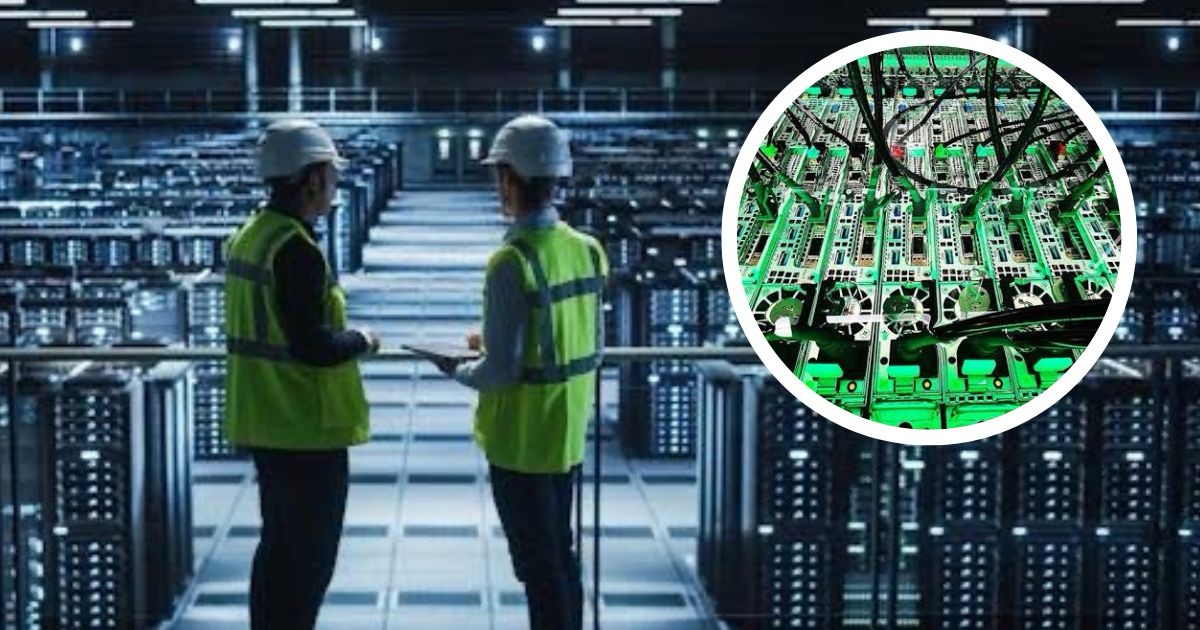
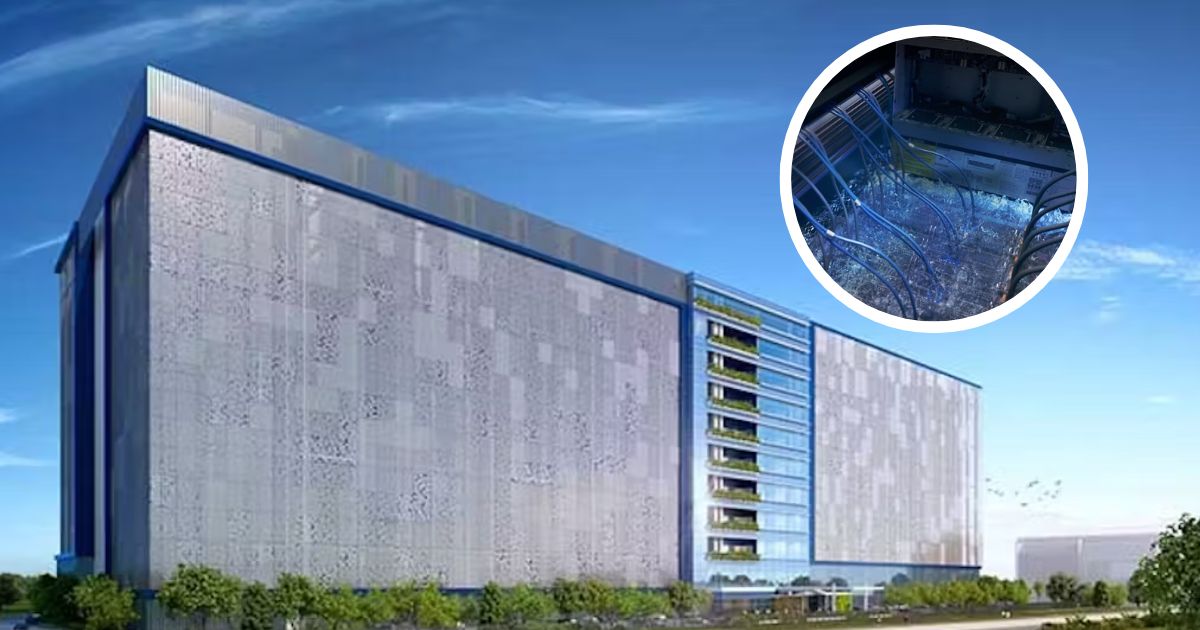
    A modern data center building featuring a sleek facade, accompanied by an inset image showing server equipment and cooling systems inside.

    Walk into a modern data center and you’ll see a carefully choreographed dance of airflow. Rows of servers are aligned like soldiers, cold air rushing through one aisle, hot air expelled into another.

    This system—known as hot aisle/cold aisle containment—is designed to keep machines cool while minimizing energy waste.

    But what most visitors never notice are the tiny gaps beneath racks, misaligned floor tiles, or improperly sealed spaces that allow air to mix. These small leaks, almost invisible to the eye, can quietly cost data centers millions each year.

    “It’s death by a thousand cuts,” said Alan Mendoza, a cooling engineer who has worked with hyperscale facilities in Southeast Asia. “Every little leak erodes efficiency. One tile left unsealed may not seem like much, but multiply that across thousands of square feet and suddenly your cooling system is working twice as hard.”

    The science of separation

    At its core, hot aisle/cold aisle containment is about discipline. Servers are lined up so that the fronts (air intakes) all face a cold aisle, while the backs (exhausts) push hot air into a separate hot aisle. Containment structures—like partitions, doors, and blanking panels—are then added to keep the two streams from mixing.

    When done correctly, this design allows operators to raise supply air temperatures without risking overheating, cutting down on energy-intensive cooling. A 2022 Uptime Institute report noted that effective containment can improve energy efficiency by up to 40 percent.

    But the system is only as strong as its weakest seal. Gaps under racks, unsealed cable cutouts, or even doors propped open by staff can let hot air seep into cold aisles. These breaches force cooling units to compensate, negating the very savings containment was meant to achieve.

    Real-world impact

    In one case study from a Singapore-based data center, engineers discovered that improperly sealed cable cutouts were allowing hot air to recirculate back into cold aisles. The leak raised inlet temperatures by 4°C across several racks, triggering cooling units to ramp up. The facility’s monthly energy bill increased by an estimated $50,000 before the issue was resolved.

    “Everyone obsesses about PUE [Power Usage Effectiveness],” Mendoza explained. “But you can’t improve PUE if you’re literally letting cold air escape and hot air sneak back in. It’s like running an air conditioner with your windows open.”

    Smaller facilities face similar challenges. A mid-sized enterprise data center in Manila reported that sealing tile gaps and installing blanking panels reduced their cooling load enough to shut down one of their Computer Room Air Conditioners (CRACs).

    The move saved them 15 percent annually on energy costs.

    The overlooked culprit

    Containment leakage is often overlooked because it doesn’t present itself as a dramatic failure. Servers don’t immediately shut down, and alarms don’t always go off. Instead, inefficiency builds quietly, month after month.

    “Cooling leaks are like background noise,” said Dr. Naomi Chu, a professor of mechanical engineering who researches thermal management at Hong Kong University of Science and Technology.

    “They rarely cause outages, so they don’t get urgent attention. But they bleed money and increase carbon footprints in ways most executives don’t realize.”

    Fixing the invisible problem

    Addressing containment leakage requires both design foresight and ongoing discipline. Experts recommend:

    • Blanking panels to cover unused rack spaces.
    • Brush grommets and floor gaskets to seal cable cutouts.
    • Thermal imaging cameras to detect hidden leaks.
    • Strict access protocols to ensure doors and panels remain closed.

    Some operators are experimenting with AI-driven airflow modeling, which uses real-time sensor data to pinpoint inefficiencies and recommend fixes. Others are turning to modular containment systems that can be reconfigured without leaving gaps when equipment changes.

    But ultimately, experts say culture is as important as technology. “You can spend millions on design, but if technicians leave panels open during maintenance, you’re back to square one,” Mendoza noted. “Containment has to be treated as a living system, not a one-time install.”

    The bigger picture

    With global data centers consuming an estimated 2 percent of the world’s electricity, efficiency isn’t just about cost—it’s about sustainability. Every watt wasted on cooling because of leaks represents unnecessary carbon emissions. As governments and investors push operators to meet green targets, addressing micro-leaks is becoming both a financial and reputational imperative.

    “Energy efficiency isn’t only about buying greener hardware,” Chu said. “Sometimes the biggest wins come from paying attention to the smallest details.”

    The quiet war against waste

    In the world of data centers, battles are often fought against headline-grabbing threats like cyberattacks or power outages. But the quiet war against tiny cooling leaks may prove just as consequential. The stakes are measured not just in dollars, but in sustainability.

    And as Mendoza put it, “The devil in data centers isn’t always in the big design flaws. Sometimes, it’s in the little leaks you didn’t bother to seal.”

  • Mining, Staking, and Authority: How Blockchain Consensus Shapes Data Center Design

    Mining, Staking, and Authority: How Blockchain Consensus Shapes Data Center Design

    A digital illustration of a blockchain, showcasing interconnected chains with binary code motifs, symbolizing data transfer and consensus mechanisms.

    When most people think of blockchain, they imagine digital currencies, smart contracts, or flashy crypto headlines. Rarely do they consider the hidden strain these systems place on the very data centers that support them.

    But behind every transaction, token transfer, or decentralized app lies a critical decision that shapes infrastructure: the choice of consensus mechanism.

    Consensus mechanisms—Proof of Work (PoW), Proof of Stake (PoS), Proof of Authority (PoA), and others—dictate how nodes in a blockchain network agree on the state of the ledger.

    What most outsiders miss is that these protocols also dictate how data centers must allocate resources, from CPU and GPU cycles to network bandwidth and storage I/O.

    Understanding the resource profiles

    Proof of Work, the mechanism famously used by Bitcoin, is synonymous with massive computational demand. Miners race to solve complex cryptographic puzzles, consuming vast amounts of electricity and generating enormous heat. “PoW networks essentially run mini supercomputers in every data center,” said Dr. Javier Montoya, a blockchain infrastructure specialist at Manila Tech Labs. “You need high-end GPUs or ASICs, advanced cooling, and reliable power to keep operations stable.”

    Proof of Stake, on the other hand, changes the game. Instead of raw computation, validators stake cryptocurrency to gain the right to create new blocks. This dramatically reduces energy usage but introduces new demands: fast and reliable network connectivity to ensure validators can communicate without delays, plus storage optimized for ledger replication.

    “PoS is about consistency and uptime, not brute force,” explained Montoya. “Even milliseconds of network lag can cause missed block proposals, leading to penalties in some networks.”

    Proof of Authority, increasingly used in enterprise blockchains, is yet another model. Here, trusted nodes validate transactions, requiring lower computation but higher identity and security management. Data centers hosting PoA networks must prioritize secure access, auditing, and redundancy, rather than raw processing power.

    Real-world implications

    The type of consensus chosen has tangible effects on infrastructure cost and design. Bitcoin mining farms in Asia and North America often resemble industrial plants more than traditional server rooms, with rows of ASIC miners and specialized cooling systems. Energy costs can exceed millions of dollars monthly.

    By contrast, Ethereum’s shift from PoW to PoS reduced energy consumption by over 99 percent, according to the Ethereum Foundation, and allowed more conventional cloud infrastructure to host validator nodes. PoA deployments in supply chain or financial networks often run on modest servers, but with strict access controls and georedundant setups.

    “Choosing a consensus mechanism isn’t just a technical decision,” said Liza Tang, CTO at a blockchain startup in Singapore. “It’s a strategic infrastructure decision. Do you want high-energy mining rigs or efficient, network-sensitive validators? The choice affects hardware, cooling, bandwidth, and even how you negotiate power contracts with data centers.”

    Beyond hardware: operational strategy

    Experts warn that overlooking consensus implications can lead to performance bottlenecks or financial waste. In PoW setups, inadequate cooling can throttle miners or trigger downtime, reducing revenue. PoS networks face penalties for slow nodes, while PoA systems can suffer governance conflicts if authority nodes are poorly distributed.

    Monitoring tools are now being tailored for these distinct profiles. AI-powered dashboards track GPU load, validator latency, or authority node availability, helping operators fine-tune resource allocation.

    Some data centers have even designed hybrid environments capable of supporting multiple consensus types simultaneously, giving clients flexibility as blockchain protocols evolve.

    The future of blockchain-ready data centers

    As blockchain adoption spreads beyond cryptocurrency—into finance, supply chain, healthcare, and even government services—data centers will increasingly need to plan around consensus mechanisms. Analysts predict that by 2027, over 40 percent of enterprise blockchain deployments will run PoS or PoA, emphasizing network reliability and governance over raw computation.

    “Consensus choice is no longer abstract,” said Tang. “It dictates the architecture of the data center itself, from racks and cooling to network topology and storage. Operators who ignore this risk overspending on the wrong resources or, worse, failing under load.”

    In the end, blockchain may appear decentralized, but its heartbeat depends on carefully engineered data centers. Whether mining coins, validating stakes, or exercising authority, the nodes inside are only as strong as the infrastructure that supports them.

    For operators, developers, and investors alike, understanding the resource profiles of consensus mechanisms is no longer optional, it’s central to the future of digital infrastructure.

  • The Hidden Danger of Hypervisor Escapes in Data Centers

    The Hidden Danger of Hypervisor Escapes in Data Centers

    An image of a modern data center with rows of servers, featuring a man sitting at a workstation in the foreground and another man smiling while standing near the server racks.

    Data centers are often described as fortresses—hardened, monitored, and carefully segmented to protect the critical workloads inside. But even behind layers of firewalls, access controls, and monitoring dashboards, a subtle yet terrifying threat lurks: the hypervisor escape.

    A hypervisor escape occurs when an attacker breaches a virtual machine (VM) and breaks out to access the host hypervisor, the software layer that manages all the VMs on a physical server. The consequences are nothing short of catastrophic.

    “Once an attacker reaches the hypervisor, they essentially hold the keys to the entire server,” said Dr. Leona Marquez, a cloud security researcher at the Philippine Institute of Cyber Defense. “All other VMs running on that host become vulnerable—data, applications, even internal communications.”

    Rare, but high-stakes

    Though hypervisor escapes are rare, their impact is staggering. Multi-tenant data centers, where dozens or hundreds of clients share the same physical hardware, are particularly at risk. A single escape can compromise multiple businesses in one fell swoop.

    “Hypervisors are designed to isolate workloads,” explained Miguel Sison, CTO at CloudSecure Solutions. “But they are still software. Bugs, misconfigurations, or zero-day vulnerabilities can open a door that most people don’t even know exists.”

    Historically, attacks exploiting hypervisor flaws have been highly targeted. In 2017, security researchers demonstrated a proof-of-concept attack on VMware ESXi that could allow a malicious VM to execute commands on the host. While no widespread breach occurred, it sent a shockwave through the industry, forcing urgent patches and audits.

    The mechanics of the threat

    Virtualization is the backbone of modern data centers. Each VM behaves like a fully independent server, yet it shares hardware resources—CPU, memory, storage—managed by the hypervisor. This architecture is efficient, scalable, and cost-effective.

    The problem arises when the hypervisor itself is compromised. Attackers can exploit flaws in virtualization code or improperly configured privileges to “escape” the VM sandbox. From there, they can inspect other VMs, modify workloads, or even pivot to the broader network.

    “Think of it like a high-security apartment building,” said Marquez. “Each tenant has their own apartment, but if someone finds a way into the main control room, they can unlock doors, access cameras, and see everything happening in every unit.”

    Prevention and defense

    Fortunately, cloud operators and enterprise data centers are not defenseless. Regular patching of hypervisors, strict access controls, and micro-segmentation can dramatically reduce the risk. Additionally, security teams are increasingly using behavioral monitoring to detect anomalous activity within VMs that might indicate a breakout attempt.

    Industry best practices also emphasize minimizing multi-tenancy where possible. High-risk workloads, sensitive data, or regulatory-bound systems are often isolated on dedicated hardware, eliminating the potential cascade effect of a hypervisor escape.

    “Isolation is the simplest but most powerful defense,” Sison said. “If a sensitive VM runs on its own server, even if someone compromises a different VM, the damage is contained.”

    Real-world vigilance

    Despite best practices, vigilance is key. Many companies underestimate the subtlety of this threat because it rarely makes headlines. Unlike ransomware attacks or data leaks, hypervisor escapes often leave little trace unless carefully monitored.

    “Security isn’t just about blocking the obvious attacks anymore,” said Marquez. “It’s about thinking like an attacker, understanding how every layer of software could be exploited, and preparing for scenarios that seem improbable—but could be disastrous if they occur.”

    The quiet risk in the age of virtualization

    As virtualization and cloud adoption continue to grow, the potential impact of hypervisor escapes grows alongside it. Analysts estimate that over 90 percent of enterprise workloads now run on virtualized infrastructure, meaning a successful exploit could touch more businesses than ever before.

    For organizations relying on multi-tenant data centers, hypervisor escapes may be the hidden risk that never gets publicized until it’s too late. The message for IT teams is clear: patch diligently, monitor continuously, and never assume a VM is an unbreakable box.

    In the world of modern data centers, the real danger isn’t just outside the firewall—it’s the unseen vulnerabilities lurking between virtual walls.

  • 8 Insights from Nvidia’s Record-Breaking AI Quarter

    8 Insights from Nvidia’s Record-Breaking AI Quarter

    A smiling man wearing glasses and a black leather jacket sits on a stage, holding a microphone, with an NVIDIA logo graphic in the background.

    Nvidia is showing the world what AI-driven growth looks like. The company just posted record sales, led by its cutting-edge Blackwell GPUs and booming data center business. Here’s a deep dive into the highlights, challenges, and future outlook shaping Nvidia’s latest quarter.

    1. Record Revenue Hits $46.7 Billion
    Nvidia reported $46.7 billion in revenue, marking a 56% increase from the same quarter last year. This growth is fueled by skyrocketing demand for AI computing, proving the company’s technology is indispensable to industries racing to implement AI solutions.

    2. AI Data Centers Dominate Sales
    Data centers brought in $41.1 billion in revenue this quarter, also up 56% year-over-year. Nvidia’s GPUs are the backbone of AI infrastructure, powering everything from cloud computing to AI research, making data centers the biggest driver of the company’s growth.

    3. Blackwell GPUs Lead the AI Revolution
    The Blackwell generation of GPUs accounted for $27 billion of Nvidia’s data center revenue. CEO Jensen Huang called Blackwell the “AI platform the world has been waiting for,” emphasizing its role as the go-to solution for high-performance AI workloads.

    4. Net Income Surges to $26.4 Billion
    Nvidia’s net income grew 59% from last year, reaching $26.4 billion. Strong margins on AI-focused products and consistent demand from tech companies and startups alike have helped the company significantly improve profitability.

    5. Nvidia Powers OpenAI’s GPT-OSS Models
    Earlier this month, Nvidia played a key role in launching OpenAI’s open-source GPT-OSS models. Its Blackwell GB200 NVL72 rack-scale system processed 1.5 million tokens per second, showcasing how Nvidia hardware underpins some of the most advanced AI models in the world.

    6. China Remains a Complex Market
    Nvidia faced hurdles selling its China-focused H20 chips. While $650 million in H20 chips were sold outside China, regulatory uncertainty and government discouragement led to zero shipments to Chinese customers this quarter. This illustrates the ongoing geopolitical challenges facing global chipmakers.

    7. Uncertain Regulations Affect Expansion
    The U.S. now allows Nvidia to sell advanced GPUs to China with a 15% export tax. However, the arrangement isn’t codified as federal regulation, creating uncertainty. CFO Colette Kress highlighted that shipments remain paused until clarity is achieved, affecting potential revenue growth in the region.

    8. Third Quarter Outlook Shows Continued Strength
    Nvidia expects $54 billion in revenue in the third quarter, even without any H20 sales to China. The company allows for a 2% margin of variance, reflecting strong confidence in AI-driven demand and continued growth in data centers globally.

    Nvidia’s earnings underline the central role of AI in shaping the tech landscape. With record revenue, Blackwell GPUs powering advanced models, and strong data center demand, the company is riding the AI wave even as regulatory hurdles in China present challenges for future expansion.

  • When the Storm Is Inside: The Hidden Battle of East–West API Chatter in Data Centers

    When the Storm Is Inside: The Hidden Battle of East–West API Chatter in Data Centers

    At first glance, a data center is a fortress of order—rows of humming servers, blinking lights, and precision-engineered cooling systems working in unison. But beneath that polished exterior lies a tempest few outsiders recognize.

    It’s not an external cyberattack or a power outage. It’s an internal storm, one created by the very software architectures businesses now rely on: microservices.

    This storm has a name in the world of developers and network engineers: East–West API chatter. And though obscure to most, it’s rapidly becoming one of the biggest performance and security challenges inside modern data centers.

    The hidden traffic jam inside the walls

    Traditionally, network concerns in data centers centered on north–south traffic—the data flowing in and out of the facility between servers and the outside world. Security tools, firewalls, and monitoring systems were all built with this pattern in mind.

    But the rise of microservices architecture—where applications are broken into dozens or even hundreds of small, independently deployable services—has flipped the model.

    Now, the real action is inside. Every request, from booking a ride on Grab to streaming a Netflix show, may involve dozens of API calls between services just to display one screen.

    The result is a flood of east–west communication, server to server, app to app, API to API. A report by Cisco estimates that as much as 80 percent of data center traffic today is east–west. For many enterprises, the chatter inside dwarfs anything leaving or entering.

    “People imagine their app talks to a database and that’s it,” said Dr. Celina Navarro, a cloud infrastructure researcher at the Asian Institute of Digital Systems.

    “In reality, it’s more like a busy airport where every service is constantly calling out to ten other services, checking status, authenticating, sending logs. The internal noise is overwhelming.”

    When microseconds become million-dollar problems

    The problem with east–west chatter isn’t just the volume—it’s the cascading effect of delays.

    Consider an e-commerce site with 50 microservices. If one API call takes just 20 milliseconds longer than expected, and each user request triggers 40 inter-service calls, that tiny slowdown snowballs into a noticeable lag for customers.

    For businesses competing on speed, those milliseconds translate into abandoned carts and lost revenue.

    A 2023 study by Akamai found that a 100-millisecond delay in load time can reduce conversion rates by 7 percent. For companies processing billions in transactions, east–west bottlenecks can quietly drain millions from the bottom line.

    Developers, meanwhile, face an uphill battle. Tools designed for monitoring north–south traffic often fail to capture the full picture of service-to-service chatter. What looks like a healthy system at the perimeter can be on the verge of collapse inside.

    Real-world wake-up calls

    The consequences have already been felt in high-profile failures. In 2021, a European fintech company experienced a multi-hour outage traced back not to a cyberattack or power failure, but to an internal feedback loop of API calls between microservices.

    What started as a retry storm from one service propagated across the architecture, overwhelming the network fabric.

    Similarly, a Southeast Asian e-commerce giant reportedly lost an entire day of transactions during a major shopping festival due to east–west congestion. The issue wasn’t server capacity but misconfigured internal APIs that flooded the data center’s backbone.

    “East–west traffic is like cholesterol,” quipped Miguel de los Reyes, a senior systems architect at a global payment processor. “You don’t see it until something clogs. By then, the damage is already happening.”

    The search for solutions

    To handle the storm, companies are increasingly turning to software-defined networking (SDN) and service mesh architectures. These technologies give operators the ability to monitor, route, and secure traffic inside the data center with a granularity impossible through traditional methods.

    Service meshes such as Istio or Linkerd, for example, insert lightweight proxies alongside each microservice, providing observability and control. They can enforce encryption between services, reroute traffic away from failing nodes, and even throttle noisy neighbors.

    But these solutions come at a cost. “Every proxy you add introduces latency and consumes CPU cycles,” said Navarro. “It’s like putting traffic cops at every intersection—necessary, but also resource-intensive. Balancing control and efficiency is the real art.”

    Some organizations are experimenting with AI-driven traffic analysis, where machine learning models predict bottlenecks before they occur. Others are building “observability-first” cultures, training developers to think about how their microservices behave in production, not just in code.

    A cultural shift as much as a technical one

    Experts agree that tackling east–west API chatter isn’t just a matter of buying new tools. It requires a mindset shift among developers and business leaders.

    In many organizations, developers ship features without full awareness of how much internal traffic those features generate. A single poorly designed API can add hundreds of unnecessary calls. Similarly, leadership often underestimates the operational costs of microservices, assuming modularity automatically equals efficiency.

    “There’s a myth that microservices solve scaling,” said de los Reyes. “In truth, they trade one set of problems for another. You get flexibility, but you also get chatter. Success depends on recognizing and managing that trade-off.”

    The storm ahead

    As enterprises continue to break down monolithic applications into ever smaller components, east–west traffic will only intensify. Analysts predict that by 2027, the average enterprise data center will host 1,000 or more microservices per critical application.

    Without robust strategies for monitoring and optimizing internal chatter, outages and slowdowns will become more common.

    For now, the message is clear: the biggest threats to performance and reliability may not come from hackers at the gates, but from the chaos within.

    The storm isn’t outside the fortress—it’s brewing in the hallways.

  • Inside Redfin’s Data Centers: How Technology Powers Modern Real Estate

    Inside Redfin’s Data Centers: How Technology Powers Modern Real Estate

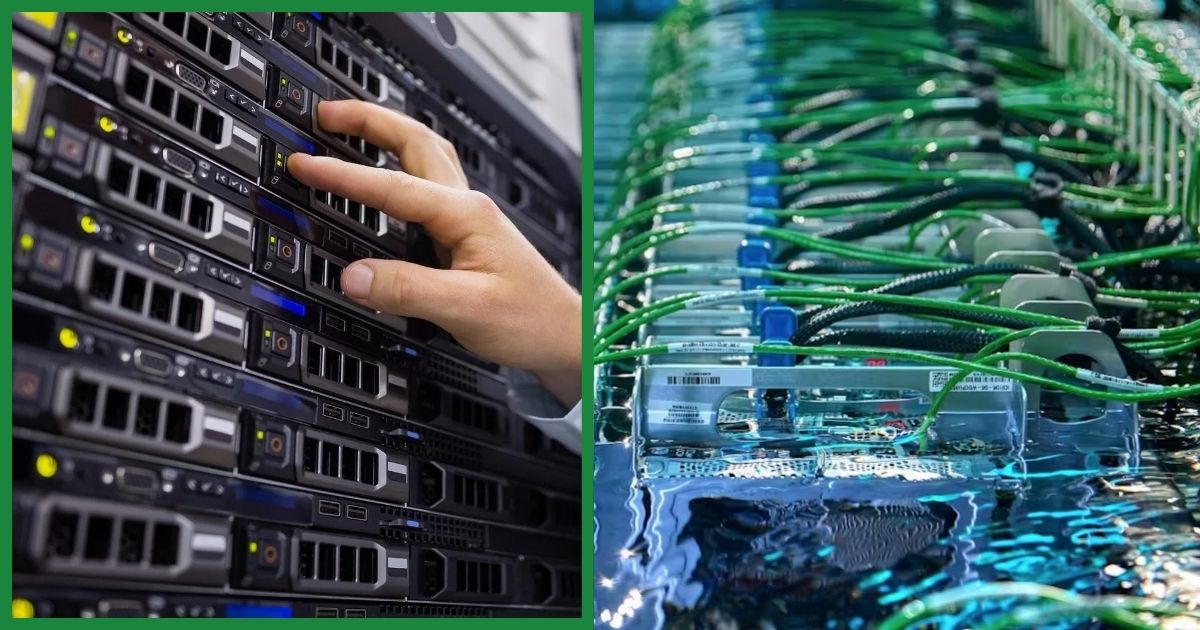
    A close-up of a person adjusting components on a server rack, showcasing various server units.

    Redfin has transformed the real estate industry by combining property listings with advanced technology, creating a platform that allows millions of buyers, sellers, and agents to access real-time data, analytics, and insights.

    At the core of this innovation are Redfin’s data centers—highly sophisticated facilities that do far more than store servers.

    These centers act as the digital backbone of Redfin’s operations, powering search functionality, predictive analytics, AI-driven recommendations, and secure user interactions across its platform.

    Understanding how these data centers operate reveals why Redfin can deliver faster, smarter, and more reliable real estate services than many competitors.

    Managing Vast Volumes of Real Estate Data

    One of the most critical functions of Redfin’s data centers is handling massive amounts of data generated every second.

    Multiple sources contribute to this information ecosystem: MLS feeds, public property records, demographic and economic indicators, user-generated content, and transactional history.

    Each listing requires continuous updates to reflect price changes, availability, status, and photos.

    Redfin’s data centers are engineered to process and store these terabytes of information efficiently, ensuring that property searches are accurate and up to date.

    Without this infrastructure, real-time search results and immediate market updates would be impossible.

    Advanced Analytics and Predictive Modeling

    Redfin’s platform goes beyond simply displaying homes—it provides actionable insights for both buyers and sellers.

    The Redfin Estimate tool, for instance, leverages machine learning algorithms to analyze historical sales data, current market trends, and neighborhood-specific factors to predict property values.

    Data centers provide the computational horsepower necessary for these models to process millions of variables simultaneously.

    Analysts estimate that predictive real estate tools like Redfin’s can reduce the decision-making time for buyers and sellers by 20–30%, giving Redfin a measurable edge in a fast-moving market.

    Security and Regulatory Compliance

    Handling sensitive personal and financial information requires robust security measures.

    Redfin’s data centers are fortified with multilayered defenses, including encryption at rest and in transit, advanced intrusion detection systems, biometric access controls, and continuous monitoring.

    In addition, compliance with global regulations such as GDPR and CCPA is embedded into operational procedures.

    These measures not only protect users from potential breaches but also ensure that Redfin maintains the trust of clients and partners in a competitive, highly regulated real estate environment.

    Scalability to Meet Market Demands

    Real estate activity fluctuates seasonally, and market booms can generate sudden spikes in traffic. Redfin’s data centers are designed for dynamic scalability, capable of expanding resources during peak demand without any performance degradation.

    By integrating virtualization and cloud technologies, Redfin can balance workloads across multiple servers, optimize storage, and ensure that users experience consistently fast load times and smooth interactions, regardless of market conditions or geographic location.

    Supporting Innovation and Emerging Technologies

    Redfin’s data centers also serve as platforms for experimentation and innovation. Engineers use the robust infrastructure to deploy AI-driven recommendation engines, virtual and 3D home tours, and enhanced analytics for agents.

    High-performance computing environments allow rapid testing, iteration, and deployment of new features without risking downtime.

    These capabilities enable Redfin to continuously improve user experience, accelerate product innovation, and maintain a competitive advantage over traditional real estate platforms and newer tech-driven entrants.

    Energy Efficiency and Sustainability

    Modern data centers consume significant energy, but Redfin’s operations incorporate energy-efficient designs to minimize environmental impact.

    From advanced cooling systems to optimized server utilization and renewable energy sourcing where possible, Redfin is reducing its carbon footprint while maintaining high performance.

    This balance between sustainability and operational efficiency reflects broader industry trends and reinforces Redfin’s commitment to responsible technology use.

    Redfin’s data centers are far more than storage warehouses—they are highly engineered, secure, and scalable ecosystems that enable the company to transform raw real estate data into actionable insights, real-time search results, and intelligent recommendations.

    From powering AI-driven tools to supporting vast analytics operations, ensuring compliance and security, and maintaining uninterrupted service during peak demand, these data centers are the silent engines behind Redfin’s innovation.

    For users, this translates to faster searches, smarter property estimates, more informed decisions, and a seamless real estate experience. For Redfin, the data centers represent a core competitive advantage, allowing it to maintain leadership in an increasingly digital real estate market.

  • Why Businesses Are Moving to Microsoft Azure: Cloud Power, Simplified

    Why Businesses Are Moving to Microsoft Azure: Cloud Power, Simplified

    Logo of Microsoft Azure with a cloud symbol in a tech-themed background, featuring a circular image of a man in glasses.

    Cloud computing has reshaped the way companies operate, and Microsoft Azure has emerged as one of the leading platforms driving this transformation. With its extensive suite of services, flexible deployment options, and strong enterprise support, Azure is helping businesses scale efficiently, innovate faster, and reduce IT complexity.

    A Platform Built for Businesses of All Sizes

    Microsoft Azure isn’t just for tech giants; it serves startups, SMBs, and multinational corporations alike. The platform offers more than 200 services, including virtual machines, databases, AI tools, IoT solutions, and analytics.

    This breadth allows companies to deploy workloads that match their unique business needs, from simple website hosting to advanced AI-driven applications.

    “Azure provides the flexibility to run any workload, anywhere,” said Carla Mendoza, cloud solutions architect at a leading financial firm. “Whether you’re scaling a startup or running mission-critical enterprise applications, Azure’s ecosystem supports you end to end.”

    Hybrid and Multi-Cloud Flexibility

    One of Azure’s strongest selling points is its hybrid cloud capabilities. Many organizations are hesitant to move everything to the cloud due to compliance, security, or operational concerns.

    Azure Arc and Azure Stack allow businesses to manage on-premises, multi-cloud, and edge environments from a single control plane. This flexibility ensures a gradual, secure transition without disrupting existing operations.

    According to Microsoft, over 95% of Fortune 500 companies use Azure for hybrid or multi-cloud deployments, demonstrating the platform’s ability to integrate seamlessly into complex IT environments.

    Security and Compliance at Scale

    Security remains a top priority for companies moving to the cloud. Azure provides built-in security features, including identity and access management, threat detection, and encryption for data at rest and in transit.

    Additionally, the platform supports compliance with more than 90 industry standards worldwide, from ISO certifications to GDPR and HIPAA.

    “Security is baked into Azure, not an afterthought,” said Tanveer Singh, IT security consultant. “Companies gain enterprise-grade protections without the overhead of managing multiple tools or vendors.”

    Accelerating Innovation With AI and Analytics

    Azure’s cloud infrastructure is more than storage and compute—it’s a platform for innovation. With tools like Azure Cognitive Services, Machine Learning, and Synapse Analytics, organizations can analyze massive datasets, automate workflows, and deliver smarter products.

    For example, retailers can leverage AI to predict demand, healthcare providers can analyze patient outcomes, and manufacturers can optimize production lines in real time.

    Cost Management and Efficiency

    Another advantage driving Azure adoption is cost control. Pay-as-you-go pricing allows companies to scale resources based on demand, avoiding wasted infrastructure spending.

    Azure Cost Management and Azure Advisor provide actionable insights to optimize cloud usage, helping businesses achieve better ROI while maintaining performance and reliability.

    Global Reach With Local Reliability

    Azure operates in more than 60 regions worldwide, offering low-latency connections and high availability. Organizations can deploy resources closer to their users, reducing downtime and improving the end-user experience.

    Combined with enterprise-grade SLAs, this global reach makes Azure a dependable backbone for critical operations.

    Businesses are moving to Microsoft Azure not because it’s the newest cloud platform, but because it combines flexibility, security, innovation, and global scale into a single ecosystem.

    From startups seeking to launch quickly to multinational enterprises managing complex workloads, Azure offers a path to streamlined operations, faster innovation, and long-term growth.

    For organizations still considering the shift, Azure proves that cloud adoption doesn’t have to be complicated.

    It provides the tools, support, and infrastructure to turn IT complexity into a competitive advantage, enabling companies to focus on what really matters: delivering value to customers and driving business forward.

  • Why Calling Data Centers “Just Server Rooms” Misses the Bigger Picture

    Why Calling Data Centers “Just Server Rooms” Misses the Bigger Picture

    A server room filled with rows of servers, featuring a person sitting in a chair working on a laptop, and another individual standing with headphones on in a data center.

    When most people hear the term “data center,” they often imagine a big, cold room filled with rows of blinking servers. While that image isn’t entirely wrong, it misses the bigger picture. Data centers are highly sophisticated facilities designed to ensure global digital services work seamlessly, securely, and sustainably. Let’s explore why reducing them to “just server rooms” doesn’t do them justice.

    More Than Servers

    Yes, servers are the heart of a data center, but they’re only one part of the system. Supporting them are power distribution units, backup generators, redundant cooling systems, fire suppression technology, and advanced networking gear. Each of these layers ensures that operations never stop, even during outages or disasters. A simple server room could never match this level of resilience.

    Designed for Reliability

    Data centers are built with redundancy in mind—meaning no single point of failure should disrupt operations. Facilities often follow the “N+1” or “2N” standard, where there’s always backup equipment ready to take over if something fails. That’s why critical industries like banking, healthcare, and government rely on certified data centers instead of traditional server rooms. The goal isn’t just storage, but uninterrupted uptime measured in “five nines” (99.999%) availability.

    Security Beyond Locked Doors

    Unlike small server closets, data centers are fortified with multilayered security. These include biometric scans, 24/7 surveillance, access control systems, and physical barriers. On top of that, cybersecurity protocols protect against digital threats. Treating data centers as mere server rooms ignores the fact that they function more like digital fortresses for sensitive information.

    Cooling as an Engineering Feat

    Server rooms often rely on basic air conditioning, but data centers require advanced thermal management. High-density computing generates enormous heat, and cooling innovations like liquid immersion, hot/cold aisle containment, and AI-driven airflow optimization have become industry standards. This level of engineering ensures efficiency while reducing energy consumption.

    Sustainability at Scale

    Another myth is that data centers are simply energy drains. In reality, modern facilities are pushing the boundaries of green technology. Operators increasingly run on renewable energy, achieve low Power Usage Effectiveness (PUE) ratios, and recycle heat for nearby communities. This scale of sustainability effort is far beyond what a server room can accomplish.

    Tier Standards Define the Difference

    One of the clearest distinctions between a simple server room and a true data center is the Uptime Institute’s Tier Classification System.

    • Tier I represents a basic setup with limited protection, similar to many server rooms, offering little redundancy and only about 99.67% uptime.
    • Tier II adds some redundancy, but still lacks the resiliency expected of mission-critical environments.
    • Tier III introduces concurrent maintainability, meaning any component can be serviced without taking systems offline, with 99.982% uptime.
    • Tier IV is the gold standard: fully fault-tolerant, offering 99.995% uptime, and engineered to survive major disruptions without downtime.

    These tiers make it clear why regulated industries, financial systems, and hyperscalers rely on Tier III and Tier IV facilities instead of server rooms that fall closer to Tier I.

    Everyday Dependence

    Perhaps the biggest oversight in calling them “just server rooms” is ignoring their impact on daily life. Every email, video call, online purchase, or social media post runs through a data center somewhere in the world. They’re not hidden closets—they’re the infrastructure that keeps society connected.

    Final Word

    Reducing data centers to “just server rooms” diminishes the complexity, security, and innovation behind them. They’re not just storage spaces for computers but critical, highly engineered ecosystems that power the modern digital age.

  • 5 Things People Get Wrong About Data Centers (And the Real Story Behind Them)

    5 Things People Get Wrong About Data Centers (And the Real Story Behind Them)

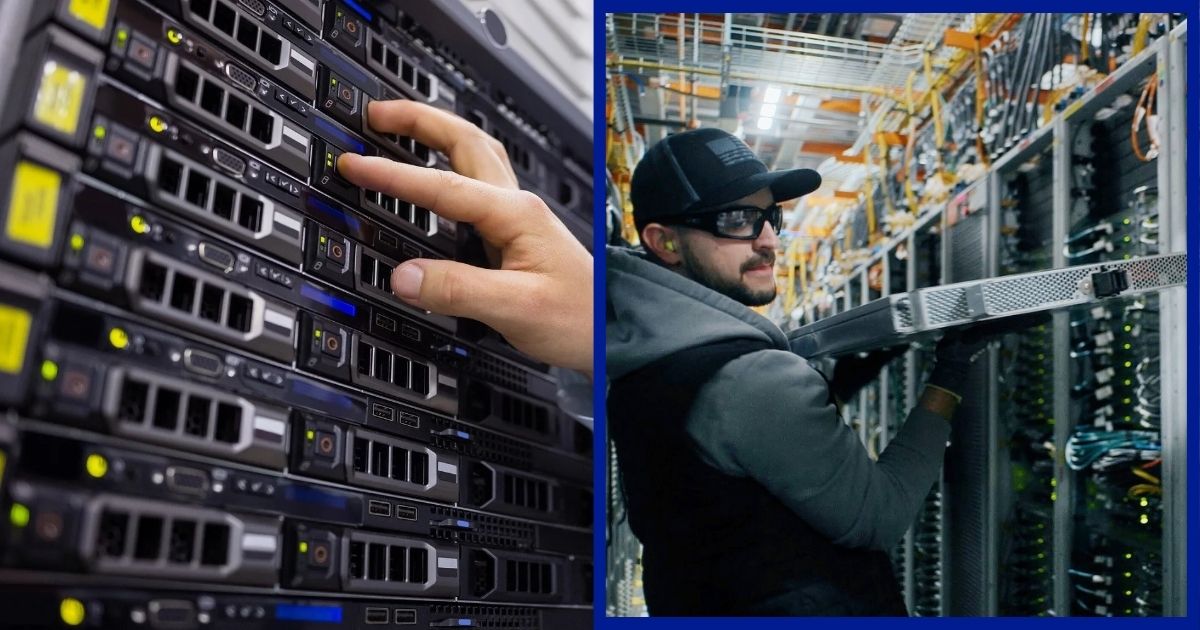
    A male technician working on a server in a data center, with an image of a female technician using a laptop on another server in the foreground. The background features rows of server racks illuminated with colorful lights.

    Data centers are the backbone of today’s digital economy, yet they’re often misunderstood. From how they store information to their role in sustainability, many of the ideas people hold are outdated or oversimplified. Let’s set the record straight.

    1. “Data Centers Are the Same as the Cloud”

    People often think “the cloud” is some invisible force floating in the air. In reality, the cloud lives inside physical data centers. These facilities house the servers, networking equipment, and storage systems that make cloud services possible. Without data centers, there is no cloud—only infrastructure that’s carefully managed and distributed around the world.

    2. “They’re Just Giant Warehouses of Computers”

    While racks of servers may be the most visible component, data centers are far more complex. They require redundant power systems, advanced cooling technologies, fire suppression, physical security, and intricate networking to keep workloads running 24/7. Calling them “warehouses” ignores the highly engineered ecosystems they are.

    3. “Cooling Is Just About Air Conditioning”

    A lot of people imagine data centers cooled by oversized office air conditioners. In truth, cooling has become a field of innovation on its own. From liquid cooling to AI-optimized airflow, operators are finding new ways to cut energy use while maintaining performance. According to Uptime Institute, cooling systems can account for up to 40% of a facility’s energy consumption, making optimization crucial.

    4. “They Waste Energy and Hurt the Environment”

    Data centers do consume large amounts of electricity, but the industry has become a leader in energy efficiency. Hyperscale providers like Google and Microsoft now run many facilities on 100% renewable energy, and average data center efficiency (measured as Power Usage Effectiveness, or PUE) has improved dramatically over the past decade. Modern designs actually drive sustainability in ways older IT setups never could.

    5. “Data Centers Don’t Affect Everyday Life”

    Some think data centers are only relevant to tech companies. The reality is, almost every digital interaction—whether it’s streaming a movie, making a bank transfer, or using a mobile app—relies on them. Data centers power e-commerce, healthcare, education, and government services, making them critical to both economies and societies.

    Data centers aren’t invisible nor simple—they’re advanced, evolving infrastructures that keep the digital world running. As the demand for faster, greener, and more reliable technology grows, understanding what they really are becomes more important than ever.

  • Data Center Interconnects: The Highways Powering Cloud and Hybrid IT

    Data Center Interconnects: The Highways Powering Cloud and Hybrid IT

    A technician adjusting server components in a data center, surrounded by server racks filled with equipment.

    As enterprises embrace hybrid and multi-cloud strategies, the role of data center interconnects (DCI) has become more critical than ever. These high-capacity links connect facilities across regions, ensuring seamless data flow, low latency, and resilient business operations.

    Why Interconnects Matter

    In the past, enterprises could rely on a single, centralized data center. Today, workloads are distributed across private facilities, colocation centers, and multiple public clouds. This creates a complex web of traffic that must be managed efficiently.

    “Interconnects are the highways of the digital economy,” said Andrew Kim, a network architecture lead at a major telco. “Without them, cloud strategies simply don’t work.”

    The Latency Factor

    One of the most pressing challenges is latency. According to Gartner, a one-second delay in application response can reduce user satisfaction by up to 16%. DCI addresses this by creating direct, high-speed routes between data centers and clouds, bypassing congested public internet paths.

    Financial services, streaming platforms, and AI applications are especially reliant on low-latency DCI to deliver real-time performance.

    Scaling with Demand

    DCI isn’t just about speed—it’s about scalability. A 2024 IDC report noted that global interconnection bandwidth is expected to exceed 33,000 terabits per second by 2027, reflecting skyrocketing demand from edge computing, 5G rollouts, and AI workloads.

    “Every new digital service—from self-driving cars to real-time analytics—pushes more data across interconnects,” Kim explained. “The infrastructure has to grow at the same pace.”

    Security and Resilience

    Another advantage of DCI is enhanced security. By keeping traffic off the public internet, enterprises reduce exposure to threats. Providers also design interconnects with redundancy in mind, ensuring that if one path goes down, another takes over instantly.

    This resilience is crucial for industries like healthcare and finance, where downtime can have massive financial or even life-threatening consequences.

    The Road Ahead

    As hybrid IT becomes the default, DCI will evolve further. Analysts expect to see increasing use of software-defined interconnects (SD-DCI), which allow enterprises to dynamically allocate bandwidth as workloads shift between clouds.

    “The future is programmable,” Kim said. “Interconnects won’t just be fixed circuits. They’ll adapt in real time to where applications and users need the most performance.”