Tag: data center

  • The Rise of Modular Data Centers: Scalable Infrastructure on Demand

    The Rise of Modular Data Centers: Scalable Infrastructure on Demand

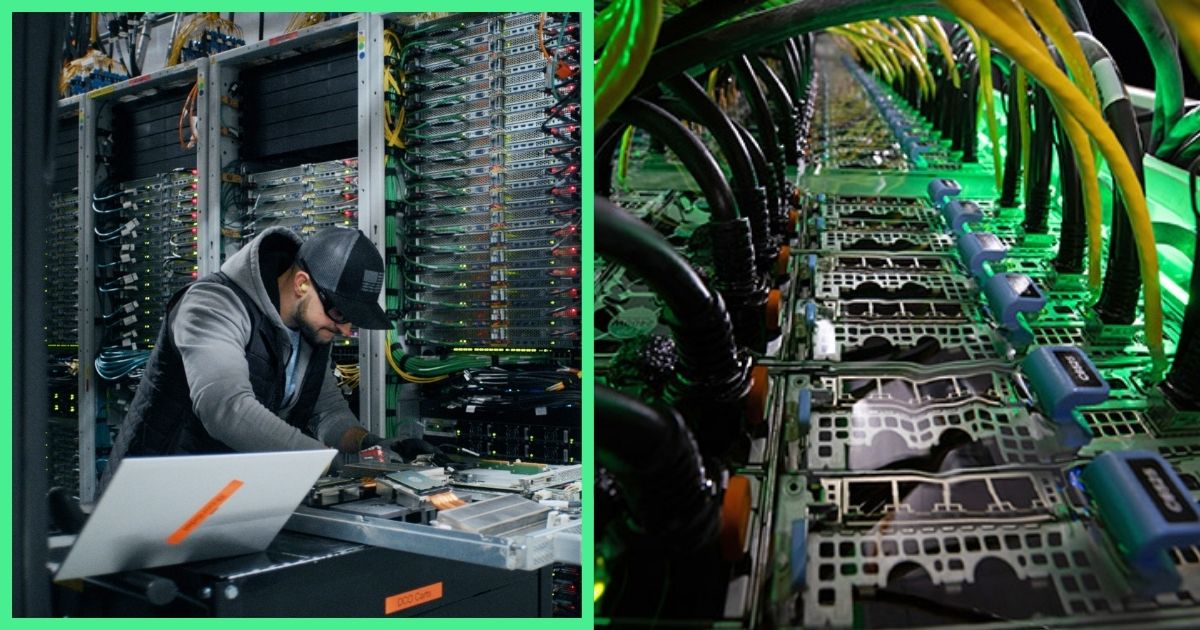
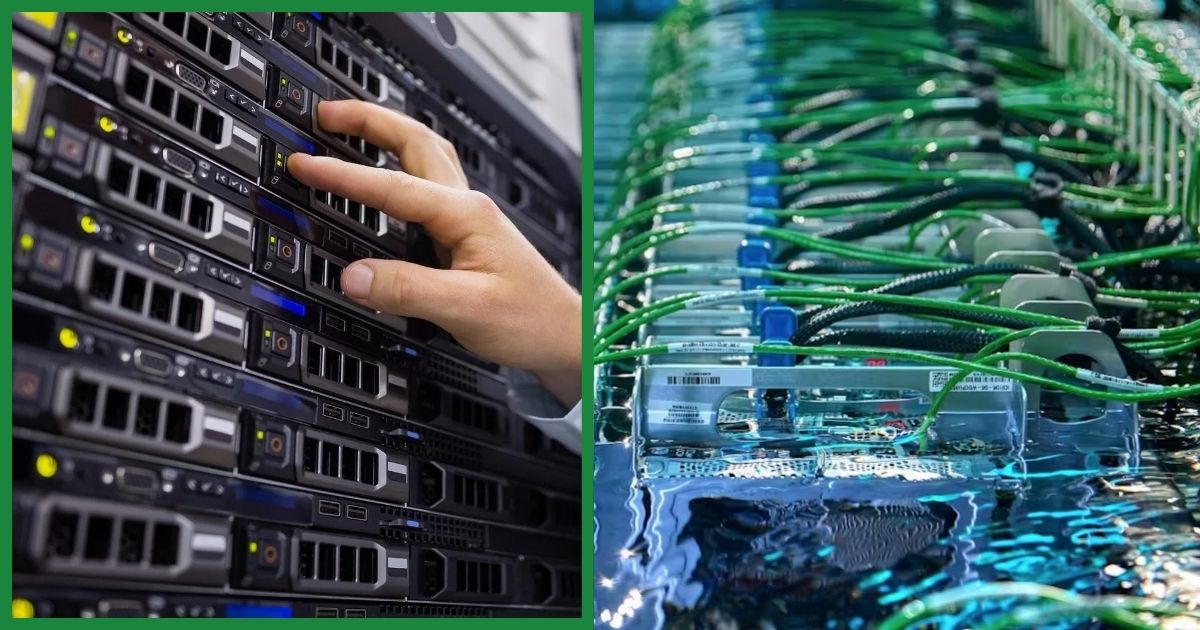
    A technician operating a server rack with multiple servers and illuminated indicators, showcasing technology used in modular data centers.

    As digital workloads surge, businesses need data centers that can keep pace without the delays of traditional construction. This demand is fueling the rise of modular data centers—prefabricated, scalable facilities designed for rapid deployment and efficiency.

    What Makes Modular Different

    Unlike conventional builds, which can take years to complete, modular data centers are assembled off-site in factory conditions and delivered in prefabricated units. These modules contain power, cooling, and IT capacity in a ready-to-deploy package.

    “Think of it as Lego blocks for infrastructure,” said Maria Lopez, an infrastructure strategist for a global colocation provider. “You can add capacity as needed, without overbuilding or waiting for long construction cycles.”

    Speed to Market as a Game-Changer

    Time-to-deployment has become a competitive differentiator. According to a 2023 Uptime Institute report, modular data centers can be deployed 30–50% faster than traditional facilities. This speed is especially critical for hyperscale cloud providers, telecom operators, and enterprises needing rapid expansion.
    For example, when demand for AI workloads spiked in 2023, several providers turned to modular builds to quickly add GPU-optimized capacity without reconfiguring entire facilities.

    Efficiency and Sustainability

    Modular designs aren’t just about speed—they’re also about efficiency. Prefabrication allows for precision engineering, tighter quality control, and reduced waste compared to on-site construction. Many modular units also integrate advanced liquid cooling or free-air cooling systems to lower power usage effectiveness (PUE).

    “Efficiency is built in from the ground up,” Lopez explained. “By standardizing components and optimizing designs, modular data centers often outperform traditional builds in both energy and water usage.”

    Meeting Industry-Specific Needs

    Different industries are finding unique applications for modular builds. Telecoms use them to extend 5G coverage at the edge. Financial firms deploy them in urban centers for low-latency trading. Even governments and militaries use modular units to bring secure computing power to remote or mission-critical locations.

    This adaptability makes modular data centers an attractive solution for organizations with varied and rapidly evolving needs.

    Looking Ahead: A Modular Future

    Analysts expect the global modular data center market to grow from $25 billion in 2023 to over $60 billion by 2028, driven by the demand for flexible, cost-efficient infrastructure.

    “The traditional model of massive, fixed-location data centers isn’t going away,” Lopez noted. “But modular is becoming the default choice for organizations that need speed, agility, and efficiency.”
  • Latency Matters: How Proximity and Network Design Shape Data Center Performance

    Latency Matters: How Proximity and Network Design Shape Data Center Performance

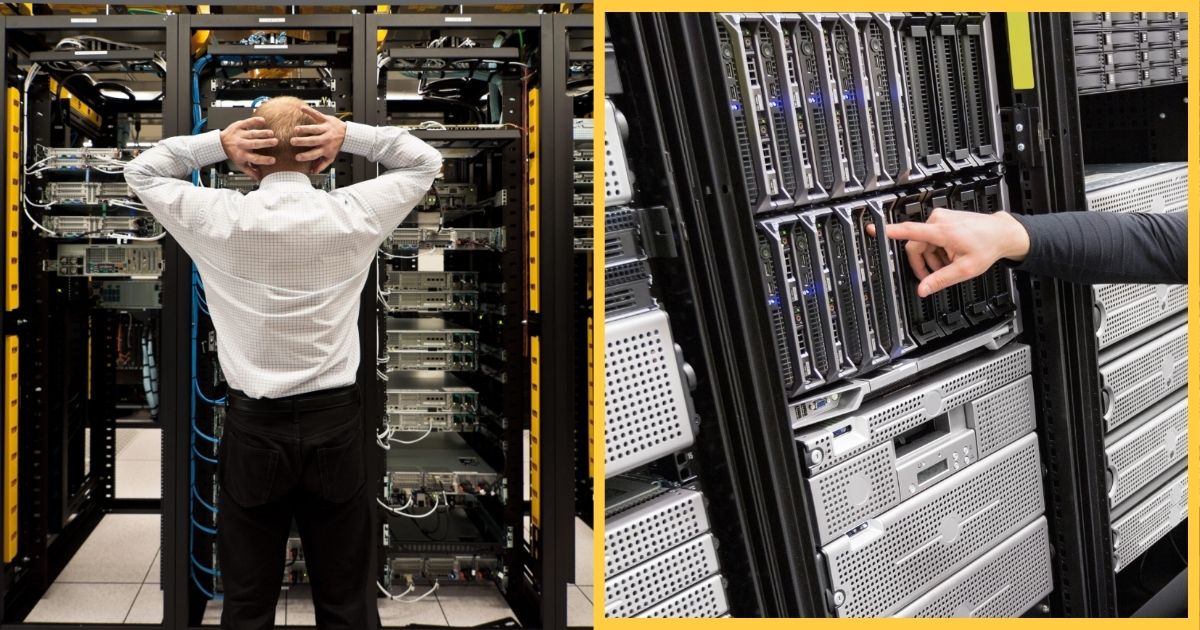
    A frustrated technician stands in front of a server rack, holding his head in distress, while another technician points at a server in a different rack.

    In today’s digital economy, speed is everything. Whether streaming a live sporting event, trading stocks, or training AI models, the difference between milliseconds can mean the difference between success and failure. At the heart of this race against time is data center latency—a measure of how quickly data can travel from one point to another.

    Why Latency Is Critical

    Latency directly impacts user experience and application performance. A 2023 Akamai study found that a one-second delay in page load can reduce conversion rates by up to 20%, while in industries like finance or gaming, even microseconds carry weight.
    “Low latency is no longer a luxury; it’s a requirement,” said Jason Kim, CTO of a U.S.-based cloud provider. “End users expect near-instant access, and that expectation puts pressure on data center design.”

    The Role of Proximity

    Physical distance plays a huge role in latency. Even at the speed of light, data traveling across continents experiences unavoidable delays. This has fueled the rise of edge data centers—smaller facilities strategically placed closer to end users and devices.
    For example, telecom operators are building edge sites near 5G towers to support real-time applications like autonomous vehicles and AR/VR. By processing data locally instead of sending it back to a centralized core, latency can be reduced from 50–100 milliseconds down to under 10 milliseconds.

    Network Architecture as a Differentiator

    While proximity helps, the design of the network itself is equally critical. Modern data centers are increasingly adopting software-defined networking (SDN) and high-speed interconnects to minimize bottlenecks.
    “Optimizing latency isn’t just about where your data center is located,” said Kim. “It’s about how your network is built and how traffic is managed within and between facilities.”
    Advanced routing techniques, fiber upgrades, and direct interconnects with major cloud providers all contribute to lower latency and higher reliability.

    Industry-Specific Demands

    Not all industries face the same latency requirements. Online retailers can tolerate slightly higher response times, but financial institutions demand single-digit millisecond performance to execute trades. Healthcare providers need low-latency connections for telemedicine, while AI workloads require rapid data movement between training clusters.
    These diverse demands are reshaping how operators design facilities, leading to specialized builds for different sectors.

    Future Outlook: Ultra-Low Latency

    As applications like metaverse platforms, real-time language translation, and robotics gain traction, demand for ultra-low latency will only increase. Analysts predict that by 2027, over 50% of enterprise data will be created and processed outside traditional data centers or the cloud, underscoring the shift toward distributed architectures.

    “Latency will define the next wave of digital infrastructure,” said Kim. “The winners will be those who balance proximity, network intelligence, and scalability.”

  • The Energy Equation: Why Data Centers Are Turning to Renewable Power Sources

    The Energy Equation: Why Data Centers Are Turning to Renewable Power Sources

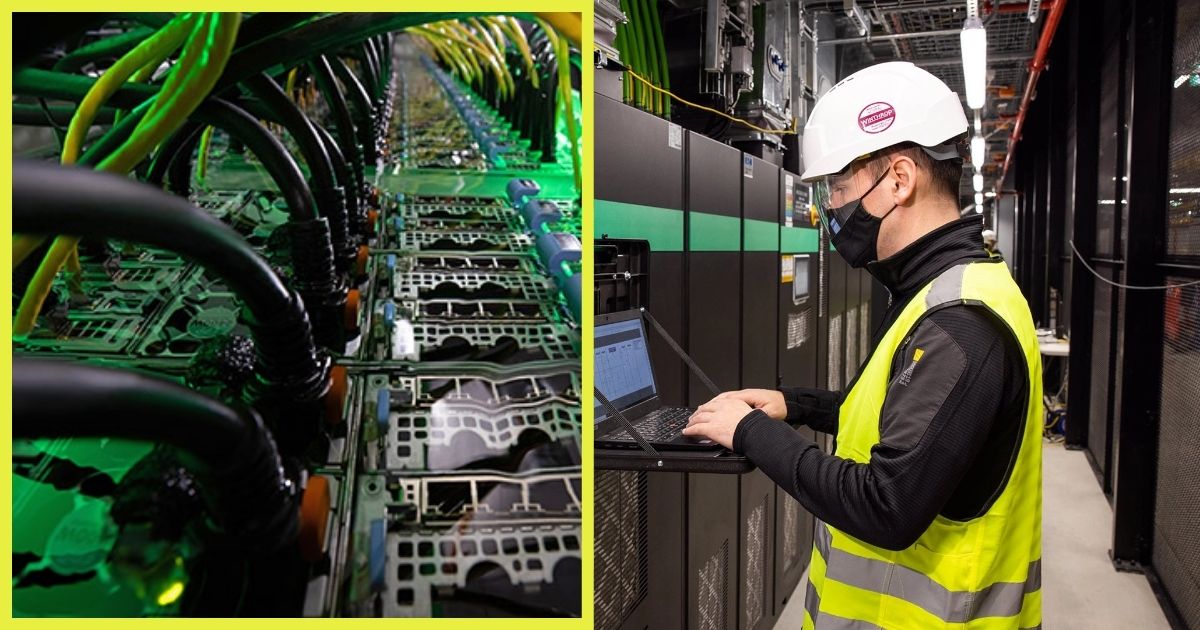
    A technician in a hard hat and safety vest monitors data center equipment, surrounded by server racks and bright green cables, highlighting the advanced technology of data centers.

    Data centers are the engines of the digital economy, but they are also among the largest consumers of electricity. As demand for cloud computing, AI, and digital services surges, so too does the industry’s energy footprint. To address both cost pressures and sustainability goals, operators are turning toward renewable power sources to keep facilities running efficiently without compromising performance.

    The Scale of the Energy Challenge

    The International Energy Agency (IEA) estimates that data centers consumed 460 terawatt-hours (TWh) of electricity in 2022, roughly 2% of global electricity demand. With the rapid growth of generative AI workloads and high-performance computing, analysts expect demand to double by 2026 if left unchecked.
    “The energy requirements of data centers are reaching a tipping point,” said Dr. Mark Liu, an energy consultant specializing in digital infrastructure. “Operators can no longer view renewable energy as an optional add-on—it has become a strategic necessity.”

    Why Renewables Make Business Sense

    Shifting to renewables isn’t just about reducing carbon footprints. Power purchase agreements (PPAs) with solar and wind farms offer predictable, long-term energy costs at a time when fossil fuel prices remain volatile. For hyperscalers like Google and Microsoft, renewables have become central to meeting both corporate sustainability targets and shareholder expectations.
    A 2023 Uptime Institute survey found that 62% of data center operators rank renewable integration as their top sustainability initiative, highlighting its growing importance in the industry.

    Hybrid Energy Models Emerging

    Few facilities can rely solely on renewables today due to intermittency challenges. Instead, hybrid models are emerging, where solar or wind power is combined with grid electricity, on-site batteries, or backup generators. Some operators are even exploring green hydrogen as a long-term solution to bridge gaps when renewable supply dips.
    “Resilience is critical for data centers,” said Maria Gonzalez, VP of Infrastructure at a European colocation provider. “Our approach is to blend renewable energy with storage and backup systems so customers never see downtime.”

    Geographic Advantage in Siting

    Location plays a huge role in renewable adoption. Data centers in regions with abundant sunlight or consistent wind can more easily tap into local clean energy sources. Northern Europe, with its mix of hydro and wind, has become a hub for sustainable facilities, while parts of the U.S. Southwest leverage solar farms at scale.
    This geographic advantage is increasingly influencing where new data centers are built, as sustainability becomes as important as connectivity and cost.

    A Future of Green Growth

    As governments tighten carbon regulations and enterprises demand greener supply chains, renewable integration will no longer be a differentiator—it will be an expectation. The industry is already moving in this direction: Amazon Web Services, for instance, announced it aims to run on 100% renewable energy by 2025, setting a new benchmark for others to follow.

    “The future of data centers is not just digital—it’s sustainable,” said Liu. “Operators that fail to integrate renewables risk falling behind in both cost competitiveness and customer trust.”

  • Edge vs. Core: How Data Centers Are Splitting Workloads for Speed and Efficiency

    Edge vs. Core: How Data Centers Are Splitting Workloads for Speed and Efficiency

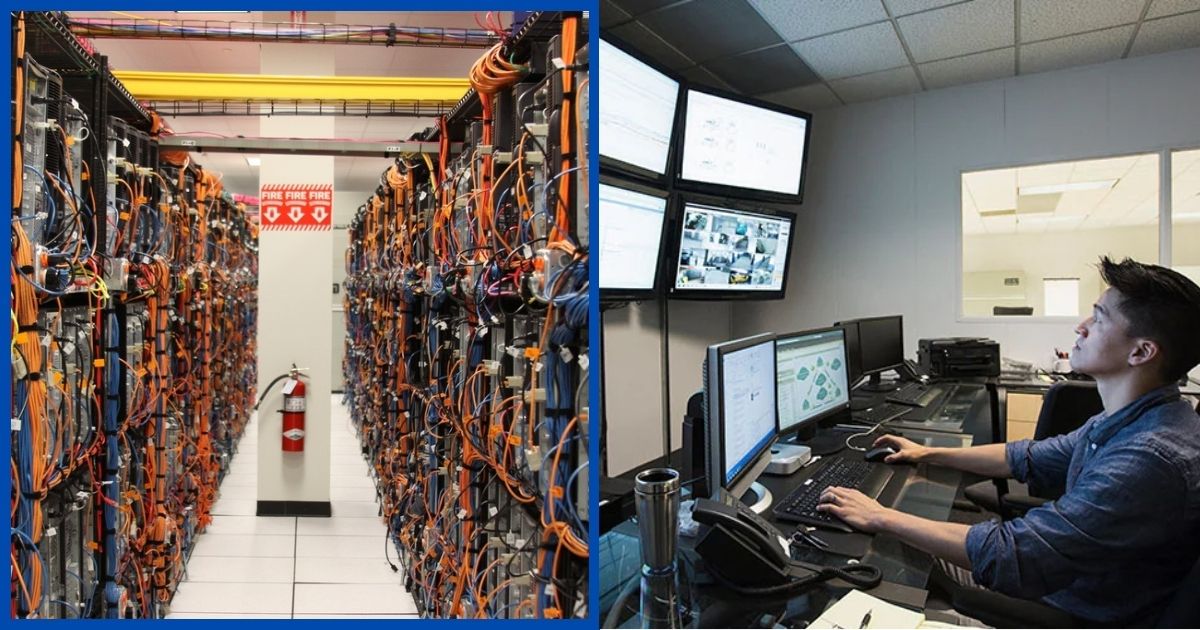
    A view of a data center filled with servers and networking equipment, showcasing a corridor lined with cables.

    As businesses increasingly rely on real-time applications, from streaming services to connected vehicles, data centers are evolving to handle workloads differently. Instead of keeping everything centralized, organizations are now balancing between core data centers and edge facilities—a strategy designed to maximize performance, reduce latency, and support the digital economy.

    Why Core Data Centers Still Matter

    Core data centers remain the backbone of enterprise IT. These large-scale facilities host massive amounts of storage and computing power, supporting functions that don’t require split-second responsiveness. Batch processing, analytics, enterprise applications, and long-term storage are examples of workloads that remain firmly rooted in the core.
    “Core data centers offer unparalleled resilience and scalability,” said Priya Nair, a senior analyst at Frost & Sullivan. “They serve as the foundation for mission-critical operations that need guaranteed uptime and compliance.”

    The Push Toward the Edge

    Where core data centers fall short is in latency. With applications like autonomous driving, video conferencing, and augmented reality, milliseconds make a difference. Edge data centers bring computing closer to the end-user or device, reducing lag by processing data locally before sending only what’s necessary back to the core.
    According to IDC, by 2026, 50% of enterprise data will be created and processed outside traditional data centers or the cloud, highlighting the growing role of edge computing.

    Workload Distribution in Practice

    Enterprises are no longer asking whether to choose edge or core but how to blend both effectively. For example, a retailer might run its real-time customer analytics at edge sites near stores, while centralizing historical trend analysis in its core facility. A logistics company could use edge for route optimization on the go, while long-term traffic data sits in the core for strategic planning.
    “Think of the edge as a sprinter and the core as a marathon runner,” said John Reyes, CTO of a global managed services provider. “Each is suited to different tasks, but together they form a complete strategy.”

    Challenges in Splitting Workloads

    The hybrid approach doesn’t come without obstacles. Managing distributed workloads introduces complexities around security, monitoring, and network reliability. Enterprises also need to ensure data consistency between sites, which can add operational overhead.
    Still, advances in orchestration tools and automation are making it easier to manage workloads across multiple environments, ensuring that performance doesn’t come at the expense of manageability.

    The Road Ahead

    As industries adopt 5G, IoT, and AI-driven applications, the edge-core balance will continue to shift. Core data centers will remain indispensable for scale and compliance, while edge facilities will grow to handle use cases demanding speed and proximity.

    In the words of Nair, “It’s no longer about one replacing the other. It’s about creating a fabric where edge and core complement each other to deliver the performance modern enterprises require.”

  • The Power Equation: Balancing Energy Demand and Sustainability in Modern Data Centers

    The Power Equation: Balancing Energy Demand and Sustainability in Modern Data Centers

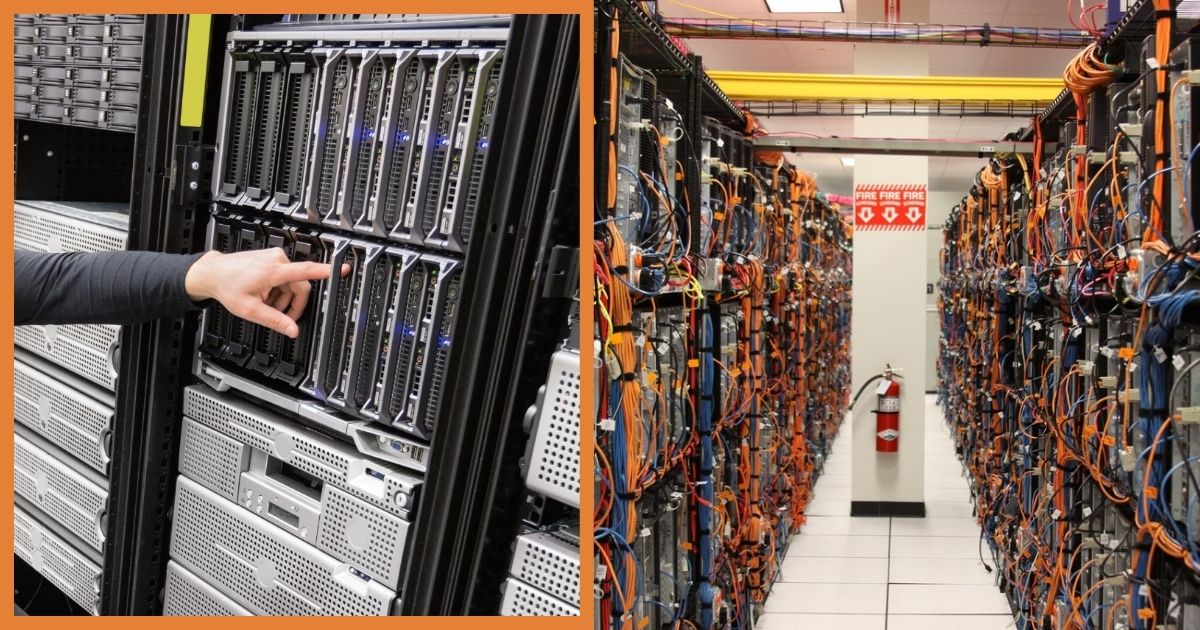
    A close-up of a hand reaching for a server in a data center, showcasing multiple servers with visible electrical ports and connections.

    Every photo uploaded, every AI prompt processed, and every financial transaction online relies on energy-hungry data centers. These facilities account for roughly 1–1.5% of global electricity consumption, a figure expected to climb as AI workloads and digital services surge.

    “The energy footprint of data centers is one of the industry’s biggest challenges,” said Miguel Tan, an energy strategist for digital infrastructure projects. “Operators are being pushed to meet exploding demand without adding to the world’s carbon problem.”

    Understanding the Energy Load

    A single hyperscale data center can consume as much electricity as 50,000 households, driven by:

    • IT Load (servers, storage, and networking gear)
    • Cooling Systems (air or liquid-based)
    • Supporting Infrastructure (UPS, lighting, monitoring systems)

    Operators measure efficiency using Power Usage Effectiveness (PUE), with the global average hovering around 1.55. The closer to 1.0, the more efficient the facility. Leaders like Google and Microsoft have already achieved PUE scores near 1.1 in some centers.

    Green Power: The Renewable Shift

    To address sustainability, data center operators are increasingly committing to 100% renewable energy sourcing. Wind, solar, and hydro power purchase agreements (PPAs) are now standard among top providers.

    “Renewables are no longer just about corporate image—they’re an operational necessity,” explained Tan. “Long-term PPAs also stabilize electricity costs in volatile energy markets.”

    Companies like Equinix have invested billions in renewable-backed operations, while hyperscalers are building on-site solar arrays and signing multi-decade wind contracts.

    Innovation in Cooling and Efficiency

    Cooling is the second-largest consumer of data center energy, making innovation critical. Advances include:

    • Liquid Cooling: Direct-to-chip systems that dramatically reduce cooling overhead.
    • AI-Driven Energy Management: Machine learning systems that optimize real-time power distribution.
    • Waste Heat Reuse: Facilities in Scandinavia and Europe now channel server exhaust heat into district heating systems.

    A study by Uptime Institute notes that direct liquid cooling can cut energy use by up to 30% in high-density racks compared to traditional air-based methods.

    Regulation and Accountability

    Governments are taking notice. The EU’s Energy Efficiency Directive requires large data centers to disclose energy performance data starting in 2024. In Asia, Singapore has imposed a moratorium on new data centers until stricter efficiency standards are met.

    These regulatory moves are pushing the industry toward transparency and accountability, ensuring that sustainability isn’t just marketing.

    The Balancing Act

    The data center industry faces a paradox: digital demand is growing faster than ever, but so is the pressure to decarbonize. Operators must balance capacity expansion with sustainable practices, all while keeping services reliable and costs competitive.

    “The winners in this race,” said Tan, “will be those who can turn sustainability into an operational advantage—not just a compliance checkbox.”

    The Road Ahead

    The power equation in data centers will never be simple, but the trajectory is clear: smarter designs, renewable commitments, and technology-driven efficiency will shape the next decade of infrastructure. Energy isn’t just a cost anymore—it’s a competitive differentiator.

  • From Colocation to Hyperscale: Navigating the New Data Center Business Models

    From Colocation to Hyperscale: Navigating the New Data Center Business Models

    A technician working on equipment inside a data center, with server racks and cables in the background.

    Behind every cloud service, streaming platform, and AI application lies a physical facility: the data center. But not all data centers are built—or monetized—the same way. Over the past decade, business models have shifted dramatically, driven by enterprise demand, hyperscaler growth, and the race for efficiency.

    “Data centers are no longer just real estate with racks and power,” said Elaine Carter, a senior analyst at a digital infrastructure consultancy. “They’ve become strategic ecosystems with different financial and operational models.”

    The Colocation Model: Shared Space, Shared Costs

    Colocation, or “colo,” remains a cornerstone of the industry. Here, enterprises rent space, power, and cooling within a third-party facility instead of building their own. This model offers flexibility without massive upfront investment.

    Colo providers typically offer:

    • Wholesale colocation: Leasing larger footprints to corporations.
    • Retail colocation: Smaller allocations for SMBs and startups.

    This shared approach allows tenants to scale quickly, pay only for what they use, and leverage the operator’s expertise. According to Synergy Research, colocation revenue continues to grow steadily, reaching double-digit annual growth since 2020.

    Hyperscale: Built for Giants

    Then there’s hyperscale—massive facilities designed to meet the demands of cloud giants like Amazon, Microsoft, and Google. Hyperscale centers can span hundreds of thousands of square meters and consume tens of megawatts of power.

    Unlike colos, hyperscale facilities are often purpose-built and owned by the cloud providers themselves, though some operators construct them in partnership with real estate investment trusts (REITs).

    “The hyperscale model is about sheer capacity and efficiency,” said Carter. “Think automation, AI-powered cooling, and the ability to spin up thousands of servers on demand.”

    Hyperscale is booming—by 2025, the number of hyperscale data centers worldwide is expected to surpass 1,000, up from 659 in 2021.

    Hybrid and Edge: Filling the Gaps

    Enterprises aren’t choosing only one model. Increasingly, they blend colocation, hyperscale, and cloud services into hybrid strategies. Sensitive workloads may run in colos, while scalable applications live in hyperscale clouds.

    The rise of edge data centers—smaller facilities placed closer to end-users—adds another layer. These are critical for latency-sensitive applications like 5G, autonomous vehicles, and industrial IoT.

    “Edge isn’t replacing hyperscale—it complements it,” explained Carter. “You need both global scale and local presence.”

    Investment Trends: Who’s Building What

    Financial structures are also evolving. Real estate investors, private equity, and infrastructure funds are pouring billions into the sector. Colocation providers like Equinix and Digital Realty continue to expand, while hyperscalers increasingly build directly or partner with specialized developers.

    Hybrid consumption models are even emerging, where enterprises pay as they go for physical rack space, mimicking cloud billing structures.

    The Bottom Line

    The future of data centers isn’t about a single model—it’s about a spectrum. Colocation provides flexibility, hyperscale delivers raw power, and edge ensures speed. Together, they form the backbone of global digital infrastructure.

    “Each model has its strengths,” said Carter. “The real winners will be the enterprises that can weave them together intelligently.”

  • Cooling the Cloud: How Next-Gen Thermal Management Is Redefining Data Center Design

    Cooling the Cloud: How Next-Gen Thermal Management Is Redefining Data Center Design

    A data center technician in safety gear works on a laptop while managing server racks with illuminated components and cables.

    As AI workloads, streaming services, and enterprise cloud usage surge, data centers are drawing more power than ever. With that comes heat—lots of it. In fact, cooling can account for up to 40% of a facility’s total energy use, according to industry estimates.

    “The physics haven’t changed: servers generate heat, and heat is the enemy of uptime,” said Marcus Leong, a senior engineer at a regional colocation provider. “What has changed is the scale—and the urgency to cool them more efficiently.”

    The Limits of Air

    For decades, air-based cooling was the norm. Rows of server racks, chilled air pumped in, and hot air pushed out. But the density of today’s workloads is stretching this model to its limits. AI chips, for instance, can run at 10x the power density of traditional CPUs, creating concentrated hot spots that air alone struggles to handle.

    Many operators now use a combination of hot aisle/cold aisle containment and free-air cooling, where outside air is filtered and used in cooler climates. Yet in warmer or tropical regions, the efficiency gains plateau quickly.

    Liquid Cooling Moves Mainstream

    Liquid cooling, once considered exotic, is moving into the mainstream. There are two main approaches:

    • Direct-to-Chip Liquid Cooling: Coolant flows directly onto cold plates attached to processors, pulling heat away faster than air could.
    • Immersion Cooling: Servers are submerged in non-conductive liquid baths, which absorb and dissipate heat at extremely high efficiency.

    According to Omdia research, the liquid cooling market is projected to grow at over 24% annually through 2028, driven by AI training clusters and high-performance computing.

    “Immersion cooling isn’t just about efficiency,” noted Leong. “It also allows denser compute in a smaller footprint, which is a game-changer for operators in space-constrained regions.”

    The AI Effect

    AI is accelerating the shift. Training a single large language model can consume megawatts of power over weeks or months. With every watt of compute generating nearly an equal watt of heat, the pressure on cooling systems has never been higher.

    Hyperscalers are already redesigning facilities with AI-first layouts, ensuring cooling infrastructure can scale alongside GPU demand.

    Sustainability and the Power Puzzle

    Cooling isn’t just a technical challenge—it’s an environmental one. Every inefficiency means wasted energy and higher emissions. That’s why modern data centers are targeting Power Usage Effectiveness (PUE) scores closer to 1.1, compared to the global average of 1.55 a decade ago.

    Tech giants are experimenting with renewable-powered cooling, waste-heat reuse (such as district heating in Nordic countries), and AI-driven optimization that predicts thermal spikes before they happen.

    Redefining Design

    Cooling is no longer an afterthought bolted onto a server room—it’s a defining pillar of data center design. The race to balance high-density computing, sustainability goals, and cost efficiency is forcing operators to innovate faster than ever.

    “The future of data centers will be written in watts and degrees,” said Leong. “And whoever masters cooling will master the cloud.”

  • What Is a Data Center in 2025? The Evolving Basics Behind the World’s Digital Infrastructure

    What Is a Data Center in 2025? The Evolving Basics Behind the World’s Digital Infrastructure

    A data center aisle filled with server racks and tangled cables, with a fire extinguisher visible on the side.

    For years, the definition of a data center was simple: a physical building filled with servers, storage, and networking equipment. In 2025, that picture is incomplete. Data centers still exist as massive facilities, but their functions now stretch across the cloud, the edge, and even the devices in your pocket.

    “The modern data center is no longer one place,” said Anita Koh, VP of Infrastructure at a global telecom provider. “It’s a distributed ecosystem that spans hyperscale campuses, regional hubs, and micro facilities embedded into cities.”

    The New Core Components

    While racks, cooling, and power remain central, data centers in 2025 increasingly include:

    1. Cloud-Native Architectures
      • Workloads are designed to run on virtualized environments rather than fixed hardware.
      • Containerization and Kubernetes now sit at the heart of many data center operations.
    2. Edge Deployments
      • Mini data centers—sometimes just a few racks—are placed close to users to power low-latency applications like autonomous vehicles or industrial IoT.
      • Gartner predicts that by 2025, 75% of enterprise-generated data will be created and processed outside traditional data centers.
    3. AI-Driven Management
      • Machine learning tools now automate workload balancing, predictive maintenance, and cooling efficiency.
      • According to McKinsey, AI-based monitoring can cut operational costs by up to 25%.
    4. Sustainability as a Component
      • Renewable energy integration, liquid cooling, and circular hardware lifecycles are now standard design considerations.
      • Operators are under pressure to meet net-zero targets as energy demand surges with AI adoption.

    Who Owns the Future Data Center?

    The industry is also reshaping who builds and runs data centers. Hyperscalers like AWS, Microsoft, and Google continue to dominate, but enterprises increasingly partner with colocation providers to balance control and cost. At the same time, sovereign cloud requirements in regions like the EU and Southeast Asia are driving local investments.

    “Ownership is diversifying,” Koh explained. “It’s not just about tech giants—it’s about governments, enterprises, and even startups carving out their part of the ecosystem.”

    Security as an Evolving Baseline

    With decentralization comes new risks. Zero Trust frameworks, hardware-based security, and blockchain-enabled logging are all being integrated at the infrastructure level. The data center of 2025 isn’t just about uptime—it’s about provable, continuous verification.

    The Invisible Backbone

    For the average user, the evolution is invisible. Whether ordering food online, training an AI model, or streaming in 4K, the expectation is seamless performance. Behind the scenes, however, the concept of the data center has shifted from a static building to a living, distributed system.

    “In 2025, asking ‘what is a data center’ is like asking ‘what is the internet,’” Koh said. “It’s not one thing—it’s the interconnected backbone of the digital economy.”

  • From Racks to Resilience: Understanding How Data Centers Keep the Digital World Running

    From Racks to Resilience: Understanding How Data Centers Keep the Digital World Running

    A technician points at a rack of servers in a data center, showcasing the organized layout of power and network cables.

    Behind every cloud service, banking app, or AI algorithm is a data center that never sleeps. These facilities may look like vast rooms lined with racks of servers, but their real strength lies in their resilience—the ability to keep running no matter what.

    “Downtime isn’t just inconvenient anymore,” said Michael Grant, CTO of a global fintech firm. “For some industries, even a few minutes offline can cost millions in lost transactions or, worse, erode trust.”

    The Anatomy of Resilience

    Resilience in data centers comes from layers of redundancy and design principles that anticipate failure before it happens. Key elements include:

    1. Redundant Power Paths
      • Dual power feeds, UPS systems, and backup generators ensure continuity if one line fails.
      • Tier III and Tier IV certified facilities guarantee at least 99.982% uptime, translating to only a handful of minutes of downtime per year.
    2. Cooling Continuity
      • Cooling systems are designed with backup chillers and fans, so a single failure doesn’t compromise server stability.
      • Modern designs increasingly use modular cooling, which can scale and swap seamlessly if one unit fails.
    3. Network Redundancy
      • Multiple fiber paths, diverse carriers, and software-defined networking (SDN) prevent a single point of failure from cutting off connectivity.
      • Edge deployments help reduce risk by decentralizing workloads closer to users.
    4. Disaster Recovery and Replication
      • Data is often mirrored in multiple locations across continents.
      • In the event of a regional outage, workloads can shift automatically to backup sites.

    Numbers Behind the Promise

    According to the Ponemon Institute, the average cost of an unplanned data center outage in 2023 reached $740,000—a 39% increase over the past five years. This makes resilience not just a technical matter but a business imperative.

    “The financial and reputational cost of downtime is forcing executives to see resilience as board-level strategy, not just an engineering problem,” said Clara Jiménez, an independent infrastructure consultant.

    The Human and Process Side

    Technology alone doesn’t guarantee uptime. Resilient data centers also depend on disciplined processes and trained staff. Routine testing of backup systems, scenario-based drills, and predictive analytics are now common practice.

    Beyond the Four Walls

    Resilience also means preparing for challenges outside the facility. Climate change, rising energy costs, and cyberattacks all test the limits of even the best-designed data centers. To adapt, operators are experimenting with renewable energy microgrids, AI-driven maintenance, and even underwater deployments to mitigate environmental risks.

    The Silent Contract of Trust

    Most users will never step inside a data center, but they implicitly trust them every day. Every message delivered instantly, every video streamed without buffering, every payment cleared in seconds is proof of resilience in action.

    “Resilience is invisible when it works,” Grant noted. “But it’s the single most important reason people trust digital services to begin with.”

  • Inside the Black Box: Breaking Down the Core Components of a Modern Data Center

    Inside the Black Box: Breaking Down the Core Components of a Modern Data Center

    A technician looks stressed while troubleshooting equipment in a server room filled with racks of servers.

    Why Data Centers Matter

    Every video streamed, every online purchase, and every banking transaction relies on a data center somewhere in the world. These facilities are the backbone of digital life, quietly running 24/7 to process, store, and secure the information economy. Yet to most people, they remain invisible—sealed buildings with no windows and heavy security.

    “Think of data centers as the factories of the digital age,” said Rajesh Nair, head of infrastructure at a global telecom provider. “They don’t produce cars or textiles; they produce availability, uptime, and trust.”

    The Core Components

    At its heart, a modern data center is built around five key layers of infrastructure:

    1. IT Equipment (Servers, Storage, and Networking)
      • Servers run applications and process data.
      • Storage systems—ranging from solid-state drives to large-scale arrays—house information securely.
      • Networking gear connects everything internally and to the outside world.
    2. Power Systems
      Data centers draw enormous amounts of electricity. A hyperscale facility can consume as much as a small city. To ensure uptime, they rely on:
      • Uninterruptible power supplies (UPS)
      • Backup diesel or gas generators
      • Power distribution units (PDUs) for load balancing
    3. Cooling Infrastructure
      Servers generate intense heat. Without cooling, they would fail in minutes. Cooling strategies now include advanced liquid cooling, rear-door heat exchangers, and hot/cold aisle containment to maximize efficiency.
    4. Physical Security
      From biometric scans at entry to CCTV monitoring, data centers are fortified against both external and insider threats. Some operators even deploy mantraps—airlock-style rooms that only allow entry after multiple layers of authentication.
    5. Monitoring and Management Tools
      Every watt, every packet, and every byte of data is monitored in real time. Data center infrastructure management (DCIM) software ensures that operations stay within safe thresholds.

    Shifting Definitions in 2025

    The definition of a “data center” is no longer static. Cloud computing, edge facilities, and colocation hubs have diversified the ecosystem. According to the Uptime Institute, by 2025, over 60 percent of enterprise IT workloads will run outside of traditional corporate data centers, either in the cloud or at edge nodes.

    “This decentralization doesn’t erase the data center—it multiplies it,” said Linda Cho, senior analyst at a digital infrastructure consultancy. “Instead of one massive site, companies are now thinking in terms of distributed micro-facilities closer to users.”

    The Human Element

    While much of the focus is on machines, skilled professionals remain critical. Data center engineers, network architects, and facilities managers oversee daily operations. The industry is also facing a global skills shortage, with demand for specialists expected to rise 15 percent annually through 2030.

    More Than Just a Building

    To outsiders, a data center might look like a warehouse full of blinking lights. But inside, it is a meticulously engineered ecosystem designed for one mission: uninterrupted digital continuity.

    “Every component—power, cooling, security—exists for one reason,” Nair said. “So that when you click, swipe, or stream, it just works.”