Tag: data center

  • AI for the Grid: How Smart Algorithms Are Cutting Data Center Energy Waste in Real Time

    AI for the Grid: How Smart Algorithms Are Cutting Data Center Energy Waste in Real Time

    A person walking between rows of server racks in a data center, with visible cables and equipment.

    Modern data centers face unprecedented energy demands, particularly with the rise of artificial intelligence and cloud services. Cooling and server operations now account for a large portion of electricity consumption, often representing nearly half of total facility costs.

    Operators are searching for solutions that go beyond hardware upgrades to manage energy more intelligently.

    Smarter Algorithms, Lower Consumption

    Artificial intelligence itself is becoming part of the solution. Machine learning models can predict server workloads, adjust cooling systems in real time, and optimize energy consumption across thousands of racks. Early deployments have demonstrated reductions in energy usage of 15 to 25 percent, with significant cost savings for hyperscale operators.

    “AI allows us to see patterns that humans simply cannot,” said Karen Liu, a senior engineer at a leading cloud provider. “We can anticipate thermal hotspots, redistribute workloads, and adjust cooling dynamically, all while maintaining service performance.”

    Predictive Cooling and Demand Shaping

    One key application is predictive cooling, where AI analyzes historical and real-time sensor data to forecast temperature spikes before they occur. By modulating fans, pumps, and airflow in advance, facilities avoid energy-intensive emergency cooling cycles.

    Another approach is demand shaping, where non-critical workloads are shifted to periods of lower grid demand or higher renewable availability. In practice, this can increase renewable energy usage by 10–15 percent and reduce reliance on fossil-fuel backup power.

    Integrating with Smart Grids

    Data centers equipped with AI-driven energy management can also interact with smart electricity grids. They can throttle power use during peak demand, discharge stored energy from on-site batteries, and even sell excess capacity back to the grid. In some regions, these actions earn operators additional revenue while stabilizing local energy supply.

    “Intelligent load management is a game changer,” said Michael Torres, an energy systems analyst. “It not only cuts operating costs but also helps the broader grid integrate more renewable energy without disruptions.”

    Scaling AI for Energy Efficiency

    The potential for AI-driven energy optimization grows as facilities scale. Large hyperscale data centers with tens of thousands of servers can see multi-megawatt reductions in peak energy use. Analysts predict that widespread adoption of AI-powered energy management could reduce global data center energy consumption by up to 10 percent over the next five years, translating to billions of dollars in savings.

    Looking Ahead

    As sustainability pressures mount, AI for energy efficiency is moving from pilot programs to mainstream deployment. The technology/ aligns operational performance with environmental goals, allowing data centers to run smarter, cleaner, and more cost-effectively.

    In the next decade, the most competitive data centers will not just host AI—they will use AI to power themselves efficiently, demonstrating that the future of digital infrastructure depends as much on intelligent energy management as it does on computing capacity.

  • Liquid Cooling at Scale: What the Latest Deployment Data Reveals About AI-Driven Infrastructure Demands

    Liquid Cooling at Scale: What the Latest Deployment Data Reveals About AI-Driven Infrastructure Demands

    Image depicting two cooling systems for data centers: one side shows large industrial fans in a cooling setup, while the other side displays a close-up of liquid cooling technology with pipes and circuits.

    Artificial intelligence has transformed data centers from steady digital warehouses into power-hungry compute engines. High-density servers that once drew 10 kilowatts per rack are now demanding 50 to 100 kilowatts, far beyond what conventional air systems can handle.

    The cooling challenge has become one of the most urgent engineering constraints in scaling AI workloads.

    The Data Behind the Shift

    Recent industry surveys show that nearly one in four data centers deployed liquid cooling in 2023, up from just one in ten only a few years earlier. Goldman Sachs projects adoption will accelerate further, with liquid cooling expected to serve more than half of all AI servers by 2026. Market forecasts estimate the global liquid cooling sector will exceed $20 billion by the early 2030s, driven by compound annual growth rates surpassing 20 percent.

    The economics are equally compelling. Operators report that immersion and direct-to-chip liquid cooling can cut energy use for cooling by as much as 40 percent compared with traditional air conditioning. These savings add up quickly at hyperscale sites, where cooling costs alone can run into tens of millions of dollars annually.

    AI as the Tipping Point

    AI is the primary driver behind liquid cooling’s rise. Training large language models and running inference workloads push hardware to extreme thermal thresholds. Without advanced cooling, chips throttle performance or risk failure.

    “The industry is at a tipping point,” said David Klein, a senior infrastructure strategist. “Air cooling has been stretched to its limits, and liquid cooling isn’t optional anymore — it’s necessary to sustain AI growth.”

    Challenges of Scaling

    Despite the momentum, widespread adoption is not without hurdles. Retrofitting existing facilities designed around air cooling is expensive and often impractical. Many operators are instead designing new campuses with liquid systems baked in from the start.

    “It’s not just about adding pipes and pumps,” explained Laura Cheng, a thermal systems engineer. “You’re redesigning power distribution, floor layouts, and maintenance protocols. It’s a total shift in how facilities are built and run.”

    Another concern is standardization. The industry is still divided between direct-to-chip approaches, where coolant flows through plates attached to processors, and full immersion systems, where servers are submerged in dielectric fluids. Without clear standards, operators face the risk of vendor lock-in.

    The Road Ahead

    The adoption curve is steep, and most analysts agree the coming decade will define the winners in cooling technology. For operators chasing net-zero commitments, liquid systems promise both efficiency gains and environmental benefits by reducing reliance on water-intensive evaporative cooling.

    For AI-driven businesses, the payoff is even clearer: faster compute, fewer bottlenecks, and a platform that can scale with demand.

    “Cooling used to be seen as a background function,” said Klein. “Now it’s a competitive differentiator. The companies that master liquid cooling at scale will be the ones powering the next generation of AI.”

  • The Hidden Cost of Cooling: Why Energy Efficiency Now Dictates Data Center Site Selection

    The Hidden Cost of Cooling: Why Energy Efficiency Now Dictates Data Center Site Selection

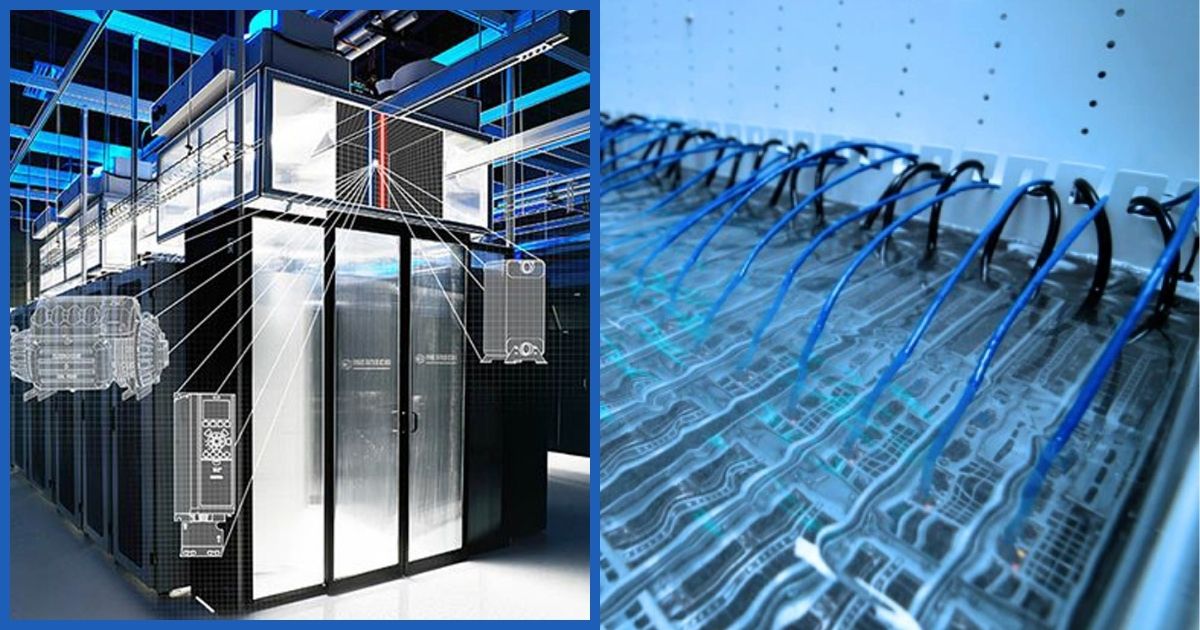
    Interior of a data center featuring server racks and cooling systems, with highlighted components.

    Data centers are expanding at an unprecedented rate to meet global demand for cloud, streaming, and artificial intelligence. But as servers multiply, so does the cost of keeping them cool.

    Cooling systems now account for up to 40 percent of a facility’s total electricity use, making them one of the most expensive and environmentally sensitive factors in operations. In many regions, the cost of energy dedicated to cooling rivals the cost of powering the servers themselves.

    Location, Location, Location

    The days of building data centers anywhere with cheap land and fiber access are fading. Operators now consider local climate, water availability, and grid sustainability before breaking ground.

    Cooler northern climates, where “free cooling” with outside air is possible for much of the year, reduce the need for costly mechanical systems. In hot, arid regions, however, the reliance on water-cooled chillers drives up both operational costs and community tensions.

    The link between site selection and sustainability is growing stronger. A facility built in a temperate climate can cut cooling-related energy consumption by as much as 30 percent compared with one in a desert environment.

    For hyperscale operators, that difference can translate into millions in annual savings while improving public perception in regions already facing water scarcity.

    The Numbers Behind the Decisions

    Industry analysts estimate that the average data center consumes enough electricity each year to power 50,000 homes, with nearly half of that tied to cooling.

    A single megawatt of data center capacity can draw more than 4 million kilowatt-hours annually just for temperature control. This economic burden is prompting companies to rethink where and how they grow.

    The global market for liquid and immersion cooling is forecast to surpass $20 billion by the early 2030s, fueled by the need to manage higher rack densities driven by artificial intelligence. But for many operators, choosing the right location still offers the fastest and most cost-effective path to efficiency.

    Voices From the Field

    “Energy costs are now as important as network latency in determining where a data center is built,” said Susan McAllister, a senior analyst specializing in data center infrastructure. “Cooling is no longer a secondary consideration — it’s often the dealbreaker.”

    Operators echo that sentiment. “A one percent improvement in power usage effectiveness can translate into millions of dollars in savings,” said Rahul Banerjee, a chief engineer for a hyperscale provider. “When you multiply that across dozens of sites, location decisions become financial imperatives.”

    Looking Ahead

    As operators push toward 2030 net-zero commitments, the economics of cooling will only sharpen. With rising energy prices, growing regulatory scrutiny, and increased community resistance to high water usage, site selection is becoming as much about sustainability as it is about connectivity.

    The future of data centers will be defined not just by where the internet flows fastest, but by where the air and water can cool servers at the lowest cost — and with the smallest environmental footprint.

  • Battery Walls and Beyond: How Next-Gen Energy Storage Is Redefining Data Center Efficiency

    Battery Walls and Beyond: How Next-Gen Energy Storage Is Redefining Data Center Efficiency

    Interior of a data center showing battery storage racks and a technician monitoring equipment.

    Data centers have always relied on batteries as a safety net, but the role of energy storage is evolving. Traditionally, uninterruptible power supply (UPS) systems provided only minutes of backup, just long enough for diesel generators to kick in.

    Now, with the industry under pressure to cut carbon emissions, batteries are becoming more than a backup—they are an active part of the energy strategy.

    From Lead-Acid to Lithium-Ion

    For decades, most facilities relied on bulky lead-acid batteries. Today, the industry is pivoting to lithium-ion systems that offer longer lifespans, smaller footprints, and higher energy density. Operators report that lithium-ion can last up to twice as long while reducing cooling demands, since the chemistry tolerates higher ambient temperatures.

    The numbers are significant. A switch from lead-acid to lithium-ion can reduce lifecycle costs by as much as 40 percent. Global adoption is accelerating, with analysts projecting that lithium-ion will dominate UPS deployments in new builds by 2030.

    Grid-Interactive Data Centers

    The next frontier is using batteries not just for emergencies, but for everyday efficiency. So-called grid-interactive data centers are beginning to feed power back into the grid during peak demand and recharge during off-peak hours when renewable energy is abundant.

    In markets like California and Northern Europe, where wind and solar supply can fluctuate, this approach helps stabilize the grid while lowering operational costs for operators. A 50-megawatt facility with advanced battery systems can store enough energy to power tens of thousands of homes for several hours.

    “Batteries are no longer just a safety mechanism,” said Daniel Hughes, an energy strategist for a major colocation provider. “They’re part of a broader optimization strategy. If you can shave your peak load or sell excess capacity back to the grid, you’re not just saving money—you’re turning energy into an asset.”

    Beyond Lithium: The Next Wave

    While lithium-ion dominates today, the industry is already eyeing alternatives. Solid-state batteries, with promises of higher safety and even greater energy density, are under development. Some operators are exploring flow batteries, which can provide long-duration storage measured in days rather than hours.

    Though still early, these technologies could redefine how data centers balance reliability, efficiency, and sustainability. “Long-duration storage is the missing link for a 24/7 renewable-powered data center,” said Priya Desai, a researcher specializing in grid integration. “The minute you can store solar energy from noon and use it at midnight, the economics of green data centers transform completely.”

    A Smarter Energy Future

    As operators pursue net-zero pledges, energy storage is emerging as a crucial lever for both efficiency and sustainability. Batteries are helping data centers consume more renewable energy, reduce dependency on diesel generators, and lower overall operating costs.

    The shift is clear: data centers are no longer passive consumers of electricity. With next-generation batteries, they are becoming active participants in the energy ecosystem—balancing loads, supporting grids, and redefining what efficiency looks like in the digital age.

  • The Power Usage Effectiveness Paradox: Why Lower PUE Doesn’t Always Mean Greener Data Centers

    The Power Usage Effectiveness Paradox: Why Lower PUE Doesn’t Always Mean Greener Data Centers

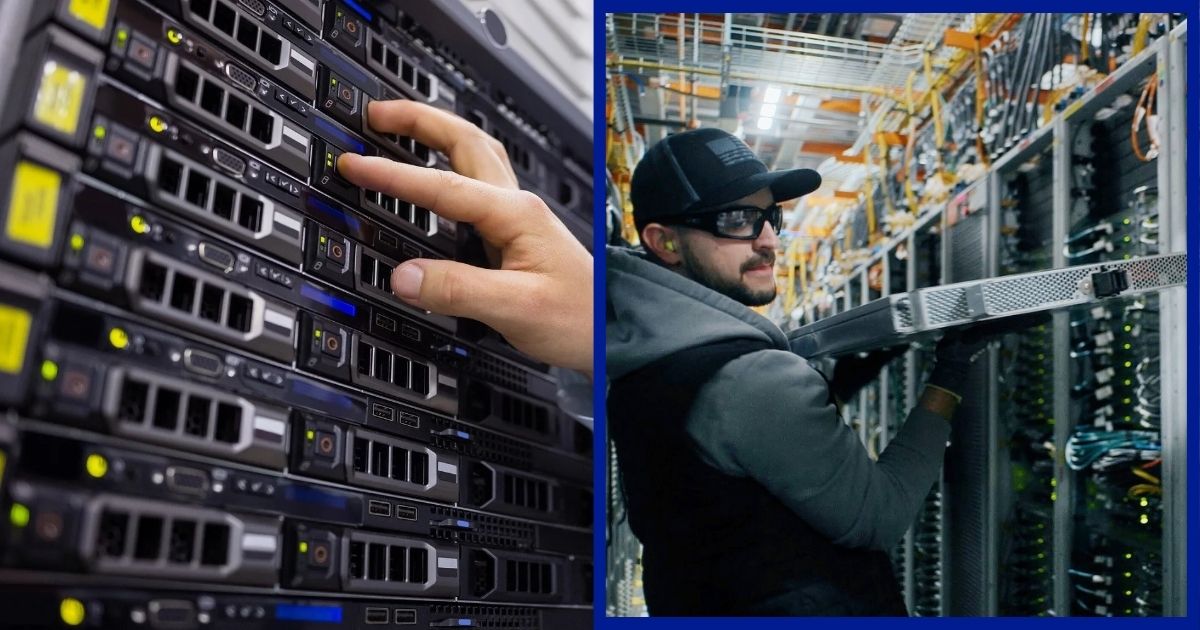
    A technician adjusting settings on multiple server units in a data center, showcasing the intricate technology used in modern computing facilities.

    For more than a decade, Power Usage Effectiveness (PUE) has been the industry’s go-to metric for measuring efficiency. A perfect score of 1.0 means all the energy consumed by a data center goes directly to computing equipment, with no overhead wasted on cooling or lighting.

    Hyperscale operators frequently tout PUE figures hovering between 1.1 and 1.2, far better than the 2.0 averages seen in older facilities.

    The problem? A lower PUE number doesn’t necessarily mean a data center is greener. In some cases, it can mask the true environmental footprint.

    When Efficiency Masks Consumption

    Modern hyperscale facilities run so efficiently that they consume massive amounts of power even while boasting low PUE scores. A 300-megawatt site with a PUE of 1.2 still draws the equivalent of hundreds of thousands of homes’ worth of electricity. In other words, a data center can be highly efficient while still being an enormous consumer of energy and resources.

    “PUE is a useful measure of how well you run a facility,” said Andrew Patel, a data center energy consultant. “But it doesn’t tell you anything about where your power is coming from or how much carbon you’re putting into the atmosphere.”

    The Carbon Blind Spot

    One of the biggest criticisms of PUE is that it focuses on efficiency, not sustainability. A data center powered by coal can achieve the same PUE score as one powered by renewable energy.

    For regulators and communities, this is a glaring blind spot. The industry’s collective carbon footprint is already estimated to exceed that of some mid-sized nations, and efficiency metrics alone won’t bring it down.

    Operators are now facing growing pressure to disclose not just PUE, but also carbon usage effectiveness (CUE) and water usage effectiveness (WUE). These complementary metrics track emissions and water consumption, giving a fuller picture of environmental impact.

    AI, Storage, and Smarter Grids

    Emerging technologies may help bridge the gap between efficiency and sustainability. Some operators are experimenting with artificial intelligence to dynamically adjust cooling loads in real time, shaving energy waste during off-peak usage. Others are integrating battery storage systems to soak up renewable energy when it’s plentiful and discharge it when demand spikes.

    “Efficiency alone isn’t enough anymore,” said Maria Lopez, an infrastructure strategist for a global cloud provider. “The conversation has shifted to resiliency and sustainability. That means using cleaner power and being transparent about every input, not just the overhead ratio.”

    The Road Ahead

    The industry is unlikely to abandon PUE—it remains a quick and simple way to compare facilities. But leaders increasingly recognize its limits. Investors, regulators, and customers are demanding more comprehensive reporting on sustainability, not just efficiency.

    The paradox is clear: a data center can achieve world-class efficiency while still being a heavy polluter. The next decade will test whether the industry can balance both measures—delivering the performance the digital economy demands without overwhelming the planet’s energy resources.

  • How Data Centers Are Reinventing Cooling to Meet 2030 Net-Zero Goals

    How Data Centers Are Reinventing Cooling to Meet 2030 Net-Zero Goals

    A digital data center cooling system with large fans and an array of green water-cooled server components.

    The Water Crisis Behind the Digital Cloud

    Data centers are the backbone of the digital economy, but their dependence on water-intensive cooling systems is straining local resources. In the United States, some of the largest clusters consume billions of gallons of water annually to keep servers within safe operating ranges.

    A single 100-megawatt facility can use up to 2 million liters of water per day, the equivalent of what thousands of households consume. Globally, the total water footprint of the industry is estimated in the hundreds of billions of liters each year, with usage projected to double before the end of the decade.

    Waste Heat Recovery: Turning Hot Air Into Home Heat

    Operators are beginning to view waste heat not as an unwanted byproduct, but as an untapped resource. In principle, as much as 90 percent of a data center’s heat emissions can be captured and reused in nearby heating systems.

    Some European facilities are already piping server heat into residential neighborhoods and public buildings, powering pools, and even connecting to district heating networks. What was once discarded energy is now helping to cut carbon emissions while lowering energy bills for local communities.

    Towards Water-Free Cooling: Air and Liquid Alternatives

    As climate pressures mount, data center operators are pivoting away from water-heavy cooling methods. Air-cooled “free cooling” systems, which rely on outside air in colder climates, can cut water use by up to 90 percent.

    Closed-loop liquid cooling systems are also growing in popularity, especially for chip-intensive workloads. These setups eliminate the need for ongoing water consumption and deliver efficiency gains at the server level.

    Liquid immersion cooling, once viewed as experimental, is emerging as a viable solution to the growing demand from artificial intelligence. By submerging hardware in non-conductive fluids, operators can reduce cooling energy use by up to 40 percent while allowing denser compute racks. Analysts expect the global market for immersion cooling to grow at more than 20 percent annually through 2030.

    Voices From the Industry

    “It lowers the cost of computing and potentially increases the number of new companies and new applications that can be created,” said John Medina, a vice president at Moody’s Ratings, describing the business upside of advanced cooling systems.

    But the transition is not without challenges. “Retrofitting existing air-cooled data centers with immersion cooling is costly, complex, and generally not recommended,” noted one industry analysis. For many operators, that means new builds rather than upgrades will drive adoption.

    Cooling Smarter to Achieve Net-Zero

    The pressure is intensifying as operators approach their 2030 net-zero pledges. Cooling is no longer just an engineering problem; it is a strategic factor that impacts energy security, community relations, and operational costs. Even a one percent improvement in power usage effectiveness can save millions annually at hyperscale facilities.

    The race is no longer about who builds the largest data center. It is about who can cool it the smartest, the cleanest, and the most efficiently.

  • Why Data Centers Built Only for Today Will Struggle Tomorrow

    Why Data Centers Built Only for Today Will Struggle Tomorrow

    A data center with server racks and a technician working on a laptop.

    Data centers that are designed with only immediate needs in mind are putting businesses at risk of higher costs, greater downtime, and limited growth.

    Industry experts warn that technology does not slow down, and neither does the demand for data. The rise of artificial intelligence, cloud applications, and data-heavy services is forcing organizations to rethink how they build and expand digital infrastructure.

    A facility that looks adequate today could be outdated in just a few years if growth projections are underestimated. Companies that ignore scalability may find themselves cornered into expensive and disruptive upgrades.

    One of the most common mistakes is failing to account for rack space expansion. Without room for additional servers, businesses are forced to renovate live data centers, a process that is not only costly but also poses serious risks of downtime. For organizations that rely on uninterrupted service, even a few hours of downtime can translate to lost revenue and customer trust.

    Another critical area is power capacity. Data centers that are designed with only current energy demands in mind face immediate challenges once workloads increase. Expanding power capacity after a facility is already operational requires complex redesigns, higher utility investments, and often, extended outages that hurt business continuity.

    Cooling is also a frequent pain point. Many operators underestimate how quickly workloads can grow and how much stress this places on infrastructure. Rigid cooling systems that cannot scale lead to overheating, reduced performance, and rising energy bills. Modular cooling solutions, by contrast, allow facilities to adapt to heavier demands without compromising uptime or efficiency.

    The financial implications of retrofitting a live data center can be severe. Construction inside an active environment is not only more expensive than building for capacity from the start, but it also introduces risks that can affect customers and partners alike. For industries that handle sensitive data, such as finance or healthcare, even temporary disruptions can have legal and reputational consequences.

    Forward-thinking operators stress the importance of long-term planning. Designing for scalability means building with extra rack space, preparing additional power capacity, and investing in flexible cooling systems. These measures may require slightly higher upfront costs, but they pay dividends in the long run by preventing disruptive upgrades and allowing smooth expansion.

    The most successful data centers are those that plan for five to ten years ahead instead of focusing solely on today’s problems. This forward-looking approach allows organizations to scale as needed, integrate new technologies, and remain competitive in a digital economy where demands shift quickly.

    Ultimately, the lesson is clear: data centers are no longer just physical buildings that hold servers. They are strategic assets that determine whether a business can keep pace with change.

    Facilities that plan only for today risk becoming obstacles, while those that anticipate tomorrow’s growth will continue to operate as engines of innovation and resilience.

  • Cloud Computing Doesn’t Kill Data Centers, Here’s Why

    Cloud Computing Doesn’t Kill Data Centers, Here’s Why

    A digital representation of cloud computing alongside a physical data center filled with server racks and networking equipment.

    The explosive growth of cloud computing has left many business leaders asking if traditional data centers are still worth the investment.

    With headlines touting “the end of on-premises” and promises of limitless scalability in the cloud, it is easy to assume physical infrastructure is fading away.

    The truth, however, is more layered. Data centers are not disappearing. They are evolving into a different role, and the most successful organizations today are those that know how to balance both.

    Cloud Still Runs on Hardware
    One of the biggest misconceptions is that the cloud floats in thin air. In reality, it is powered by enormous data centers owned by providers such as Amazon Web Services, Microsoft Azure, and Google Cloud.

    For example, AWS operates more than 100 data centers across the globe, each stacked with racks of servers and massive cooling systems.

    When a business spins up a new virtual machine or stores files in the cloud, it is still relying on physical infrastructure—just not their own.

    This proves that far from being replaced, data centers remain the engine of the cloud economy.

    Compliance Keeps On-Premises Alive
    In industries where data security is a matter of law, on-premises infrastructure remains critical.

    Hospitals in the United States, for instance, must comply with HIPAA rules, which often restrict the use of public cloud storage for patient medical records. In banking, regulators require certain customer data and transaction logs to remain within national borders.

    The European Union’s General Data Protection Regulation (GDPR) has also forced companies to carefully control where and how data is stored.

    These rules explain why major financial institutions like JPMorgan Chase continue to operate their own private data centers while selectively using the cloud for less sensitive workloads.

    Performance Demands Local Control
    Cloud computing is powerful, but distance creates delays. Applications that demand split-second responsiveness—such as stock trading platforms in Wall Street, autonomous vehicle systems, or real-time online gaming—cannot afford latency.

    A gaming company like Riot Games, for example, relies on strategically placed regional data centers to support “League of Legends” players with minimal lag.

    Similarly, financial firms keep trading engines in colocation facilities located near stock exchanges to execute trades in milliseconds.

    These use cases show that local infrastructure is often the only way to guarantee the speed businesses and consumers expect.

    Cloud Isn’t Always Cheaper
    Cost is another area where assumptions and reality collide. At first glance, cloud services appear cheaper because they eliminate the need for upfront capital spending.

    But when workloads run nonstop or involve huge volumes of data, bills can skyrocket. Dropbox famously learned this lesson. After years of storing user files on AWS, the company decided to build its own data infrastructure.

    By doing so, Dropbox reported saving nearly $75 million in operating costs over just two years. This illustrates that while the cloud is ideal for flexibility and burst capacity, private or hybrid data centers can provide massive long-term savings.

    Hybrid Models Are the New Normal
    Instead of choosing between cloud or data centers, many companies now choose both. This hybrid approach allows them to place each workload in the environment where it performs best.

    Netflix is a prime example. The streaming giant uses AWS for its massive content delivery but still operates its own Open Connect Appliances—specialized data center hardware—to efficiently stream movies and shows directly to internet service providers worldwide.

    Meanwhile, retail giant Walmart mixes public cloud with private data centers to power e-commerce, supply chain systems, and in-store technologies. These hybrid strategies highlight the flexibility companies gain when they don’t treat the decision as all-or-nothing.

    Data Centers Redefined, Not Replaced
    The story of data centers is not one of extinction but transformation. Businesses no longer see them as isolated silos but as one piece of a larger digital ecosystem.

    Today’s enterprise IT strategy is about orchestration—moving workloads seamlessly between cloud platforms and private infrastructure. Even cloud-native companies like Zoom have recognized this, maintaining their own data centers while also leveraging public cloud partners.

    This dual approach ensures reliability, compliance, and scale. The role of the data center has shifted, but it remains an indispensable part of the equation.

    Cloud computing has reshaped the way organizations view infrastructure, but it has not eliminated the need for data centers. From regulatory compliance to cost optimization and from performance to hybrid innovation, the physical backbone of IT is alive and well.

    The companies thriving in the digital age are those that see the value of both worlds and deploy workloads strategically across them. The future is not cloud versus data centers—it is cloud and data centers working together to power global business.

  • Step-by-Step Explainer: How PUE Defines Data Center Efficiency

    Step-by-Step Explainer: How PUE Defines Data Center Efficiency

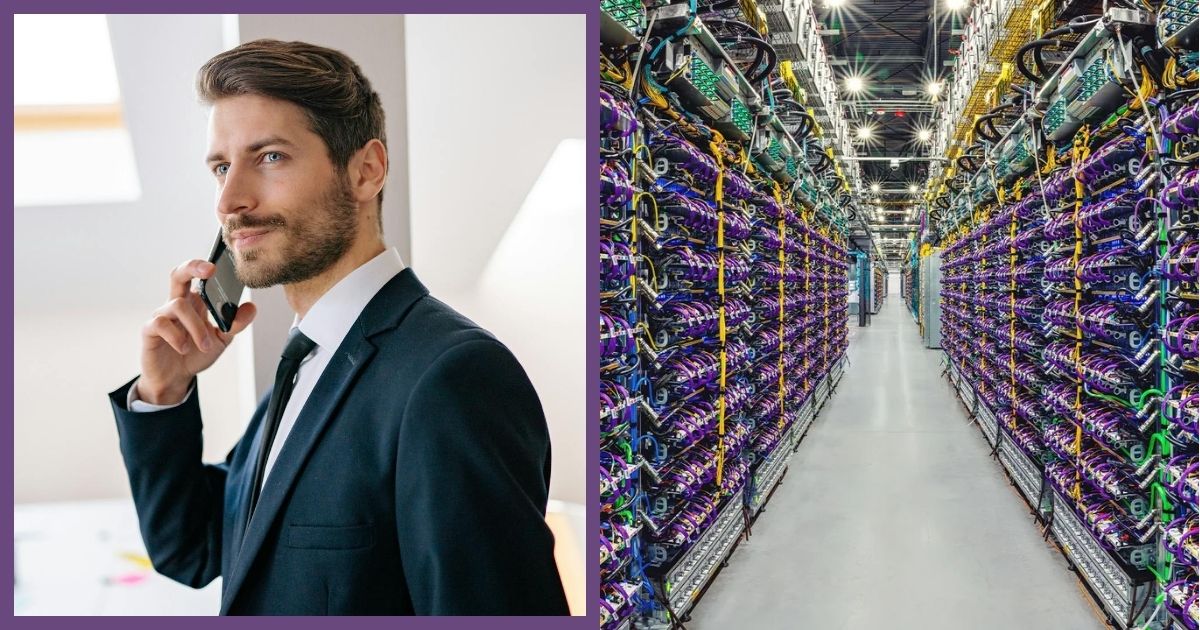
    A businessman in a suit speaking on a phone, next to a view of a data center with rows of servers and colorful cables.

    Data centers power everything from cloud storage to online banking, but the electricity they consume comes with hefty costs and environmental consequences. To measure and improve efficiency, operators rely on a metric called Power Usage Effectiveness, or PUE, which has become the industry standard for benchmarking energy performance.

    Step 1: Understand what PUE is.
    Power Usage Effectiveness, or PUE, is a globally recognized benchmark for data center efficiency. It tells operators how much of the electricity they buy is actually used for computing versus how much is wasted on non-IT functions like cooling, lighting, and power distribution. Without PUE, companies would have no standard way to compare efficiency across facilities.

    Step 2: Learn the formula.
    The math is simple but powerful: PUE = Total Facility Energy ÷ IT Equipment Energy. Imagine a data center consumes 2,000 kilowatt-hours (kWh) in a day. If the servers themselves use 1,000 kWh while cooling systems, fans, and lights consume the rest, the PUE is 2.0. This shows that for every unit of energy powering servers, an equal amount is lost to overhead.

    Step 3: Recognize the perfect score.
    A PUE of 1.0 represents absolute efficiency where 100 percent of power feeds computing hardware and nothing goes to support systems. While practically impossible because every facility requires cooling and power distribution, 1.0 serves as the industry’s north star. The closer a facility gets to that number, the more advanced and efficient its design is considered.

    Step 4: Know the industry range.
    Most facilities today operate between 1.2 and 2.0. A hyperscale cloud provider like Google or Microsoft often reports PUE averages closer to 1.1 or 1.2, thanks to billions invested in engineering and cooling innovation. Smaller colocation centers or enterprise-owned facilities may see PUEs of 1.7 or higher, reflecting older designs and less efficient layouts.

    Step 5: Connect PUE to costs.
    Every decimal point counts. A PUE of 1.5 means that for every $1 spent powering servers, an additional 50 cents goes to cooling and overhead. Over a year, that waste can translate into millions of dollars in extra electricity bills for a large-scale operator. Lowering PUE directly improves profit margins while freeing up resources to reinvest elsewhere.

    Step 6: See the sustainability link.
    Electricity consumption directly ties to carbon emissions, especially in regions reliant on coal or natural gas. Lower PUE means less electricity is required to do the same amount of computing, which reduces greenhouse gases. This is why investors, regulators, and customers are increasingly scrutinizing PUE as part of environmental, social, and governance (ESG) reporting.

    Step 7: Plan for efficiency gains.
    Operators can lower PUE in multiple ways. Optimizing airflow management with hot-aisle and cold-aisle containment reduces cooling load. Switching to liquid cooling, which absorbs heat more efficiently than air, can dramatically cut overhead. Locating facilities in colder climates, like Scandinavia, allows operators to use “free cooling” from outside air instead of mechanical chillers. Each of these strategies can shave points off a PUE score.

    Step 8: Understand the risks of ignoring it.
    A poor PUE score is more than just a statistic. It signals rising energy costs, higher carbon taxes in some regions, and increased vulnerability to equipment failure. As cooling systems work harder to support inefficient layouts, the likelihood of downtime and outages grows. In competitive markets, inefficient operators may find themselves priced out as customers seek greener, cheaper alternatives.

    Step 9: Takeaway for operators.
    Improving PUE is not a one-time project but an ongoing discipline. Regular monitoring, periodic upgrades, and design improvements ensure facilities remain competitive as energy prices climb and sustainability rules tighten. For operators, better PUE means lower costs, stronger resilience, and a positive environmental footprint that aligns with global climate goals.

    PUE is more than just a number on a chart—it is a reflection of a data center’s financial health, operational resilience, and environmental responsibility. As the demand for digital services continues to grow, facilities that manage their energy wisely will not only save money but also position themselves as leaders in sustainable innovation.

  • Colocation or Build Your Own Data Center? Breaking Down the Big IT Debate

    Colocation or Build Your Own Data Center? Breaking Down the Big IT Debate

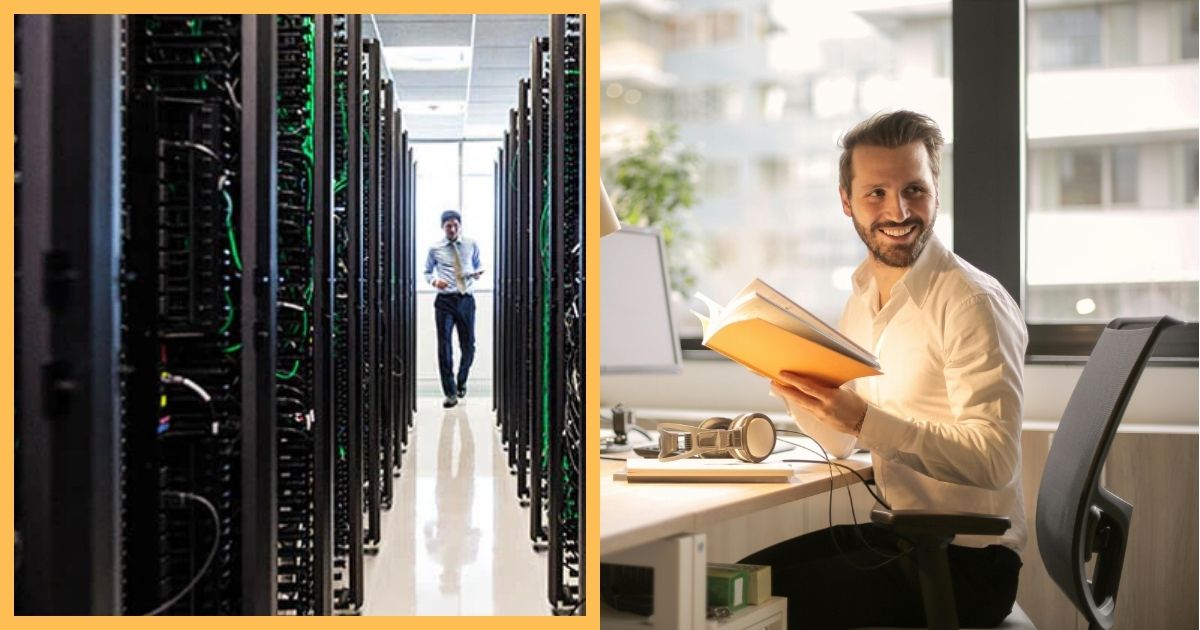
    A data center aisle with server racks on either side and a person walking through, and a smiling man in a white shirt sitting at a desk with a book in hand.

    The decision between building a private data center and opting for colocation is becoming one of the most pressing choices for enterprises in 2025.

    Technology leaders weigh the trade-off as businesses demand more control, security, and scalability in their digital infrastructure.

    A company-owned data center offers unmatched control, from customized layouts to strict compliance requirements.

    Colocation, on the other hand, provides access to advanced security systems, redundant power supplies, and high-speed connectivity without the upfront capital investment.

    Control vs. Convenience
    Owning your own facility ensures every rack, cable, and cooling unit is tailored to your needs, but it requires millions of dollars in construction and ongoing maintenance.
    Colocation means relying on a shared facility, but it delivers convenience by outsourcing physical operations and offering predictable monthly costs.

    Cost vs. Capability
    Building from scratch gives enterprises complete independence, but unpredictable expenses can strain budgets.
    Colocation shifts the financial model to subscription-style billing, freeing businesses from surprise maintenance bills.

    Compliance vs. Flexibility
    Firms with unique industry regulations may find ownership necessary for meeting strict standards.
    Organizations prioritizing rapid growth, disaster recovery, and agility often choose colocation to expand faster with minimal disruption.

    The Bottom Line
    The debate centers on a single question: Is absolute control worth the heavy price, or does convenience win out in today’s fast-moving digital economy?

    Analysts note that more enterprises are leaning toward colocation in 2025, particularly as cloud adoption and hybrid IT strategies continue to accelerate.

    Experts predict that the choice will increasingly define how businesses remain competitive in a data-driven future.