Tag: ECONOMY

  • CMS Throws a Gala to Celebrate Its SGX Encore, Promising to “Globalize” Pharma While Everyone Else Does the Math on Margins

    CMS Throws a Gala to Celebrate Its SGX Encore, Promising to “Globalize” Pharma While Everyone Else Does the Math on Margins

    On July 15, 2025, China Medical System Holdings Limited marked its secondary listing on the Singapore Exchange with a forum-dinner hybrid at its gleaming Tuas CDMO plant, because nothing says capital-market discipline like canapés beside stainless steel reactors.

    About 150 representatives from government, pharma multinationals, biotech hopefuls, investors and pharma KOLs dutifully turned up to debate how to sell more drugs, faster, across Southeast Asia, the Middle East and every other “emerging” market investors suddenly remember exists when Western growth stalls.

    Speakers from SGX, Singapore’s Economic Development Board, CGS International Securities, L.E.K. Consulting and A*STAR laid out the familiar trilogy of incentives, streamlined rules and capital access, with SGX’s Caihan Chia declaring the bourse increasingly attractive to Chinese issuers thanks to lighter friction and friendlier tax nudges.

    “The successful listing of CMS showcases the growing interest among Chinese companies in the Singapore market,” Chia said, framing the deal as both validation for SGX and a springboard for CMS into Southeast Asia’s fragmented but fast-growing healthcare spend.

    IQVIA data helpfully reminded the room why everyone is here: by 2028, Asia-Pacific, India, Africa and the Middle East, and Latin America together could be a USD 336 billion to USD 384 billion pharma market, which is suddenly comparable to Western Europe, and definitely not something investors were ignoring five years ago.

    Singapore, with its predictable rule of law, deep capital pools and ability to host both roadshows and reactors, is positioning itself as the region’s clean room for cross-border pharma finance.

    CMS, which insists it is no longer just “China’s largest CSO,” rolled out its dual-hub narrative: China for scale and speed, Singapore for global polish and investor access.

    Chairman and CEO Lam Kong pitched “New CMS, New Ascent,” a three-engine strategy—product innovation, commercial transformation and international expansion—that he says is already delivering a durable second growth curve.

    The company claims nearly 40 first-in-class or best-in-class drug candidates via licensing, partnerships and in-house R&D, with five already approved in China and in broad clinical use, while it doubles down on cardio-cerebrovascular, gastroenterology, ophthalmology and skin health to keep cash flows less cyclical.

    Dermavon, its skin health arm, was spotlighted as a niche leader marching toward a Hong Kong spin-off, because nothing accelerates value creation like giving investors another ticker to argue about.

    On globalization, CMS talked up its “bring in” and “move outward” two-way playbook, using Singapore to knit together R&D, manufacturing, commercialization and investment into something that resembles a multinational’s operating model, at least on the slides.

    PharmaGend, its Tuas-based CMO/CDMO founded in 2023, was cast as Southeast Asia’s future production workhorse, already FDA and HSA certified for tablets and capsules, with injections, ointments and nasal sprays on the expansion roadmap.

    Rxilient, established in 2021, said it has filed nearly 20 drug and device applications across Southeast Asia, the Middle East, Hong Kong, Macao and Taiwan, betting on dermatology, ophthalmology, oncology, autoimmune and CNS indications to turn regulatory approvals into real revenue.

    CMS R&D, set up in Singapore in 2024, is pushing more than 10 early-stage programs, aiming to wed “China speed” to global standards, a phrase that sounds great in keynotes and terrifying in compliance departments.

    HiGend, launched this year as a hub-and-spoke incubator, wants to industrialize early-stage biopharma creation by piping Chinese innovation into global trials and commercialization tracks.

    Three panel discussions tried to answer the only question that matters: can Chinese innovators really scale outside the U.S. and Europe without getting swallowed by regulatory heterogeneity, pricing caps and a patchwork of distributors.

    Executives dissected case studies like Stulln eye drops and ruxolitinib cream, arguing that clinical value plus omnichannel commercialization can still win in China and be ported to Southeast Asia if you own your sales muscle and data.

    Others noted that Chinese drugmakers have racked up over USD 10 billion in upfront license-out payments in the past three years, mostly to the West, but the next growth burst could come from emerging markets that together house 1.8 billion people but spend a fraction of Western peers on healthcare.

    Investment bankers and fund managers warned that most Chinese firms are still stuck in the “isolated breakthrough” phase, cashing single licensing checks rather than building repeatable, global operating systems.

    To get past that plateau, they argued, companies will need full-stack internationalization—manufacturing, R&D, clinical, regulatory and commercialization—so they can convert episodic deal revenue into durable brand equity and pricing power.

    CMS clearly thinks its China–Singapore lattice is that template, promising a closed loop of R&D, manufacturing, commercialization and investment that it says can be cloned across Southeast Asia and beyond.

    Skeptics will point out that Southeast Asia’s six biggest economies are still dominated by out-of-pocket spending, generics and chaotic distribution, which makes “scalable” a generous adjective.

    CMS counters that localized manufacturing, stronger in-market sales teams and smarter licensing will tilt the odds.

    The applause lines faded with the stage lights, but the thesis held: emerging markets are where the volume is, Western Europe is where the benchmarks are, and Singapore is where you pitch both.

    Whether CMS’s second growth curve bends up or flatlines will depend less on dinners in Tuas and more on how fast those nearly 40 pipeline assets clear regulators, find payers and prove clinical value in markets that are allergic to premium pricing.

    For now, SGX gets another Chinese healthcare listing to market, CMS gets a new investor base to court, and everyone else gets one more case study to cite at the next “globalization” forum.

  • GoTyme Bank hits 6.5 million users, P30B in deposits, and expands nationwide with SM Store kiosks

    GoTyme Bank hits 6.5 million users, P30B in deposits, and expands nationwide with SM Store kiosks

    GoTyme Bank, one of the country’s fastest-growing banks, announced major milestones in user growth, financial trust, and service expansion in its Q2 update — signaling strong momentum as it redefines how Filipinos experience banking.

    “In under three years, 6.5 million Filipinos have chosen to upgrade their banking experience with GoTyme Bank,” said Nate Clarke, GoTyme Bank CEO. “GoTyme users spent over P10.5 billion on the GoTyme Bank card in the last three months and in the past year has been used in over 100 countries meaning GoTyme customers are not just using the card here, they are taking us with them as they explore the world.”

    GoTyme Bank is now among the top 4 banks in monthly active app users and top 5 in Instapay sends, placing it in league with the country’s largest financial institutions. “These are not just numbers—it’s a signal. A signal that our mission to make banking more simple, more reliable, and more beautiful is resonating,” Clarke added.

    Trusted with Over P30 Billion in Deposits

    As of today, GoTyme Bank holds over P30 billion in customer deposits, a staggering achievement that requires a high level of diligence and security tech. In response to its growing depositor base, GoTyme Bank introduced tighter authentication controls, including mandatory biometric checks when relinking devices, to better protect customers against phishing scams. The bank also has enhanced fraud detection systems to catch threats faster and more accurately.

    70+ SM Store Kiosks and Expanded Access

    GoTyme Bank will continue scaling with an aggressive physical expansion. “By the third quarter of 2025, every single SM Store across the country will proudly host a GoTyme Bank kiosk,” said co-CEO Albert Tinio. “That’s more than 70 new locations where anyone can walk up, open an account in under five minutes, receive a free Visa debit card, and instantly step into the world of beautiful, seamless banking.”

    “We are putting the power of banking directly where people live, shop, and thrive. This is more than convenience. This is a revolution in access and empowerment,” he added.

    Backing National Pride and Local Entrepreneurs

    GoTyme Bank, which is known to empower and back young achievers, pushing and encouraging them to fulfill their dreams, is the Official Bank of the Philippine Football Federation, supporting both men’s and women’s national teams. More than just a sponsorship, the collaboration champions the spirit of Filipino excellence from the grassroots up to the global stage. “We are shining a light on discipline, teamwork, and national pride,” Tinio said.

    In addition to championing sports, the bank is also supporting small businesses. “Through partnerships with Paymongo and foodpanda, we’re extending credit up to P3 million to small businesses. These are the entrepreneurs fueling the local economy—and we want to fuel their growth,” said Tinio.

    GoTyme Bank has also rolled out a Buy Now, Pay Later product designed to be user-friendly and affordable. “Shopping for your dream gadget, that long-awaited appliance, or even booking your next adventure—and paying in four easy installments with the lowest, most transparent fees in the market.”

    Other exciting new features coming soon include:

    • Local Stock investing in Q3
    • Curated cryptocurrency trading inside the app
    • Cash deposit and withdrawal machines with self-service and off-us functionality
    • A new Go Rewards earning scheme, with 1 point per P100 spent at partner stores, and 1 point per P500 spent elsewhere

    “You can now use those points to book flights, stock up on groceries, and more. We’re making rewards simpler, faster, and more useful—because that’s what beautiful banking should feel like,” Clarke said.

    A Clear Vision

    “At GoTyme Bank, we believe banking should do more than manage your money—it should elevate your life,” Tinio concluded. “Every new kiosk we build, every feature we launch, every partnership we forge is part of a bigger promise: to make financial growth, freedom, and security accessible to every Filipino, no matter where they are or what dreams they hold.”

  • China Breaks Out the Crystal Ball to Avoid Another “Oops” Moment in Global Trade Circus

    China Breaks Out the Crystal Ball to Avoid Another “Oops” Moment in Global Trade Circus

    In a move that absolutely no one saw coming — except everyone paying attention to global economic chaos — China has decided it’s time to double down on peering into the economic abyss before it gets sucked in.

    With U.S. tariffs behaving like an unpredictable toddler and global trade resembling a high-stakes poker game played blindfolded, Beijing is bracing for impact.

    The National Development and Reform Commission (NDRC), China’s top economic planning body, has announced a shiny new plan to supercharge its economic monitoring systems and fine-tune early warning tools.

    Because if there’s one thing China has learned from the last few years of whiplash-inducing economic diplomacy, it’s that waiting until the economy starts coughing is probably too late to call the doctor.

    In a notice released in late June, the NDRC invited research institutions to assess the impact of U.S. tariffs and — in a completely surprising twist — to look into how non-tariff barriers (read: all the other fun ways countries mess with trade) are likely to wallop China’s economy.

    This sudden surge in surveillance, wrapped in bureaucratic optimism, is part of preparations for China’s 2026-2030 development blueprint. Because nothing says “long-term plan” like trying to guess the next global tantrum.

    The NDRC, which already coordinates with agencies like the People’s Bank of China and the Ministry of Commerce, wants to level up from simply tracking obvious economic symptoms to uncovering underlying fractures in supply chains, tech ecosystems, and currency flows.

    Apparently, “just-in-time” isn’t just for manufacturing anymore — it’s now Beijing’s new motto for avoiding economic humiliation.

    “This might need to be of higher frequency and more capable of reflecting the real economy,” said Shao Yu, director of the Shanghai Institution for Finance and Development, in what might be the most polite way of saying “our current tools are about as useful as a sundial in a blackout.”

    According to Shao, the new systems will likely move beyond basic barometers like trade balances or stock market jitters. Instead, they’ll dig into the fragile sinews of global trade: think semiconductor bottlenecks, shipping chokepoints, and sudden shifts in monetary policy that could fry even the most carefully laid industrial plans.

    China’s economy, long praised for its steel spine and manufacturing muscle, has faced a more wobbly reality lately.

    As trade wars, pandemic fallout, and a slowing domestic market crash into one another, Beijing’s latest maneuver reads less like strategic foresight and more like crisis management with a PhD.

    Still, officials are keen to avoid surprises. After all, the last few years have been one long string of “what now?” moments for global policymakers.

    And while Washington and Brussels keep inventing new ways to enforce economic influence — whether through tariffs, tech bans, or selectively moral trade policies — China is trying to stay one panic attack ahead.

    So, the message from Beijing is clear: if the world is going to keep rewriting the rules, China wants to at least be the first to know when the new script drops.

    Whether this initiative actually makes a difference — or just adds another layer of impressive-sounding bureaucracy — remains to be seen.

    But one thing’s certain: in the Great Global Trade Restructuring Olympics, nobody wants to be the last one to realize the starting gun already went off.

  • South Africa Decides Inflation Is Too Boring to Fix Quickly: Finance Minister Urges Patience While the Rand Watches Nervously

    South Africa Decides Inflation Is Too Boring to Fix Quickly: Finance Minister Urges Patience While the Rand Watches Nervously

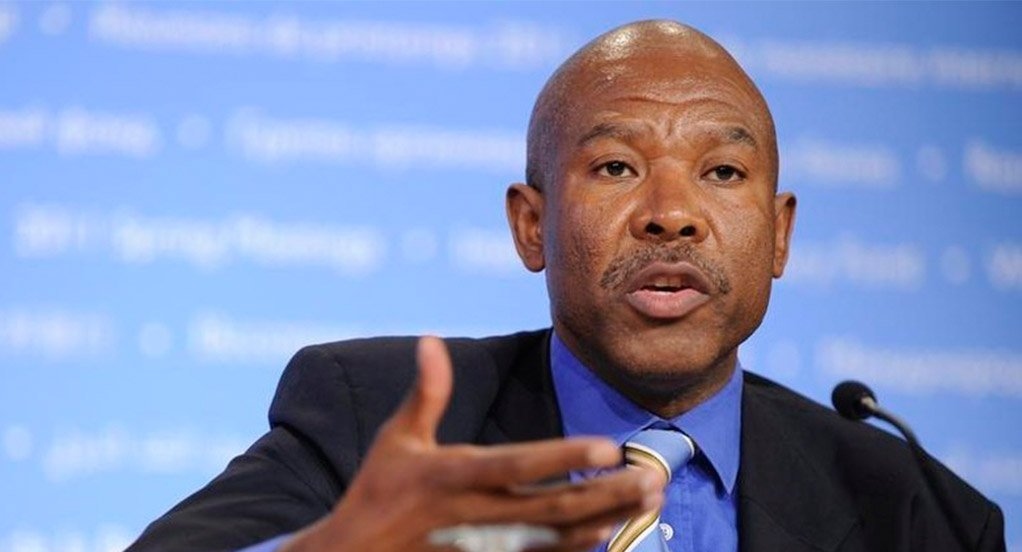
    South Africa’s finance minister Enoch Godongwana has a message for anyone hoping for decisive economic reform: calm down.

    While the South African Reserve Bank (SARB) has made it abundantly clear that it wants a lower inflation target – and has been screaming it into the void for years – Godongwana is urging everyone to take a deep breath and maybe a sabbatical before making any sudden moves.

    Speaking in parliament on Tuesday, Godongwana confirmed that, yes, work is indeed “progressing well” on the possibility of revising the inflation target. But don’t get too excited, because this isn’t something that will be rushed just because the SARB got a little giddy with their spreadsheets.

    “Such decisions should not be taken in haste,” Godongwana declared, wrapping his cautious optimism in a cocoon of bureaucratic caveats. He added that proper “technical and political engagements” are needed to form a “genuine consensus grounded in a thorough consideration of the social and economic realities.” Translation: don’t hold your breath.

    Currently, the inflation target sits between 3% and 6%, which is the monetary equivalent of playing darts with oven mitts. The SARB has been quietly, and sometimes not-so-quietly, advocating for a tighter 3% goal – you know, something resembling actual inflation control.

    Back in May, the central bank even modeled a 3% target during its policy announcement, saying it found the number “more attractive” than the fuzzy midpoint of the current range. How romantic.

    It seems like markets are ready to swipe right. Mere whispers of a lower target in the works were enough to send investor confidence and bond prices rising, as if economic seriousness might actually be on the menu for once.

    But not so fast. In South Africa, policy moves at the speed of molasses in winter. Especially when said policies require cooperation between independent institutions and politicians with differing agendas.

    Godongwana, for his part, appears less thrilled than SARB Governor Lesetja Kganyago about diving into the unknown waters of inflation targeting reform. While Kganyago has practically made a side hustle out of championing a stricter inflation regime, the finance minister is taking the “let’s workshop it” approach.

    To be fair, inflation is already below the current target, clocking in at a modest 2.8% in May. But that’s no reason to get complacent, considering South Africa’s track record of being one bad fiscal decision away from economic chaos.

    Analysts say tightening the inflation target could increase policy credibility and tame inflation expectations in the long term, giving the SARB a clearer mandate. “A lower, well-communicated inflation target is helpful if paired with disciplined fiscal policy,” said Annabel Bishop, chief economist at Investec, in a recent research note.

    Unfortunately, disciplined fiscal policy is as rare in South Africa as a pothole-free road.

    The SARB’s next monetary policy meeting is set for July 31, and while markets are hoping for more than just PowerPoint slides, the real decision on the target still lies with the finance minister. Which means, for now, we’re all just watching a very polite game of economic hot potato.

    In the meantime, investors can rest easy knowing that the country’s approach to inflation reform remains as carefully delayed and diplomatically overconsulted as ever. Because if there’s one thing South Africa excels at, it’s mastering the art of appearing busy while moving absolutely nowhere.

  • Wall Street Tiptoes Higher While Everything Else Burns Down

    Wall Street Tiptoes Higher While Everything Else Burns Down

    U.S. stock futures inched up Wednesday as traders clung to optimism over trade talks and awaited jobs data, apparently pretending everything’s fine.

    The S&P 500 rose 0.14%, the Nasdaq added 0.1%, and the Dow climbed 0.16% before market open, despite warning signs flashing across multiple sectors.

    Investors are bracing for Thursday’s non-farm payrolls report, hoping a slowing job market might finally bully the Fed into cutting interest rates.

    Tech stocks took a hit Tuesday as Treasury yields jumped following surprisingly strong job openings data, reminding everyone the labor market isn’t cooperating with Wall Street’s rate-cut fantasies.

    President Trump insisted he wouldn’t delay the July 9 tariff deadline, further complicating shaky trade talks with Japan, though he’s still banking on a deal with India.

    The EU’s trade boss is also flying in for some last-minute economic diplomacy, likely involving hand-wringing and low expectations.

    Meanwhile, U.S. Senate Republicans narrowly passed a tax-and-spending bill that slashes benefits, boosts military funding, and balloons the national debt by $3.3 trillion—because fiscal discipline is clearly overrated.

    Health insurer Centene crashed 26.6% in premarket after yanking its 2025 earnings forecast, blaming lower-than-expected revenue from its marketplace plans.

    The panic spread, dragging down Elevance Health and UnitedHealth by 3.8% and 1.2%, respectively, as investors realized insurance isn’t immune to math.

    Big banks, however, smugly climbed higher after announcing plans to raise dividends, having passed the Fed’s annual stress test like honor students showing off their report cards.

    And Verint Systems spiked 12.7% after rumors emerged that Thoma Bravo might buy the call-center software maker, because private equity always knows how to find a bargain in chaos.

  • UAE’s Alleged Bitcoin Buying Spree Sparks Sovereign Crypto Power Play, Says Analyst

    UAE’s Alleged Bitcoin Buying Spree Sparks Sovereign Crypto Power Play, Says Analyst

    The United Arab Emirates is reportedly purchasing billions of dollars in Bitcoin while expanding its mining operations, according to a statement by tech and energy journalist Ram Superable.

    Superable, reacting to claims by Strike CEO Jack Mallers and crypto commentator AltcoinGordon, described the development as a potential geopolitical shift in sovereign wealth strategy.

    He noted that unlike hedge funds and ETFs merely testing the waters, the UAE’s alleged approach resembles a full-scale commitment to Bitcoin as a long-term economic hedge.

    The move, if confirmed, positions the UAE as a future-proof financial player, seeking independence from dollar volatility and fossil fuel dependency.

    Superable said the scale of involvement rivals El Salvador’s crypto experiment but comes with the backing of massive oil wealth.

    He emphasized that the move is not about hype or short-term speculation but about liquidity, infrastructure, and strategic economic positioning.

    He also pointed out that energy-rich nations may increasingly convert surplus power into “digital gold” through mining, transforming Bitcoin from a risk asset into a state-level tool.

    Superable warned that institutional players and policymakers should treat this not as market noise, but as policy in motion.

    The potential UAE pivot, he argued, could redefine Bitcoin’s global narrative and accelerate adoption among sovereign players.

    The statement signals that digital assets may now be entering a new phase—less about volatility, more about long-term geopolitical relevance.

  • Vietnam’s Clean Energy Gamble: Retroactive Tariff Cuts Could Bankrupt Developers, Superable Warns

    Vietnam’s Clean Energy Gamble: Retroactive Tariff Cuts Could Bankrupt Developers, Superable Warns

    Vietnam’s proposed retroactive tariff cuts for 173 solar and wind projects are a “self-inflicted disaster in the making,” according to tech and energy journalist Ram Superable.

    Superable warned that slashing clean energy revenues by up to 46 percent threatens to bankrupt developers and destroy investor confidence.

    He said the plan sends a clear message to global financiers that their money is not safe in Vietnam.

    Vietnam’s clean energy boom was once the pride of Southeast Asia, driven by generous feed-in tariffs that jumpstarted the sector.

    Superable said the country is now jeopardizing that success by introducing legal and financial uncertainty.

    “Instead of evolving policy sensibly, the government seems intent on detonating investor confidence with legal and financial whiplash,” he said.

    He acknowledged that feed-in tariffs had their limitations but argued that retroactive cuts are not the solution.

    Superable said such actions effectively put a warning label on Vietnam for future investors.

    He urged policymakers to focus on competitive auctions, direct power purchase agreements, grid upgrades, and battery storage.

    “These are Vietnam’s real path forward, not a scorched-earth revision of past commitments,” he said.

    Vietnam aims to install 73 gigawatts of solar and 38 gigawatts of wind capacity by 2030.

    Superable said those targets are at risk if the government continues to “swing a wrecking ball at the very foundations of its energy transition.”

    He warned that the clean energy sector could implode under the weight of policy reversals.

    The proposed tariff changes have already rattled international investors watching Vietnam’s energy reforms.

    Superable said restoring trust will require a rapid shift to mature, market-based models that attract long-term capital.

    He added that without decisive action, Vietnam risks derailing its own clean energy progress.

    Analysts say the government must balance energy security, investor confidence, and environmental goals to avoid long-term damage.

    Superable’s statement underscores growing concern that Vietnam’s energy transition could stall just as the country faces rising demand and climate pressures.

  • Mobile Money Surpasses Two Billion Accounts in 2024

    Mobile Money Surpasses Two Billion Accounts in 2024

    Mobile money reached two significant milestones in 2024, surpassing two billion registered accounts and over half a billion active monthly users worldwide.

    The industry, which took 18 years to achieve one billion registered accounts and 250 million active users, has doubled in size in just five years, according to the GSMA Mobile Money Programme’s ‘State of the Industry Report on Mobile Money 2025.’

    In 2024, mobile money processed around 108 billion transactions, totalling over $1.68 trillion. Transaction volumes grew by 20%, while transaction values increased by 16%, reflecting the industry’s robust expansion.

    Vivek Badrinath, GSMA Director General comments: “Mobile money has emerged as a powerful driver of financial inclusion and economic growth. Its continued success depends on supportive regulatory environments that promote innovation, accessibility and help unlock the full socio-economic potential. To ensure mobile money remains accessible, affordable, and safe, it is vital for governments and regulators to work with financial service providers to support financial literacy programs, empowering underserved populations and opening new opportunities for financial decision-making.” 

    Mobile money has become a key driver of economic development. By 2023, countries with mobile money services saw a $720 billion boost to their GDP, reflecting a 1.7% increase. In Sub-Saharan Africa, mobile money added approximately $190 billion to GDP in 2023.

    Sub-Saharan Africa remains the global leader in mobile money, with new accounts rising in East and West Africa. East Africa led growth in active accounts in 2024, followed by Southeast Asia and West Africa. East Asia-Pacific also showed strong growth, particularly in Cambodia, Fiji, the Philippines, and Vietnam, where enabling regulations fostered success.

    Many providers in East Asia-Pacific have evolved into full-service financial platforms, offering products like credit, savings, and insurance. By June 2024, 44% of providers offered credit services, making it the most common adjacent financial product.

    Despite the growth, several barriers remain, notably among women. Eight of the 12 countries surveyed still showed disparities in mobile money ownership between men and women, with limited awareness and digital financial literacy as significant barriers.

    Mobile money providers are addressing these issues, with nearly 60% launching digital literacy initiatives to drive adoption and close the gender gap.

  • 5 Major Areas Hit Hard by Tariffs

    5 Major Areas Hit Hard by Tariffs

    Tariffs — taxes imposed on imported goods — might sound like a high-level economic tool, but their effects ripple through everyday life in ways that can’t be ignored. Here are five major areas feeling the heat.


    1. Consumer Prices

    One of the most immediate impacts of tariffs is higher prices on everyday goods. When imported products like electronics, cars, or clothing face tariffs, companies often pass the added costs onto consumers.

    The U.S.-China trade war, for example, drove up prices on everything from smartphones to washing machines, with consumers footing the bill.


    2. Manufacturing and Supply Chains

    Manufacturers that rely on global supply chains feel the pinch. Tariffs on raw materials like steel and aluminum mean higher production costs for industries like automotive, construction, and aerospace.

    Companies either absorb the cost — hitting profits — or push it downstream to customers, creating a domino effect of price increases.


    3. Farmers and Agriculture

    Agriculture is often caught in the crossfire of tariff wars. Countries facing tariffs retaliate by imposing their own, targeting key exports like soybeans, corn, and pork.

    When China slapped tariffs on American agricultural products, U.S. farmers lost billions in export revenue — forcing the government to roll out subsidies to keep farms afloat.


    4. Jobs and Employment

    Tariffs create a complicated job market. While they’re meant to protect domestic industries, they can backfire. Industries reliant on imports — like retail, technology, and manufacturing — may cut jobs to offset rising costs.

    Conversely, sectors shielded by tariffs, like local steel production, might see a short-term job boost — but at the expense of higher prices elsewhere.


    5. Global Trade Relationships

    Tariffs rarely go unanswered. They often spark retaliatory measures, escalating into full-blown trade wars. This strains diplomatic ties and reshapes global trade routes.

    The U.S.-China tensions led to countries like Vietnam and Mexico becoming alternative manufacturing hubs as companies sought to sidestep tariffs.


    Final Take:

    Tariffs may start as economic policy, but they quickly become personal — affecting prices, jobs, and even international relations.

    Whether you’re a consumer, a business owner, or a global investor, staying informed on trade battles is crucial because the ripple effects hit closer to home than you might think.

  • 5 Overlooked Events and Movements Shaping the Tariff War

    5 Overlooked Events and Movements Shaping the Tariff War

    While the world fixates on the headline battles of the ongoing tariff war, a handful of quieter but equally powerful shifts are unfolding behind the scenes. These events could reshape global trade in ways few are paying attention to.


    1. China’s Pivot to Latin America

    As tariffs choke U.S.-China trade, Beijing is forging deeper economic ties with Latin American countries. From major soybean deals with Brazil to infrastructure projects in Argentina, China is strategically diversifying its import sources. This under-the-radar shift not only secures food supplies but also strengthens China’s foothold in the region — traditionally within America’s sphere of influence.


    2. The Rise of Southeast Asian Manufacturing Hubs

    With Chinese exports becoming pricier, companies are rerouting supply chains to Vietnam, Thailand, and Malaysia. Apple, for instance, is increasingly shifting production to Vietnam to dodge rising costs. This quiet manufacturing exodus is transforming Southeast Asia into a new global factory floor — a shift that might outlive the tariff war itself.


    3. Currency Manipulation Accusations Heating Up

    While tariffs make headlines, currency devaluation is the quieter battlefield. The U.S. has accused China, Vietnam, and even Japan of keeping their currencies artificially low to make exports cheaper despite tariffs. If these accusations turn into sanctions or further financial conflict, it could trigger ripple effects in global markets.


    4. Russia and China’s Quiet Energy Alliance

    With Western tariffs squeezing China’s energy imports, Russia has stepped in to fill the gap. A rising number of energy deals — including massive gas pipelines and coal exports — are strengthening the economic bond between Moscow and Beijing. This growing alliance, largely ignored by mainstream coverage, could reshape global energy routes and power balances.


    5. Tech Cold War Intensifying Beyond Semiconductors

    Most eyes are on the chip war, but the battle extends further. China is quietly pushing to dominate emerging fields like AI, green energy, and electric vehicles — industries the U.S. is also vying to lead. This tech standoff, driven by tariffs and export bans, isn’t just about microchips anymore — it’s a fight for the next wave of global innovation.


    The Bigger Picture:

    While the tariff war’s headline clashes grab attention, these overlooked moves are quietly reshaping global alliances, industries, and supply chains. The true consequences may unfold in these backchannels — long after the tariff talks end.