Tag: ECONOMY

  • 中国经济复苏新政点燃亚洲市场 — 高净值投资者的战略机遇

    中国经济复苏新政点燃亚洲市场 — 高净值投资者的战略机遇

    周一,亚洲市场大幅上涨,受中国经济战略重大转向的推动,旨在重振国内消费 —— 这是寻求利用全球第二大经济体复苏的投资者们不可忽视的关键时刻。


    关键市场表现:数据驱动的增长

    • 香港恒生指数: +1.3% 至 24,262.21 —— 受到中国科技巨头重振信心的推动。
    • 东京日经225指数: +1.1% 至 37,475.24 —— 受工业韧性和华尔街乐观情绪支撑。
    • 上海综合指数: +0.4% 至 3,431.79 —— 反映出市场对中国政策改革的谨慎乐观态度。

    中国经济重振计划:关键措施解读 中国国务院公布了一项多层面的经济复苏蓝图,旨在应对通缩压力并激发消费者支出 —— 这是在长期疫情后经济疲软局面下期待已久的转向。核心举措包括:

    • 加速工资增长: 通过有针对性的就业支持政策,促进可持续收入增长。
    • 稳定房地产市场: 推出战略性改革提振房地产信心,释放沉睡资本。
    • 扩大信贷获取: 鼓励银行提供利率和期限合理的消费贷款,激发市场活力。
    • 社会基础建设投资: 提高养老金福利,建立国家级儿童补贴制度,增强可支配收入,推动消费增长。

    这套综合方案标志着中国正全力扭转2月份出现的一年来首次通缩,同时遏制生产者价格下滑趋势。

    全球阻力:贸易战阴影难散 尽管中国正推动强劲的国内转型,全球地缘政治动荡依然存在。随着前美国总统唐纳德·特朗普关税政策再度升温,中国继续成为华盛顿打压的目标。穆迪分析公司指出:“美国不可预测的经济政策将持续扰乱全球贸易格局,导致中国面临更严重的通缩压力,削弱复苏前景。”

    制造商正在战略性地转向国内市场,以应对出口限制 —— 这一转变可能重塑供需关系,压缩利润空间,并重构定价权。


    投资机遇解读:如何抢占先机

    1. 中国科技板块重启: 随着香港科技股引领反弹,高净值投资者可把握被低估的板块巨头回升机会。
    2. 黄金避险激增: 黄金接近每盎司3000美元的历史高位,仍是对抗贸易战市场波动的关键对冲工具。
    3. 能源布局机会: 布伦特原油上涨1%至71.29美元/桶 —— 需求持续叠加供应受限,能源市场或释放潜在收益空间。

    聚焦美联储:利率决策与经济展望 投资者目光现转向美联储即将发布的政策声明。尽管预计维持利率不变,但央行的经济预测可能决定2025年剩余时间的市场走向。考虑到贸易战加剧可能带来的通胀反弹,任何利率路径的变化都可能在全球股债市场引发连锁反应。

    结论:市场领导者的战术窗口已开启 中国大胆的经济复苏计划 —— 叠加不断演变的关税格局 —— 呈现出双刃剑局面。对于高净值个人、机构投资者和商业领袖而言,机遇在于识别被低估的复苏资产,同时战略性地对冲全球波动风险。

    下一步,属于那些具备前瞻性眼光、能够抓住上行机会并规避下行风险的投资者 —— 你会如何布局你的资本?

  • Guyana’s Oil-Rich Essequibo: Next Frontier for Global Energy Dominance?

    Guyana’s Oil-Rich Essequibo: Next Frontier for Global Energy Dominance?

    Guyana’s President Irfaan Ali has decisively shut down the prospect of face-to-face negotiations with Venezuelan President Nicolas Maduro over the disputed, resource-rich Essequibo region — a geopolitical flashpoint now positioned as one of the most lucrative energy assets on the global stage.

    Essequibo, covering two-thirds of Guyana’s landmass and home to 125,000 people, holds the world’s largest crude oil reserves per capita — a game-changing asset discovered in 2015 by ExxonMobil.

    With Exxon and other major players competing for prime stakes, Guyana’s recent oil block auctions have ignited a bidding war, elevating the country to an energy powerhouse.

    For high-net-worth investors, this conflict represents more than territorial politics — it signals a rare opportunity to secure early-mover advantage in an emerging energy hub.


    The Geopolitical Landscape: Risks, Rewards, and Realignments

    The resurgence of this border conflict, intensifying since Venezuela’s parliament attempted to declare Essequibo its 24th state in 2023, underscores a rapidly shifting geopolitical landscape.

    Ali’s refusal to engage with Maduro, citing Venezuela’s violation of the December 2023 Argyle Agreement, signals Guyana’s intent to leverage international arbitration — particularly through the UN’s International Court of Justice — to protect its sovereignty and resource control.

    Maduro’s rhetoric, branding Ali the “Zelensky of the Caribbean,” highlights the Kremlin-aligned leader’s positioning amid global power plays.

    Investors should monitor how this narrative intersects with sanctions, supply chains, and energy policy shifts, particularly as Venezuela deepens ties with Russia.


    Market Implications: Energy Wealth and Infrastructure Potential

    For strategic investors, Essequibo’s vast reserves offer a dual play: upstream oil extraction and downstream infrastructure development.

    With proven reserves and ongoing exploration, Guyana’s energy boom promises scalable output growth, providing leverage in global supply chains — particularly with Western markets seeking alternatives to Russian and Middle Eastern oil.

    In parallel, infrastructure opportunities are accelerating. Offshore extraction sites require robust logistical frameworks, from ports to processing facilities, making Guyana fertile ground for infrastructure investments spanning energy transport, industrial services, and support hubs.


    High-Stakes Takeaways for Investors and Business Leaders:

    • Energy Sector Upside: Early positioning in Guyana’s energy ecosystem — from oil production to infrastructure services — offers asymmetric returns, particularly as global supply chains seek diversification.
    • Geopolitical Leverage: Understanding Venezuela’s evolving alliances with Russia — and potential sanctions fallout — is essential to de-risking capital flows into the region.
    • Legal and Political Safeguards: Guyana’s reliance on international courts for territorial validation signals an environment where legal protections may align with Western-backed stability.

    Essequibo’s transformation from a disputed borderland into a global energy nexus is unfolding rapidly — and the strategic window for investors to capitalize on this shift may be narrowing.

    With Ali’s firm stance reshaping the balance of power, now is the time for decision-makers to evaluate entry points and competitive positioning in what could become the next energy super-region.

    For those prepared to navigate the geopolitical intricacies and secure early stakes, Essequibo presents not just an oil-rich frontier — but a future-defining strategic asset in the global energy landscape.

  • ING Philippines: Key Economic Trends and AI Impact for 2025

    ING Philippines: Key Economic Trends and AI Impact for 2025

    ING Philippines delivered its annual economic outlook on 4 March at Shangri-La The Fort, offering a comprehensive analysis of the key drivers shaping the global and Philippine economies in 2025.

    The event, attended by corporate executives and investment professionals, centred on three transformative themes: Trade, Tariffs, and Technology.

    These themes were identified as critical forces with the potential to reshape markets and influence economic trajectories in the coming year.


    The event featured a panel of esteemed speakers, including Finance Undersecretary Domini Velasquez, ING Asia Pacific chief economist Deepali Bhargava, and Peter Noordzij, head of Wholesale Banking Technology at ING Hubs Philippines.

    Usec. Domini explored economic risk mitigation and the Philippines’ opportunities in artificial intelligence (AI), while Deepali addressed global economic risks and their impact on growth and employment.

    Peter delved into AI’s transformative potential and ING’s strategic approach to leveraging technology.


    The Philippine economy remains a standout performer in Asia, with GDP growth projected at 6.1% in 2025, following a strong recovery in 2024.The country ranked as the third-fastest-growing economy in Asia and eighth globally in 2024, driven by robust labour market conditions and rising domestic consumption.

    This enabled the Bangko Sentral ng Pilipinas (BSP) to become the first among ASEAN-5 central banks to initiate monetary easing.

    Strategic reforms, such as the CREATE MORE Act, are expected to further enhance the business environment by reducing corporate tax rates from 25% to 20% and streamlining investment processes.

    Additional initiatives, including entry into the JPMorgan Bond Index and amendments to key banking charters, underscore the government’s commitment to fostering a competitive economy.

  • Berde Renewables and PSS Group Forge High-Impact Joint Venture

    Berde Renewables and PSS Group Forge High-Impact Joint Venture

    In a decisive move to capitalize on Southeast Asia’s accelerating energy transition, Berde Renewables Inc., a distributed renewable energy portfolio company of I Squared Capital, has entered into a strategic joint venture with Power Systems and Solutions Co. Ltd. (PSS Group), a leading renewable developer and EPC with a proven 105MW track record in Thailand.

    This high-value collaboration will spearhead the region’s clean energy revolution by developing and deploying solar photovoltaic, battery storage, and hybrid energy solutions at scale.


    Key Market Opportunity: A $200 Billion Renewable Energy Boom

    As Asia-Pacific races to meet rising energy demand—projected to grow by over 60% by 2040—Thailand is at the epicenter of a $200 billion renewable energy investment wave.

    Corporate power purchase agreements (PPAs), energy efficiency mandates, and government-backed decarbonization policies are driving a lucrative expansion in clean energy infrastructure.

    Scalable Asset Base and Accelerated Expansion

    The venture launches with a robust portfolio:

    • 18.9MWp of operational assets
    • 30MWp currently under construction
    • 170MWp in advanced development stages
    • 300MW+ pipeline targeted over the next three years

    This rapid deployment strategy ensures immediate cash flow generation, scalability, and long-term value creation for investors and corporate stakeholders seeking exposure to Southeast Asia’s renewable energy sector.


    Strategic Competitive Advantage: Integrated, Bankable Energy Solutions

    By merging Berde Renewables’ global expertise in clean energy with PSS Group’s deep-rooted market presence in Thailand’s power and industrial sectors, the partnership will offer fully integrated, high-efficiency energy solutions. These include:

    • Corporate PPAs tailored for industrial and commercial energy consumers
    • Hybrid renewable systems that enhance grid stability
    • Energy asset management services to optimize infrastructure lifespan and ROI

    This joint venture is uniquely positioned to unlock high-yield opportunities for institutional investors, sovereign wealth funds, and multinational corporations seeking to hedge against energy volatility while advancing sustainability commitments.


    Leadership Insights: A High-Stakes Play for Market Dominance

    “The energy transition demands bold, strategic investments,” said Sam Yamdagni, Founder & CEO of PSS Group. “By combining PSS’s deep industry expertise with ISQ/Berde’s financial strength and technical innovation, we are not just building megawatts—we are engineering the future of Asia’s clean energy economy.”

    Morris Zhou, Co-founder of Berde Renewables Inc., echoed the sentiment: “This partnership is a high-impact catalyst for accelerating the renewable energy shift in Asia. We are actively seeking partners—investors, corporations, and industrial leaders—who want to be at the forefront of a more resilient, sustainable energy future.”


    Exclusive Investment & Partnership Opportunities

    With a strong pipeline of bankable utility-scale projects and corporate PPA agreements, Berde Renewables and PSS Group are actively expanding across Southeast Asia.

    Business leaders, institutional investors, and energy stakeholders are invited to explore strategic partnerships and co-investment opportunities in this high-growth sector.

  • Who owns the Philippine data center boom?

    Who owns the Philippine data center boom?

    The Philippine data center industry’s rapid growth is steered by domestic telecom incumbents, local conglomerates in strategic partnerships, and global digital infrastructure investors building capacity to meet surging cloud, AI, and enterprise demand.

    PLDT’s data center arm VITRO Inc., under ePLDT, remains the largest domestic operator with more than a dozen facilities and multiple hyperscale campuses under development.

    Its current footprint includes major sites such as the 50‑megawatt (MW) VITRO Sta. Rosa campus with plans for larger builds exceeding 100 MW, anchoring roughly 40 percent of existing capacity.

    PLDT has signaled potential minority partner sales to unlock capital and manage leverage.

    Globe Telecom participates primarily through ST Telemedia Global Data Centres Philippines, a joint venture with Singapore‑based ST Telemedia Global Data Centres and Ayala Corporation.

    STT GDC is executing multi‑phase builds totaling more than 124 MW at its Fairview and Cavite campuses, positioning it as a top second operator by capacity.

    International colocation and hyperscale platform providers are expanding their Philippine presence. U.S.‑based Equinix acquired three local data centers from a domestic operator, bringing carrier‑neutral interconnection under its global footprint and accelerating enterprise and cloud service access.

    Singapore‑headquartered Digital Edge, backed by U.S. investor Stonepeak, operates certified facilities emphasizing sustainability and advanced cooling.

    Chinese cloud provider Alibaba Cloud plans a second Philippine data center as it responds to regional cloud demand and latency needs.

    Emerging ventures include joint initiatives such as AyalaLand Logistics Holdings with FLOW Digital Infrastructure in Biñan, and infrastructure developer Megawide’s partnership with Singapore’s Evolution Data Centres to build high‑capacity colocation facilities, reflecting property and construction groups diversifying into digital infrastructure.

    Converge ICT Solutions continues to build proprietary centers across Luzon and the Visayas to support its broadband and enterprise services.

    Market size and growth underscore the strategic stakes. Current data center revenue is projected at roughly $638 million to $744 million in 2025, with capacity between 560 MW and 632 MW, and expected to grow toward 1.3‑1.5 gigawatts by 2030 or 2028 as operators complete planned projects.

    The market could reach nearly $2 billion in value by 2030 on double‑digit compound annual growth rates. Colocation makes up the large majority of revenue, while hyperscale facilities and AI‑ready halls are attracting the largest incremental investment.

    Despite the rapid build‑out, the Philippines still lags regional peers in density, with higher population per MW served, signaling both runway and competitive pressure to attract global workloads beyond domestic demand.

    Energy constraints and costs remain a key operational risk, prompting operators to pursue renewable power procurement and efficiency innovations.

    Ownership patterns reflect a blend of local incumbents consolidating base load capacity, conglomerate partnerships providing capital and land access, and global digital infrastructure players capturing strategic footholds.

    For decision makers, the competitive landscape will hinge on securing power, connectivity, and interconnection ecosystems as well as navigating regulatory and geopolitical currents shaping foreign investment and data sovereignty imperatives.

  • China’s AI Revolution: DeepSeek’s Breakthroughs Signal Unprecedented Investment Opportunity

    China’s AI Revolution: DeepSeek’s Breakthroughs Signal Unprecedented Investment Opportunity

    Key Takeaways:

    • DeepSeek, a Hangzhou-based AI disruptor, is redefining global AI economics with cost-efficient open-source models, attracting a surge of foreign investment into China’s tech sector.
    • Foreign holdings in CSI A500 firms now stand at 1.77 trillion yuan ($240 billion), a clear signal of increasing global confidence in China’s emerging industry leaders.
    • The AI-driven bull market is unfolding: The Nasdaq Golden Dragon China Index is up 6% since February, the Hang Seng TECH Index has surged 9%, and AI-related Chinese shares have outperformed, gaining 15% year-to-date against the MSCI China Index’s 9% increase.
    • Valuation gaps between Chinese and U.S. tech stocks are narrowing, presenting a rare window for strategic entry before global funds move en masse.

    Strategic Insight: A Defining Moment for Chinese Equities

    The global investment community is recalibrating its stance on China. DeepSeek’s ability to develop large language models at a fraction of Western costs has validated China’s capacity for software innovation.

    This breakthrough is more than an isolated success—it underscores a larger shift in AI and deep-tech competitiveness that will reshape capital allocation strategies worldwide.

    Investment flows into CSI A500 companies—leaders in IT and communication services—are accelerating, with foreign holdings now representing 3.85% of the total market capitalization. Given the typically underweight global exposure to Chinese assets, institutional investors face a critical inflection point: delay further, and rising demand may drive valuations significantly higher.

    Peter Milliken, Director of Equity Research at Deutsche Bank AG, highlights a fundamental shift: “A structural reallocation toward Chinese shares is inevitable. Given the current low exposure, acquiring these assets without triggering price surges will soon become increasingly difficult.”

    The AI-Driven Bull Market: A Catalyst for Capital Reallocation

    UBS research confirms that tech-driven rebounds historically precede balance-sheet breakthroughs, with AI-related Chinese stocks gaining 15% since the start of 2024. As the competitive gap in AI innovation narrows, China’s tech sector is poised for a revaluation, with investors capitalizing on undervalued assets before institutional capital catches up.

    David Chao, Global Market Strategist for Asia-Pacific at Invesco, emphasizes the mispricing: “Chinese tech companies trade at a significant discount to their U.S. counterparts. With AI leveling the playing field, these valuation gaps will continue to close, rewarding early entrants.”

    HSBC Global Private Banking’s Chief Investment Officer for China, Desmond Kuang, sees DeepSeek as a turning point: “This is a reaffirmation of China’s technological competitiveness. The appetite for high-growth, innovative Chinese equities is intensifying.”

    Actionable Outlook: The Smart Money is Moving—Are You?

    • Strategic investors should move swiftly to capture underpriced Chinese tech assets before broader capital inflows drive valuations higher.
    • AI-related equities are leading the rally, offering an attractive risk-reward profile in a market primed for a prolonged uptrend.
    • Liquidity and growth remain the key foreign investment criteria, positioning CSI A500 core assets as a focal point for global capital reallocation.

    China’s AI revolution is no longer a speculative bet—it’s a demonstrable reality. The investment landscape is shifting, and those who recognize the inflection point stand to benefit disproportionately. The time to act is now.

  • Who owns the Philippine data center boom?

    Who owns the Philippine data center boom?

    The Philippine data center industry’s rapid growth is steered by domestic telecom incumbents, local conglomerates in strategic partnerships, and global digital infrastructure investors building capacity to meet surging cloud, AI, and enterprise demand.

    PLDT’s data center arm VITRO Inc., under ePLDT, remains the largest domestic operator with more than a dozen facilities and multiple hyperscale campuses under development.

    Its current footprint includes major sites such as the 50‑megawatt (MW) VITRO Sta. Rosa campus with plans for larger builds exceeding 100 MW, anchoring roughly 40 percent of existing capacity.

    PLDT has signaled potential minority partner sales to unlock capital and manage leverage.

    Globe Telecom participates primarily through ST Telemedia Global Data Centres Philippines, a joint venture with Singapore‑based ST Telemedia Global Data Centres and Ayala Corporation.

    STT GDC is executing multi‑phase builds totaling more than 124 MW at its Fairview and Cavite campuses, positioning it as a top second operator by capacity.

    International colocation and hyperscale platform providers are expanding their Philippine presence. U.S.‑based Equinix acquired three local data centers from a domestic operator, bringing carrier‑neutral interconnection under its global footprint and accelerating enterprise and cloud service access.

    Singapore‑headquartered Digital Edge, backed by U.S. investor Stonepeak, operates certified facilities emphasizing sustainability and advanced cooling.

    Chinese cloud provider Alibaba Cloud plans a second Philippine data center as it responds to regional cloud demand and latency needs.

    Emerging ventures include joint initiatives such as AyalaLand Logistics Holdings with FLOW Digital Infrastructure in Biñan, and infrastructure developer Megawide’s partnership with Singapore’s Evolution Data Centres to build high‑capacity colocation facilities, reflecting property and construction groups diversifying into digital infrastructure.

    Converge ICT Solutions continues to build proprietary centers across Luzon and the Visayas to support its broadband and enterprise services.

    Market size and growth underscore the strategic stakes. Current data center revenue is projected at roughly $638 million to $744 million in 2025, with capacity between 560 MW and 632 MW, and expected to grow toward 1.3‑1.5 gigawatts by 2030 or 2028 as operators complete planned projects.

    The market could reach nearly $2 billion in value by 2030 on double‑digit compound annual growth rates. Colocation makes up the large majority of revenue, while hyperscale facilities and AI‑ready halls are attracting the largest incremental investment.

    Despite the rapid build‑out, the Philippines still lags regional peers in density, with higher population per MW served, signaling both runway and competitive pressure to attract global workloads beyond domestic demand.

    Energy constraints and costs remain a key operational risk, prompting operators to pursue renewable power procurement and efficiency innovations.

    Ownership patterns reflect a blend of local incumbents consolidating base load capacity, conglomerate partnerships providing capital and land access, and global digital infrastructure players capturing strategic footholds.

    For decision makers, the competitive landscape will hinge on securing power, connectivity, and interconnection ecosystems as well as navigating regulatory and geopolitical currents shaping foreign investment and data sovereignty imperatives.

  • Sendwave Welcomes Ogie Alcasid as Brand Ambassador to Champion Secure Money Transfers with No Transfer Fees for Filipinos Abroad

    Sendwave Welcomes Ogie Alcasid as Brand Ambassador to Champion Secure Money Transfers with No Transfer Fees for Filipinos Abroad

    Sendwave, an international money transfer service, announces a new partnership with Filipino music icon Ogie Alcasid.

    This collaboration highlights Ogie’s support for Sendwave’s mission of providing overseas Filipino workers (OFWs) with remittances that are secure, fast, and chargeno transfer fees*.

    Janice Chang, Global Brand Lead for Sendwave Philippines, expressed her enthusiasm on the collaboration: “We’re so excited to welcome Ogie Alcasid to the Sendwave community. Ogie is beloved among Filipino families all around the world for his talent, humor, and his deep connection to family values, making him the perfect ambassador for Sendwave. With Ogie on board, we’re confident we can further our mission of helping OFWs support their loved ones, no matter the distance by sending money with no transfer fees.”

    With this, Alcasid shared that he has long admired OFWs’ commitment to provide for their families.

    Noon pa man, saludo na ako sa ating mga OFW. Hindi biro ang kanilang pagkawalay at pakikibagay sa ibang bansa para magtrabaho. Naniniwala ako na sa tulong ng Sendwave, makakampante ang ating mga OFW na magpadala ng pera sa kanilang mga pamilya sa Pilipinas nang sigurado, mabilis, at affordable he said

    (“I really look up to our OFWs. Being away from home and adapting to another country for work is so hard. I believe that, with Sendwave, our OFWs can feel confident that their families back home in the Philippines will receive their remittances in a safe, fast, and affordable way.”) 

    Sendwave was founded in 2014 and since it kicked off operations in the Philippines in 2021, it has simplified the remittance process for OFWs in an affordable way. Users can send money directly from their phones through the Sendwave app, as easily as sending a text message. The app ensures that hard-earned money reaches loved ones fast, eliminating the need for form-filling, queuing, visiting banks or remittance centers. Sendwave supports transfers to bank accounts, cash pickups and mobile wallets, offering a hassle-free experience without additional transfer fees. 

    Chang emphasized the importance of OFW remittances: “In 2023, OFW remittances constituted nearly 7.7% of the country’s GDP. These remittances are essential to Filipino families, so it is our mission at Sendwave to ensure that OFWs can send their hard-earned money home easily, safely, and affordably.”

    As part of Zepz, Sendwave continues to expand its global reach, and with Ogie Alcasid as its new ambassador, the company is ready to launch exciting new campaigns to help OFWs stay connected with their families back home.

    For more information, visit https://www.sendwave.com/en or download the Sendwave app on Google Play.

    * Sendwave makes money off the exchange rate. FX rates are subject to change.

  • Adage Capital’s Bold Move: Will Japan’s Pension Crisis Be Solved?

    Adage Capital’s Bold Move: Will Japan’s Pension Crisis Be Solved?

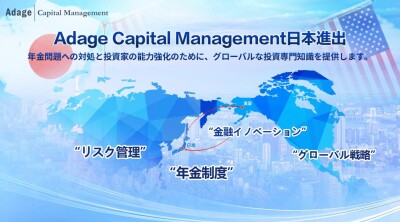
    Adage Capital Management (ACM) has announced its entry into Japan in 2024, a significant milestone in its globalization strategy.

    This expansion aims to confront Japan’s pressing demographic challenges, including an aging population and declining birth rates.

    These factors are poised to strain Japan’s pension system over the next two decades.

    ACM’s foray into the Japanese market promises to deliver global investment expertise tailored to local needs.

    The firm is dedicated to enhancing financial literacy among Japanese investors, fostering sound financial management practices.

    By addressing long-term sustainability issues within the pension framework, ACM seeks to empower investors.

    The introduction of advanced investment strategies is set to invigorate Japan’s financial landscape.

    ACM’s client-centric approach emphasizes rigorous research and data-driven decision-making, appealing to cautious investors.

    Collaborating with local financial institutions will drive innovation and support economic revitalization in Japan.

    With a strong presence in U.S. equity markets, ACM is known for its in-depth fundamental analysis and value investing strategies.

    Core services include equity investment management, institutional portfolio management, and comprehensive risk management strategies.

    Through this expansion, ACM aims to enhance retirement security for Japanese investors while promoting financial growth across the region.

  • Estate developer dedicated to attracting foreign investment, creating high-value jobs

    Estate developer dedicated to attracting foreign investment, creating high-value jobs

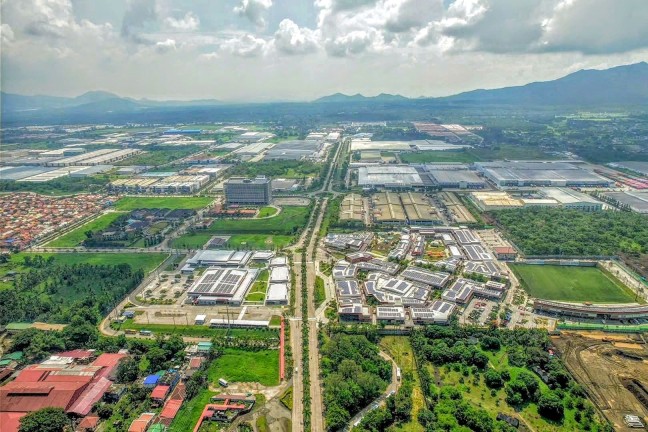
    Aboitiz InfraCapital Economic Estates, a leading developer of industrial-anchored estates in the Philippines and across Asia, continues to champion the Philippines as a premier investment destination.

    Participating in a strategic investment mission at the 4th Philippines-Singapore Business and Investment Summit, Aboitiz InfraCapital reaffirmed its commitment to fostering strong international partnerships and driving economic growth in the region.

    With over 1,700 hectares of developed land, the Economic Estates have generated more than 100,000 jobs, attracted ₱158 billion in investments, and facilitated $3.4 billion in exports in 2023 alone, underscoring the Philippines’ competitive advantage in the global market.

    “Aboitiz InfraCapital is dedicated to creating business environments that support the growth and expansion of our locators. By continuously improving our offerings and collaborating with both government and private stakeholders, we aim to provide seamless and efficient solutions to our partners,” shared Monica Trajano, Vice President for Sales, Leasing, and Business Development at Aboitiz InfraCapital Economic Estates.

    “Through intentional design, innovation, and a focus on ease of doing business, we ensure that investors find success and long-term value in the Philippines.”

    The summit, held in collaboration with the Embassy of the Philippines in Singapore, the Department of Trade and Industry-Philippine Trade and Investment Center (DTI-PTIC), and the Philippine Economic Zone Authority (PEZA), highlighted the Philippines’ strategic advantages as an investment destination.

    Aboitiz InfraCapital showcased its Economic Estates portfolio, including LIMA Estate in Batangas, West Cebu Estate, MEZ2 Estate in Cebu, and the newly launched TARI Estate in Tarlac.

    These estates offer comprehensive infrastructure and services that cater to industries such as light to medium manufacturing, food, electronics, automotive, and shipbuilding—further solidifying the country’s position as a hub for global industries.

    The Philippine government’s 8-point economic agenda, led by President Ferdinand Marcos Jr., was a key focus of the summit. The agenda aims to generate employment, promote investments, and enhance infrastructure, creating a business-friendly environment that encourages international companies to establish or expand their presence in the country.

    PEZA Director General Tereso Panga emphasized, “The Philippines is a smart investment choice in the region. With its high economic growth and favorable conditions, now is the ideal time to invest in the country.”

    The summit also featured George Barcelon, Chairman of the Philippine Chamber of Commerce and Industry, who highlighted the strong relationship between the Philippines and Singapore.

    “With over 240,000 Filipinos living in Singapore, known for their command of English, intelligence, and adaptability, we look forward to further deepening business ties between our two nations and welcoming Singaporean companies to the Philippines.”

    Aboitiz InfraCapital’s Economic Estates are home to over 240 locators from 11 countries, representing sectors such as food, electronics, packaging, automotive, shipbuilding, and light to medium manufacturing.

    These companies thrive within Aboitiz InfraCapital’s robust business ecosystem, which offers access to critical infrastructure, including reliable power, water, and construction services, as well as regulatory and operational support.

    This integrated approach allows locators to optimize costs and enhance productivity, positioning the Economic Estates as an ideal choice for global enterprises seeking a strong foothold in Asia.

    “Our Economic Estates are designed to meet global standards, offering locators the optimal environment to succeed in the dynamic Philippine market,” added Jolan Formalejo, Vice President for Inventory Generation at Aboitiz InfraCapital Economic Estates. “From strategic location to comprehensive infrastructure, we provide the full suite of solutions needed for our partners to thrive.”

    Finance Secretary Ralph Recto shared an optimistic outlook on the Philippine economy over the next decade, reinforcing the country’s commitment to strengthening trade and investment partnerships across the Asia-Pacific.

    As Aboitiz InfraCapital Economic Estates continues to shape the future of industrial development in the Philippines, it remains steadfast in its mission to attract global investments, generate high-value jobs, and drive innovation.

    Through its strategic partnerships with both the public and private sectors, the company plays a pivotal role in advancing the government’s vision of building a more sustainable, inclusive, and globally competitive economy.