Tag: event

  • China and Russia Loom: Why the Philippines’ New Alliance With Ukraine Should Terrify Every Filipino

    China and Russia Loom: Why the Philippines’ New Alliance With Ukraine Should Terrify Every Filipino

    The world is sliding into chaos—and the Philippines may be standing on the fault line. As Russia’s bloody war in Ukraine drags on and China ramps up its illegal bullying in the West Philippine Sea, the Philippines and Ukraine have decided to forge a stronger alliance.

    But beneath the warm words of “partnership” and “cooperation,” this alliance sends a chilling message: the Philippines is preparing for a darker, more dangerous future.

    Two Nations, One Enemy: Aggression From Bullies

    At a high-level forum hosted by the Stratbase Institute and the Embassy of Ukraine in Manila, lawmakers, diplomats, and military leaders made it clear—Ukraine and the Philippines face the same nightmare.

    Stratbase Institute President Victor Andres “Dindo” Manhit minced no words: both nations are under attack. Ukraine bleeds daily from Russia’s bombs and missiles. The Philippines, meanwhile, is being harassed by Chinese ships that swarm, ram, and block Filipino fishermen in their own waters.

    “Ukraine is courageously defending its territory against outright armed aggression, while the Philippines asserts its sovereign rights in the West Philippine Sea in the face of coercion and incursions,” Manhit said. His warning was stark: deeper cooperation is not optional—it is urgent.

    Ukraine and the Philippines: Bonded by War and Fear

    Ukrainian Ambassador Yuliia Fediv pointed out that, though oceans apart, the two nations are united by trauma. Both have been violated by stronger neighbors who spit on international law.

    “Both of our nations are committed to defending sovereignty, territorial integrity, and upholding a rule-based international order,” Fediv declared.

    Her words underscored a frightening truth: what Russia has done to Ukraine, China could easily do to the Philippines.

    The Black Sea and the West Philippine Sea: Mirrors of Danger

    Dr. Hanna Shelest, a Ukrainian security expert, drew a haunting parallel between Europe’s Black Sea and Asia’s contested waters. “If you don’t understand why it is important for all of us… you’re just not understanding the security challenges that we are facing,” she warned.

    Her message is clear—ignore Ukraine’s suffering, and you invite the same fate.

    Ukrainian parliamentarian Tamila Tasheva drove the point home: both countries are stalked by predators who test the limits of international law. For her, maritime security is not about warships—it is about protecting people, trade, and the fragile order that keeps the world from sliding into anarchy.

    Technology and the Terrifying New Face of War

    Ukraine’s brutal battlefield innovations are rewriting the rules of conflict, and the Philippines cannot afford to look away.

    Natalia Gumenyuk, a Ukrainian journalist, revealed how drones and unmanned boats have become deadly tools of survival. “They are boats which can be remotely operated… But the secret is not about one technology. It’s about the very developed feedback loop between the producers and the battlefield,” she explained.

    The reality is sobering: Ukrainians are writing the military doctrine of tomorrow. And if war breaks out in the West Philippine Sea, Filipinos may find themselves staring down the same terrifying technologies.

    Trade, Diplomacy, and Food Security at Risk

    Beyond the battlefield, Ukraine’s leaders issued another warning—one that should alarm every Filipino household.

    Ukraine is one of the world’s largest grain exporters. Its parliamentarian Lesia Vasylenko reminded Filipinos: “For you, it’s very important because it’s your food security.”

    If Ukraine falls, the global food chain collapses—and the Philippines, which already struggles with inflation, will suffer first.

    Vadym Halaichuk, another Ukrainian MP, called the opening of Ukraine’s embassy in Manila a major step forward but warned that trade between the two nations is still dangerously low. “We are now trading at less than $70 million in 2024… but that’s a huge potential for expanding. What we can look into is replacement of some of the goods that we are purchasing from China,” he stressed.

    In other words, every peso the Philippines spends on Chinese imports strengthens the very country undermining our sovereignty.

    Philippine Experts Sound the Alarm

    Filipino security experts were blunt: China is preparing for dominance, and the Philippines is dangerously exposed.

    Retired Rear Admiral Rommel Jude Ong described China’s military growth as overwhelming: “Since 2015, the PLA Navy has surpassed the U.S. Navy in terms of battle force numbers. That creates what I call a regional imbalance of naval power.”

    General Emmanuel Bautista, former AFP chief, issued a grim scenario: “Will China do a Ukraine? Either Taiwan or the Philippines… the Philippines will be inevitably involved.”

    The implication is horrifying: the Philippines is not a bystander. If Beijing strikes, Manila will bleed.

    Reciprocity, Culture, and the Human Factor

    Dr. Chester Cabalza of the Stratbase Institute reminded Filipinos that alliances must be two-way. Ukraine backed the Philippines’ bid for a United Nations Security Council seat, and Manila must repay the support.

    He also pointed to cultural diplomacy as another front—Ukraine exports not just food and resources, but also art and ideas. Yet in the shadow of war, even cultural exchange becomes an act of defiance against aggressors.

    Europe, Asia, and the Coming Global Firestorm

    This forum followed another Stratbase gathering with European leaders just days earlier, warning of gray zone tactics, cyberattacks, and lawfare—all tools of intimidation used by authoritarian regimes.

    The message resounded: from Europe to Asia, democracies are under siege.

    Why Filipinos Should Be Afraid

    Every speech, every warning, every comparison at the forum painted a terrifying picture. The Philippines is not safe. The seas we fish in, the food we eat, the jobs we rely on, even the culture we share—all are threatened by aggressors who believe might makes right.

    Ukraine’s tragedy is a warning. If Russia can trample a sovereign nation without consequence, what will stop China from doing the same in the West Philippine Sea?

    The partnership between the Philippines and Ukraine is more than symbolic. It is a desperate preparation for storms on the horizon—storms that could engulf every Filipino in fear, hunger, and war.

    And if the world refuses to learn from Ukraine’s suffering, the Philippines may be next.

  • Andi Avalon Unwraps The Gift in Bellesa Films’ Latest

    Andi Avalon Unwraps The Gift in Bellesa Films’ Latest

    A model posing in a playful outfit with a fur-like top and thigh-high stockings, holding a playful item in a colorful room with blue lighting.

    Andi Avalon stars with Kate Dalia and Isiah Maxwell in Bellesa Films’ The Gift, a sensual story where passion between lovers builds to a steamy surprise and erupts into an unforgettable threesome, now streaming exclusively at Bellesa Films.

    It’s Andi and Kate’s anniversary, and Andi decides to celebrate in an unforgettable way – by introducing her wife to a surprise guest. After the couple enjoys a steamy bath together, Andi leads Kate to the bedroom where Isiah Maxwell is waiting. What begins as a private moment between two women turns into an intimate encounter, with each partner taking turns giving, receiving and exploring until the gift is fully unwrapped.

    “I absolutely loved shooting The Gift,” Avalon said. “Kate and Isiah were amazing co-stars, and the chemistry between us was effortless. Bellesa always creates such a safe, welcoming space, and that allowed us to really relax and make the scene feel genuine and sensual. It was such a memorable experience, and I’m so excited for fans to see the final result.”

    The Gift is now live at Bellesa Films.

    To learn more about Andi Avalon, visit AndiAvalon.com.

    For booking inquiries, contact alex@hussiemodels.com and find her official model page at HussieModels.com.

  • Little Puck in the Running for Multiple AVN 2026 Fan Awards

    Little Puck in the Running for Multiple AVN 2026 Fan Awards

    A group of performers at an awards event, featuring three individuals in colorful costumes with a playful theme, posing together in front of a backdrop. The main focus is on a performer in a revealing outfit, exuding confidence and playfulness.

    Little Puck is calling on her fanbase to help secure pre-nomination spots for the 2026 AVN Fan Awards.

    The fan-favorite performer and cosplayer is seeking recognition in the following categories:

    • ‘Favorite Cosplayer’
    • ‘Favorite Porn Star Creator’
    • ‘Most Spectacular Boobs’

    “The AVN Fan Awards are such a special way for performers to feel the love directly from the people who matter most: our fans,” said Little Puck. “These categories are so me, and I’d be thrilled to see my name on the final list. If you’ve ever enjoyed my work or supported my cosplay, please take a moment to click and nominate me. It really makes a difference.”

    Fans can submit nominations now at AVN.com/awards/pre-nomination.

    To learn more about Little Puck, visit LittlePuckpls.com and Snipfeed.co/littlepuck.

  • 8 Surprising Ways China’s Silver Economy Is Quietly Changing the World

    8 Surprising Ways China’s Silver Economy Is Quietly Changing the World

    A thoughtful young person with headphones in a recording studio, contemplating ideas of the silver economy, with an inset image of active older adults enjoying a run outdoors.

    China’s aging population has long been painted as a looming crisis, but the country is flipping the script. Instead of treating demographic change as a burden, China is turning it into a trillion-dollar powerhouse known as the silver economy. By 2035, the spending power of older citizens is projected to hit 19.1 trillion yuan ($2.68 trillion) — nearly 28 percent of total national consumption.

    Here are eight eye-opening ways China’s silver economy is transforming life for seniors, reshaping industries, and creating ripple effects far beyond its borders.

    1. From Survival Spending to Lifestyle Choices

    Gone are the days when seniors in China focused only on the basics. Today’s older generation is demanding more than just survival. They are choosing development-oriented spending, splurging on wellness programs, leisure travel, cultural activities, and premium nutrition.

    This shift means companies can no longer rely on cheap essentials; they are forced to innovate with high-quality products and services tailored to seniors’ evolving needs.

    2. Technology Becomes a Caregiver

    One of the boldest areas of innovation is eldercare technology. At the World Robot Conference, Chinese companies unveiled robots that serve meals, offer companionship, and assist with daily routines. These are not futuristic prototypes — they are already deployed in hospitals, nursing homes, and households.

    Even more striking, China led the creation of the world’s first international standard for eldercare robots, solidifying its influence on how the rest of the world will use technology to care for the elderly.

    3. Train Travel Reinvented for Seniors

    China’s railways are now more than just a way to move from city to city. New senior-friendly train carriages have been designed with softer lighting, accessible bathrooms, grab bars, call buttons, and onboard medical staff. Entertainment and meals are adapted to older passengers’ needs.

    Over one million seniors have already traveled on these specialized journeys, proving that aging gracefully can mean exploring the country in safety and comfort.

    4. A New Consumer Class Rises

    China’s 310 million seniors — accounting for 22 percent of the population — are shaping markets in ways no one expected. They are purchasing imported foods, digital health apps, specialized footwear, and wellness services. This surge in demand has pushed businesses to diversify product lines and rethink customer service strategies.

    For global brands, tapping into China’s silver economy is becoming as important as targeting younger consumers.

    5. Millions of New Jobs on the Horizon

    Experts predict the silver economy could create 100 million jobs by 2050. These opportunities span from high-tech industries like robotics and smart homes to service sectors such as hospitality, nutrition, wellness, and eldercare.

    For China, this means demographic change is not just sustainable — it is a new engine for employment and inclusive growth that benefits both urban and rural workers.

    6. Seniors Are Going Global

    The silver economy isn’t confined to China’s borders. The country is actively sharing its innovations in digital care models, wearable technology, and smart homes with the world. Meanwhile, international companies are diving into China’s senior market to offer healthcare, lifestyle, and wellness solutions. This two-way flow of ideas and products is creating new opportunities for global trade and collaboration.

    7. Social Harmony Through Senior Welfare

    Investing in the silver economy is not just about money. China’s strategy also strengthens social stability and cohesion. By designing systems that prioritize dignity, respect, and accessibility for older citizens, the government builds trust among communities.

    This approach reinforces the cultural value of caring for elders while preventing social strain that might otherwise arise from rapid demographic shifts.

    8. A Platform for International Cooperation

    China’s silver economy is opening doors for global partnerships in healthcare, research, and policy-making. Instead of closing off, China is inviting other nations to collaborate on shared challenges. Countries facing their own aging populations can draw lessons from China’s proactive model, while China benefits from shared expertise and diverse collaborations.

    It’s a mutually beneficial exchange that could shape how the world addresses aging for decades to come.

    Final Takeaway

    China’s silver economy shows that aging populations don’t have to spell disaster. Instead, they can spark innovation, dignity, and cooperation. With its seniors driving demand for new technologies, services, and global partnerships, China is proving that demographic shifts can be transformed into engines of progress.

  • China’s Silver Economy Is a $2.6 Trillion Power Grab That Could Rewrite Global Aging and Leave the World Dependent on Beijing

    China’s Silver Economy Is a $2.6 Trillion Power Grab That Could Rewrite Global Aging and Leave the World Dependent on Beijing

    A young man wearing headphones sits in a studio, thoughtfully resting his chin on his hand, with a backdrop featuring a city skyline. In the foreground, there's a circular inset showing two older adults jogging in a park, smiling.

    The World Is Sleepwalking Into China’s Aging Trap

    While much of the world is still scrambling to find solutions for their rapidly aging populations, China is weaponizing its demographic crisis and turning it into an economic juggernaut. Branded as the “silver economy,” Beijing’s model for monetizing its elderly citizens is on track to hit a staggering 19.1 trillion yuan ($2.68 trillion) by 2035.

    That’s nearly 28 percent of total Chinese consumption, according to the Fudan Institute on Aging.

    But this is not just about healthcare or retirement homes. It is about Beijing positioning itself as the global rule-setter in eldercare technology, international markets, and even cultural narratives on aging.

    While other nations drown in pension crises and underfunded healthcare systems, China is creating a parallel economy that could dominate supply chains, innovation pipelines, and international cooperation agreements.

    The result? A world where the graying of humanity feeds into Beijing’s economic machine.

    From Weakness to Weapon: China’s 310 Million Seniors

    By the end of 2024, more than 310 million Chinese citizens were aged 60 and above—22 percent of the entire population. What should be a crisis is being reframed as an opportunity. Seniors are no longer just consumers of healthcare; they are reshaping demand across food, housing, transportation, leisure, and lifestyle.

    Unlike older populations in Europe and the United States, China’s seniors are not content with survival spending. They are demanding “development-oriented” consumption—premium healthcare, lifestyle upgrades, and technology-driven solutions. This sudden shift has fueled an explosion of new industries from elder-friendly tourism and nutrition to AI-powered wellness devices. And every yuan spent is strengthening Beijing’s grip on future global markets.

    Robots, Standards, and Silent Domination

    The most chilling example of this transformation comes from technology. At the World Robot Conference, Chinese companies unveiled eldercare robots that deliver meals, provide companionship, and assist with daily routines. These are not futuristic concepts—they’re already deployed in hospitals, nursing homes, and private residences.

    Worse, China has taken the lead in creating the world’s first international standard for eldercare robots. Standards are invisible weapons. By defining global rules, Beijing ensures that future robotics markets—from Europe to Africa—will rely on Chinese frameworks, patents, and manufacturing. The world is quietly being locked into Chinese systems without even realizing it.

    Redefining Comfort and Dignity—on Beijing’s Terms

    Even basic infrastructure is being reshaped. Entire train carriages have been redesigned specifically for senior travelers, complete with softer lighting, medical staff, and accessibility features. More than a million passengers have already taken these journeys. It might look like compassion, but make no mistake: every innovation ties Chinese seniors, and eventually foreign partners, deeper into Beijing’s state-approved consumption ecosystem.

    The silver economy is not just about extending life—it’s about controlling how life is lived, where money flows, and who sets the cultural tone for aging societies worldwide.

    Seniors as Global Consumers—and China as the Gatekeeper

    Chinese seniors are now some of the most sophisticated consumers on Earth. They are investing in premium nutrition, educational courses, digital health apps, and lifestyle upgrades. This makes them a powerful market force that companies everywhere want to access.

    But here’s the catch: access to this market requires compliance with Chinese regulations, partnerships with Chinese firms, and acceptance of Chinese standards. What looks like an economic opportunity for international businesses is, in reality, a Trojan horse for dependency.

    A Job Machine That Threatens Global Labor Flows

    Experts estimate that the silver economy could create 100 million jobs in China by 2050. These roles will span from robotics manufacturing to wellness tourism and eldercare services. For countries already struggling with unemployment, this means more industries and jobs being siphoned into China’s orbit.

    Instead of a global workforce benefiting equally, the aging crisis could become another driver of dependency—where innovation, investment, and jobs migrate east, leaving Western economies further hollowed out.

    Beijing’s Narrative of “Harmony” Masks a Power Play

    China is branding its silver economy as a triumph of dignity, solidarity, and shared responsibility. The government emphasizes investments in welfare, infrastructure, and international cooperation. It presents this model as a gift to the world—an example of how demographic decline can be turned into prosperity.

    But beneath the rhetoric lies a calculated strategy: dominate the technologies, industries, and cultural narratives of aging before other nations can even catch up. By the time the rest of the world reacts, Beijing could already control the rules of the global silver economy.

    A Future Defined by Dependency

    International cooperation sounds harmless—until you realize what it means in practice. Countries struggling with their own aging populations will have little choice but to adopt Chinese tech, standards, and policies. What begins as a partnership could quickly become dependency.

    China’s silver economy is being sold as a story of human dignity and innovation. In reality, it’s a geopolitical maneuver to ensure that the global conversation on aging—one of the most pressing issues of the 21st century—is dictated from Beijing.

    The Frightening Bottom Line

    China’s silver economy is not a benign response to demographic change. It is a $2.68 trillion juggernaut designed to capture markets, set standards, and create dependency under the guise of compassion.

    As the world ages, nations may soon find themselves trapped in Beijing’s narrative of “shared opportunities”—with their economies, policies, and even cultural approaches to aging bound to China’s model.

    The silver wave is coming. And unless other countries move fast, the future of aging—and the industries it fuels—will be owned not by humanity, but by Beijing.

  • Murdochs Circle TikTok: Trump’s Shocking Deal Hands Power Over to Billionaire Elites

    Murdochs Circle TikTok: Trump’s Shocking Deal Hands Power Over to Billionaire Elites

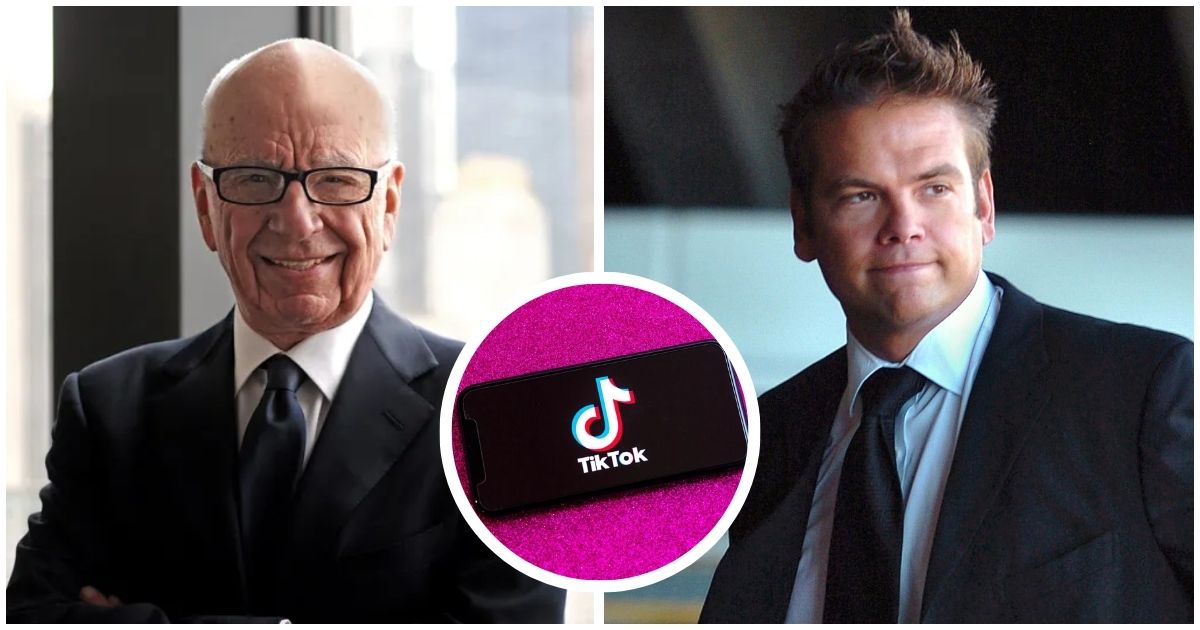
    Portraits of Rupert Murdoch and Lachlan Murdoch with a TikTok logo displayed in the foreground.

    A Deal That Reeks of Control

    The United States is once again on the edge of a political and technological storm. Former President Donald Trump has revealed that media barons Rupert Murdoch and his son Lachlan are “probably” set to be involved in the controversial TikTok takeover deal. The revelation came during a Fox News interview, where Trump casually name-dropped the Murdochs as potential investors in the social media platform’s U.S. spin-off.

    On the surface, the news might seem like another chapter in the saga of TikTok’s survival in America. But beneath the headlines lurks something darker: the very same media dynasty that already controls what millions of Americans see on television could soon control one of the world’s most influential social platforms.

    The Billionaire Boys’ Club

    Trump didn’t stop with the Murdochs. He also mentioned Oracle’s Larry Ellison and Dell Technologies CEO Michael Dell as likely players in the deal. Behind closed doors, sources confirm that other financial giants, including private equity firm Silver Lake Management and venture capital powerhouse Andreessen Horowitz, are circling the deal like vultures.

    According to Bloomberg, Oracle is poised to control TikTok’s security and algorithm — essentially deciding what content Americans are allowed to see. Meanwhile, ByteDance, TikTok’s Chinese parent company, would be reduced to a minority stake of less than 20%.

    The spin being pushed is that this will guarantee TikTok’s “safety” and “independence” under U.S. leadership. But let’s be clear: this isn’t about national security. This is about billionaires carving up one of the most powerful communication platforms on Earth for their own profit and influence.

    Americans Shut Out, Billionaires Take Over

    White House Press Secretary Karoline Leavitt went on Fox News to reassure the public that Americans will control six of seven board seats in the new TikTok U.S. structure. She boasted that the algorithm — TikTok’s secret sauce — will now be “U.S.-controlled.”

    But ask yourself: which Americans? Everyday users? Or the billionaire investors handpicked by Trump’s inner circle?

    If the Murdochs — who already dictate Fox News coverage — gain control, TikTok could easily morph into yet another weaponized platform, spreading narratives designed to divide and manipulate. Millions of users who flock to TikTok for entertainment could unknowingly be subjected to subtle propaganda pushed by the same family that has profited off polarization for decades.

    Trump, Xi, and the Strange Dance of Approval

    The timeline of the deal makes the situation even more unsettling. Just last year, a federal law was set to ban TikTok entirely. The app briefly went dark before Trump extended the deadline multiple times, giving ByteDance room to negotiate.

    Now, Trump claims Chinese President Xi Jinping personally approved the deal. TikTok even issued a statement thanking both Xi and Trump “for their efforts to preserve TikTok in the United States.”

    Think about that. A platform used by 170 million Americans is now being preserved not by democratic processes, not by consumer voices, but through backroom arrangements involving Trump, Xi, and billionaire investors.

    The Illusion of “Saving” TikTok

    Supporters of the deal argue that this is the only way to keep TikTok alive in the United States. But at what cost? ByteDance will lose control, and in its place, a handful of elites will decide the future of one of the world’s most powerful platforms.

    It’s not about saving TikTok. It’s about controlling it. And once billionaires own it, ordinary Americans will have no say in how their data, their content, and even their voices are used.

    The Murdoch Factor: More Dangerous Than China?

    For years, TikTok critics have shouted about the dangers of Chinese ownership, warning of surveillance and propaganda. But is the prospect of Murdoch control any better?

    The Murdoch empire has a long history of shaping political discourse for profit. Fox News, run by Lachlan Murdoch, is notorious for stoking division and anger to keep ratings high. If TikTok becomes another Murdoch property, it could be engineered to amplify outrage and misinformation at an even larger scale — not just on cable news, but directly on the smartphones of millions of young Americans.

    A Future Controlled by Billionaires

    The TikTok deal is not about freedom, security, or democracy. It’s about billionaires tightening their grip on information. From television to newspapers to social media, the Murdochs and their allies are quietly building an empire that decides what Americans see, hear, and believe.

    And the scariest part? They’re doing it with the blessing of Trump, Xi, and the very politicians who claim to be protecting us.

    Outrage Is the Only Response

    If this deal is signed, TikTok will no longer be the quirky, creative outlet it once was. It will be a platform engineered by billionaires, for billionaires — with ordinary users left powerless.

    The Murdoch family’s looming role in this takeover is a warning sign: our information, our culture, and even our democracy are being sold off piece by piece. Americans should be outraged, because once control is lost, we may never get it back.

  • Fire Fest 2025: Marikina Set for the Hottest Festival of the Year

    Fire Fest 2025: Marikina Set for the Hottest Festival of the Year

    A young man wearing headphones and a black cap is sitting in a studio, deep in thought, with a city skyline visible behind him. To the right, a circular logo for Fire Fest features the text 'Where Heat, Smoke, Spark, and Air Ignite the Ultimate Filipino Food & Culture Experience.'

    The heat is about to rise in the east as Fire Fest 2025 takes over the Renaissance Convention Center in Marikina on October 4-5, transforming the city into the Philippines’ hottest playground for food, culture, and community spirit.

    What began as a humble chili festival by the Philippine Chili Federation has now erupted into a massive four-hall spectacle, uniting six powerhouse communities under one blazing banner. The event will showcase everything from the iconic Chili Fest 8, complete with fiery eating challenges and a 200-sauce “Table of Fire,” to the first-ever Chili Cocktail Cup led by renowned mixologist Chef Kalel Demetrio.

    Beyond the spice, visitors can indulge in Texas-style barbecue from the Pitmasters Club of the Philippines, ice-cold craft beer courtesy of the Philippine Craft Brewers Association, and even explore disaster-preparedness lessons disguised as a camping bazaar. For a cooler touch, plant lovers can head to the “Fanged & Fearless” garden exhibit by Horti Filipina.

    More than just food and fire, organizers say the festival is a rallying point for supporting local products, small businesses, and Filipino creativity. With celebrity chefs, international recognition, and thousands of thrill-seekers expected, Fire Fest 2025 is set to be Marikina’s biggest blaze yet.

  • Consumer Tech Expo 2025 Shows Filipinos Ready to Embrace the Future

    Consumer Tech Expo 2025 Shows Filipinos Ready to Embrace the Future

    An individual wearing headphones and a cap sits in a studio-like setting, reflecting thoughtfully. In the background, a large promotional image for the Consumer Tech Expo is displayed, featuring crowds engaging with technology.

    Consumer Tech Expo 2025 transformed the SMX Convention Center into a three-day showcase of innovation, record-breaking sales, and hands-on experiences that drew more than 8,000 eager visitors.

    Opening with a futuristic twist, VIPs used AI-powered augmented reality glasses from Rokid Philippines in place of the traditional ribbon-cutting, signaling a weekend where technology wasn’t just displayed but lived.

    Shoppers flocked to massive discounts of up to 97% and a wildly popular ₱1 auction, while more than 20 interactive zones allowed attendees to experience cutting-edge gadgets firsthand. On stage, 19 Tech Talk sessions featured experts discussing artificial intelligence, gaming, content creation, and smart living.

    The Expo also debuted 22 new products, giving Filipinos an early look at innovations from over 100 global and local brands including Apple, Canon, JBL, Nintendo, and PLDT Home. Hourly raffles kept the excitement alive, with lucky winners taking home premium devices like gaming laptops and Nintendo Switch consoles.

    By the end of the weekend, the event generated an impressive ₱19.8 million in sales. Organizers are already gearing up for its return on September 4–6, 2026, promising an even bigger celebration of the future.

  • Lucky Me! Shocks Rivals With 10-Year Streak as Philippines’ #1 Most Chosen Brand

    Lucky Me! Shocks Rivals With 10-Year Streak as Philippines’ #1 Most Chosen Brand

    Group photo of the Monde Nissin team celebrating Dutch Mill's recognition as #11 in Dairy at the Brand Footprint Awards 2025, with a backdrop promoting sustainable food security.

    MANILA, PHILIPPINES — In a stunning display of consumer loyalty, Monde Nissin’s flagship brand Lucky Me! has been crowned the Philippines’ Most Chosen Brand for the 10th consecutive year at the Worldpanel by Numerator’s Brand Footprint Awards 2025. The recognition, announced on August 29, cements Lucky Me!’s place as an unshakable giant in Filipino households.

    But the wins did not stop there. Lucky Me! also claimed the title of the country’s Most Meaningfully Different Brand, a nod to its deep emotional and cultural resonance with families nationwide. Monde Nissin’s dominance spread across its portfolio, with SkyFlakes (#9 in Food), Fita (#15 in Food), and Dutch Mill (#11 in Dairy) all earning national recognition. Mama Sita’s, another Monde Nissin-distributed brand, stunned observers by securing the #2 Fastest Growing Brand award—highlighting a surging appetite for authentic Filipino flavors.

    “These awards reflect where we’ve been and where we’re going,” said Monde Nissin CEO Henry Soesanto, stressing the company’s commitment to innovation and household well-being.

    The Worldpanel by Numerator Awards benchmark brands by purchase frequency and household penetration, underscoring Monde Nissin’s unmatched role in shaping Filipino dining tables for generations.

  • Monde Nissin Iconic Brands Honored at Worldpanel’s Brand Footprint Awards 2025

    Monde Nissin Iconic Brands Honored at Worldpanel’s Brand Footprint Awards 2025

    A group of seven individuals standing together at an event, holding a Dutch Mill product and an award certificate, with a backdrop displaying a sustainability message.

    Monde Nissin Corporation was honored at the Worldpanel by Numerator’s Brand Footprint Awards 2025, held on August 29, 2025, as its flagship brand Lucky Me! celebrated a remarkable 10-year milestone as the #1 Most Chosen FMCG (Fast-Moving Consumer Goods) Brand in the Philippines. 

    In addition to this decade-long distinction, Lucky Me! was also recognized as the country’s Most Meaningfully Different Brand. This recognition reflects the enduring bond it shares with Filipino households, where Lucky Me! has become a symbol of comfort, value, and everyday nourishment.

    Across Monde Nissin’s broader portfolio, brands continued to earn the trust of consumers nationwide. SkyFlakes ranked as the #9 Most Chosen Brand in Food, with Fita ranking at #15 in the same category. Dutch Mill secured the #11 spot in Dairy, and Fita was recognized as the #15 Most Chosen Brand in Food. These distinctions reflect the wide-reaching impact and consumer trust across Monde Nissin’s family of brands. 

    Meanwhile, Mama Sita’s was named the #2 Fastest Growing Brand. This reinforces its place as a champion of authentic Filipino flavors that connect generations. Present at the event to accept the certificate was Mama Sita’s president Clara Reyes-Lapus, and culinary director Joyce Lapus-Sandoval.   Mama Sita’s is exclusively distributed in the Philippines by Monde Nissin Corporation.

    “We are incredibly honored by these recognitions. We extend our heartfelt gratitude to every Filipino family who continues to choose and trust our brands,” said Henry Soesanto, CEO of Monde Nissin Corporation. “These awards reflect where we’ve been, and where we’re going—toward a future shaped by continued innovation, accessibility, and our deep commitment to the well-being of every household we serve.”

    The Worldpanel by Numerator Brand Footprint Awards highlight the brands that have a significant impact on daily life by benchmarking their reach to consumers through a combination of how often they are purchased and their penetration. Monde Nissin’s strong performance in the 2025 report reinforces its long-standing mission of improving the well-being of people through accessible, nutritious, and innovative food solutions.

    These distinctions underscore Monde Nissin’s integral role in Filipino homes, from trusted pantry staples to modern kitchen essentials. Looking ahead, Monde Nissin remains committed to a future defined by innovation, responsible growth, and connection with the communities it serves. 

    As the company continues its journey of Making Better Possible, it expresses sincere gratitude to its consumers, employees, and partners whose trust and support have made this achievement possible.