Tag: event

  • Monde Nissin Supports Cocolinarya Turismo 2025, Champions Coconut Sustainability with GoodNom Fresh Gata

    Monde Nissin Supports Cocolinarya Turismo 2025, Champions Coconut Sustainability with GoodNom Fresh Gata

    Bottles of GoodNom Fresh Gata coconut milk on display at Cocolinarya Turismo 2025 event, featuring a ceremonial ribbon-cutting led by various key figures.

    In celebration of National Coconut Week, Monde Nissin Corporation proudly participated as a Gold Sponsor of Cocolinarya Turismo 2025, a premier culinary event organized by the Philippine Coconut Authority (PCA). Held at SM Megamall Trade Hall, Building B, last August 29, 2025, the event gathered key figures from government, industry, and education, and secretaries from the Department of Trade and Industry (DTI) and Department of Agriculture (DA).

    As part of its sponsorship, Monde Nissin showcased GoodNom Fresh Gata, a proudly Filipino product that celebrates the coconut as a locally sourced, sustainable ingredient. GoodNom brings the versatility of coconut to Filipino cuisine thanks to its 5 Sarap Signs of fresh gata–Maputi, Mabango, Malapot, Manamis-namis at Ma-krema. By promoting coconut in Filipino cuisine, Monde Nissin reinforces its commitment to supporting smallholder farmers, advancing local agriculture, and promoting Filipino food heritage.  

    “This partnership reflects our deep belief in the power of local. By introducing GoodNom Fresh Gata at Cocolinarya Turismo 2025, we celebrate the richness of our culinary traditions and advocate for a more sustainable and inclusive food system,” said Marc Alejo, Monde Nissin’s Head of Public Affairs. “We are honored to support the coconut industry, whose resilience and potential continue to inspire us. Through events like this, we move closer to our goal of Making Better Possible.”

    Cocolinarya Turismo 2025, co-organized by the DTI-Bureau of Market Development, Promotions and OTOP (DTI-BMDPO), Coconut Farmers and Industry Development Plan (CFIDP), Council of Hotel and Restaurant Educators of the Philippines (COHREP), and Lyceum of the Philippines University Laguna, gives students and educators a platform to reimagine the role of coconut in the future of culinary, tourism, and hospitality education. This year’s theme, “Exploring Horizons, Empowering Futures,” encourages innovation, sustainability, and youth empowerment through Filipino cuisine.

    Monde Nissin’s presence at the event underscores its commitment to shared value creation, sustainable sourcing practices, and partnerships that uplift local industries. As the company continues to expand its offerings rooted in Filipino tradition and agricultural potential, GoodNom Fresh Gata stands as a symbol of how purposeful products can create impact from farm to table.

  • Monde Nissin Is Betting Big on Coconut; And It Could Pay Off for Everyone

    Monde Nissin Is Betting Big on Coconut; And It Could Pay Off for Everyone

    Products of GoodNom Fresh Gata arranged on a display shelf, with a ceremonial ribbon-cutting event featuring attendees and a mascot in the background.

    At first glance, Monde Nissin Corporation’s splashy sponsorship of Cocolinarya Turismo 2025 looks like another classic case of big business wrapping itself in the flag of sustainability.

    The company was a Gold Sponsor at the August 29 event held at SM Megamall Trade Hall, a stage co-organized by the Philippine Coconut Authority (PCA), the Department of Trade and Industry (DTI), and the Department of Agriculture (DA).

    It was a lineup designed to impress: secretaries from both agencies, academe partners, and industry figures who all nodded in rhythm to the promise of a brighter coconut future.

    But beneath the glossy program, some analysts see a familiar narrative—corporations riding on cultural festivals to strengthen their brands, while the actual state of smallholder farmers remains precarious. Researcher-led observations point out that events like these often frame themselves as “inclusive” without fully addressing systemic inequalities in agriculture, from farmgate pricing to middlemen dominance.

    The cynicism isn’t baseless. The Philippine coconut industry, despite being a global export powerhouse, has left millions of farmers struggling below the poverty line. Sustainability pledges, according to the same researchers, tend to sound more like marketing campaigns than structural reforms.

    Against this backdrop, Monde Nissin’s showcase of its GoodNom Fresh Gata product may be less about empowering farmers and more about positioning itself as the corporate hero of the Filipino kitchen.

    The GoodNom Pitch: Fresh Gata in Five Sarap Signs

    At the event, Monde Nissin introduced GoodNom Fresh Gata, a proudly Filipino product pitched as a reinvention of a traditional kitchen staple. Its selling points—the “Five Sarap Signs” of coconut cream: maputi, mabango, malapot, manamis-namis, and ma-krema—hit directly at nostalgic culinary identity.

    Company executives framed the product as not only a nod to heritage but also a push for sustainability. Marc Alejo, Monde Nissin’s Head of Public Affairs, said the initiative reflects their “deep belief in the power of local” and moves them closer to their goal of “Making Better Possible.”

    Critics, however, question whether commodifying gata into a packaged brand really uplifts small farmers. Observers stress that while such products create visibility for coconuts in mainstream markets, they also reinforce the power imbalance between corporations with marketing muscle and farmers who lack direct market access.

    Why Coconut Matters: From Export Giant to Local Struggle

    The Philippines remains one of the top global exporters of coconut products, particularly oil, with millions of hectares dedicated to coconut farming. Yet, as researchers highlight, the irony is that many coconut farmers live in poverty. The average income of a smallholder coconut farmer is estimated at less than ₱100 per day, vulnerable to fluctuating world prices and extreme weather events.

    Events like Cocolinarya Turismo 2025 take on the heavy responsibility of reimagining the coconut industry beyond export commodities. The theme “Exploring Horizons, Empowering Futures” attempts to do exactly that—connecting coconuts not just to industrial output, but to culinary tourism, hospitality education, and youth innovation. Still, questions linger about whether such thematic events translate into tangible improvements for farmers.

    Cocolinarya Turismo: Between Showpiece and Substance

    The culinary festival was co-organized with the DTI-Bureau of Market Development, Promotions and OTOP, the Coconut Farmers and Industry Development Plan (CFIDP), the Council of Hotel and Restaurant Educators of the Philippines (COHREP), and Lyceum of the Philippines University Laguna. Its purpose was clear: give students and educators a platform to experiment with coconuts as a future-proof culinary tool.

    From the outside, it looked like a colorful pageant of innovation—young chefs reimagining dishes, educators linking coconut to global tourism, and sponsors tying it all back to inclusivity. Yet, researchers argue that festivals like these often miss the core tension: the widening gap between the branding of coconuts as a “national treasure” and the lived reality of coconut-dependent communities.

    Monde Nissin’s Stake: Beyond the Event Hype

    Monde Nissin’s presence underscores the company’s strategy of “shared value creation.” By associating itself with sustainability-linked causes, it signals to consumers that its products are not just food—they are part of a bigger mission. GoodNom Fresh Gata is marketed as more than convenience; it is positioned as a cultural artifact wrapped in the narrative of farm-to-table impact.

    From a business perspective, this makes sense. Filipino consumers are increasingly drawn to brands with “purpose,” especially those linked to local agriculture and heritage. Monde Nissin, known for staples like Lucky Me! and SkyFlakes, is now expanding into a space where identity and sustainability overlap.

    Parsing the Bigger Picture

    Researchers clarify that while cynicism about corporate intent is warranted, the entry of major food corporations into coconut advocacy does carry potential benefits. Sponsorship and visibility can attract attention to the industry, foster partnerships, and open up educational opportunities.

    The challenge, however, lies in follow-through. Without mechanisms to ensure small farmers benefit directly, the gains risk staying at the level of branding and pageantry. Government agencies like the PCA and DA must move beyond co-signing sponsorships and focus on structural reforms—like direct support for farmers, modernization of coconut processing, and equitable trade systems.

    Coconut Sustainability as a National Imperative

    The Philippines’ reliance on coconuts as both an export earner and cultural staple means its future is intertwined with how the industry adapts. Climate change, typhoon vulnerability, and global price fluctuations all pose risks. Integrating coconuts into culinary tourism and education may not solve these overnight, but it helps reposition the coconut as more than an export commodity.

    In this light, Monde Nissin’s sponsorship of Cocolinarya Turismo 2025 can be seen less as an empty gesture and more as part of a broader national conversation. Whether it delivers long-term results depends on the synergy between corporations, government agencies, and farmer organizations.

    Final Word: Marketing or Mission?

    In the end, the question remains—was Monde Nissin’s golden spotlight at Cocolinarya Turismo 2025 a genuine commitment to coconut sustainability, or another example of corporate branding cloaked in cultural advocacy?

    As one researcher summed it up, the answer might be both. The event succeeded in raising the coconut’s profile and reenergizing its role in Filipino cuisine. But the deeper work—fair prices for farmers, climate resilience, and a more equitable supply chain—still awaits real action.

  • ING Philippines marks 35 years with leadership forum in partnership with ECCP

    ING Philippines marks 35 years with leadership forum in partnership with ECCP

    Three speakers participating in a leadership forum, each holding a microphone and speaking, in a well-lit venue.

    ING Philippines, in collaboration with the European Chamber of Commerce of the Philippines (ECCP), marked its 35th anniversary by hosting a leadership forum titled “Do Your Thing: Lead with Impact” on 15 September 2025 at the Grand Hyatt Manila in Bonifacio Global City.

    The event brought together approximately 100 emerging leaders from the business and finance sectors for a dynamic exchange on modern leadership and strategies for driving organisational success.

    “At ING, we believe in empowering people to go further, do their thing, and create meaningful change,” said Jun Palanca, country manager for ING Philippines.

    “This belief has guided our journey over the past 35 years in the Philippines. Strong leadership is essential to achieving lasting impact, and this forum reflects our commitment to nurturing the next generation of changemakers.”

    The programme featured two key engagement sessions that explored the evolving demands of leadership in today’s dynamic landscape.

    The first session, a fireside chat titled “Do Your Thing: Lead with Impact,” explored the qualities that define effective and transformative leadership. Eugene Acevedo, former president and CEO of RCBC and author of Never Stand Alone; Reinvent and Outperform: Becoming a Better Leader; and The Future Leader: What it Takes to be the Next-gen CEO, shared insights on reinvention, digital advocacy, lifelong learning, and purposeful leadership.

    The conversation was moderated by Lenin Duenas, head of Corporate Sector and Financial Institutions Coverage at ING Philippines, who posed thoughtful questions on delivering results, upholding integrity, and driving positive change across diverse stakeholder groups.

    “Digital transformation is 90% transformational and 10% digital. It should be called Transformation Digital—the other way around,” Acevedo remarked when asked about translating management theories into meaningful business change. “Culture is what matters most. A company cannot be digitally transformed unless it is digitally ready,” he added.

    The second session, a panel discussion titled “Leading Across Generations and Beyond,” brought together emerging leaders to reflect on their leadership journeys and the complexities of inspiring multigenerational teams. Panellists shared strategies for aligning diverse groups around a common purpose and steering the next phase of organisational growth.

    The panel featured Carlo Puno, chief financial officer, treasurer, and chief risk officer of Globe Telecom; Raffy Montemayor, co-founder and director of Salmon Group and chair of Salmon Bank (Rural Bank); Philip Dy, president of Metrobank Foundation and executive director of GT Foundation; and Jessica Sy, vice president and head of Design, Innovation, and Strategy at SM Prime Holdings, Inc. and SM Development Corporation. The session was moderated by Nic Chua, director of Corporate Sector and Financial Institutions Coverage at ING Philippines.

    The event was also graced by the presence of H.E. Marielle Geraedts, ambassador of the Kingdom of the Netherlands to the Philippines, underscoring the strong ties between the Netherlands and the Philippines and the shared commitment to fostering leadership and innovation across borders.

    “We’re proud to partner with ING Philippines for this milestone event,” said Paulo Duarte, president of ECCP. “As the Philippines continues to rise as a strategic market in Asia, cultivating strong leadership across sectors is vital to sustaining inclusive growth and innovation.”

    The forum also marked a significant milestone for ING Philippines, which has been operating in the country since 1990. ING became the first foreign bank to secure a universal banking licence in the Philippines in 1996, and over the past three decades has established itself as one of the country’s most respected financial institutions. To date, ING has facilitated 194 capital market transactions worth over USD 28 billion and provided advisory services for more than 80 mergers and acquisitions valued at USD 35 billion.

  • Could Tulfo Actually Ban Facebook? The Answer Is Not as Crazy as It Sounds

    Could Tulfo Actually Ban Facebook? The Answer Is Not as Crazy as It Sounds

    A split image featuring Senator Erwin Tulfo in a formal setting, looking serious, alongside a young man in a studio with headphones, both with a graphic symbol representing a ban on Facebook.

    A recent blog entry published in Praxis Post by a political climate researcher has stirred debate by suggesting that Senator Erwin Tulfo’s clash with Meta could escalate into an actual ban of Facebook in the Philippines.

    The researcher’s analysis frames Tulfo’s fiery rhetoric and confrontational style as early signs that the unthinkable may soon become a political reality.

    Tulfo Versus Meta

    According to the Praxis Post article, tensions came to a head when Meta’s representatives skipped the continuation of the Senate’s probe into online gambling.

    Instead of attending, the company’s Philippine representative, Genixon David, sent a letter explaining that experts were unavailable for the hearing and offered to meet Tulfo at a later, more convenient time.

    The researcher noted that this response “did not sit well with Tulfo,” who interpreted Meta’s absence as arrogance. During the hearing, Tulfo reacted with sharp words, asking, “Why are they dictating this committee kung kelan sila attend?”

    The blog entry pointed out that Tulfo viewed the gesture not as a scheduling issue but as defiance against government authority.

    The Online Gambling Flashpoint

    The Praxis Post entry underscored why Tulfo is particularly incensed: online gambling activities have migrated from regulated e-wallets like GCash and PayMaya to social media platforms, particularly Facebook.

    Civic watchdog group Digital Pinoys testified that illegal gambling links are now openly circulating in groups, pages, and even private chats.

    Citing Tulfo’s remarks, the researcher emphasized that as much as 65 percent of Filipinos are reportedly engaged in some form of online gambling, making it a nationwide crisis rather than just a local one. For Tulfo, the failure of Meta to appear at the hearing was equivalent to ignoring a matter of public welfare.

    Support and Escalation

    The blog further detailed how Senator Risa Hontiveros supported Tulfo’s call by moving for a show-cause order against Meta representatives. Tulfo himself raised the possibility of subpoenas if Meta continues to avoid Senate inquiries.

    The researcher argued that Tulfo could go beyond gambling regulation and reframe Meta’s non-cooperation as a broader issue of sovereignty and national security. According to the analysis, “If Meta continues to resist, Tulfo could portray the company as a foreign corporate bully disregarding Philippine laws.”

    The Case for a Ban

    The Praxis Post analysis explored the potential consequences of Tulfo pushing for a Facebook ban. While such a move would disrupt businesses, media distribution, and even family communication—given that 96 million Filipinos use Facebook as of 2025—it may still gain traction if Tulfo convinces the public that Meta prioritizes profits over accountability.

    The researcher drew parallels with other countries. Nigeria banned Twitter for seven months in 2022 after political clashes, while Myanmar and India have also restricted or banned platforms like Facebook and TikTok at various times.

    These examples, the analysis suggested, show that governments are not hesitant to cut ties with social media giants when national interest is invoked.

    Populism and Political Capital

    The blog stressed Tulfo’s political style as a key factor. He has built his reputation on confrontations with powerful institutions and his willingness to propose drastic measures in defense of public welfare. According to the researcher, Tulfo’s branding as a populist firebrand makes him more likely than other lawmakers to champion a Facebook ban if Meta continues to ignore the Senate’s summons.

    The analysis pointed out Tulfo’s own words describing Meta as “pinaka-kolokoy” and “nagmamamatigas,” noting that such language primes the public to view Meta as stubborn and dismissive.

    This kind of rhetoric, the researcher argued, lays the foundation for a narrative where banning Facebook could be sold as a matter of national dignity and sovereignty.

    What Comes Next

    The Praxis Post blog concluded that much depends on Meta’s next steps. If the company complies with Senate hearings and demonstrates cooperation, the situation could de-escalate. But if Meta continues to keep its distance, the researcher warned that Tulfo has both the political will and the rhetorical framework to push for banning Meta’s platforms in the Philippines.

    The blog’s final observation was stark: “The possibility of Facebook being banned in the Philippines may have once sounded ridiculous. But Tulfo has already planted the idea in the public mind, and in politics, even the unthinkable can become policy.”

    The Praxis Post blog entry by the political climate researcher has brought into focus the growing tension between lawmakers and tech platforms. While banning Facebook in the Philippines would disrupt everyday life for millions, the researcher suggested that Tulfo’s populist approach and confrontational stance could turn this extreme measure into a real policy debate if Meta continues to resist government oversight.

    Source: Praxis Post, authored by a political climate researcher

  • Every Day, 5,000 Filipinos Bring Home Smartphones with Home Credit

    Every Day, 5,000 Filipinos Bring Home Smartphones with Home Credit

    A person wearing headphones and a black cap is thoughtfully listening while seated in a studio setting. In the background, there is a cityscape view through a window. An inset image shows two individuals engaging in conversation, one wearing a red and black Home Credit jacket.

    Home Credit Philippines (HCPH), the country’s  leading consumer finance company, has helped more than 12 million Filipinos access essential  products and services, from smartphones and appliances to mobility and insurance. 

    At its recent event, Future Focus: Building Tomorrow Together, HCPH revealed that it has  financed 2.5 million smartphones since the start of 2024—an average of 5,000 devices per day  already by August 2025. The company also reported strong growth across other product  categories, underscoring how far it has come in just over a decade, evolving from a small retail  booth to a nationwide financial partner trusted by millions. 

    From 33 Customers to 12 Million Loyal Customers 

    Since opening its first booth in 2013 with only 33 customers, HCPH has grown into the country’s  leading consumer finance provider. Today, it reaches millions nationwide through 18,000 partner  stores and a dedicated team of 10,000 sales associates. 

    “Our journey has always been about empowering Filipinos to achieve more,” said Puneet Suneja,  Chief Sales Officer of HCPH. “From 33 customers from our first day to 12 million we’ve served  today, every milestone reflects our mission of making modern living more attainable—whether  through a smartphone, a home appliance, or mobility solutions.” 

    Premium Smartphones Made Affordable for Every Filipino 

    iPhones remain the top choice for many Home Credit users looking to upgrade to a premium  device. Financing for these smartphones reached ₱10 billion in 2024 and is expected to hit ₱20  billion by the end of 2025—double the previous year’s volume.  

    Enhancing Comfort at Home, on the Road 

    HCPH also plays a role in modernizing Filipino households. Refrigerators, televisions, and air  conditioners remain top choices among financed items. 

    During Home Credit’s peak season, the company financed an average of 700 refrigerators, 1,400  televisions, and 1,100 air conditioners per day, highlighting strong demand for comfort and  convenience at home. 

    Mobility, on the other hand, has emerged as a rapidly growing category in the Philippines.  According to motorcycledata.com, the country ranks as the fifth largest motorcycle market in the  world, highlighting strong local demand.  

    Recognizing this trend, HCPH makes motorcycles and e-bikes more accessible through flexible  financing options, enabling more Filipinos to enjoy convenient and affordable mobility. Since the  start of 2024, HCPH has financed close to 70,000 units motorcycles and e-bikes amounting to  ₱4.5 billion, providing customers with not just transportation, but also greater independence in  managing work, family, and leisure. 

    All-around Consumer Protection, with Every Purchase 

    Beyond financing, HCPH also offers Home Credit Protect, a comprehensive program designed to  give customers peace of mind without added financial strain. Users can choose between Borrower Protection, which covers accidents, life, illness, hospital cash, installment waiver, unlimited online consultations, and protection for borrowers and their families; or Device  Protection, which safeguards against accidental liquid damage, offers extended warranty, fast  door-to-door repair or replacement, and like-for-like device replacement. 

    “For as low as ₱3 a day, the same price as a pandesal, customers can protect their purchases,  extend product life, and secure coverage for themselves and their families. With Home Credit  Protect, they don’t just safeguard their devices; they gain confidence knowing they and their loved  ones are covered,” Suneja explained.  

    As of August 2025, Home Credit has already approved and released over ₱1.75 billion in claims,  with nearly 70,000 devices repaired or replaced under Home Credit Protect, showing strong  customer trust. 

    Driving Economic Growth 

    These achievements underscore the vital role consumer finance plays in the country’s economic  and digital growth. Smartphone adoption, appliance upgrades, and mobility access fuel  productivity, improve quality of life, and strengthen the Philippines’ position as one of Southeast  Asia’s most dynamic consumer markets. 

    “With our scale and expertise, Home Credit is not only serving individual customers but also  contributing to economic activity,” said Sheila Paul, Chief Marketing Officer of HCPH. “We are on  track to exceed last year’s performance and will continue supporting a new generation of Filipinos  seeking access to technology, comfort, and convenience in everyday life.” 

    To know more about the latest updates from Home Credit Philippines, visit its official website,  http://www.homecredit.ph, or get the Home Credit App from Google Play, the App Store, or Huawei  AppGallery. You may also follow its official Facebook, Instagram, and TikTok accounts. Home Credit Philippines is a financing company duly licensed and supervised by the Securities  and Exchange Commission (SEC) and the Bangko Sentral ng Pilipinas (BSP)

  • 5,000 Filipinos a Day Are Snagging iPhones, Fridges, and Motorcycles Without Breaking the Bank

    5,000 Filipinos a Day Are Snagging iPhones, Fridges, and Motorcycles Without Breaking the Bank

    A young man wearing headphones, deep in thought, sits in a modern studio with a cityscape background. A circular inset shows two men in conversation, one in a black shirt and the other in a red and black Home Credit uniform.

    It sounds too good to be true. How can thousands of Filipinos bring home the latest iPhones, refrigerators, and even motorcycles every single day without going bankrupt or drowning in debt?

    The numbers are staggering. Home Credit Philippines claims it has financed 2.5 million smartphones since the start of 2024. That is 5,000 devices a day. Every day. By August 2025, that pace shows no signs of slowing down.

    Skeptics might ask: Who exactly is lending money to make this happen? How did a small retail booth turn into the powerhouse behind millions of purchases nationwide? And is there a catch hiding behind the glittering statistics?

    From a Tiny Booth to a Financial Giant

    The story starts humbly. In 2013, Home Credit Philippines opened its first booth with just 33 customers. Fast forward twelve years and the company has served more than 12 million Filipinos. It now operates through 18,000 partner stores and employs 10,000 sales associates across the country.

    Puneet Suneja, Chief Sales Officer of Home Credit Philippines, frames it as a mission, not a business strategy. Every milestone, he says, reflects the company’s dedication to making modern living attainable. Smartphones, home appliances, mobility solutions—they are not just products. They are tools for empowering people, making life easier, and enabling opportunities that were once out of reach.

    Smartphones That Feel Within Reach

    Among Home Credit’s financed items, iPhones remain the crown jewel. Financing for these premium devices reached ₱10 billion in 2024 and is projected to hit ₱20 billion by the end of 2025. This surge represents a doubling of volume in just a year.

    For many Filipinos, Home Credit is no longer just a lender. It is the gateway to technology that once seemed exclusive.

    Comfort and Convenience at Home

    The trend is not limited to gadgets. Modern Filipino households are upgrading appliances faster than ever. During peak seasons, Home Credit financed an average of 700 refrigerators, 1,400 televisions, and 1,100 air conditioners per day. These numbers highlight not just consumer demand, but a shift in lifestyle priorities.

    Convenience, comfort, and quality living are now attainable for more families nationwide.

    Two Wheels, Endless Opportunities

    Mobility is another sector seeing explosive growth. The Philippines ranks as the fifth largest motorcycle market in the world. Recognizing this, Home Credit has made motorcycles and e-bikes accessible through flexible financing options. Since the start of 2024, the company has financed close to 70,000 units worth ₱4.5 billion.

    Customers are not just buying vehicles. They are gaining independence, better access to work, and more freedom in managing their daily lives.

    More Than Just Financing

    Home Credit goes beyond lending. The company’s Home Credit Protect program offers comprehensive coverage for both borrowers and devices. For as low as ₱3 a day, customers can secure protection against accidents, illness, hospital stays, and even device damage. Nearly 70,000 devices have already been repaired or replaced under this program, totaling over ₱1.75 billion in approved claims by August 2025.

    This commitment to protection transforms financing into confidence. Consumers are not just purchasing items. They are securing peace of mind for themselves and their families.

    Driving Economic Growth

    The impact of Home Credit’s operations extends beyond individual households. By enabling access to technology, home appliances, and mobility, the company fuels economic activity and boosts productivity. Sheila Paul, Chief Marketing Officer of Home Credit Philippines, emphasizes that the company’s efforts strengthen the Philippines’ position as a dynamic consumer market in Southeast Asia.

    Every smartphone, refrigerator, and motorcycle financed contributes to a ripple effect of opportunity and growth.

    A Decade of Trust

    Home Credit’s growth is anchored in credibility. Backed by Bank of Ayudhya of Thailand and MUFG Bank of Japan, the company is licensed and regulated by the Securities and Exchange Commission and the Bangko Sentral ng Pilipinas. It has been recognized as the Best Finance Company of the Philippines in 2024 by the Asian Banking & Finance Retail Banking Awards.

    From 33 customers to 12 million, from a small booth to a national powerhouse, Home Credit has reshaped consumer finance in the Philippines. Its model combines access, flexibility, and protection, empowering Filipinos to embrace technology, comfort, and mobility without fear.

    Access Made Simple

    Those interested can learn more about Home Credit Philippines at www.homecredit.ph or through the Home Credit App available on Google Play, the App Store, and Huawei AppGallery. The company also maintains active social media accounts on Facebook, Instagram, and TikTok to keep customers informed about the latest offers and updates.

    Home Credit is not just financing purchases. It is financing possibilities, unlocking opportunities, and redefining how millions of Filipinos experience modern life.

    Tags:

    2022 (86) 2023 (466) 2026 (774) Acer (19) Agoda (35) AI (857) Art (78) Artificial Intelligence (247) Asia (71) banking (39) Bitcoin (59) Blockchain (156) books (49) BUSINESS (1085) Canon (50) Cars (82) ChatGPT (110) china (164) climate-change (67) CLOUD (83) content (30) Crypto (170) cryptocurrency (71) cyber-security (85) cybersecurity (182) Cybersecurity (42) data (36) data center (173) digital marketing (105) ECONOMY (127) education (137) Energy (167) enterprise (28) environment (45) Epson (40) event (223) events (933) fashion (134) Featured (149) Finance (820) Fintech (74) food (132) GADGETS (19) Gaming (174) Gcash (65) Global Dominion (23) GoTyme Bank (89) guide (18) Health (154) healthcare (25) Home Credit (59) Honor (142) Huawei (91) Insurance (145) investing (176) investment (18) IPO (33) IT (70) Kaspersky (103) laptop (51) latest (2139) launch (19) Lenovo (112) LIFESTYLE (831) loan (18) LUXURY (192) Manulife (61) marketing (161) Meralco (24) money (80) new (19) news (1951) onlyfans (107) personal-finance (73) Philippines (2086) photography (19) politics (124) price (160) promo (172) PUMA (96) Real Estate (62) realme (85) renewable-energy (56) Samsung (63) Security (158) singapore (18) Smartphone (177) smartphones (95) social media (18) SPORTS (63) STARTUP (88) stocks (24) SUSTAINABILITY (172) TBC Featured (78) TCL (118) tech (241) Technology (1213) travel (274) WEB3 (55) writing (42)

  • 8 Big Reasons Why Converge’s Cyber Resiliency Bundle is a Game-Changer for Businesses

    8 Big Reasons Why Converge’s Cyber Resiliency Bundle is a Game-Changer for Businesses

    A thoughtful individual wearing headphones and a cap, with a blurred cityscape in the background, contemplates digital security, represented by a circular inset showing a computer screen with a lock icon and cybersecurity symbols.

    The internet has turned into both a lifeline and a battlefield for modern businesses. On one side, companies depend on fast and reliable connectivity to run everything from payroll systems to customer transactions. On the other side, hackers, ransomware groups, and cybercriminals are constantly testing the walls, looking for cracks to exploit.

    This is where Converge Global Business steps in with its newly launched Cyber Resiliency Bundle—an all-in-one digital armor meant to keep companies safe, connected, and productive. Instead of piecing together multiple vendors, tools, and subscriptions, the bundle delivers everything in one go: reliable connectivity, advanced network security, and turnkey implementation.

    Here are eight ways this innovation can transform the way organizations handle digital threats and network performance.

    1. Reliable Connectivity Without the Guesswork

    Businesses can’t afford unstable internet. Converge brings in high-speed, uncontended fiber that keeps workflows smooth even during peak hours. Dedicated Internet Access (DIA) powers headquarters with maximum bandwidth, while branches can tap into cost-efficient fiber broadband or even Starlink satellite connectivity for hard-to-reach areas.

    2. SD-WAN That Does More Than Connect

    Software-Defined Wide Area Network (SD-WAN) isn’t just about keeping branches online. Converge’s SD-WAN layers in VPN tunneling, Intrusion Prevention Systems, URL and application filtering, and advanced malware protection. That means organizations can manage performance while simultaneously keeping threats out.

    3. A Turnkey Solution That Saves Time and Stress

    Instead of juggling multiple service providers and worrying about hardware compatibility, companies get a single point of contact. Converge takes care of solution design, procurement, and implementation. This plug-and-play approach gives IT teams more time to focus on business strategy rather than troubleshooting.

    4. Built for High-Stakes Industries

    Sectors like banking, healthcare, retail, and e-commerce can’t afford downtime. A failed transaction or a compromised patient record could mean millions lost or reputations destroyed. With the Cyber Resiliency Bundle, mission-critical industries gain both continuity and protection, ensuring that sensitive operations never skip a beat.

    5. Business Continuity Even During DDoS Attacks

    Distributed Denial of Service (DDoS) attacks are like digital traffic jams designed to cripple networks. The Cyber Resiliency Bundle is specifically structured to keep businesses online even when under attack, ensuring that operations remain seamless when competitors or bad actors attempt disruption.

    6. Cost Savings Through Simplification

    Rather than buying internet, cybersecurity, and failover systems separately, businesses can streamline everything in one contract. That not only means reduced costs but also fewer invoices, fewer vendors to manage, and faster response times if something goes wrong.

    7. A Future-Proofed Digital Armor

    Cyber threats evolve at lightning speed, but so does network demand. The bundle ensures that businesses aren’t just reacting to problems—they’re proactively prepared. By combining security, speed, and scalability, companies can focus on growth without worrying that their tech stack will collapse under pressure.

    8. Backed by the Power of Converge’s Fiber Empire

    Behind this bundle is one of the largest fiber optic networks in the Philippines—more than 862,000 kilometers strong. Converge’s participation in major subsea cable systems like Bifrost and SEA-H2X also means global-grade connectivity with lower latency and stronger resilience. It’s not just about staying online locally, but about securing a place in the global digital economy.

    The Bigger Picture

    In today’s digital-first world, businesses don’t just need the internet—they need cyber resiliency. Converge’s new bundle offers exactly that: a layered defense system wrapped inside enterprise-grade connectivity. Whether you’re running a hospital, an e-commerce giant, or a nationwide retail chain, the package simplifies security and boosts performance at the same time.

    As Converge Chief Technology Officer Paulo Martin Santos put it: “Modern organizations can no longer afford downtime, inadequate performance, or vulnerabilities to cyberattacks. With the Cyber Resiliency Bundle, we’re equipping businesses with the tools they need to stay operational, secure, and ahead of the curve.”

    For enterprises ready to level up their defenses while keeping operations agile, this launch isn’t just another product announcement—it’s a survival toolkit for the digital age. Businesses can explore more about the Cyber Resiliency Bundle by visiting www.convergeict.com or reaching out directly to the Global Business Group at globalbusiness@convergeict.com.

  • Your company won’t last in a cyber apocalypse, here’s why

    Your company won’t last in a cyber apocalypse, here’s why

    A thoughtful person wearing headphones and a black cap is sitting in a modern studio with a city skyline in the background, while an inset graphic displays cybersecurity icons and a finger touching a laptop.

    Let’s be honest: every CEO says their company is “ready” for cyberattacks. They’ve got antivirus software, a firewalled network, and maybe even a small IT team on standby.

    But the reality? Most businesses are sitting ducks. Cybercriminals are faster, smarter, and infinitely more motivated than the average corporate defense system. For every shiny new firewall installed, hackers are already testing ways to punch a hole through it.

    And when the attack comes, it doesn’t come politely. It doesn’t wait until your quarterly budget review is over. It slams your systems during peak hours, cripples operations, and leaves customers wondering why your “secure” company just leaked their personal information. That’s the nightmare modern enterprises live with—and many won’t survive the first big hit.

    So here’s the cynical question: why do so many companies still treat cybersecurity like an optional accessory, rather than a core survival tool?

    The Brutal Truth About Business Downtime

    Downtime is more than a technical hiccup—it’s reputational suicide. Imagine a hospital whose systems crash mid-surgery. Or a retail chain whose payment terminals freeze during the Christmas rush. Or a bank forced to explain why millions in transactions suddenly went dark. These aren’t “what ifs.” They’re common headlines.

    Businesses across finance, healthcare, retail, and e-commerce are in a constant race against invisible threats. Distributed Denial of Service (DDoS) attacks can take down websites in seconds. Malware can slip into company emails undetected. Even one careless click by an employee can invite chaos into entire networks.

    And the kicker? Customers don’t care about excuses. They expect businesses to be resilient, 24/7, no matter what’s happening in the shadows of the digital world.

    Enter Converge Global Business—With a Big Promise

    Against this backdrop of paranoia and vulnerability, Converge Global Business, the enterprise arm of Converge ICT Solutions, is stepping in with what they call a game-changer: the Cyber Resiliency Bundle.

    On paper, it sounds like another tech package. But dig deeper, and the ambition becomes clear. Converge isn’t just selling internet access—they’re selling a survival kit for the digital battlefield.

    Their pitch is simple: you don’t have to cobble together cybersecurity tools, failover systems, and connectivity from different vendors anymore. Converge wants to hand it to you in one neatly wrapped bundle, manage it for you, and let you sleep at night knowing your business won’t collapse when the next cyber storm hits.

    So, what’s actually inside this mysterious bundle?

    Subscribe to continue reading

    Subscribe to get access to the rest of this post and other subscriber-only content.

  • 8 Reasons Why the World’s First Pizza Bank in Molito Is Changing How We Eat and Bank

    8 Reasons Why the World’s First Pizza Bank in Molito Is Changing How We Eat and Bank

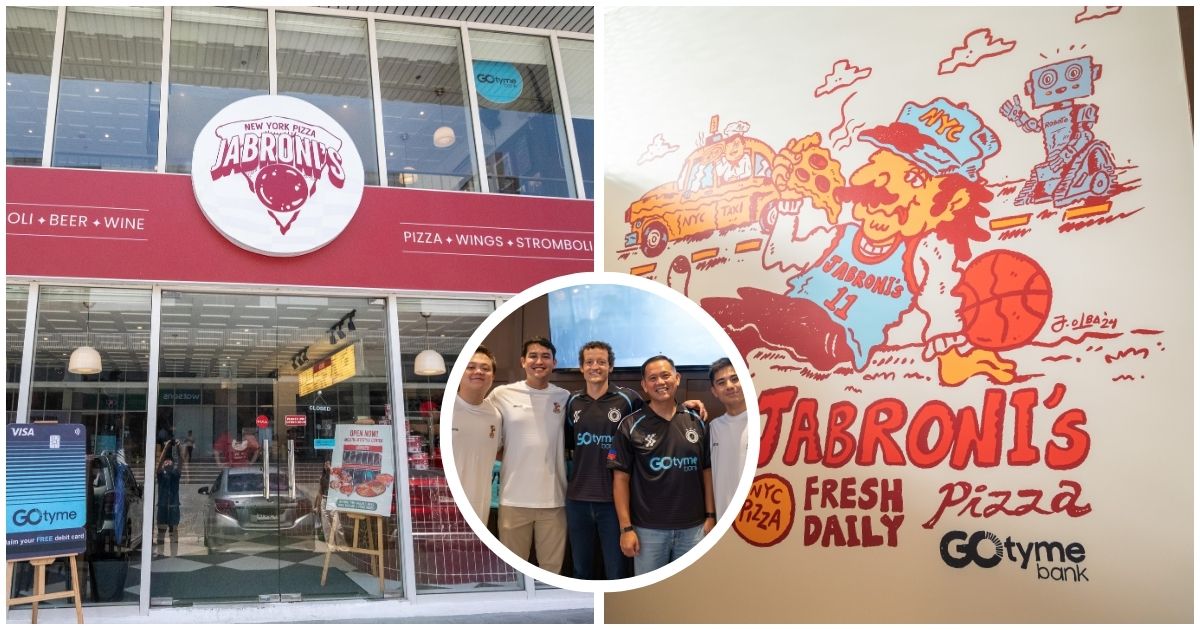
    Exterior view of Jabroni's Pizza, showcasing its playful signage and branding, with a smaller inset photo of four people posing together.

    Pizza and banking might sound like an unlikely duo, but GoTyme Bank and Jabroni’s Pizza have cooked up a groundbreaking concept that’s making headlines: The Pizza Bank.

    Located in Molito, Alabang, this two-story space blends financial services with mouthwatering comfort food, creating a one-of-a-kind community hub. Whether you’re craving a cheesy slice or looking to open a bank account in minutes, The Pizza Bank proves that money management doesn’t have to be boring.

    Here are eight reasons why this world-first concept is reshaping the way we think about dining and finance.

    1. It’s the World’s First-Ever Pizza Bank

    While cafes and coworking spaces have already merged with financial services, no one has dared to combine pizza with banking—until now. The Pizza Bank is a global first, designed to make financial transactions feel as comforting as ordering your favorite slice. Instead of the usual sterile atmosphere of a bank branch, you’re welcomed by the warm scent of freshly baked dough and melted cheese. This innovative setting alone makes it a must-visit.

    2. You Can Open a Bank Account in Under Five Minutes

    Forget the long lines and endless paperwork. At The Pizza Bank, opening a GoTyme Bank account is faster than reheating leftover pizza. Customers can head to the in-store kiosk, key in their details, and get started in just a few minutes. By the time your mozzarella sticks arrive, you’ll already be a verified account holder.

    3. A Menu That Goes Beyond Pizza

    Of course, this isn’t just about banking. Jabroni’s Pizza has loaded The Pizza Bank with a menu that keeps the community coming back for more. From ridges and pizza rolls to buffalo wings, mozzarella sticks, and even curated wine selections, there’s something for every craving. It’s a rare place where you can savor both comfort food and financial convenience without skipping a beat.

    4. Exclusive Discounts for GoTyme Customers

    GoTyme Bank isn’t just bringing financial services into a pizzeria—it’s also offering real perks. Until December 31, 2025, anyone who signs up for a GoTyme Bank account at the Molito kiosk will get 25% off their total bill. Already a GoTyme user? No problem. You can still enjoy 10% off when you pay with your GoTyme Bank Visa debit card until January 15, 2026. Essentially, banking here rewards both your wallet and your appetite.

    5. A Community Hub, Not Just a Branch

    One of the standout aspects of The Pizza Bank is its commitment to community. GoTyme Bank and Jabroni’s designed the space to be more than just a restaurant or banking kiosk—it’s a social spot. Whether you’re dropping by with friends, hosting a casual meet-up, or just enjoying solo pizza therapy, The Pizza Bank is built to be a vibrant gathering place where conversations and connections flow as easily as the wine list.

    6. Banking Meets Lifestyle Innovation

    GoTyme Bank’s mission has always been to make banking accessible and enjoyable, and The Pizza Bank embodies that goal. Instead of limiting branches to malls or offices, GoTyme is embedding its services in everyday hangouts like gyms, barbershops, and now pizza parlors. This approach removes the friction from banking and makes financial inclusion feel less intimidating and more natural. With The Pizza Bank, managing your money feels as familiar as ordering your go-to pepperoni slice.

    7. A Slice of New York in Alabang

    The Pizza Bank’s design draws inspiration from classic New York slice shops, bringing a nostalgic city vibe into the Molito community. From its two-floor setup to the casual yet stylish interiors, it’s a place where you can feel both the hustle of a metropolis and the warmth of a neighborhood joint. Whether you’re grabbing lunch, catching up with friends, or setting up your digital banking, the atmosphere blends urban energy with local charm.

    8. A Glimpse Into the Future of Banking

    The Pizza Bank isn’t just a quirky experiment—it’s a vision of what the future of banking could look like. By embedding itself in everyday spaces, GoTyme is proving that financial services don’t have to exist in stiff, intimidating offices. Instead, they can integrate into our lifestyle seamlessly, creating new opportunities for interaction and accessibility. The Pizza Bank is the first of its kind, but it certainly won’t be the last as banks worldwide look for creative ways to engage communities.

    The Pizza Bank is more than a novelty. It’s a bold experiment that reimagines how financial services and food culture can come together in meaningful ways. Whether you’re in it for the perks, the pizza, or the promise of faster, friendlier banking, The Pizza Bank is worth a visit.

    Drop by Molito today, open a GoTyme Bank account, and enjoy exclusive discounts on your Jabroni’s favorites. For more updates and promos, follow @gotymebank and get a taste of the future—one slice at a time.

  • Little Puck Wins Three Major Industry Awards in 2025

    Little Puck Wins Three Major Industry Awards in 2025

    A collage featuring two women conversing closely at an event surrounded by greenery, along with a solo image of a woman lounging on a yellow couch, wearing a stylish outfit with red accents.

    Little Puck is celebrating a hat trick of honors this year with three award wins that showcase her impact across cosplay, alternative modeling, and independent content creation.

    At this year’s Pornhub Awards, the star took home the ‘Favorite Cosplayer’ award, cementing her status as one of the most inventive and recognizable cosplayers in the business. The 2025 Urban X Awards also honored her as ‘Alt Model of the Year’, and at the 2025 AltStar Awards, Little Puck claimed ‘Best Clip Artist of the Year’, a recognition of her boundary-pushing work as a creator.

    “These awards are extra meaningful to me because they recognize the variety of work I put my heart into,” said Little Puck. “I’ve built this career from the ground up, pouring myself into cosplay, clips, and performances that feel true to me, and I’m grateful to my fans and the industry for showing so much love. That support keeps me excited to take bigger risks and push my creativity even further.”

    Fans can see more of Little Puck’s award-winning creations on Instagram at @littlepucksplayhouse.

    To learn more about Little Puck, visit LittlePuckpls.com and Snipfeed.co/littlepuck.