

The defining factor in the corporate artificial intelligence race over the next 12 to 18 months will not be access to ultra-powerful frontier models like GPT-6 or Fable-5. Instead, market leadership will belong to organizations that master agentic workflows, continuous loop engineering, and operational control.
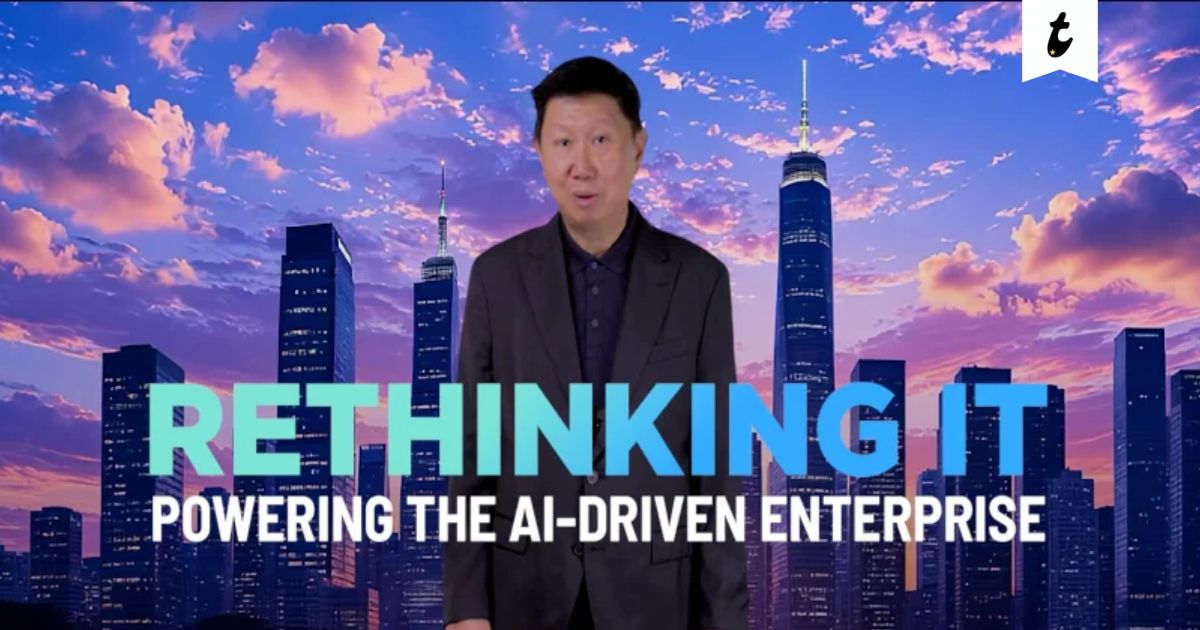
That is the perspective of Edward Morris, CEO of Generative AI firm Enigmatica and member of the Forbes Business Council. Speaking on the rapid shift occurring across enterprise deployments, Morris emphasized that business value is migrating away from one-off prompts and toward autonomous, instruction-driven systems capable of self-evaluation and refinement.
The Shift to Agentic Workflows and Loop Engineering
As AI capabilities expand, the technological frontier is shifting from simple text generation to orchestrated execution. Over the coming 12 to 18 months, specialized multi-model systems will increasingly automate complex tasks through iterative evaluation cycles.
“Future trends around AI always tend to be a little murky because the market shifts, flagship companies like OpenAI, Anthropic, and others tend to release things that shake the way AI is used. It’s likely though that over the next 12 to 18 months we’ll see far larger impact from agentic workflows, loop engineering, and the rise of Forward Deployment Engineers,” Morris noted. “Perhaps even hybrids of Loop Engineering where smaller specialised models and systems repeatedly loop and continuously evaluate and improve their own outputs. What we’re going to see are organisations that don’t necessarily have access to Fable-5 or GPT-6 that are “winning” the AI race. It’ll be organisations that figure out loops and agents better than others and can control data, AI, employees, and actual outcomes.”
Moving Beyond Isolated Prompting
Despite rumors of prompt engineering’s decline, Morris maintains that direct instructions remain foundational to all AI operations, whether delivered verbally, in text, or contextually. However, the nature of how humans interact with these systems is maturing into sustained feedback loops rather than standalone queries.
To demonstrate this approach, Morris recently built a mass orchestration agent featuring built-in safety controls and real-time user steering.
“Prompting will always be an important part of AI. Anyone who says it won’t be is being disingenuous at best and lying at worst. You will always need a first push for AI to start working and that first push is the Prompt. It doesn’t have to be written out either. It can be spoken, placed in via Context, or similar. But regardless, there will always be an instruction,” Morris explained. “When I think about recently, I made a mass orchestration Agent that does have loops in it for continuous improvement. The loop has a start and stop function so that it doesn’t go forever, just in case it repeats mistakes. To add to this, users can add their own input into the loop so that the AI Agent can better determine what is good and what is bad. The loop then reinforces that until user feedback is purely pedantic. Moving away from isolated prompting and instead into instruction based work. The system now becomes more reliable over time instead of slowly turning into a confident liability.”
Strategic Guardrails: Balancing Safety with Innovation
Deploying highly capable AI systems brings significant risk management challenges. As models grow more sophisticated, rigid rules alone are often insufficient to dictate behavior, requiring structured access controls and strategic human intervention.
Key elements of modern AI risk management include:
-
Risk-Tiered Use Cases: Categorizing applications based on potential impact and potential failure costs.
-
Targeted Data Access Restrictions: Limiting sensitive data access strictly to authorized systems and roles.
-
Selective Human-in-the-Loop Oversight: Placing human review specifically where high-stakes consequences justify intervention.
“Risk Management is always an interesting concept when it comes to AI because as AI gets smarter, the more potential there is for AI to just simply ignore the risks or guidelines in place and do its own thing. Typically though, we classify use cases by risk, restricting access to sensitive data and placing human oversight exactly where the consequences justify it,” Morris stated. “It would simply be impossible to have a good AI Product and have every single possible risk removed. You need space for innovation to breathe. The point is in finding a balance where you can be sure that no one accidentally gives an intern level Chatbot the ability to access a theoretical nuclear reactor and cause untold amounts of damage.”
Industry Background
A British-Filipino AI strategist and consultant, Morris has advised and implemented artificial intelligence solutions across Fortune 100 corporations, small and medium enterprises, public sector government bodies, and non-profit organizations. His work in prompt architecture and AI implementation has previously been featured on the front page of the Financial Times and showcased on the NASDAQ screen in Times Square.


Leave a Reply