
BORACAY, Philippines – The white sand and turquoise waters of Shangri-La Boracay present an idyllic backdrop for a corporate gathering, but inside the main ballroom, the mood among the Philippines’ top business leaders is one of calculated urgency.
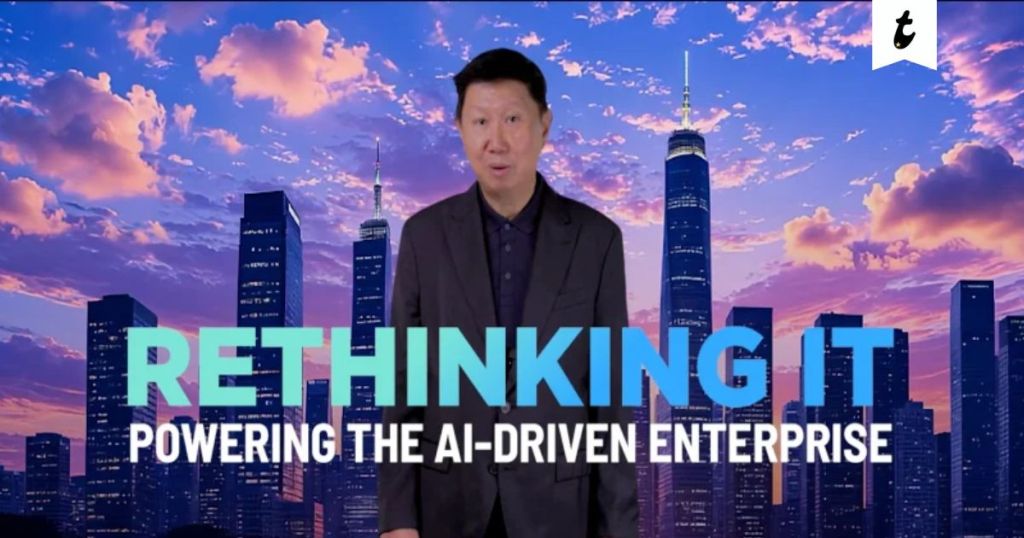
Assembled for the ninth annual VST ECS CXO Tech Summit, more than a hundred chief executive officers, chief information officers, and technology directors from the country’s largest banks, healthcare networks, conglomerates, and telecommunications providers have gathered under a singular directive: “Rethinking IT: Powering the AI-Driven Enterprise”.
Yet behind the optimism of corporate transformation lies a severe, structural bottleneck threatening the momentum of the global digital economy.
Addressing the assembly via opening remarks, Jimmy Go, President and Chief Executive Officer of VST ECS Phils., Inc., the country’s premier information and communications technology distributor, delivered a stark message that reframed the entire hardware landscape.
“The world is transforming rapidly through a combination of artificial intelligence acceleration, shifting geopolitical powers and environmental & climate pressures that outpace the past years of changes in the last centuries,” Go told the delegation.
“We meet at the crossroads of history, where Artificial Intelligence is no longer a promise, but a force rewriting the rules of industry. AI is the greatest game changer since the dawn of computers, unleashing a new era where memory has become the oil of the digital economy.”
Go’s metaphor is not hyperbole. As generative AI models and autonomous agentic workflows transition from novelty pilots into core operational infrastructure, the physical architecture required to power them is straining at the seams.
High-bandwidth memory (HBM) and enterprise-grade server DRAM have emerged as the new geopolitically sensitive, supply-constrained commodity. Much like crude oil dictated industrial growth and geopolitical leverage in the 20th century, memory silicon is dictating who can scale AI in 2026, and who gets left behind.
The Great Silicon Crunch: When Memory Outpaces Supply
For the past two years, global corporate narratives were dominated by software: algorithms, large language models, and conversational agents. But in 2026, the AI discourse has slammed directly into the physical limits of hardware manufacturing.
The underlying problem is structural. Modern AI architectures, particularly transformer models and agentic frameworks capable of autonomous reasoning across legacy enterprise databases, require massive throughput.
Standard server compute is useless if processors are starved of data. This has triggered a hyper-competitive land grab for High-Bandwidth Memory (HBM3e and HBM4) and high-density server DDR5 modules.
The global semiconductor supply chain is buckling under the weight of this demand. Leading memory manufacturers, including Micron Technology, SK Hynix, and Samsung, have shifted substantial manufacturing capacity toward high-margin HBM wafers to satisfy hyperscale cloud providers like Microsoft, Amazon Web Services (AWS), Google, and Meta. Consequently, traditional enterprise DRAM and NAND storage production has been severely squeezed.
Industrial data illustrates the breadth of the shockwave:
- Severe Supply Off-Takes: Major chipmakers report that over 75% of projected 2027 memory output is already pre-sold or fully allocated to tier-one hyperscalers.
- Pricing Surges: Server high-speed DDR5 prices have surged nearly 100% quarter-on-quarter, while commercial solid-state drive (SSD) prices have more than doubled over recent months.
- Consumer Market Collateral: As silicon is redirected toward data centers, consumer technology is taking a direct hit. Industry analysts project a 13% decline in global smartphone shipments in 2026, with mid-range consumer notebook prices jumping between 30% and 50% due to component scarcity.
“Two years ago, AI was a demo. Last year, it was a pilot. This year, the leaders who are pulling ahead have moved it into production: into customer service, credit scoring, demand forecasting, document processing, and software development,” Go stated. “The CXOs who win are those who stop viewing tech as an operational support mechanism and start viewing it as their primary weapon. Technology is now the business itself.”
Yet, converting technology into the business itself requires hardware that is increasingly difficult to secure. Smaller enterprises and regional corporations are discovering that equipment lead times are slipping deep into 2027, forcing executive teams to completely rethink their capital expenditure strategies and infrastructure timelines.
Moving Beyond Experimentation: The ROI Imperative
The hardware pinch coincides with an uncompromising shift in board-level expectations. According to recent enterprise surveys from Deloitte and Citi, 2026 marks the definitive line of demarcation: the era of AI experimentation is officially over, replaced by a strict demand for measurable return on investment and operational efficiency.
Over the past 24 months, corporate balance sheets absorbed millions of dollars in exploratory AI budgets, funding proof-of-concepts that frequently yielded impressive internal demonstrations but minimal bottom-line impact.
In 2026, the mandate from boards and chief financial officers is clear: move from conversational tools to production systems that drive gross margin expansion.
This transition is defined by the shift from static AI to agentic systems. Rather than merely summarizing documents or generating text, production-grade AI in 2026 operates with autonomous agency, executing multi-step software workflows, navigating legacy ERP systems, conducting real-time credit checks, and managing supply routes without requiring constant human prompts.
Across various vertical markets, early adopters are demonstrating the operational divide between passive automation and active intelligence:
| Industry Sector | Legacy Operational Model | 2026 Production AI Model | Primary Metric Impact |
| Financial Services | Manual underwriting, multi-day loan approvals | Real-time algorithmic credit scoring using e-wallet & telecom telemetry | Processing time reduced from days to minutes; expanded addressable market |
| Business Process Outsourcing | Human-driven tier-1 support handling routine inquiries | Autonomous AI agents handling 75–85% of frontline calls | Up to 65% reduction in interaction costs; +13 point CSAT improvement |
| Logistics & Supply Chain | Static routing, manual warehouse manifest audits | Dynamic algorithmic orchestration & autonomous inventory management | Elimination of legacy supply chain bottlenecks; optimized fuel & cycle times |
| Healthcare Diagnostics | Paper-based triaging, sparse specialist availability | Diagnostic AI copilots & predictive molecule mapping systems | Clinical decision support in remote regions; accelerated therapeutic discovery |
“In a fast-moving market, waiting for a technology to become ‘100% stable’ before adopting it is a death sentence,” Go cautioned during his address. “By the time it is stable, your competitors have already optimized it, scaled it, and captured the margin. In the exponential era, perfection is the enemy of survival. Agility, iteration, and a relentless willingness to cannibalize your own successful products are the only true forms of risk management.”
Sovereign Cloud and the Emerging Southeast Asian Hub
As macro economic pressures intensify, Southeast Asia has emerged as one of the world’s most dynamic battlegrounds for cloud infrastructure and digital expansion. The Philippines, long recognized as a global capital for business process management, is rapidly repositioning itself as a primary node for regional data processing and sovereign infrastructure.
A confluence of legislative reform and foreign direct investment is accelerating this shift. The Philippine government recently enacted Executive Order 119, known as the Data Sovereignty Framework. The executive measure updates national data classification protocols, mandates strict data residency guidelines for sensitive state and citizen information, and establishes clear cybersecurity compliance mandates for public institutions and critical infrastructure operators.
Rather than stifling growth, this regulatory clarity has served as a beacon for international tech giants seeking stable, rule-based jurisdictions in the Asia-Pacific region.
Hyperscale operators are responding with unprecedented capital commitments. Amazon Web Services (AWS) is currently advancing a planned $5 billion long-term investment strategy in the country, centered around the establishment of a dedicated cloud region. Simultaneously, domestic real estate conglomerates and international infrastructure funds are constructing mega-scale data centers across Luzon and Mindanao, turning former industrial land into high-density server farms.
Concurrently, national policy initiatives like the Pax Silica strategy reflect a long-term economic ambition to shift the nation away from raw mineral and ore exports toward high-value domestic processing, semiconductor testing, and AI infrastructure hosting.
Financial Inclusion Through Telemetry: The Fintech Shift
Nowhere is the tangible impact of production-grade AI more visible in the domestic economy than in financial services. Historically, Southeast Asian emerging markets have struggled with deep financial exclusion, as tens of millions of citizens operated entirely outside the formal banking architecture due to a lack of traditional credit collateral, physical identification, or documentable employment histories.
That structural barrier is being systematically dismantled. Major domestic fintech platforms, including GCash and Maya, alongside specialized quantitative credit intelligence firms like Trusting Social and JuanHand, have deployed machine learning models that assess creditworthiness without relying on legacy credit bureau metrics.
By ingesting unstructured, alternative data streams, such as e-wallet transaction velocity, mobile top-up patterns, utility payment consistency, and micro-merchant settlement frequency, these autonomous credit models can calculate default probabilities in milliseconds.
The societal and economic metrics illustrate a fundamental transformation:
- Micro-Credit Reach: Over 12 million previously unbanked citizens have secured access to formal credit instruments.
- Capital Velocity: Micro-lending platforms operating in the space have disbursed over ₱55 billion in nano-loans, directly fueling informal and micro-enterprise commerce.
- Underwriting Acceleration: Loan evaluation and disbursement windows have compressed from multi-day manual reviews to fully automated approvals completed within two minutes, operating under central bank regulatory sandboxes.
By bypassing legacy banking physical footprint requirements, financial institutions are achieving margins on micro-transactions that were previously economically unviable, creating a blueprint for emerging market fintech worldwide.
From Cost Center to “Intelligence Arbitrage”: The Human Factor
While financial services demonstrate AI’s capacity for market expansion, the Philippine Business Process Outsourcing (BPO) sector represents a dramatic case study in labor evolution. The industry, which generates over $42 billion annually and serves as a foundational pillar of domestic employment, has historically relied on labor arbitrage by offshoring back-office and customer care roles to lower-cost, highly educated, English-proficient talent pools.
The rapid maturity of generative voice and text AI threatened to disrupt this business model entirely. However, early data from 2026 suggests the sector is undergoing an evolution rather than an outright collapse.
As autonomous AI platforms assume management of 75% to 85% of routine, transactional customer interactions, such as password resets, basic balance inquiries, and booking changes, the role of human personnel is shifting higher up the value chain. BPO operators are actively retraining frontline agents into Customer Experience (CX) Architects and complex resolution specialists.
“AI will not replace that talent. But talent that uses AI will replace talent that does not,” Go emphasized, addressing the broader workforce implications. “Our job as leaders is to make sure our people are on the right side of that line.”
This shift represents a migration from raw labor arbitrage to what industry leaders call intelligence arbitrage, a model where human emotional intelligence and strategic reasoning are augmented by machine processing power, preserving the country’s competitive advantage in global service exports.
Architecting the Fluid Enterprise
As the three-day CXO Tech Summit unfolds in Boracay, the overarching message from technology leaders and distributors like VST ECS is that the window for passive observation has permanently closed.
The convergence of severe global hardware shortages, rising capital costs for silicon, strict sovereign data frameworks, and rapid agentic AI deployment demands an entirely new posture from corporate leadership. The legacy playbook of treating technology as an operational overhead line item managed by an isolated IT department is obsolete.
“As executives, our job is no longer to predict the future with perfect accuracy. Our job is to build organizations that are modular, resilient, and fluid enough to pivot when the future changes overnight,” Go urged in his closing mandate to the summit delegation. “The mandate for everyone in this room is clear: Stop managing the present. Start architecting the future. Turn your technology roadmap into your core corporate strategy. Empower your teams to experiment, fail fast, and scale faster.”
The market leaders emerging from the 2026 silicon squeeze will not necessarily be the organizations with the largest legacy balance sheets, but those capable of navigating hardware supply realities, establishing secure sovereign data postures, and relentlessly converting silicon power into operational scale.
In the era of the intelligent enterprise, technology is no longer supporting the business, because technology is the business.




Leave a Reply