
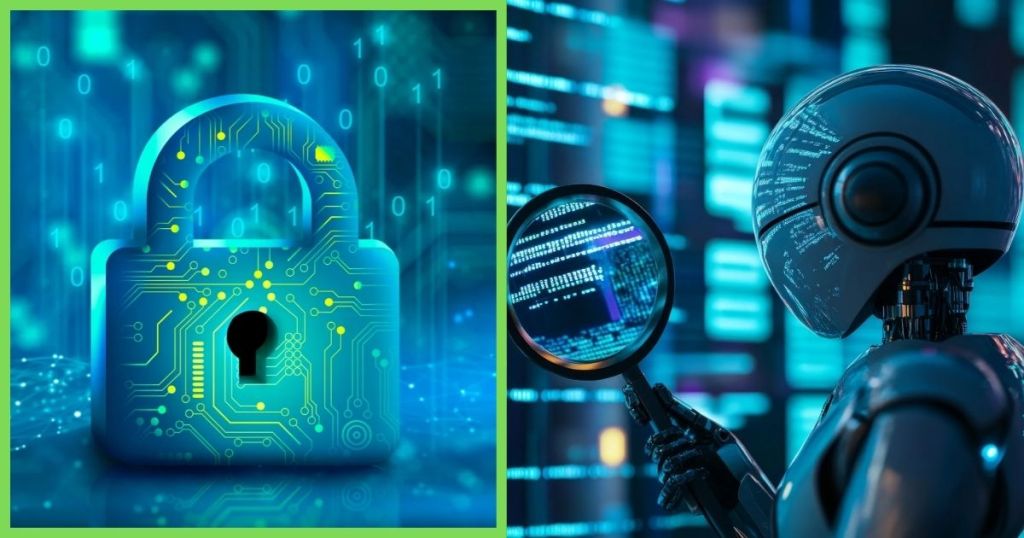
Cybersecurity has always been a cat-and-mouse game between defenders and attackers. But the rise of artificial intelligence has accelerated the conflict into what experts now call a “machine-speed arms race.” Both enterprises and cybercriminals are deploying AI tools—sometimes the very same ones—to outmaneuver each other in real time.
“AI has changed the scale and speed of cyberattacks,” said Dr. Lara Mendoza, a cybersecurity researcher at Asia Pacific Cyber Institute. “What once took hackers days of reconnaissance can now be done in minutes with the help of generative AI.”
How Hackers Weaponize AI
Criminal groups are no longer limited to brute-force methods. They’re leveraging AI to:
- Automate Phishing: AI can craft personalized spear-phishing emails in multiple languages with human-like tone, dramatically boosting success rates.
- Exploit Discovery: Machine learning can scan for software vulnerabilities at scale, faster than traditional methods.
- Deepfake Attacks: Synthetic audio and video are being used in social engineering scams targeting executives.
In 2023, the FBI warned that AI-powered fraud losses could surpass $10 billion annually if unchecked.
The AI-Driven Defense
On the flip side, enterprises are using AI to enhance cybersecurity across three critical fronts:
- Threat Detection: AI models analyze billions of logs to identify anomalies that may signal an intrusion.
- Incident Response: Automated playbooks powered by machine learning can contain breaches in seconds, reducing dwell time.
- Predictive Defense: Algorithms forecast attack vectors based on historical data and hacker behavior.
Global companies are reporting real gains. Microsoft, for example, claims its AI-driven detection system blocks over 1,000 password attacks per second.
The Double-Edged Sword
The problem? The same algorithms that power defense can be reverse-engineered for offense. “AI is dual-use by nature,” said Mendoza. “Defenders may adopt AI for anomaly detection, but attackers can use adversarial AI to fool those same models into ignoring malicious activity.”
This creates an escalating cycle—each new AI defense prompts hackers to find AI-driven workarounds.
Regulation and Ethical Concerns
Governments are racing to set boundaries. The EU AI Act will require transparency and risk assessments for high-risk AI systems, including those in cybersecurity. Meanwhile, the U.S. Cybersecurity and Infrastructure Security Agency (CISA) is funding initiatives to evaluate how AI can both help and harm digital defense.
But regulation lags behind innovation. “Hackers don’t wait for policymakers,” Mendoza warned. “Enterprises can’t afford to wait either.”
What the Future Holds
Experts predict the next phase will involve autonomous cybersecurity agents—AI systems capable of defending networks with little human oversight. While promising, this raises trust issues: can organizations fully hand over defense to machines?
“The future of cybersecurity won’t be human vs. machine,” Mendoza concluded. “It will be machine vs. machine, with humans ensuring that the right side wins.”




Leave a Reply