Tag: ECONOMY

  • Cory Chase, Bree Brooks Deliver Explosive Finale in Taboo Heat’s BBC Championship Season 2

    Cory Chase, Bree Brooks Deliver Explosive Finale in Taboo Heat’s BBC Championship Season 2

    TabooHeat.com wraps up its most talked-about series with the finale of BBC Championship Season 2, as Cory Chase and Bree Brooks team up to reward their undefeated squad in a no-holds-barred orgy that goes full throttle from the first frame.

    To celebrate the team’s big win and ease nerves about a possible relocation, Coach Cory brings in her step-sister Bree for a high-stakes team-building exercise that leaves no position unfilled.

    The finale features standout performances from Ace Bigs, Ace Hardz, Kaby Snow, and Dwayne Foxxx – each pushing the action into overtime with two of the industry’s top MILFs.

    Looking to elevate her content, Cory shared her vision for the scene: “I’ve done four-guy orgies before, but something was always missing – the previous co-star wasn’t as passionate about anal as I am. For this finale, I needed someone who matches my enthusiasm completely. Bree Brooks, the ultimate super MILF, was the perfect choice!”

    Chase and Brooks both praised the cast and creative chemistry that carried the series through: “We tip our hats to all the incredible male performers throughout Championship Season 2, and especially for this epic final game that closes out the series!”

    Watch the season finale of BBC Championship Season 2 at TabooHeat.com, and connect with Taboo Heat’s Cory Chase (#besttits) and Luke Longly on X @CoryChaseXXX and @NBProductions1.

  • [URGENT] Why power, not AI, may decide the data center race

    [URGENT] Why power, not AI, may decide the data center race

    The global data center industry is entering a sustained expansion phase, with nearly 100 gigawatts of new capacity expected between 2026 and 2030, effectively doubling today’s footprint and pushing total investment toward $3 trillion.

    Capacity is projected to grow at a 14 percent compound annual rate through 2030, driven primarily by hyperscale cloud providers and accelerating AI workloads, creating both structural opportunities and mounting pressure on power infrastructure, capital markets, and supply chains.

    Hyperscalers will remain the dominant growth engine, pursuing a hybrid strategy of leasing capacity while continuing to self-build large-scale campuses to secure power access, control latency, and manage long-term costs.

    By 2030, AI workloads could account for roughly half of all data center demand, up from about one-quarter in 2025, with a pivotal shift expected around 2027 as inference overtakes training as the primary driver of compute consumption.

    This transition materially changes deployment economics, as inference workloads require geographically distributed infrastructure closer to end users, increasing demand for regional and edge facilities rather than centralized mega-clusters alone.

    Regionally, the Americas will retain leadership, representing roughly half of global capacity and posting the fastest growth, supported by strong U.S. hyperscale investment, while APAC and EMEA expand at lower but still robust double-digit rates tied to cloud migration, sovereign AI requirements, and government-backed digital infrastructure.

    Power availability has emerged as the sector’s binding constraint, with grid connection wait times exceeding four years in many core markets, forcing operators to adopt behind-the-meter generation, battery storage, and, in some jurisdictions, direct ownership of power assets.

    In the U.S., natural gas is increasingly used as bridge or permanent on-site power, though sustainability concerns among large tenants may limit adoption, while EMEA and APAC lean more heavily on renewables and private-wire solutions to reduce cost and regulatory risk.

    Capital intensity continues to rise, with average global construction costs climbing to more than $10 million per megawatt and forecast to increase further, excluding tenant-funded IT fit-outs that can exceed $25 million per megawatt for AI-optimized deployments.

    Roughly $1.2 trillion in real estate asset value and nearly $870 billion in new debt financing will be required to deliver the next wave of capacity, alongside an additional $1 trillion to $2 trillion in tenant spending on GPUs, networking, and related infrastructure.

    These economics are accelerating industry consolidation, raising barriers to entry, and favoring well-capitalized operators with proven execution, access to power, and balance sheet flexibility.

    For investors and developers, the central risks now lie in power procurement, construction timelines, and the pace of AI application adoption, while strategic advantage will accrue to those who can align capital deployment with the shift from training to inference and the resulting geographic redistribution of demand.

  • TP in the Philippines wins double honors at HIMAP Awards 2025

    TP in the Philippines wins double honors at HIMAP Awards 2025

    TP in the Philippines (formerly Teleperformance), a leader in digital business services, continues to fortify its presence and position as an innovation and community-impact leader after earning two of the highest distinctions at the HIMAP Awards 2025, an award giving body recognizing excellence and innovation in the healthcare information management industry, held at Shangri-La The Fort, Bonifacio Global City.

    The organization received both the Makabago Award for Excellence in Technology and Innovation and the Pamayanan Award for Excellence in Community Development and Outreach Programs, reflecting TP’s unique ability to blend advanced technology with sustained, institutionalized social impact.

    TP.AI wins the Makabago Award for transforming healthcare operations with its proprietary AI ecosystem that has redefined operational excellence across its 8,000-strong healthcare workforce.

    On the other hand, TP also receives the Pamayanan Award through its TP Healthcare Vertical, emphasizing the organization’s long-term commitment to community empowerment through its advocacy and outreach programs.

  • Why 2026 may force small businesses to outsource their networks

    Why 2026 may force small businesses to outsource their networks

    SMB network strategy in 2026 is shifting from deferred maintenance to structural modernization, as bandwidth demand, cybersecurity risk, and talent constraints converge.

    Decision makers are prioritizing faster connectivity, integrated security, and outsourced operations to sustain growth and control risk.

    After a year dominated by endpoint lifecycle issues such as Windows 10 end of support, infrastructure investment is back on the agenda. Networks are being upgraded not as standalone IT projects but as core business platforms supporting cloud workloads, AI-enabled applications, and distributed workforces.

    Managed services are becoming central to this transition. The global managed services market is projected to grow at a 15 percent CAGR through 2032, reflecting sustained demand for remote monitoring, security management, and operational efficiency. For SMBs, outsourcing is increasingly a risk mitigation strategy rather than a cost play, driven by persistent skills shortages and rising threat exposure.

    Wireless infrastructure is a near-term priority. WiFi 7 adoption is expected to accelerate in 2026 as the standard matures and deferred upgrades resume. Higher throughput, lower latency, and improved reliability are critical for cloud-centric operations, dense device environments, and AI-assisted workflows.

    Enterprise WLAN demand is expanding rapidly, particularly in sectors such as retail, hospitality, and education where service quality directly affects revenue and user experience.

    These wireless gains require corresponding upgrades on the wired side. Multi-gigabit switching is moving from edge case to baseline, with 2.5G emerging as the minimum standard across most access layers. Growth in high-power PoE devices, including advanced access points, cameras, and IoT endpoints, is forcing investment in switches that support PoE++ and higher aggregate power budgets without creating bottlenecks.

    Security is no longer separable from connectivity. Hybrid work, cloud access, and tighter governance expectations are expanding the attack surface, placing SMBs squarely in the threat landscape once dominated by larger enterprises. Networks are being designed with embedded, multi-layer security that is continuously monitored through cloud platforms, often by external providers.

    This convergence strengthens the case for managed service providers. Centralized cloud management, advanced analytics, and remote remediation allow MSPs to deliver enterprise-grade protection and performance at scale. For many SMBs, delegating day-to-day security and network operations has become the preferred model as regulatory pressure and incident costs rise.

    AI is beginning to deliver operational value rather than promise. In 2026, AI and machine learning are increasingly embedded in network and security platforms to detect anomalies, predict failures, and automate routine tasks. Natural language interfaces and intent-based controls are reducing administrative overhead, enabling lean IT teams and MSPs to manage more complex environments with fewer resources.

    The transformation underway is incremental but material. By the end of 2026, SMB networks are expected to be faster, more resilient, and more standardized, with security and management built in by design. These changes position smaller organizations to absorb future digital demands while containing operational and cyber risk.

  • AI is reshaping entertainment faster than its defenses can adapt

    AI is reshaping entertainment faster than its defenses can adapt

    Artificial intelligence will be the primary driver of new security risks across the global entertainment industry in 2026, expanding the attack surface from ticketing and production to distribution, gaming, and regulatory compliance, according to Kaspersky’s latest Security Bulletin.

    Kaspersky’s analysis concludes that AI is no longer a peripheral tool but a core operational layer that both defenders and attackers will exploit, forcing studios, platforms, and rights holders to rethink risk management across creative and commercial systems.

    The firm warns that AI-driven ticketing systems will intensify competition between pricing algorithms and scalpers, enabling real-time demand analysis, large-scale bot deployment, and dynamic resale pricing that can undermine fixed-price strategies and artist controls in secondary markets.

    In content production, the growing use of cloud-based and AI-assisted visual effects tools is expected to widen supply-chain risk, as studios increasingly rely on smaller vendors and freelancers whose infrastructure may be less secure, creating new pathways for pre-release leaks of high-value assets.

    Kaspersky also flags content delivery networks as an emerging concentration risk, noting that unreleased episodes, game builds, and live streams are often centralized within a limited number of providers, making them attractive targets for AI-enabled reconnaissance, credential abuse, and configuration exploitation.

    Within gaming and fan communities, generative AI tools are expected to accelerate abuse patterns, including the circumvention of in-game safeguards, the creation of prohibited content, and the potential exposure of personal data through poorly governed training or fine-tuning processes.

    On the regulatory front, Kaspersky anticipates tighter rules around transparency, consent, and licensing for AI-generated and AI-trained content, driving the creation of internal AI governance roles responsible for compliance across production, marketing, and distribution workflows.

    The company advises entertainment organizations to treat AI systems and their underlying data as critical infrastructure, extend threat modeling to all AI-enabled processes, strengthen oversight of external vendors, harden CDN security monitoring, and implement strict governance for generative AI deployments to mitigate financial, legal, and reputational risk.

  • Nvidia’s supply shift collides with surging AI demand

    Nvidia’s supply shift collides with surging AI demand

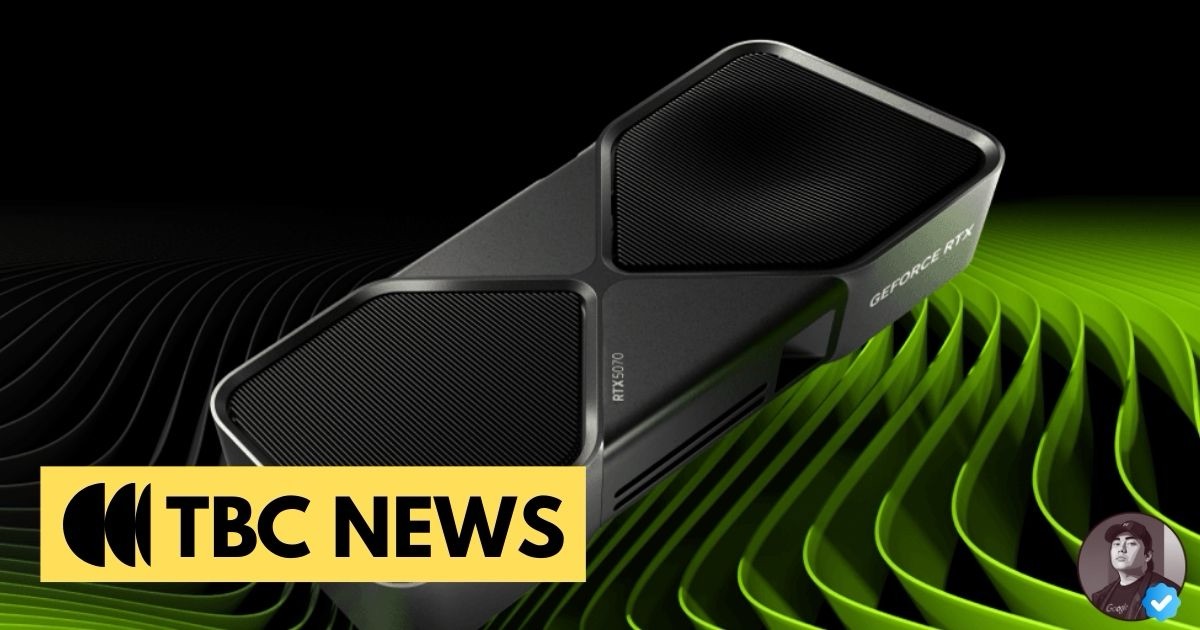
    A tightening global supply of memory and storage components is beginning to spill over into the consumer graphics card market, raising concerns about availability of Nvidia’s next generation GPUs.

    Industry observers say the rapid expansion of artificial intelligence infrastructure worldwide is absorbing vast quantities of key components, leaving fewer resources for traditional PC hardware.

    The strain first became visible in memory markets. Spot prices for 16GB DDR5 chips surged by as much as 450 percent in the final quarter of 2025, according to market trackers, as data centers competed aggressively for supply.

    Retail markets reflected the imbalance, with some resellers listing DDR5 kits at prices exceeding $2,000. NAND flash used in solid state drives has also seen steep increases, with suppliers reporting price jumps of more than 200 percent over the past year.

    Graphics cards, which depend heavily on high bandwidth memory, are now feeling the effects. In late November, Nvidia confirmed a change in its supply model, ending the practice of bundling VRAM with GPU chips sold to board partners.

    Manufacturers are now required to source memory independently, a shift that places additional pressure on GPUs with large memory capacities, particularly models equipped with 16GB or more of GDDR7.

    Against this backdrop, a Reddit post from an alleged European PC retailer has drawn attention within the enthusiast community. The user, posting on the r/pcmasterrace subreddit, claimed their supplier has imposed strict limits on Nvidia GPU orders.

    According to the shared email, the retailer can order only up to five units of the RTX 5070 per cycle, while the RTX 5070 Ti and higher tier models are currently unavailable. The supplier reportedly cited the current market situation as the reason, without further detail.

    While the claims have not been independently verified, they align with broader signals of stress across the hardware supply chain.

    Analysts warn that as long as AI driven demand continues to dominate memory and storage production, shortages and allocation limits for high performance consumer GPUs are likely to persist, potentially reshaping pricing and availability well into the next product cycle.

  • Can It Survive? The HONOR X9d 5G Ultimate Plane Drop Challenge

    Can It Survive? The HONOR X9d 5G Ultimate Plane Drop Challenge

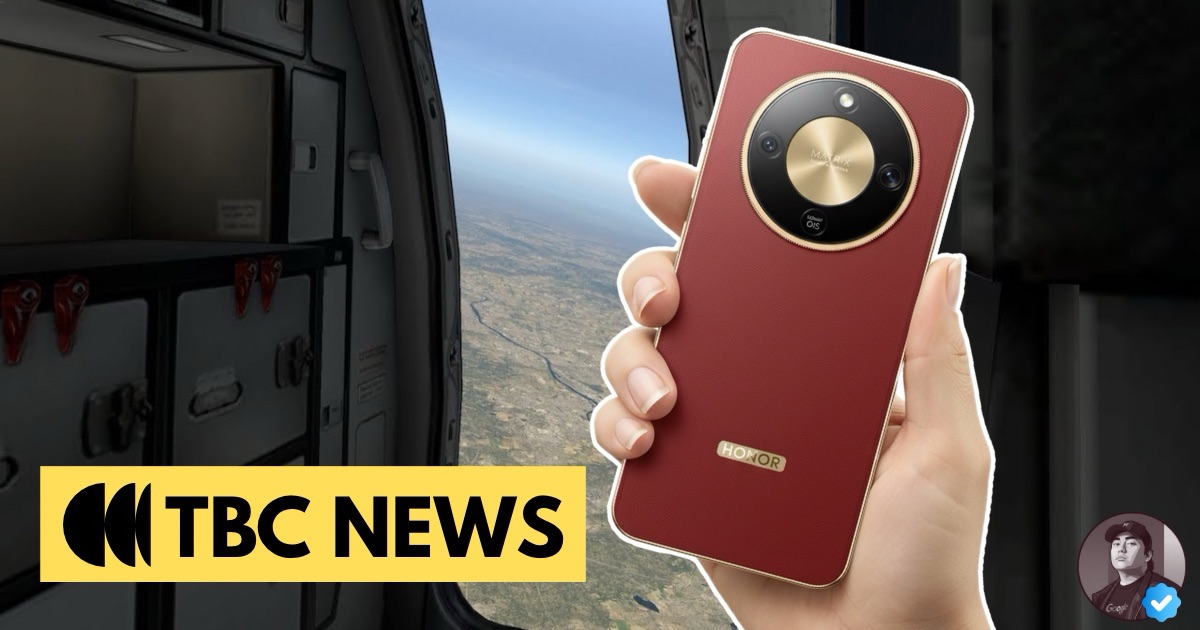
    Starting the year with a total bang! Leading global AI smart devices provider HONOR Philippines unveils its most explosive release yet—the HONOR X9d 5G.

    Positioned as the toughest mid-range smartphone of the year, the latest addition to the X Series is built to withstand extreme challenges while delivering powerful everyday performance.  

    Since the launch of the X9 Series in the Philippines in 2023, HONOR has built a reputation as an innovative technology brand known for putting smartphone durability to the ultimate test.

    From the debut of the HONOR X9a 5G—famously dropped under five feet and featured in viral smash tests—the ultra-tough HONOR X9b 5G, which endured an intense 50-foot drop, each generation has pushed the boundaries of what mid-range smartphones can withstand.  

    This legacy continued with the launch of the HONOR X9c 5G in January 2025, which quickly became the most anticipated device in the X Series, thanks to its Triple-Defense mechanism and headline-making helicopter drop test and Guinness World Records for “The Most People Performing a Mobile Phone Drop Test Simultaneously.  
     
    Now, HONOR raises the bar even higher. To prove the next evolution of toughness, the all-new HONOR X9d 5G was subjected to its most extreme challenge yet—an ultra-intense high-altitude drop test.  

    “Year after year, HONOR fans and consumers push us to go beyond expectations, and that inspires everything we do,” said Stephen Cheng, Vice President of HONOR Philippines. “The HONOR X9d 5G was designed with Filipino users in mind—combining toughness, innovation, especially value. Our extreme durability tests reflect our confidence in delivering a device that can keep up with real life challenges.”  

    And now the ultimate question remains—can the HONOR X9d 5G survive an extreme high-altitude drop from the plane? Let’s find out!  
     

    The Ultimate Phone Drop Challenge: Media VS HONOR X9d 5G 

    To ensure credibility and transparency, HONOR Philippines invited one of its trusted media partners, Gadget Pilipinas’ Editor-in-Chief Gian Viterbo, to take part in the ultimate phone drop challenge, releasing the device from an ultralight plane at a speed of 60 km/hr.  
     
    “I said YES to the ultimate phone drop test challenge as a consumer, because I was genuinely curious about the result. I knew the risks and factors at hand, and I really wanted to know if the HONOR X9d would really survive,” expressed by Gian Viterbo, EIC of Gadget Pilipinas.  

    Here is the full video to witness and see the ultimate durability phone drop test:https://bit.ly/HONORX9d5G_PlaneChallenge   

    Watch the Launch and Win HONOR X9d 5G 
     
    Interested to know more about the toughest phone, HONOR X9d 5G? Don’t dare to miss the big news, revelations, and updates. Catch its grand launch, live on Facebook https://www.facebook.com/share/17fq2PZZUZ/ on January 9, Friday, 6 PM, and have the chance to win the latest HONOR X9d 5G.   

    And is really HONOR giving away a Tesla Cybertruck? The answer will be coming your way very soon.  

    Join the conversation and find out. Visit HONOR’s website www.hihonor.com, and follow HONOR Philippines on Facebook (Facebook.com/HonorPhilippines), Instagram (Instagram.com/honorph/) and TikTok: (Tiktok.com/@honorphilippines) for exclusive teasers, launch updates, and big reveal. 

    Check out HONOR’s wide array of mobile phones, tablets, and laptops at any HONOR Experience and Partner Stores nationwide (https://www.hihonor.com/ph/retailers/) or online via Shopee (https://bit.ly/HONORPHShopee), Lazada (https://bit.ly/HONORPHLaz) and TikTok Shop (https://bit.ly/HONORTikTokShop). 

  • An under-the-radar security box just made industry leaders take notice

    An under-the-radar security box just made industry leaders take notice

    Zyxel Networks, a leader in delivering secure and AI-powered cloud networking solutions, today announced that its USG FLEX 50HP Firewall has won Security Hardware of the Year at the 2025 PC Pro Excellence Awards.

    Now in its 28th year, this UK-based program is one of the industry’s most respected, recognizing products that deliver outstanding performance and real-world value through expert review.

    Unified Security for Modern Networks
    The USG FLEX 50HP was recognized for solving a key challenge for SMBs and MSPs: maintaining consistent security across hybrid environments.

    Unlike traditional firewalls that manage cloud and on-premises settings separately, the USG FLEX 50HP uses Zyxel Networks’ Nebula cloud platform and Smart Sync to bridge the gap.

    With Nebula serving as the centralized management layer, Smart Sync enables synchronized security policies, network objects, and high availability settings across cloud and on-premises environments.

    This ensures consistent protection while simplifying day-to-day operations. The USG FLEX 50HP combining comprehensive threat protection with cost-effective deployment, empowering SMBs and MSPs to adopt enterprise-grade security without operational or budget strain.

    Global Recognition from Independent Experts
    This UK honor follows a string of international achievements for Zyxel Networks’ security portfolio. Recently, Zyxel Networkswas rated “Champion” in the Network Firewall and VPN categories in Germany’s Techconsult PUR 2026 survey.

    Additionally, the USG FLEX H series demonstrated top-tier performance in independent testing by The Tolly Group in the United States.

    “Being named Security Hardware of the Year by PC Pro validates our focus on making security practical for SMBs and MSPs,” said Mr. Gary Chen, SEA Regional Head at Zyxel Networks.

    “This recognition reflects our commitment to providing robust, reliable solutions that are easy to manage in an increasingly complex threat landscape.”

  • Crypto’s corporate reset fuels billions in mergers and public listings

    Crypto’s corporate reset fuels billions in mergers and public listings

    Crypto industry dealmaking surged to record levels in 2025, marking a decisive shift toward maturity and scale as mergers, acquisitions, and public listings rebounded sharply across the sector.

    Data from PitchBook shows more than 265 crypto-related mergers and acquisitions were completed during the year, with total transaction value reaching $8.6 billion, nearly four times the activity recorded in 2024.

    At the same time, public market access reopened in a meaningful way, with 11 crypto companies completing initial public offerings that raised a combined $14.6 billion, compared with just $310 million from four IPOs a year earlier.

    The acceleration in exits reflects clearer regulatory frameworks, growing institutional participation, and stronger operating fundamentals among leading firms.

    Companies that successfully went public in 2025 generally demonstrated recurring revenue, clear product-market fit, and limited reliance on volatile token prices.

    Exchanges, stablecoin issuers, and infrastructure providers dominated the IPO class, signaling investor preference for predictable, scalable business models.

    Industry executives point to regulatory clarity, durable revenue visibility, and improved public-market readiness as key factors behind the reopening of the IPO window.

    The inclusion of Coinbase in the S&P 500 further amplified institutional interest and validated crypto as an investable sector for traditional asset managers.

    Mergers and acquisitions in 2025 also differed from prior cycles, shifting away from distressed sales toward strategic expansion.

    Buyers focused on acquiring licenses, regulatory approvals, distribution networks, and technical capabilities that would be costly or slow to build internally.

    Payments infrastructure, stablecoin platforms, wallets, and enterprise-grade tools were among the most sought-after targets, while Web2 companies increasingly used acquisitions as a faster entry point into crypto.

    Looking ahead to 2026, deal pipelines remain strong despite a slowdown in early-stage funding that could limit future acquisition targets.

    Analysts expect continued activity across regulated services, infrastructure, and payments, alongside greater use of SPACs, reverse takeovers, and token-based deal structures as the sector enters its next growth phase.

  • Entertainment’s AI boom is creating a new and dangerous blind spot

    Entertainment’s AI boom is creating a new and dangerous blind spot

    Artificial intelligence will be the primary driver of new security risks across the global entertainment industry in 2026, expanding the attack surface from ticketing and production to distribution, gaming, and regulatory compliance, according to Kaspersky’s latest Security Bulletin.

    Kaspersky’s analysis concludes that AI is no longer a peripheral tool but a core operational layer that both defenders and attackers will exploit, forcing studios, platforms, and rights holders to rethink risk management across creative and commercial systems.

    The firm warns that AI-driven ticketing systems will intensify competition between pricing algorithms and scalpers, enabling real-time demand analysis, large-scale bot deployment, and dynamic resale pricing that can undermine fixed-price strategies and artist controls in secondary markets.

    In content production, the growing use of cloud-based and AI-assisted visual effects tools is expected to widen supply-chain risk, as studios increasingly rely on smaller vendors and freelancers whose infrastructure may be less secure, creating new pathways for pre-release leaks of high-value assets.

    Kaspersky also flags content delivery networks as an emerging concentration risk, noting that unreleased episodes, game builds, and live streams are often centralized within a limited number of providers, making them attractive targets for AI-enabled reconnaissance, credential abuse, and configuration exploitation.

    Within gaming and fan communities, generative AI tools are expected to accelerate abuse patterns, including the circumvention of in-game safeguards, the creation of prohibited content, and the potential exposure of personal data through poorly governed training or fine-tuning processes.

    On the regulatory front, Kaspersky anticipates tighter rules around transparency, consent, and licensing for AI-generated and AI-trained content, driving the creation of internal AI governance roles responsible for compliance across production, marketing, and distribution workflows.

    The company advises entertainment organizations to treat AI systems and their underlying data as critical infrastructure, extend threat modeling to all AI-enabled processes, strengthen oversight of external vendors, harden CDN security monitoring, and implement strict governance for generative AI deployments to mitigate financial, legal, and reputational risk.