Tag: ECONOMY

  • HONOR X9d 5G Grand Launch Brings Together Sponge Cola, 6ense, YARA, and Boys Night Out 

    HONOR X9d 5G Grand Launch Brings Together Sponge Cola, 6ense, YARA, and Boys Night Out 

    Leading global AI smart devices provider HONOR Philippines is gearing up for the highly anticipated launch of the HONOR X9d 5G and has recently unveiled its star-studded lineup.

    OPM legend Sponge Cola is confirmed to perform at the launch, while hosting duties will be handled by the boys of Boys Night Out, the iconic evening radio talk show. Catch the event live on Facebook:https://bit.ly/X9dLaunch_PR

    “At the launch of the HONOR X9d 5G, we will be joined by our dearest media friends, HONOR Stars, and of course, our esteemed dealer partners. We want to give them the best as a show of gratitude for the support they have given us for this launch. We also want to share this moment with our HONOR fans, which is why we are streaming the event online,” said HONOR Philippines Vice President Stephen Cheng. 

    HONOR Philippines is also known for championing talented P-Pop groups, and for the HONOR X9d 5G Grand Launch, rising stars 6ENSE and YARA will take the stage. HONOR Stars The Aguinaldos, Chichi Dela Cruz, Hammerman, and others will also be present at the event. 

    Watch out for the grand launch of the toughest phone of the year, the HONOR X9d 5G, on January 9. Catch it live on Facebook athttps://bit.ly/X9dLaunch_PR — and you might just be the lucky winner of a brand-new HONOR X9d 5G. Simply follow the mechanics posted here

    For more exciting announcements, visit HONOR’s website www.hihonor.com, and follow HONOR Philippines on Facebook (Facebook.com/HonorPhilippines),Instagram (Instagram.com/honorph/) and TikTok: (Tiktok.com/@honorphilippines) for exclusive teasers, launch updates, and big reveal.  

    Check out HONOR’s wide array of mobile phones, tablets, and laptops at any HONOR Experience and Partner Stores nationwide (https://www.hihonor.com/ph/retailers/) or online via Shopee (https://bit.ly/HONORPHShopee), Lazada (https://bit.ly/HONORPHLaz) and TikTok Shop (https://bit.ly/HONORTikTokShop).

  • How thousands of Filipino students are suddenly getting a head start on jobs

    How thousands of Filipino students are suddenly getting a head start on jobs

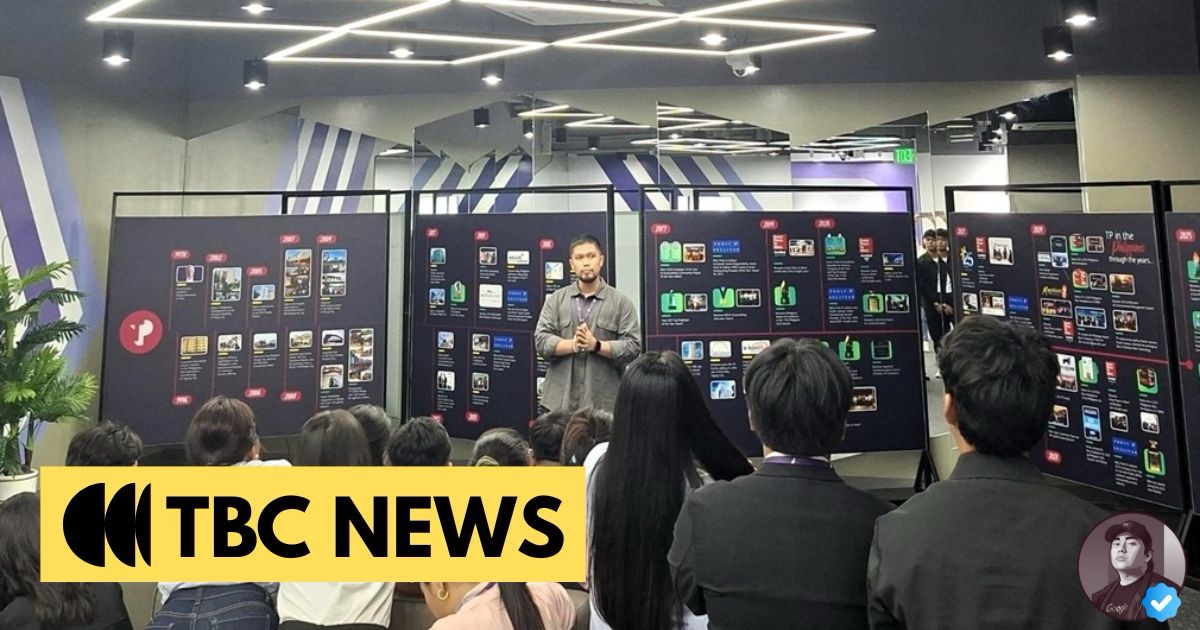
    TP in the Philippines, formerly Teleperformance, capped a record year for its TP LaunchPad program in 2025 after reaching more than 19,000 students nationwide and expanding partnerships with over 40 academic institutions, reinforcing its role in preparing young Filipinos for careers in the IT-BPM industry.

    The company said TP LaunchPad significantly scaled its reach across Luzon, Visayas, and Mindanao, generating thousands of career leads through more than 60 student engagement activities, including job fairs, interview workshops, mock interviews, mentorship sessions, and 22 immersive site tours that introduced students to real-world operations.

    The program is TP’s flagship university relations and student empowerment initiative, designed to bridge classroom learning with industry-ready skills and practical exposure, particularly as demand for skilled IT-BPM talent continues to grow.

    “Through TP LaunchPad, we can impart talent development resources and career opportunities to the youth and the future workforce,” said Jeffrey Johnson, chief people officer of TP in the Philippines. “By investing in their development, we can ensure a sustainable future and career pipeline for the Philippine IT-BPM industry.”

    A major highlight in 2025 was the expansion of TP’s academic alliances, including a new partnership with Mapua Malayan Colleges Laguna and Mapua Malayan Digital College, which aims to align curricula with IT-BPM sector requirements and improve near-hire readiness among graduates.

    As part of the collaboration, Mapua Malayan Digital College will also provide full scholarship grants to five TP employees under its continuing education program, allowing them to complete their college degrees while working.

    Beyond academe partnerships, TP LaunchPad advanced inclusivity efforts by accommodating participants who are deaf or hard of hearing, opening more employment pathways for persons with disabilities.

    The company also expanded its partnership with the Technical Education and Skills Development Authority through the Enterprise-Based Education and Training program, making skills training and IT-BPM readiness more accessible to learners from underserved communities.

    Johnson said TP remains committed to long-term workforce development through collaboration with schools, government agencies, and local communities, as TP LaunchPad continues to grow as a platform for youth empowerment and national talent development.

  • [FINAL HOURS!] What’s really driving the next data center gold rush

    [FINAL HOURS!] What’s really driving the next data center gold rush

    The global data center industry is entering a sustained expansion phase, with nearly 100 gigawatts of new capacity expected between 2026 and 2030, effectively doubling today’s footprint and pushing total investment toward $3 trillion.

    Capacity is projected to grow at a 14 percent compound annual rate through 2030, driven primarily by hyperscale cloud providers and accelerating AI workloads, creating both structural opportunities and mounting pressure on power infrastructure, capital markets, and supply chains.

    Hyperscalers will remain the dominant growth engine, pursuing a hybrid strategy of leasing capacity while continuing to self-build large-scale campuses to secure power access, control latency, and manage long-term costs.

    By 2030, AI workloads could account for roughly half of all data center demand, up from about one-quarter in 2025, with a pivotal shift expected around 2027 as inference overtakes training as the primary driver of compute consumption.

    This transition materially changes deployment economics, as inference workloads require geographically distributed infrastructure closer to end users, increasing demand for regional and edge facilities rather than centralized mega-clusters alone.

    Regionally, the Americas will retain leadership, representing roughly half of global capacity and posting the fastest growth, supported by strong U.S. hyperscale investment, while APAC and EMEA expand at lower but still robust double-digit rates tied to cloud migration, sovereign AI requirements, and government-backed digital infrastructure.

    Power availability has emerged as the sector’s binding constraint, with grid connection wait times exceeding four years in many core markets, forcing operators to adopt behind-the-meter generation, battery storage, and, in some jurisdictions, direct ownership of power assets.

    In the U.S., natural gas is increasingly used as bridge or permanent on-site power, though sustainability concerns among large tenants may limit adoption, while EMEA and APAC lean more heavily on renewables and private-wire solutions to reduce cost and regulatory risk.

    Capital intensity continues to rise, with average global construction costs climbing to more than $10 million per megawatt and forecast to increase further, excluding tenant-funded IT fit-outs that can exceed $25 million per megawatt for AI-optimized deployments.

    Roughly $1.2 trillion in real estate asset value and nearly $870 billion in new debt financing will be required to deliver the next wave of capacity, alongside an additional $1 trillion to $2 trillion in tenant spending on GPUs, networking, and related infrastructure.

    These economics are accelerating industry consolidation, raising barriers to entry, and favoring well-capitalized operators with proven execution, access to power, and balance sheet flexibility.

    For investors and developers, the central risks now lie in power procurement, construction timelines, and the pace of AI application adoption, while strategic advantage will accrue to those who can align capital deployment with the shift from training to inference and the resulting geographic redistribution of demand.

  • The AI bet that paid off for TP in the Philippines

    The AI bet that paid off for TP in the Philippines

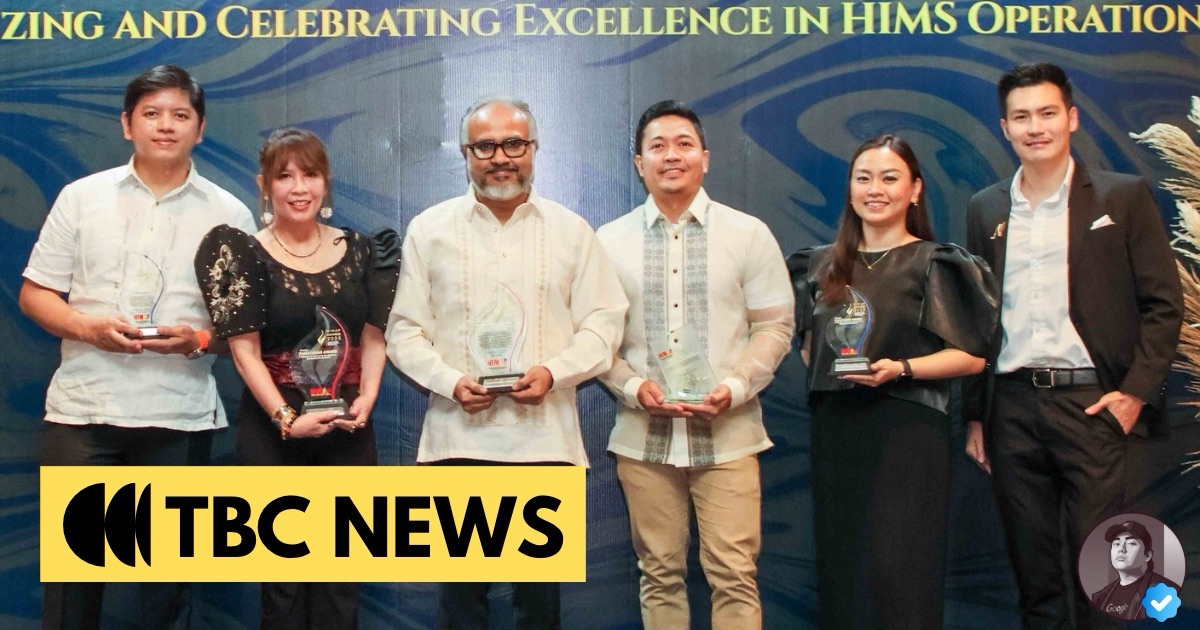
    TP in the Philippines (formerly Teleperformance), a leader in digital business services, continues to fortify its presence and position as an innovation and community-impact leader after earning two of the highest distinctions at the HIMAP Awards 2025, an award giving body recognizing excellence and innovation in the healthcare information management industry, held at Shangri-La The Fort, Bonifacio Global City.

    The organization received both the Makabago Award for Excellence in Technology and Innovation and the Pamayanan Award for Excellence in Community Development and Outreach Programs, reflecting TP’s unique ability to blend advanced technology with sustained, institutionalized social impact.

    TP.AI wins the Makabago Award for transforming healthcare operations with its proprietary AI ecosystem that has redefined operational excellence across its 8,000-strong healthcare workforce.

    On the other hand, TP also receives the Pamayanan Award through its TP Healthcare Vertical, emphasizing the organization’s long-term commitment to community empowerment through its advocacy and outreach programs.

  • This smartphone launch turned into a full-blown online spectacle

    This smartphone launch turned into a full-blown online spectacle

    Leading global AI smart devices provider HONOR Philippines has done it again—new year, new explosive drop.

    Its latest smartphone, the HONOR X9d 5G, was officially revealed on New Year’s Day and has gone viral since.

    With top internet personalities like Malupiton, Ser Geybin, Jomar Yee, and KaMangyan Vlogs posting about it, the launch has officially become a trending online moment.

    “The past three years gave us a strong foundation—and we are excited that achievement proves we’re capable of pushing boundaries and delivering even more. We have a lot of exciting news lined up for our HONOR fans, and what we did with the HONOR X9d 5G and the Tesla Cybertruck is just a preview of what’s to come. You should all watch out on the grand launch this coming January 9,” said HONOR Philippines Vice President Stephen Cheng.

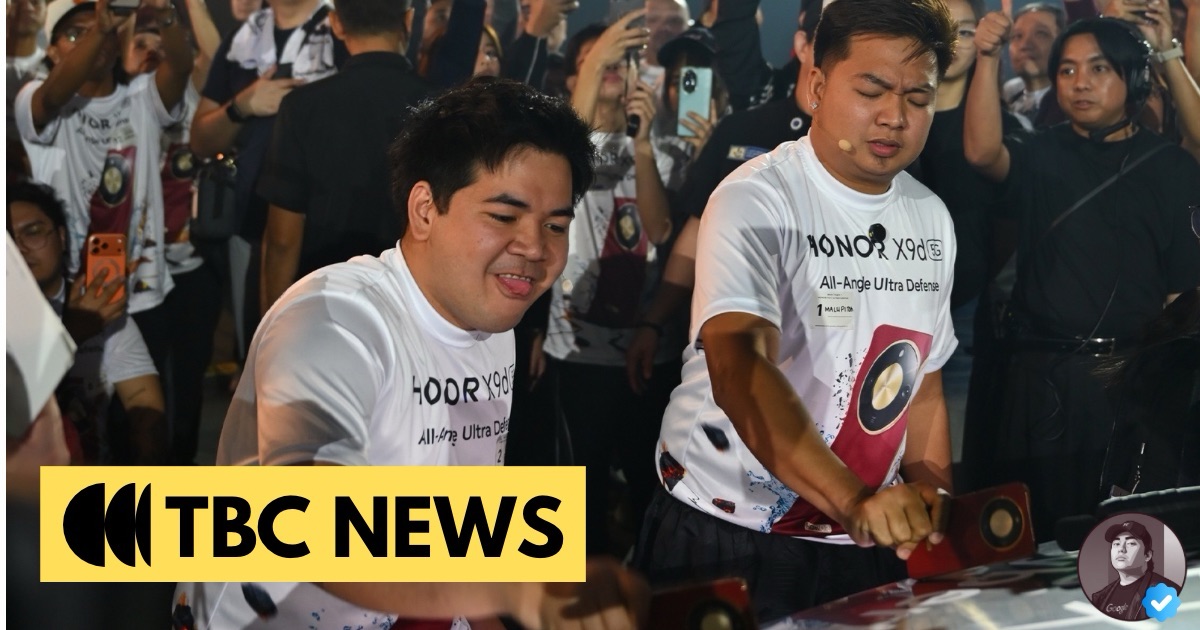
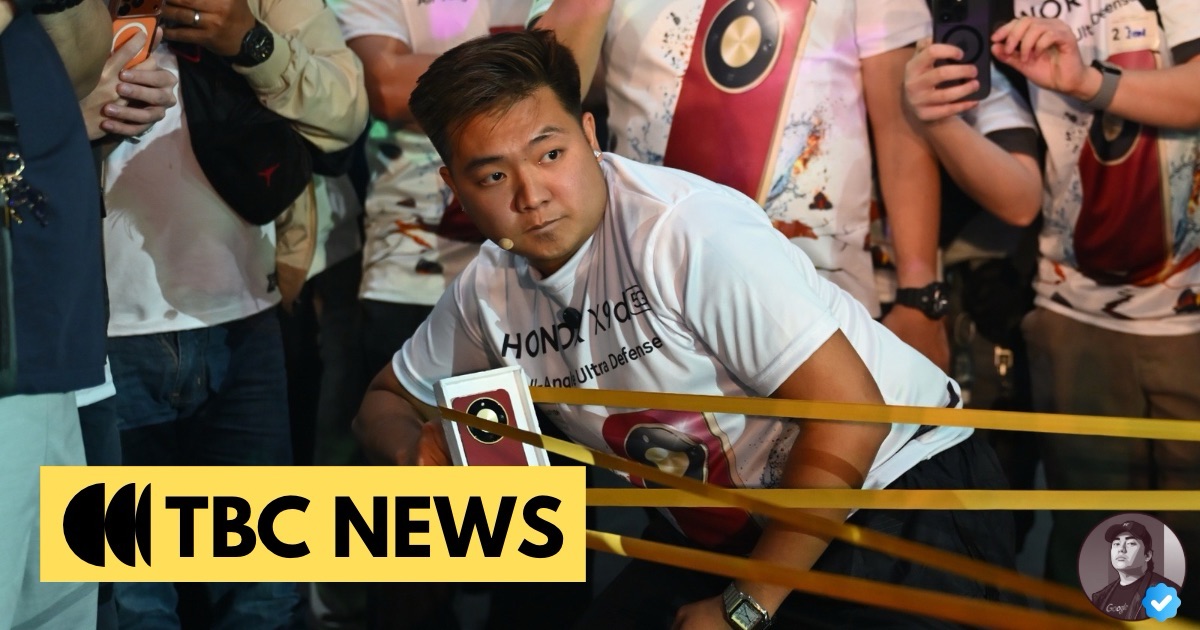
    In a thrilling HONOR X9d 5G Ultra Defense Challenge held at WBS Studios in Pasig, the toughest phone was tested yet again—this time against an all-steel Tesla Cybertruck. Leading the challenge were HONOR Brand Ambassadors Joshua Garcia and Julia Barretto.

    The event featured a series of extreme torture tests between the HONOR X9d 5G and the Tesla Cybertruck: a slingshot hit, a 3-meter throw, a cornhole shot, a decibel test, and, of course, a car-pull runover involving the Tesla Cybertruck and the HONOR X9d 5G—all experienced firsthand by Joshua and Julia.

    Join the conversation and find out soon. Visit HONOR’s website http://www.hihonor.com, and follow HONOR Philippines on Facebook (Facebook.com/HonorPhilippines), Instagram (Instagram.com/honorph/) and TikTok (Tiktok.com/@honorphilippines) for exclusive teasers, launch updates, and big reveal.

    Check out HONOR’s wide array of mobile phones, tablets, and laptops at any HONOR Experience and Partner Stores nationwide (https://www.hihonor.com/ph/retailers/) or online via Shopee (https://bit.ly/HONORPHShopee), Lazada (https://bit.ly/HONORPHLaz) and TikTok Shop (https://bit.ly/HONORTikTokShop).

  • [You’re Invited] Inside the most expensive infrastructure wave of the decade

    [You’re Invited] Inside the most expensive infrastructure wave of the decade

    The global data center industry is entering a sustained expansion phase, with nearly 100 gigawatts of new capacity expected between 2026 and 2030, effectively doubling today’s footprint and pushing total investment toward $3 trillion.

    Capacity is projected to grow at a 14 percent compound annual rate through 2030, driven primarily by hyperscale cloud providers and accelerating AI workloads, creating both structural opportunities and mounting pressure on power infrastructure, capital markets, and supply chains.

    Hyperscalers will remain the dominant growth engine, pursuing a hybrid strategy of leasing capacity while continuing to self-build large-scale campuses to secure power access, control latency, and manage long-term costs.

    By 2030, AI workloads could account for roughly half of all data center demand, up from about one-quarter in 2025, with a pivotal shift expected around 2027 as inference overtakes training as the primary driver of compute consumption.

    This transition materially changes deployment economics, as inference workloads require geographically distributed infrastructure closer to end users, increasing demand for regional and edge facilities rather than centralized mega-clusters alone.

    Regionally, the Americas will retain leadership, representing roughly half of global capacity and posting the fastest growth, supported by strong U.S. hyperscale investment, while APAC and EMEA expand at lower but still robust double-digit rates tied to cloud migration, sovereign AI requirements, and government-backed digital infrastructure.

    Power availability has emerged as the sector’s binding constraint, with grid connection wait times exceeding four years in many core markets, forcing operators to adopt behind-the-meter generation, battery storage, and, in some jurisdictions, direct ownership of power assets.

    In the U.S., natural gas is increasingly used as bridge or permanent on-site power, though sustainability concerns among large tenants may limit adoption, while EMEA and APAC lean more heavily on renewables and private-wire solutions to reduce cost and regulatory risk.

    Capital intensity continues to rise, with average global construction costs climbing to more than $10 million per megawatt and forecast to increase further, excluding tenant-funded IT fit-outs that can exceed $25 million per megawatt for AI-optimized deployments.

    Roughly $1.2 trillion in real estate asset value and nearly $870 billion in new debt financing will be required to deliver the next wave of capacity, alongside an additional $1 trillion to $2 trillion in tenant spending on GPUs, networking, and related infrastructure.

    These economics are accelerating industry consolidation, raising barriers to entry, and favoring well-capitalized operators with proven execution, access to power, and balance sheet flexibility.

    For investors and developers, the central risks now lie in power procurement, construction timelines, and the pace of AI application adoption, while strategic advantage will accrue to those who can align capital deployment with the shift from training to inference and the resulting geographic redistribution of demand.

  • The unexpected company taking top honors in Philippine healthcare innovation

    The unexpected company taking top honors in Philippine healthcare innovation

    TP in the Philippines (formerly Teleperformance), a leader in digital business services, continues to fortify its presence and position as an innovation and community-impact leader after earning two of the highest distinctions at the HIMAP Awards 2025, an award giving body recognizing excellence and innovation in the healthcare information management industry, held at Shangri-La The Fort, Bonifacio Global City.

    The organization received both the Makabago Award for Excellence in Technology and Innovation and the Pamayanan Award for Excellence in Community Development and Outreach Programs, reflecting TP’s unique ability to blend advanced technology with sustained, institutionalized social impact.

    TP.AI wins the Makabago Award for transforming healthcare operations with its proprietary AI ecosystem that has redefined operational excellence across its 8,000-strong healthcare workforce.

    On the other hand, TP also receives the Pamayanan Award through its TP Healthcare Vertical, emphasizing the organization’s long-term commitment to community empowerment through its advocacy and outreach programs.

  • The network upgrade SMBs postponed is now unavoidable

    The network upgrade SMBs postponed is now unavoidable

    SMB network strategy in 2026 is shifting from deferred maintenance to structural modernization, as bandwidth demand, cybersecurity risk, and talent constraints converge.

    Decision makers are prioritizing faster connectivity, integrated security, and outsourced operations to sustain growth and control risk.

    After a year dominated by endpoint lifecycle issues such as Windows 10 end of support, infrastructure investment is back on the agenda. Networks are being upgraded not as standalone IT projects but as core business platforms supporting cloud workloads, AI-enabled applications, and distributed workforces.

    Managed services are becoming central to this transition. The global managed services market is projected to grow at a 15 percent CAGR through 2032, reflecting sustained demand for remote monitoring, security management, and operational efficiency. For SMBs, outsourcing is increasingly a risk mitigation strategy rather than a cost play, driven by persistent skills shortages and rising threat exposure.

    Wireless infrastructure is a near-term priority. WiFi 7 adoption is expected to accelerate in 2026 as the standard matures and deferred upgrades resume. Higher throughput, lower latency, and improved reliability are critical for cloud-centric operations, dense device environments, and AI-assisted workflows.

    Enterprise WLAN demand is expanding rapidly, particularly in sectors such as retail, hospitality, and education where service quality directly affects revenue and user experience.

    These wireless gains require corresponding upgrades on the wired side. Multi-gigabit switching is moving from edge case to baseline, with 2.5G emerging as the minimum standard across most access layers. Growth in high-power PoE devices, including advanced access points, cameras, and IoT endpoints, is forcing investment in switches that support PoE++ and higher aggregate power budgets without creating bottlenecks.

    Security is no longer separable from connectivity. Hybrid work, cloud access, and tighter governance expectations are expanding the attack surface, placing SMBs squarely in the threat landscape once dominated by larger enterprises. Networks are being designed with embedded, multi-layer security that is continuously monitored through cloud platforms, often by external providers.

    This convergence strengthens the case for managed service providers. Centralized cloud management, advanced analytics, and remote remediation allow MSPs to deliver enterprise-grade protection and performance at scale. For many SMBs, delegating day-to-day security and network operations has become the preferred model as regulatory pressure and incident costs rise.

    AI is beginning to deliver operational value rather than promise. In 2026, AI and machine learning are increasingly embedded in network and security platforms to detect anomalies, predict failures, and automate routine tasks. Natural language interfaces and intent-based controls are reducing administrative overhead, enabling lean IT teams and MSPs to manage more complex environments with fewer resources.

    The transformation underway is incremental but material. By the end of 2026, SMB networks are expected to be faster, more resilient, and more standardized, with security and management built in by design. These changes position smaller organizations to absorb future digital demands while containing operational and cyber risk.

  • WATCH: Joshua Garcia, Julia Barretto Test 2026’s Toughest Phone HONOR X9d 5G against Tesla Cybertruck

    WATCH: Joshua Garcia, Julia Barretto Test 2026’s Toughest Phone HONOR X9d 5G against Tesla Cybertruck

    Leading global AI smart devices provider HONOR Philippines has done it again—new year, new explosive drop.

    Its latest smartphone, the HONOR X9d 5G, was officially revealed on New Year’s Day and has gone viral since.

    With top internet personalities like Malupiton, Ser Geybin, Jomar Yee, and KaMangyan Vlogs posting about it, the launch has officially become a trending online moment.

    “The past three years gave us a strong foundation—and we are excited that achievement proves we’re capable of pushing boundaries and delivering even more. We have a lot of exciting news lined up for our HONOR fans, and what we did with the HONOR X9d 5G and the Tesla Cybertruck is just a preview of what’s to come. You should all watch out on the grand launch this coming January 9,” said HONOR Philippines Vice President Stephen Cheng.

    In a thrilling HONOR X9d 5G Ultra Defense Challenge held at WBS Studios in Pasig, the toughest phone was tested yet again—this time against an all-steel Tesla Cybertruck. Leading the challenge were HONOR Brand Ambassadors Joshua Garcia and Julia Barretto.

    The event featured a series of extreme torture tests between the HONOR X9d 5G and the Tesla Cybertruck: a slingshot hit, a 3-meter throw, a cornhole shot, a decibel test, and, of course, a car-pull runover involving the Tesla Cybertruck and the HONOR X9d 5G—all experienced firsthand by Joshua and Julia.

    Join the conversation and find out soon. Visit HONOR’s website http://www.hihonor.com, and follow HONOR Philippines on Facebook (Facebook.com/HonorPhilippines), Instagram (Instagram.com/honorph/) and TikTok (Tiktok.com/@honorphilippines) for exclusive teasers, launch updates, and big reveal.

    Check out HONOR’s wide array of mobile phones, tablets, and laptops at any HONOR Experience and Partner Stores nationwide (https://www.hihonor.com/ph/retailers/) or online via Shopee (https://bit.ly/HONORPHShopee), Lazada (https://bit.ly/HONORPHLaz) and TikTok Shop (https://bit.ly/HONORTikTokShop).

  • The productivity reset most professionals are trying after the holidays

    The productivity reset most professionals are trying after the holidays

    The holiday lights have come down, and the office inbox is filling up. For most working professionals, the first week back can feel like a mountain to climb—but instead of dreading and feeling overwhelmed by the “holiday hangover,” let’s look at this as your 2026 reset. After all, you’re great and you can handle anything life throws at you.

    Whether you’re a manager, a creative, or a busy parent balancing a side hustle, having a supportive partner—like Gemini, which can help you take on any task in the office, in school, and even at home—can make all the difference.

    Are you ready to hit the new year running? Here’s how you can use Gemini to clear the mental clutter and build real momentum this January by using the following prompts:

    1. Conquer the “Inbox Mountain”

    Don’t let hundreds of unread emails paralyze your first week back. Use Gemini to identify what actually matters so you can focus on your high-impact projects or milestones.

    Try this prompt: “I’m returning from a two-week holiday. I have over 200 unread emails. Help me draft a 3-step plan to sort them by urgency and suggest a polite ‘back to work’ auto-reply for any non-urgent requests.”

    Anyone can try this prompt with Gemini at no cost. But to those with paid subscriptions, Gemini is already built-in within Gmail that streamlines inbox management. Accessible via the “Ask Gemini” icon on desktop and mobile, it uses natural language to summarize threads, draft replies, find files across Gmail and Drive, and create Calendar events. Whether finding old emails or proofreading drafts, Gemini acts as a powerful partner to accelerate daily productivity.

    2. Turn Resolutions into a Realistic Schedule

    We all start January and roll into the new year with big goals, but sometimes life just happens. Use Gemini to break those big 2026 dreams into small, achievable daily habits that fit your actual calendar.

    Try this prompt: “I want to focus on professional growth this year while still making time for the gym. Look at a typical 9-to-5 workday and suggest three 15-minute ‘micro-habits’ I can start this week to achieve this goal.”

    3. Beat the “Blank Page” Blues

    Getting back into the creative flow is tough. If you have a report or presentation due, don’t stare at a blinking cursor and a field of white—let Gemini help and give you a head start.

    Try this prompt: “I need to write a project proposal for a new marketing campaign. Can you give me an outline with five key sections to help me get started?”

    4. Meal Prep for a Busy Work Week

    One of the first things to go out the window when work gets busy is healthy eating; when you’re swamped, it’s easy to reach for your phone and order any food mindlessly, ruining your budget or health goals. Save your Sunday nights (and your diet) by letting Gemini handle the thinking.

    Try this prompt: “I’m a busy professional with only 30 minutes to cook dinner. Give me a list of 5 healthy, 30-minute meals under this Php(insert amount) budget that I can make this week with a combined grocery list.”

    5. Find Your Focus (and Keep It)

    The transition back to work or school can be overwhelming, and you might find yourself looking for ways to balance the social energy with your personal to-do list. If you’re struggling to stay focused on a task in a single day and want to optimize concentration, ask for a “Focus Protocol” tailored to how you work.

    Try this prompt: “I’m finding it hard to concentrate today. Suggest a productivity technique (like Pomodoro) and a way to structure my next four hours to finish my top three tasks.”

    The important thing to remember is to not feel overloaded by the heaps of work facing you in 2026—we can take it all on with a steady gameplan and a partner that can help us whittle it down one by one. By using these simple prompts in Gemini, you can spend less time stressed and worrying, and more time being efficient and doing what you actually love.