Digital travel platform Agoda is calling on travel partners including, accommodation, flight and activity providers, to be a part of its upcoming World Tourism Day sale, designed to inspire travelers to explore new destinations.
Timed to coincide with World Tourism Day on 27 September, the upcoming Agoda World Tourism Day Sale campaign creates the perfect moment for emerging destinations alike to attract greater attention and demand. This increased accessibility is sparking curiosity and inspiring travelers to venture beyond the usual hotspots, giving hoteliers and travel partners in these emerging destination cities a valuable chance to capture a larger share of regional tourism.
“World Tourism Day is a reminder of the need to keep travel accessible and affordable for everyone,” said Andrew Smith, Senior Vice President, Supply at Agoda. “Across Asia Pacific, accommodation searches for emerging cities now account for over 30% of overall searches in the first half of the year and they are a big part of the region’s growing tourism story. This campaign offers hoteliers in both major hubs and emerging cities the opportunity to connect with new audiences and capture demand through Agoda’s global platform.”
Running from 24 September to 8 October, the World Tourism Day sale will offer up to 60% off hotel bookings, with special flash sales of up to 70% on 27 September and 6 October and exclusive deals on flights and activities. Agoda VIP members will receive early access to deals from 21 to 23 September.
By participating, hoteliers can tap into Agoda’s extensive global reach to increase property visibility, drive bookings from high-intent travelers, and connect with new guest segments during a key seasonal travel window. To help its partners maximize these opportunities, Agoda offers data-driven tools and insights designed to optimize performance in capturing demand.
Campaign highlights for partners:
VIP Early Access (21–23 September): Up to 60% off for Agoda VIP members.
Mega Sale (24 September – 8 October): Up to 60% off hotels for all travelers.
Flash Sales (27 September and 6 October): Up to 70% off hotels for limited-time bookings.
Exclusive Flight and Activity Deals: Enhanced cross-sell opportunities.
Bitget just made one of its boldest crypto moves yet. The global exchange is transferring a massive 440 million BGB tokens to the Morph Foundation, setting the stage for BGB to become the beating heart of Morph Chain.
Here’s how this shift could transform the world of onchain consumer finance.
1. A $440M Power Play All 440 million BGB tokens held by Bitget are heading to Morph. Half of them will be burned instantly, while the other half will be gradually unlocked to drive growth, incentives, and education.
2. BGB Becomes the Gas and Governance Token Morph Chain officially adopts BGB as its gas and governance token, powering transactions and decision-making across a high-performance blockchain network.
3. A Global Settlement Layer for 120 Million Users With Morph as BGB’s new home, the token will serve more than 120 million users worldwide, acting as the backbone for payments and settlement activities.
4. A Burn Mechanism Linked to Activity BGB’s supply will shrink over time. The Morph Foundation plans to tie token burns directly to network usage until the total supply reaches just 100 million.
5. Supercharged Utility Across Exchanges Beyond Morph, BGB stays active on platforms like Bitget, MEXC, and Bitfinex, where holders can enjoy perks such as Launchpool access, fee discounts, and token mining.
6. Developers Get Direct Access to Massive Infrastructure Bitget and Bitget Wallet are integrating their services into Morph, giving builders access to stablecoin issuers, payment rails, and 120 million users. Hackathons and builder programs are also in the pipeline.
7. Morph Rails Will Drive the Ecosystem Forward This backbone infrastructure will power decentralized applications focused on payments, opening the door for a new generation of PayFi innovations at scale.
From token burns to powering Web3 payments, Bitget’s move places BGB at the center of a massive ecosystem shift. For crypto enthusiasts, developers, and investors, this may be the beginning of BGB’s most important chapter yet.
AnyMind Group, a BPaaS company for marketing, e-commerce and digital transformation, today announced that it has won two honors at the Mob-Ex Awards 2025, highlighting the company’s continued innovation in mobile marketing, POKKT, Asia’s leading mobile advertising platform, specializing in gamified in-app ad experiences and rewarded video formats that drive deeper consumer engagement.
AnyMind and Nestlé Philippines’ Bear Brand Sterilized 2 Player Connected Device Game won Silver for Best Mobile Gamification Campaign and Bronze for Most Innovative Use of Mobile. These wins underscore the company’s ability to deliver engaging, tech-enabled brand experiences that resonate with consumers.
Mayi Baviera, Country Manager, Philippines, AnyMind Group, said: “These recognitions validate our commitment to pushing the boundaries of mobile innovation for our brand partners. By combining creativity, data, and technology, we’re able to craft gamified experiences that not only entertain but also drive meaningful engagement and business outcomes.”
Building on a track record of recognition
The latest Mob-Ex Awards achievements build on a series of industry honors for AnyMind in recent years:
POKKT Awards 2023: Grand Prix / Best in Show for Unilever Tresemmé’s KOL-Powered Immersive Shopping Experience
Multiple accolades across Digital IMC, Social Media Marketing, Experimental Technology, Customer Experience, and Use of Video categories in partnership with leading brands
These awards further establish AnyMind as a partner of choice for brands seeking to connect with consumers through innovative, data-driven, and immersive digital experiences.
Beyond the wins, AnyMind was also shortlisted as a finalist across four categories in collaboration with leading global brands:
Most Innovative Use of Mobile: Nestlé Philippines – Bear Brand Sterilized – Bear Brand Sterilized 2 Player Connected Device Game
Best Mobile Gamification Campaign: Nestlé Philippines – Bear Brand Sterilized – Bear Brand Sterilized 2 Player Connected Device Game
Best Use of Personalisation: Nestlé Philippines – Maggi Kari – Maggi Kari DCO – Weather Targeting Gamified Execution
Best Use of Interactive Media / AR & VR: Perfetti Van Melle – Chupa Chups – Chupa Chups Head Movement Gamified Execution
Insurance has always been seen as complicated and expensive, but Singlife Philippines is breaking that perception by rolling out two new features on its Plan & Protect App: the Annual Payment option and Payment via QRPH. These tools aim to simplify how Filipinos pay for coverage while making insurance more accessible than ever.
Here’s what you need to know.
1. Annual Payment Option Helps You Save More Instead of dealing with recurring monthly charges, Singlife now lets customers pay upfront for an entire year of coverage. This not only ensures uninterrupted protection but also saves up to 17% compared to monthly premiums.
2. Peace of Mind With Year-Round Coverage Paying once a year means you won’t have to worry about missing a monthly payment deadline. From health emergencies to accidents, you can go about your daily life knowing your protection is already secured.
3. Coverage Available Across Multiple Products The Annual Payment option applies to Singlife’s popular products, including the 100-in-1 Protection Plan, Protect from Medical Costs, Protect from Income Loss, Protect from Income Loss (Accidents), and Protect from Emergency.
4. Easy Payment via Credit or Debit Cards Customers can conveniently make their one-time annual payment using their preferred credit or debit card—no need for complicated processes or extra paperwork.
5. QRPH Payment Adds Convenience Singlife also launched Payment via QRPH in-app. Since QRPH is the national QR code standard, it works with major banks and e-wallets in the Philippines. This allows policyholders to settle premiums instantly, securely, and with zero transfer fees.
6. Insurance That’s Truly for Every Filipino Singlife Philippines CEO Lester Cruz summed it up best: “We’re proving that insurance can be simple, affordable, and truly for every Filipino.” With these new features, the company is turning insurance into a practical choice, not a luxury.
By combining affordability, flexibility, and accessibility, Singlife Philippines is pushing its mission of helping Filipinos achieve financial independence and peace of mind.
For more details, visit singlife.com.ph or download the Singlife Plan & Protect App today.
Demon Slayer isn’t just a hit anime—it’s a visual spectacle, and its cosplay community has taken that artistry to a whole new level.
From meticulously crafted Nichirin swords to flawless hair and costume details, fans are transforming into Tanjiro, Nezuko, Zenitsu, and more with jaw-dropping accuracy.
But among hundreds of impressive cosplays, a few truly stand out for their creativity, attention to detail, and sheer dedication.
We’ve scoured social media and conventions to bring you the top 5 Demon Slayer cosplays that make the characters leap off the screen and into reality.
Lenovo just made a surprising move that blends cutting-edge technology with high-speed adrenaline. The global tech leader has officially become the Title Sponsor of the Lenovo Kalì Kart Team, in partnership with Gruppo CRG, one of the most storied names in karting.
Here are the biggest takeaways from this groundbreaking collaboration:
A New Era for Kalì Kart Established in 1960 and now owned by Gruppo CRG, Kalì Kart is rebranded as the Lenovo Kalì Kart Team. The goal is simple: nurture future motorsport stars under 16.
Legendary Track Record Gruppo CRG and Kalì Kart boast 27 World Titles and 26 international titles. They have also shaped the careers of racing legends like Michael Schumacher, Lewis Hamilton, and Max Verstappen.
AI Meets Karting Lenovo is powering the team with AI PCs, high-performance servers, and data-driven tools to improve kart design, aerodynamics, and real-time race strategies.
Tech That Trains Champions Young drivers will use Lenovo devices to analyze their performance, refine their driving style, and prepare for higher levels of racing.
The Lenovo Kart Academy A new academy will guide the most promising talents with physical and mental training, management support, and even marketing development to help them reach Formula 1.
Motorsports as a Testing Ground Lenovo sees racing as the ultimate lab, where its tech can prove its reliability in mission-critical, high-pressure environments.
Beyond Karting Both Lenovo and Gruppo CRG plan to expand their partnership into STEM-focused initiatives, inspiring students worldwide through innovation and racing.
First Big Debut Fans can catch the Lenovo Kalì Kart Team in action for the first time at the FIA Karting World Cup in Cremona, Italy, on September 28.
From turbocharged data analytics to the grooming of future F1 champions, Lenovo’s leap into karting proves technology and racing are the perfect match.
The Powerball jackpot has skyrocketed to a jaw-dropping $1.7 billion after no ticket matched all six numbers in the September 3, 2025, drawing.
The winning numbers were 3, 16, 29, 61, 69, with the Powerball 22.
While no one hit the jackpot, one lucky player in Ohio snagged $1 million, and 14 others across multiple states won prizes ranging from $1 million to $2 million.
The next drawing is set for Saturday, September 6, at 10:59 p.m. ET.
With a cash value of $770.3 million, the prize is now among the largest in lottery history.
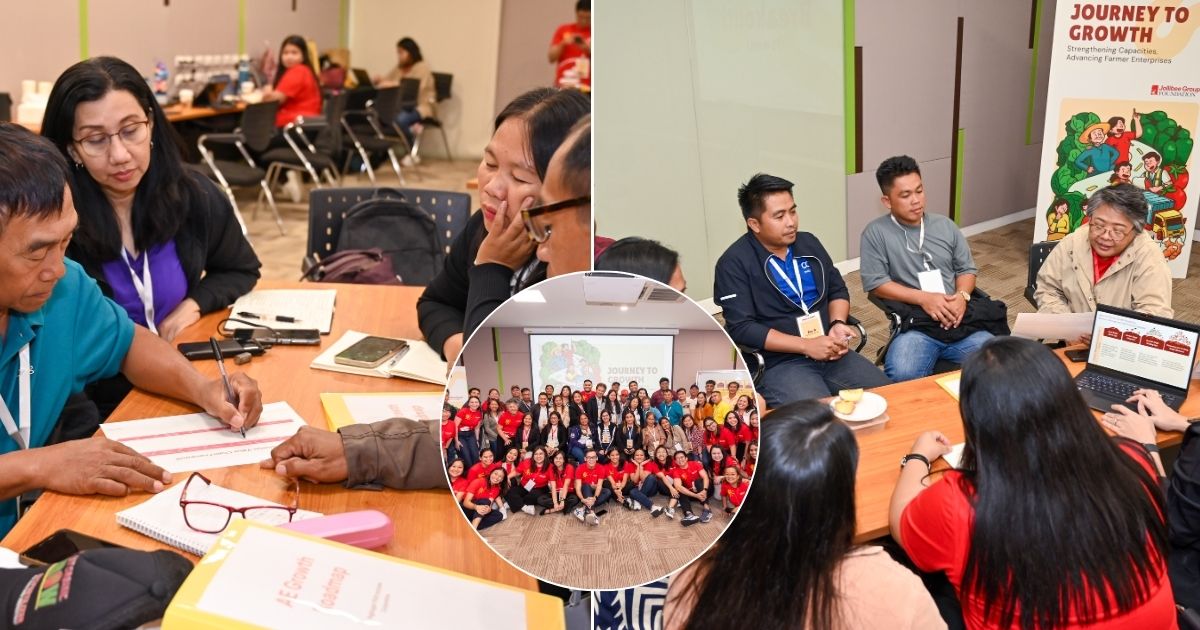
Manila, Philippines – The Jollibee Group Foundation (JGF), the social development arm of the Jollibee Group, brought together the local implementing partners (LIPs) of its Farmer Entrepreneurship Program (FEP) from August 19 to 21, strengthening collaboration and deepening shared commitment to help farmers build better livelihoods.
The three-day workshop, titled Journey to Growth: Strengthening Capacities, Advancing Farmer Enterprises, focused on giving LIPs practical tools and opportunities to learn from one another. The sessions helped partners find new ways to guide farmer groups more effectively, so they can become stronger, more sustainable farming communities.
“This workshop ensures that our partners are equipped with the right tools and knowledge to guide our farmer groups more effectively,” said Gisela Tiongson, President of Jollibee Group Foundation. “As the FEP program continues to grow, we want out partners to grow with us, providing support that truly responds to the unique needs of each farming community they work with.”
Training for the Future
The capacity building activity gathered participants from local governments, microfinance institutions, cooperatives, farmer leaders, academe, and representatives from Jollibee Group business units – all united by a common goal: to help farmers grow their enterprises and strengthen their role in the food value chain.
Over three days, the partners took part in a mix of learning sessions and peer discussions led by subject matter experts from various fields. The sessions showed what it takes to run a successful farm business- from good customer service and efficient operations to sound financial management. The sessions also encouraged participants to reflect on how they can guide farmer groups not just in growing crops, but in becoming dependable suppliers to bigger markets.
One highlight was the presentation of action plans by LIPs to strengthen the farmer enterprises they are supporting, which were reviewed by fellow LIPs, creating a space for peer-to-peer learning and fresh ideas that they can bring back to their communities. These presentations reflected the action plans developed during the workshop, anchored on real data, insights, and shared experiences.
“We learned a lot from the sessions on how we can strengthen our support to the farmers in our communities. We sincerely thank JGF for the continued guidance so we can be more effective and grow together. (Marami po kaming natutunan sa sessions upang paigtingin pa ang suporta namin sa mga magsasaka sa aming lugar. Nagpapasalamat po kami sa JGF sa patuloy na paggabay sa amin upang mas maging epektibo pa at magtulungan upang sama-sama tayong umunlad.),” shared Justine Lynn Limocon, Manager of the Business Development Center at Sacred Heart Savings Cooperative.
The 2025 Journey to Growth Workshop is part of Jollibee Group Foundation’s ongoing effort to ensure farmers have the right support system—partners who are capable, aligned, and committed to building thriving farming communities.
For more information on Jollibee Group, visit Jollibee Group’s official website.
Jollibee Group Foundation (JGF) is the social development arm of the Jollibee Group. Established in 2004, the Foundation envisions every Filipino family to have food on the table. It builds partnerships and strengthens community capacities for resilience and self-reliance.
JGF promotes access to food through programs in agro-entrepreneurship, education, and disaster response, in collaboration with partners in the Philippines and abroad. Its flagship programs include the Farmer Entrepreneurship Program (FEP), which enables smallholder farmers to supply institutional markets; the Access, Curriculum, and Employability (ACE) Scholarship Program, which supports youth pursuing agriculture-related skills training; and FoodAID, which delivers immediate food assistance in times of crisis.
Under its ‘Joy of Learning’ banner, JGF implements the Busog, Lusog, Talino (BLT) Central Kitchen Program to address hunger and malnutrition among public school children and recently launched the Classroom Building Project in celebration of its 20th anniversary.
Through these initiatives, JGF continues to spread the Joy of Sharing by working alongside communities to create lasting, meaningful change.
About Jollibee Group
The Jollibee Group (PSE: JFC) is one of the world’s fastest-growing restaurant companies, driven by its purpose of spreading joy through superior taste. Its portfolio includes 19 brands with over 9,900 stores across 33 countries.
The Jollibee Group’s portfolio includes nine wholly owned brands (Jollibee, Chowking, Greenwich, Red Ribbon, Mang Inasal, Yonghe King, Hong Zhuang Yuan, Smashburger and Tim Ho Wan), five franchised brands (Burger King, Panda Express, Yoshinoya, Common Man Coffee Roasters, and Tiong Bahru Bakery in the Philippines), and ownership stakes in other key brands like The Coffee Bean and Tea Leaf (80%), Compose Coffee (70%), SuperFoods Group that operates Highlands Coffee (60%), and bubble tea brand Milksha (51%). The Company also has membership interests in Tortazo, LLC, along with Chef Rick Bayless, for Tortazo in the U.S. and has recently invested in Botrista, a leader in beverage technology.
The Jollibee Group’s global sustainability agenda, Joy for Tomorrow, underscores its commitment to sustainable business practices across food safety, employee welfare, community support, good governance, and environmental responsibility, among others. These focus areas are aligned with the United Nations Sustainable Development Goals (UN SDGs).
The Jollibee Group has been recognized as the Philippines’ Most Admired Company by the Asian Wall Street Journal, named one of Asia’s Fab 50 Companies, and listed among Forbes’ World’s Best Employers and Top Female-Friendly Companies. The Company is also a three-time Gallup Exceptional Workplace Award recipient and featured in TIME’s World’s Best Companies and Fortune’s Southeast Asia 500 List.
The rise of agentic AI, a form of artificial intelligence that can operate with little or no human intervention, is pushing businesses, educators, and policymakers to rethink the future of work. The 8th GAIN National Convention, happening on August 29 at the AIM Conference Center in Makati City, will gather leaders from government, academe, and industry to unpack how this technology could shape the Philippines.
Here are eight conversations set to define the event:
What Makes Agentic AI Different from Generative AI Unlike generative AI that relies on prompts, agentic AI is designed to act independently. Microsoft research shows that 89% of Philippine companies are preparing to deploy AI agents in the next 12 to 18 months, underscoring the urgency of the discussion.
Preparing Filipino Talent for an AI-Driven Future GAIN President Monette Iturralde-Hamlin emphasized that this year’s convention will focus on actionable steps in training local talent, aligning education and policies with an AI-enabled economy.
Agentic AI in Southeast Asian Education SEAMEO Innotech’s Deputy Director Kochakorn Khattapan-Acidre will share insights on how schools across the region are adopting AI to improve learning outcomes and prepare students for an AI-integrated world.
How AI is Redefining Education, Government, and Business Rex Wallen Tan, CTO of Southville Global Education Network, will explain what agentic AI is at its core and how its applications are transforming different sectors.
Business Efficiency Through AI Adoption Industry representatives like Doc Ligot from the Philippine AI Business Association, Ida Tiongson from Fintech Alliance PH, and JL Botor from the Healthcare Information Management Association of the Philippines will outline how AI can streamline processes and create new opportunities.
Cross-Sector Collaboration for an AI-Ready Philippines A panel featuring government, academe, and industry leaders will examine how collaboration can ensure that the country adapts responsibly and inclusively to the rise of agentic AI.
Showcasing GAIN’s Flagship Initiatives Beyond the AI conversation, the convention will highlight GAIN-led programs like the Reading Program at Southville International School and Colleges, open-access English learning resources, and a Duolingo English course tailored for Tagalog speakers.
Strengthening the Global Competitiveness of Filipino Talent GAIN Chairman Peter Laurel stressed that the convention is not just about technology but about ensuring that Filipino professionals remain globally competitive in the era of rapid digital transformation.
The convention carries the theme “Shaping Tomorrow: Gaining Momentum in the Era of AI” and is open to limited participants.
The Philippine data center industry’s rapid growth is steered by domestic telecom incumbents, local conglomerates in strategic partnerships, and global digital infrastructure investors building capacity to meet surging cloud, AI, and enterprise demand.
PLDT’s data center arm VITRO Inc., under ePLDT, remains the largest domestic operator with more than a dozen facilities and multiple hyperscale campuses under development.
Its current footprint includes major sites such as the 50‑megawatt (MW) VITRO Sta. Rosa campus with plans for larger builds exceeding 100 MW, anchoring roughly 40 percent of existing capacity.
PLDT has signaled potential minority partner sales to unlock capital and manage leverage.
Globe Telecom participates primarily through ST Telemedia Global Data Centres Philippines, a joint venture with Singapore‑based ST Telemedia Global Data Centres and Ayala Corporation.
STT GDC is executing multi‑phase builds totaling more than 124 MW at its Fairview and Cavite campuses, positioning it as a top second operator by capacity.
International colocation and hyperscale platform providers are expanding their Philippine presence. U.S.‑based Equinix acquired three local data centers from a domestic operator, bringing carrier‑neutral interconnection under its global footprint and accelerating enterprise and cloud service access.
Singapore‑headquartered Digital Edge, backed by U.S. investor Stonepeak, operates certified facilities emphasizing sustainability and advanced cooling.
Chinese cloud provider Alibaba Cloud plans a second Philippine data center as it responds to regional cloud demand and latency needs.
Emerging ventures include joint initiatives such as AyalaLand Logistics Holdings with FLOW Digital Infrastructure in Biñan, and infrastructure developer Megawide’s partnership with Singapore’s Evolution Data Centres to build high‑capacity colocation facilities, reflecting property and construction groups diversifying into digital infrastructure.
Converge ICT Solutions continues to build proprietary centers across Luzon and the Visayas to support its broadband and enterprise services.
Market size and growth underscore the strategic stakes. Current data center revenue is projected at roughly $638 million to $744 million in 2025, with capacity between 560 MW and 632 MW, and expected to grow toward 1.3‑1.5 gigawatts by 2030 or 2028 as operators complete planned projects.
The market could reach nearly $2 billion in value by 2030 on double‑digit compound annual growth rates. Colocation makes up the large majority of revenue, while hyperscale facilities and AI‑ready halls are attracting the largest incremental investment.
Despite the rapid build‑out, the Philippines still lags regional peers in density, with higher population per MW served, signaling both runway and competitive pressure to attract global workloads beyond domestic demand.
Energy constraints and costs remain a key operational risk, prompting operators to pursue renewable power procurement and efficiency innovations.
Ownership patterns reflect a blend of local incumbents consolidating base load capacity, conglomerate partnerships providing capital and land access, and global digital infrastructure players capturing strategic footholds.
For decision makers, the competitive landscape will hinge on securing power, connectivity, and interconnection ecosystems as well as navigating regulatory and geopolitical currents shaping foreign investment and data sovereignty imperatives.