
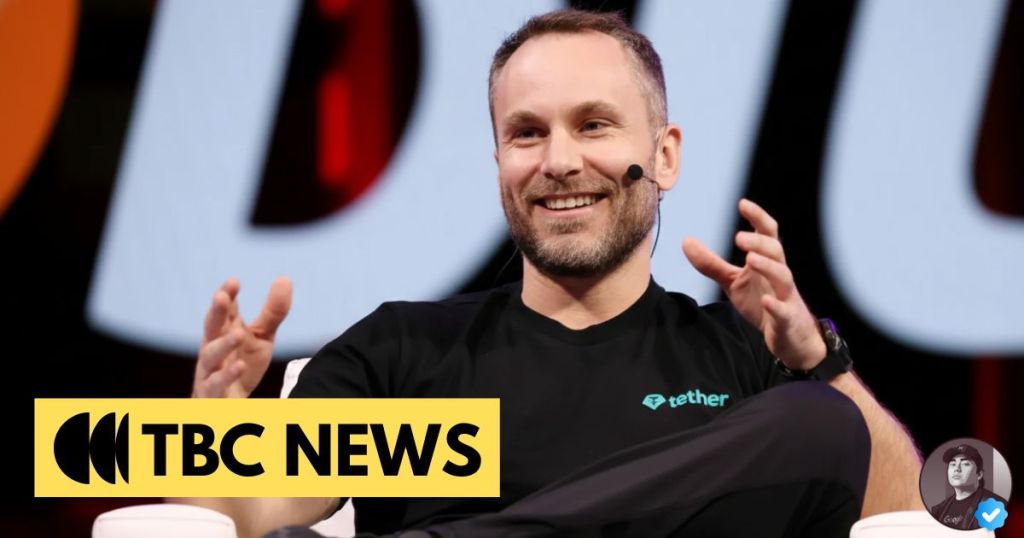
If you use crypto, send money abroad, or just worry about your savings losing value, this matters now. Tether is charging back into the United States with a new regulated product, massive reserves, and a public campaign to rewrite its reputation.
After years of operating offshore under scrutiny, Tether this week launched USAT, a U.S.-regulated stablecoin issued through Anchorage Digital Bank, designed to comply with new federal rules and compete directly with Circle’s USDC. The move comes as Fidelity Investments rolls out its own stablecoin, joining JPMorgan Chase and PayPal in an intensifying race for control of digital dollars.
Tether’s flagship USDT still dominates globally with $187 billion in circulation, more than all rival stablecoins combined, and 536 million users, growing by 30 million per quarter. CEO Paolo Ardoino says adoption is scaling “more like Facebook rather than any other fintech application.”
The company insists it has cleaned up its image. Ardoino says Tether now works with nearly 300 law enforcement agencies across more than 60 countries, including the DOJ, FBI, Secret Service, and follows OFAC sanctions rules. He says Tether has frozen $3.5 billion in tokens tied largely to scams and hacks, including $225 million in a 2023 pig butchering scam.
Skeptics remain. S&P Global Ratings called USDT’s stability weak three months ago. During the 2022 TerraLuna collapse, Tether says it redeemed $7 billion in 48 hours and $20 billion in 20 days, equal to 25% of reserves. Ardoino claims Tether now holds $30 billion in excess reserves, managed by Cantor Fitzgerald, formerly led by current U.S. Commerce Secretary Howard Lutnick.
The profits are enormous. Fortune reports Tether made more than $15 billion in profit for 2025, largely from reserve yields it does not share with holders. Pending legislation, the CLARITY Act, could formally ban stablecoin issuers from paying interest anyway.
Beyond stablecoins, Tether holds 140 tons of gold worth roughly $24 billion, with Tether Gold circulating $2.6 billion, and has invested more than $1 billion in Neura, $775 million in Rumble, plus major bets on satellites, data centers, agriculture, and even Juventus.
The question is no longer whether Tether will survive. It is whether your future paycheck, savings, or AI tools will quietly run on it.



Leave a Reply